
What if the “safe” packaging standards your facility has used for years are actually the primary reason your freight costs are spiraling out of control? Most operations managers realize that rising carrier surcharges and high return rates are unsustainable. Paying premium prices to large catalog suppliers for materials that fail to protect your goods is a costly inefficiency. Identifying the specific mistakes to avoid with industrial packaging is the first step toward stabilizing your operations and protecting your bottom line.
We’ll help you eliminate the hidden errors that drive up freight costs and cause preventable product damage. This guide outlines how to achieve near-zero transit damage while lowering your total cost of ownership for materials. We’ll examine how to optimize warehouse space in facilities from Anaheim to San Diego, navigate the latest 2026 dimensional weight surcharges, and transition from generic supplies to high-performance, custom-engineered protection. By focusing on engineering over commodity purchasing, you can ensure your logistics chain remains both durable and cost-effective.
Key Takeaways
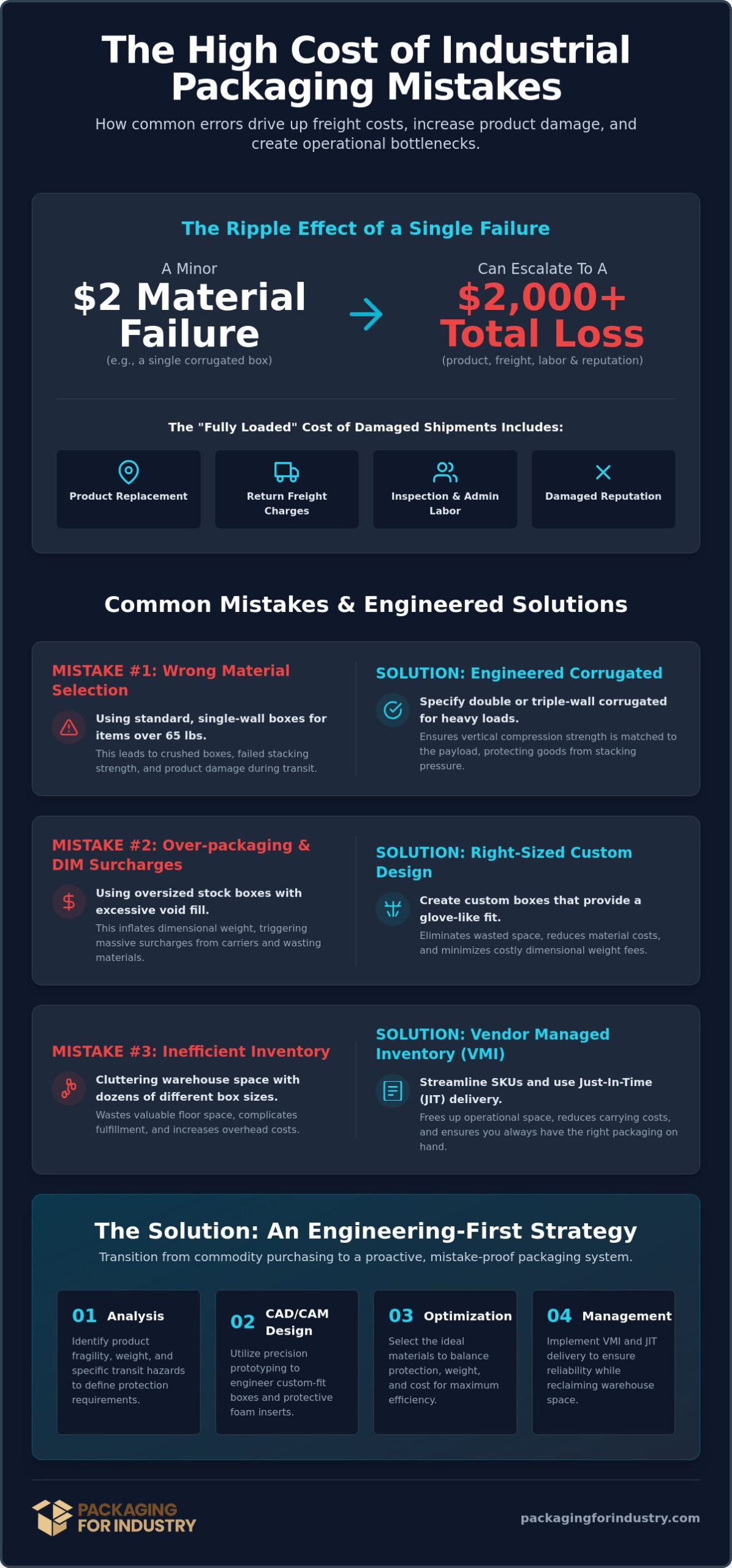
- Understand how a minor $2 material failure can escalate into a $2,000 product loss and damage your brand’s long-term reputation.
- Learn to identify common mistakes to avoid with industrial packaging, such as over-packaging with generic materials that trigger expensive dimensional weight surcharges.
- Discover why selecting the correct stretch film gauge and palletization technique is critical for stabilizing heavy industrial loads during transit.
- Transition from high-priced catalog suppliers to a manufacturer-direct model that utilizes Vendor Managed Inventory to reclaim valuable warehouse floor space.
- Implement an engineering-first strategy using CAD/CAM precision prototyping to ensure your protective packaging is optimized for both safety and fiscal efficiency.
The True Cost of Industrial Packaging Mistakes
Many logistics managers view packaging as a simple commodity purchase. This perspective is a dangerous oversight that often leads to catastrophic financial leaks. A single $2 corrugated box failure can easily result in a $2,000 product loss once you account for manufacturing time, raw materials, and lost opportunity costs. When you view packaging as a coordinated system of preparing goods, you recognize it as a critical insurance policy for your revenue. One of the most common mistakes to avoid with industrial packaging is treating it as an afterthought rather than a vital engineering component. In the high-volume Southern California market, where shipping lanes from Los Angeles and Orange County are constantly active, these errors compound quickly across your entire supply chain.
Financial Impact Beyond the Replacement Cost
The “fully loaded” cost of a damaged shipment extends far beyond the price of the item itself. It includes return freight charges, labor for inspection, and the heavy administrative burden of processing insurance claims. Frequent damage also compromises customer retention and long-term contract stability. Aerospace and medical device manufacturers, in particular, cannot afford the reliability gaps caused by poor material selection. Utilizing precision-engineered foam packaging or heavy-duty corrugated boxes reduces these risks. Proactive engineering doesn’t just protect the product; it helps lower insurance premiums by demonstrating a consistent commitment to loss prevention and professional logistics standards.
Operational Bottlenecks Caused by Poor Packaging
Inefficient packaging impacts your daily throughput and overhead. Non-standard box sizes slow down automated fulfillment lines and complicate palletization, leading to unstable loads that are prone to tipping. If your facility is cluttered with dozens of different box dimensions, you’re wasting expensive warehouse floor space that could be used for production. Our Vendor Managed Inventory (VMI) programs address this by streamlining your stock and ensuring you only have what you need. Even small choices have large consequences. Cheap tape might save pennies on a purchase order, but it often leads to double-handling and wasted man-hours when seals fail during transit. Shifting to a custom design packaging approach ensures every material serves a functional, cost-saving purpose in your operation.
Design and Material Selection Errors to Avoid
Selecting the wrong materials is a fundamental engineering failure that compromises the entire logistical chain. One of the primary mistakes to avoid with industrial packaging is the assumption that a standard shipping container provides adequate protection for specialized industrial components. Without precise material selection, you risk structural collapse, internal shifting, and non-compliance with federal general requirements for shipments and packagings. Every material in your assembly must be chosen based on the specific fragility, weight, and environmental sensitivity of the payload.
Corrugated Complexity: Single vs. Double Wall
Relying on standard single-wall RSCs for heavy machinery or high-density parts often leads to box failure during stacking. If your payload exceeds 65 pounds, upgrading to double-wall or even triple-wall corrugated is usually necessary to maintain vertical compression strength. Using stock boxes for custom-sized products is another common error. The resulting dead space requires excessive void fill, which increases costs without adding structural integrity. Specialized custom corrugated boxes eliminate this issue by providing a glove-like fit that prevents internal product shifting and reduces the overall footprint of the shipment.
Over-packaging, often driven by a generic catalog procurement mindset, is a costly habit where shippers use oversized boxes and mountains of bubble wrap to compensate for poor design. This strategy ignores the financial impact of dimensional weight surcharges from carriers like UPS and FedEx. If you’re shipping air, you’re paying for it. You can request a packaging quote to see how a streamlined, engineered design reduces both material waste and shipping fees.
Protective Foam Failures
Material compatibility is frequently overlooked, especially in the electronics and aerospace sectors. Using standard polyethylene foam for sensitive circuit boards instead of anti-static (ESD) foam can lead to latent electrical failures. Density also matters. Polyurethane is excellent for light, fragile items, but heavy industrial gear requires the high-load bearing capacity of polyethylene. The mistake of using loose-fill peanuts for precision instruments is particularly egregious; they settle during transit, leaving the product vulnerable to impact. High-performance custom foam packaging is the only reliable way to secure high-value gear for medical and aerospace applications.
Finally, neglecting Mil-Spec requirements in defense contracts is a mistake that can lead to rejected shipments and contract penalties. Military packaging requires specific barrier materials and labeling that standard commercial packaging does not provide. Ensuring your supplier understands these technical specifications is vital for maintaining compliance and supply reliability across your Southern California operations.
Logistics and Load Stabilization Oversights
Securing a load for transit is as critical as the primary container itself. Many of the most expensive mistakes to avoid with industrial packaging occur during the final stages of palletization. If a load shifts even a few inches during a long-haul journey, the structural integrity of the entire shipment is compromised. Manufacturers in Anaheim and Los Angeles often face high freight costs due to poor stabilization, which leads to rejected shipments and costly re-delivery fees. Proactive logistics management requires a focus on containment force and structural reinforcement to ensure goods arrive intact.
The Science of Load Stabilization
Improper palletization and uneven weight distribution are primary causes of transit failure. A common error is using the wrong gauge of stretch film for heavy industrial loads. While a thinner gauge might seem cost-effective on a purchase order, it often lacks the containment force required to hold heavy machinery or bulk components in place. Switching from hand-applied film to machine-grade film can improve consistency and reduce material waste, ensuring every pallet is wrapped with precise tension and maximum durability.
- Strap Crush Prevention: High-tension strapping is necessary for heavy payloads, but it can easily crush the corners of corrugated boxes. Integrating corner and edge protection distributes the pressure of the straps. This maintains the box’s vertical strength and prevents internal product damage.
- Rackable Pallets: Ensure your pallets are designed for high-density storage. Using non-standard or damaged pallets can lead to collapses in warehouse racking systems, creating significant safety hazards and potential inventory loss.
Optimizing for Freight and Surcharges
The 2026 UPS and FedEx dimensional weight (DIM) formulas have made efficient packaging design more important than ever. Carriers now charge based on the volume of the package rather than just the physical weight. Falling into the DIM weight surcharge trap is a mistake that can double your shipping expenses overnight. If your box is just one inch larger than necessary in every dimension, the cumulative cost across thousands of shipments is staggering. This “shipping air” tax is a direct hit to your profitability.
Reducing your box footprint by utilizing custom-engineered designs allows you to fit more units per pallet and avoid “oversized” fees. Many Southern California distributors ignore these fees during the design phase, only to realize the financial impact once the invoices arrive. By optimizing your packaging dimensions to align with carrier thresholds, you can significantly lower your total cost of ownership while improving supply reliability across your entire distribution network.
Procurement and Inventory Management Blunders
Procurement is where your packaging strategy either gains or loses its financial edge. One of the most persistent mistakes to avoid with industrial packaging is relying on large, retail-focused catalog suppliers for specialized manufacturing needs. While these catalogs offer convenience, they carry significant markups and provide generic products that aren’t optimized for your specific payload. By partnering with a localized manufacturer-supplier in Southern California, you gain access to direct pricing and engineering expertise that catalog companies simply don’t offer. This shift allows you to move away from “off-the-shelf” compromises and toward solutions that actually reduce your total cost of ownership.
The Catalog vs. Custom Supplier Debate
The hidden markups in “big name” industrial catalogs can quietly erode your margins. These suppliers are built for small-scale retail needs, not high-volume industrial operations. When you source from a local provider in areas like Anaheim or Los Angeles, you benefit from significantly shorter lead times and reduced shipping costs on the materials themselves. A major advantage of working with an engineering-focused supplier is the access to free prototyping. This allows you to test custom corrugated or foam designs before committing to a bulk order, ensuring the protection is perfect before the first shipment leaves your dock.
Streamlining with Managed Inventory
Poor inventory management often manifests as two extremes: wasting warehouse floor space with excess stock or suffering from “packaging stockouts” that halt your entire production line. Both scenarios are expensive. Stocking months of bulky corrugated boxes ties up your cash flow and limits your operational flexibility. Conversely, an emergency order for missing supplies usually comes with overnight shipping premiums and frantic labor costs. Transitioning to a Just-In-Time (JIT) delivery model ensures you have exactly what you need without the warehouse clutter.
Implementing a Vendor Managed Inventory (VMI) program is the most effective way to eliminate these procurement headaches. Under a VMI system, your supplier monitors your stock levels and replenishes inventory automatically. This removes the “purchasing burden” from your procurement team and ensures you never miss a ship date due to a lack of materials. It also improves your cash flow, as you only pay for the packaging as you use it. For manufacturers in San Diego and Orange County, this level of supply reliability is a competitive necessity in 2026.
Solution: Engineering a Mistake-Proof Packaging Strategy
Eliminating the most common mistakes to avoid with industrial packaging requires moving beyond a reactive purchasing mindset. You can’t fix systemic shipping damage or high freight costs by simply adding more tape or bubble wrap to a failing design. A mistake-proof strategy relies on technical precision and a comprehensive understanding of the logistical environment. By treating your packaging as an engineered component of your product, you stabilize your supply chain and protect your profit margins from the hidden costs of transit failure.
The first step in this process is a thorough packaging cost and damage audit. We analyze your current return rates, material waste, and carrier surcharges to identify where your capital is leaking. Once the vulnerabilities are clear, we utilize CAD/CAM design to create precision prototypes. This engineering-first approach ensures that your protective materials, such as custom foam and double-wall corrugated, integrate perfectly to provide total protection. Partnering with a local Southern California expert allows you to implement these changes quickly, ensuring your operations remain agile and cost-effective.
Custom Design and Prototyping at PFI
Our Anaheim-based team specializes in engineering high-performance solutions for the aerospace and defense sectors. We understand that a single failure in these industries isn’t just a financial loss; it’s a major operational setback. To prevent this, we offer comprehensive kitting and assembly services that reduce your internal labor costs and minimize the risk of packing errors on your warehouse floor. Starting with a custom design packaging review is the most direct path to identifying materials that are either under-performing or unnecessarily expensive. We don’t just sell you a box; we provide a validated system of protection.
Local Support for Southern California Manufacturers
Proximity matters when you’re managing a complex manufacturing schedule. Our local presence allows us to provide next-day delivery to facilities across Los Angeles, Orange County, and San Diego. This geographic advantage does more than just ensure reliability; it also helps you reduce your carbon footprint by shortening the distance your supplies travel. Instead of waiting days for a shipment from a national catalog supplier, you get the materials you need exactly when you need them. We invite you to request a packaging quote today to benchmark your current costs against an engineered, manufacturer-direct solution. Let’s optimize your packaging and eliminate the errors that are holding back your operational efficiency.
Optimize Your Industrial Logistics for 2026
Securing your supply chain requires a transition from viewing packaging as a commodity to treating it as a critical engineering discipline. By prioritizing expert CAD/CAM prototyping and specialized aerospace and defense experience, you can eliminate the structural failures that drive up return rates. Localized distribution in Southern California provides the operational agility you need; next-day delivery ensures your facility stays lean and efficient. Identifying the primary mistakes to avoid with industrial packaging is the first step toward a more resilient and fiscally responsible operation.
Reducing your total cost of ownership is achievable through precision design and managed inventory. We’re here to serve as your proactive problem-solver. Our team provides the technical expertise required to navigate rising freight surcharges and complex protective requirements. It’s time to stop overpaying for generic catalog supplies and start investing in a system that works for your specific payload. When you’re managing complex shipments, precision matters.
Your team deserves the confidence that every shipment will arrive intact and on time. We look forward to helping you optimize your logistics and strengthen your competitive edge.
Frequently Asked Questions
What is the most common cause of shipping damage in industrial logistics?
Improper load stabilization and incorrect material density are the primary causes of transit damage. When items shift within a container or a pallet collapses under its own weight, the structural integrity of the shipment fails. Using generic void fill for heavy components that require engineered support is a significant risk for any high-volume operation.
How can I avoid UPS and FedEx dimensional weight surcharges?
You can avoid dimensional weight (DIM) surcharges by reducing the external volume of your shipping containers. Carriers calculate costs based on the space a package occupies rather than just its physical weight. Utilizing custom-sized corrugated boxes eliminates “shipping air” and ensures you aren’t paying for unused volume, which is vital under the 2026 carrier pricing models.
Is custom packaging more expensive than stock boxes from a catalog?
Custom packaging often results in a lower total cost of ownership compared to stock catalog boxes. While catalog items offer convenience, they frequently lead to over-packaging, higher freight costs, and increased damage rates. Engineering a solution specifically for your product reduces material waste and lowers your overall logistical expenses over time.
Why should I use custom foam inserts instead of bubble wrap?
Custom foam inserts provide superior structural integrity and shock absorption compared to bubble wrap. Industrial payloads often crush bubble wrap during transit, leaving the product vulnerable to impact. Precision-cut foam secures the item in place and maintains its protective properties throughout the entire shipping cycle; it’s the standard for high-value aerospace and medical gear.
How does Vendor Managed Inventory (VMI) work for packaging?
Vendor Managed Inventory (VMI) involves your supplier taking responsibility for monitoring and replenishing your packaging stock levels. This system eliminates the risk of production-halting stockouts and reduces the administrative burden on your procurement team. You also improve cash flow by only paying for the materials as they’re utilized in your facility.
What are the requirements for Mil-Spec packaging in 2026?
Mil-Spec packaging requires strict adherence to military standards such as MIL-STD-2073 for preservation and MIL-STD-129 for labeling. These regulations ensure that defense-related components can withstand long-term storage and harsh environmental conditions. Partnering with a specialized supplier ensures your materials meet these technical requirements without the risk of contract rejection.
How do I know if my pallet loads are properly stabilized?
Proper stabilization is confirmed by measuring containment force and ensuring the pallet load remains a cohesive unit. If you see boxes overhanging the pallet edge or notice the load shifting when moved, your stabilization is inadequate. Using the correct gauge of stretch film and adding corner protection are essential steps to prevent these common mistakes to avoid with industrial packaging.
Can PFI help with packaging for the medical device industry in Southern California?
Yes, PFI provides specialized packaging solutions for medical device manufacturers throughout Los Angeles, Orange County, and San Diego. We understand the stringent protection requirements for sensitive medical instruments and offer local next-day delivery to keep your production lines moving. Our team can engineer custom foam and corrugated systems that meet the specific safety standards of the healthcare sector.