
Standard stretch film is designed to seal a load, but for many industrial shipments, that airtight seal is exactly what leads to total loss. If you’ve ever opened a shipping container only to find condensation building up inside pallet loads, you know that moisture is a silent profit killer. Many warehouse managers struggle with the “greenhouse effect” where trapped heat ruins product integrity, causes labels to peel, and compromises corrugated strength before it even reaches the customer. Utilizing a breathable transit wrap is the most effective way to solve these moisture-related issues while maintaining the high-tension load stability your operations require.
This guide explores how switching to high-performance vented film prevents moisture buildup, protects temperature-sensitive loads, and reduces product damage across your supply chain. You’ll discover how to eliminate spoilage while ensuring your loads stay secure during transit. We’ll examine the technical differences between vented and standard films, identify the best applications for various industries, and show you how to lower overall packaging costs through better material selection. This information will help you make an informed decision that improves both your bottom line and your shipping reliability, ensuring your products arrive in the same condition they left the warehouse.
Key Takeaways
- Breathable transit wrap prevents the “greenhouse effect” by allowing airflow through die-cut vents, effectively stopping condensation from damaging labels and corrugated containers.
- Choosing the right vented stretch film balances air circulation with high-performance load containment to eliminate product spoilage in temperature-sensitive supply chains.
- Optimized material selection reduces reliance on expensive secondary packaging and helps warehouses avoid costly shipping damage surcharges from carriers.
- Southern California businesses can lower packaging costs and improve reliability by utilizing PFI’s local next-day delivery and Vendor Managed Inventory (VMI) programs.
What is Breathable Transit Wrap? (Vented Stretch Film Explained)
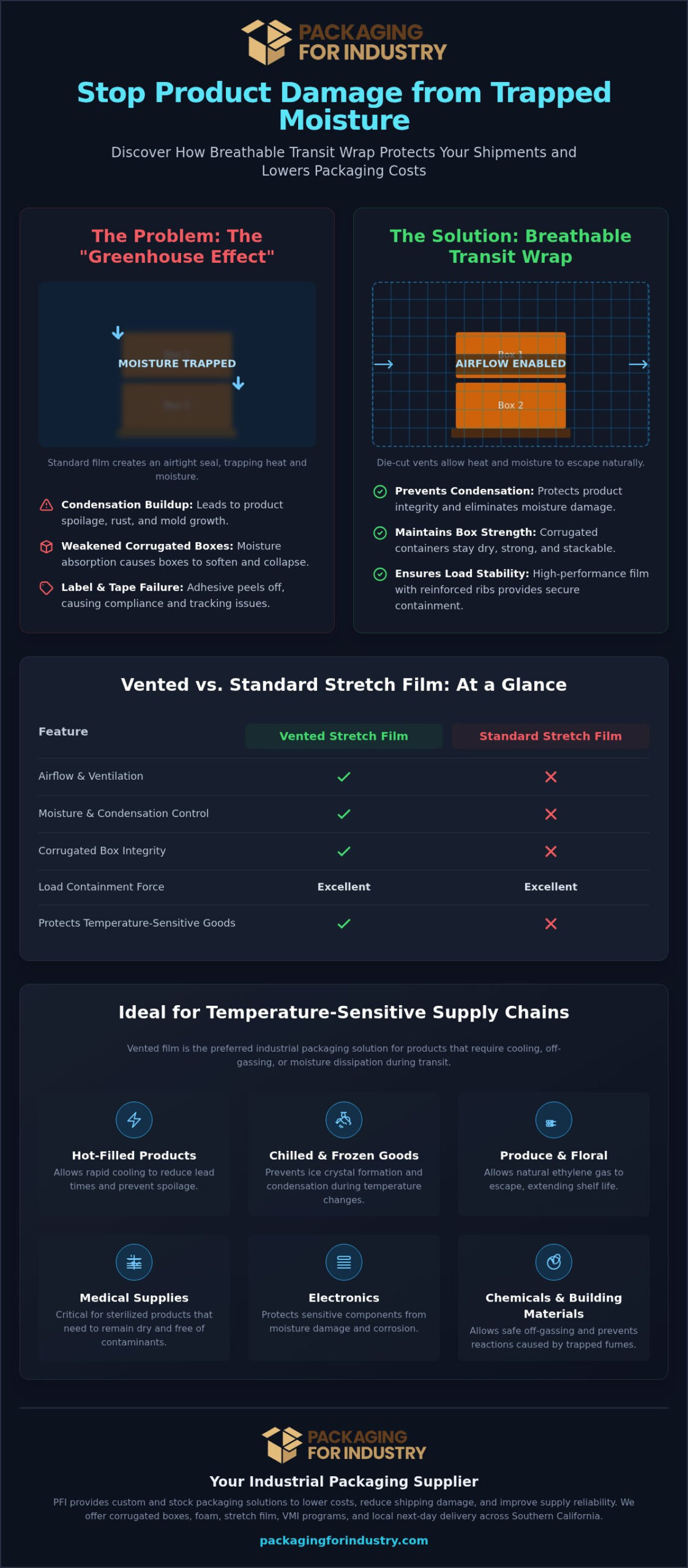
Breathable transit wrap is a specialized industrial packaging material engineered with die-cut vents or holes to facilitate continuous airflow throughout a palletized load. Unlike standard solid films that create a moisture-proof barrier, this material allows heat and gases to escape while maintaining the high structural tension required for safe transport. For manufacturers shipping products prone to condensation or spoilage, vented film serves as a high-performance alternative to solid stretch wrap that protects both the product and the secondary packaging from moisture damage.
The manufacturing process for vented film differs significantly from standard blown or cast stretch film. While standard films focus on creating a consistent, unbroken surface for maximum puncture resistance, vented films are designed with reinforced structural ribs. These ribs ensure that the die-cut holes don’t tear or “run” when the film is stretched to its limit. This engineering allows the film to provide the same load-holding force as traditional materials while offering the ventilation necessary for temperature-sensitive goods.
The Mechanics of Airflow in Palletization
Solid stretch wrap often creates a “greenhouse effect” inside a pallet. When hot-filled products or chilled goods are wrapped, the temperature differential causes moisture to condense on the inside of the film. This leads to label peeling, mold growth, and the structural failure of corrugated boxes. Vented film eliminates this risk by allowing moisture to dissipate naturally. Because the film utilizes reinforced edges around each vent, it maintains high containment force, ensuring the load remains stable even during aggressive transit maneuvers.
Breathable Wrap vs. Traditional Pallet Netting
Many operations previously relied on pallet netting for airflow, but breathable transit wrap offers several operational advantages. Netting is often difficult to apply; it tends to snag on pallet corners and can be challenging to secure at the end of the wrap cycle. Vented film behaves much like standard stretch wrap, making it compatible with most existing automated machinery in warehouses and distribution centers without requiring specialized attachments or constant operator intervention.
Sustainability and disposal also favor vented film over netting. Most pallet netting is made from complex materials that are difficult to recycle in standard industrial streams. In contrast, vented films are typically manufactured from linear low-density polyethylene (LLDPE). This makes them easier to integrate into existing recycling programs, helping facilities lower their environmental impact while reducing the labor costs associated with waste management.
Why Your Supply Chain Needs Breathable Industrial Packaging
Industrial shipping environments are rarely controlled. Products often move from high-heat production lines directly into cold storage or humid shipping containers. This temperature fluctuation is the primary cause of condensation, which can devastate an entire pallet load if the packaging doesn’t allow for thermal exchange. Implementing a breathable transit wrap is a proactive strategy to maintain product integrity by addressing environmental risks that standard films ignore.
The need for airflow extends beyond just preventing moisture. Many industrial products, such as freshly manufactured chemicals or metal components, are highly sensitive to the “micro-climate” created inside a wrapped pallet. By facilitating faster cooling for products shipped directly from production lines, warehouses can reduce lead times and move inventory faster without risking heat-related spoilage or structural failures in their packaging materials.
Combatting Condensation and Mold
When moisture is trapped within a solid plastic barrier, it seeks the nearest porous surface. In most industrial loads, this means your corrugated boxes absorb the “sweat,” leading to a significant loss in compression strength. This softening of the cardboard is a leading cause of load collapse during transit. Beyond structural issues, moisture promotes mold growth on organic materials and causes label adhesive to fail, which is particularly problematic for high-value medical supplies and electronics that require strict traceability.
Using vented film ensures that hot-fill food and beverage products can cool down without creating a vacuum or trapped humidity. This constant airflow is also essential for preventing rust and corrosion on metal parts in humid transit lanes. It keeps the relative humidity inside the wrap consistent with the external environment, protecting your investment from the factory floor to the end user.
Supporting Product Outgassing and Curing
Many industrial processes involve chemical curing or outgassing after the product is manufactured. Freshly molded plastic components, for instance, release gases as they stabilize. If these products are immediately sealed with standard film, the trapped gases can lead to pressure buildup or chemical reactions that degrade the finish of the product. Breathable transit wrap allows these gases to escape safely, ensuring that product quality remains stable from our Anaheim packaging supplier facility to nationwide destinations.
This ventilation is also critical for chemical manufacturers who need to prevent heat buildup within a pallet. By allowing the load to “breathe,” you ensure that the curing process continues naturally without the risk of heat-related spoilage. If you’re seeing moisture-related damage in your shipments, you can request a packaging quote to see how vented solutions improve your logistics reliability.
Selecting the Right Breathable Wrap: Vented vs. Perforated
Choosing the correct breathable transit wrap requires an understanding of both load dynamics and environmental requirements. While both vented and perforated films allow for airflow, they serve different operational needs. Vented film is typically the superior choice for high-tension loads that require maximum structural integrity. It features large, reinforced die-cut vents that facilitate aggressive air circulation without compromising the containment force needed for heavy industrial pallets.
Perforated wrap is often better suited for lighter loads or specific moisture-wicking applications where smaller apertures are sufficient. Operations must choose between macro-perforations for maximum cooling and micro-perforations for finer moisture control. Selecting the right gauge thickness is also critical; heavier pallets and longer transit distances generally require a thicker film to prevent the vents from distorting or tearing under stress. We recommend evaluating your specific pallet weight to determine the optimal gauge that balances material costs with load safety.
Hand vs. Machine Application
Your choice between hand and machine application depends largely on your facility’s throughput. Hand stretch film is ideal for low-volume or highly specialized loads where operators need to manually adjust tension for irregular shapes. For high-volume production lines, machine stretch film offers the consistency and cost-savings necessary for large-scale operations. Automated application ensures every pallet receives the same level of tension, which is vital for maintaining load stability across long-distance shipping routes.
Material Composition: Blown vs. Cast Vented Film
Material composition is another key factor in selecting a breathable transit wrap. Blown vented film provides superior puncture resistance, making it the preferred option for loads with sharp industrial corners or irregular shapes that might puncture thinner materials. Cast film offers better clarity, which is essential for barcode scanning and inventory tracking during the distribution process. It also operates much more quietly than blown film, which can improve the working environment in busy fulfillment centers.
As an experienced Anaheim packaging supplier, PFI helps manufacturers evaluate their specific equipment and load profiles to determine the most cost-effective material. We focus on the intersection of engineering and economics, ensuring you don’t overspend on high-gauge films when a thinner, high-performance cast film would suffice. By matching the film’s material properties to your specific application, you can reduce waste and improve the overall reliability of your supply chain.
Optimizing Load Stability and Lowering Packaging Costs
Cost optimization in industrial logistics requires a holistic view of the packaging system. Choosing the right breathable transit wrap is a strategic move to stabilize your bottom line by reducing the need for expensive secondary packaging. When standard films trap moisture, manufacturers often compensate by using thicker, heavy duty corrugated boxes or additional corner board protection to prevent load collapse. By eliminating the root cause of moisture softening, vented film allows you to maintain structural integrity with standard materials, leading to significant packaging cost savings over the long term.
Shipping efficiency also impacts your relationship with carriers. Companies like UPS and FedEx frequently apply surcharges or deny damage claims for loads that shift or arrive in compromised packaging. A high-performance breathable wrap ensures that your pallets remain stable and professional from the moment they leave your dock. Utilizing pre-stretched vented films further reduces waste; these materials are engineered to provide maximum containment force with less physical plastic, lowering your cost per pallet wrapped while improving environmental metrics.
The Role of Vendor Managed Inventory (VMI)
Maintaining a reliable supply of specialized packaging materials can be a challenge for busy Southern California warehouses. PFI addresses this through our VMI packaging programs, which are designed to prevent production stops caused by stockouts. We manage the lead times for your breathable wrap supplies and monitor your usage levels automatically. This proactive approach frees up valuable warehouse space in Los Angeles and Orange County facilities, allowing you to focus on production rather than inventory tracking.
Reducing Product Damage in Transit
Load shift is a primary driver of shipping damage, especially when moisture has compromised the grip of the film. High-cling vented films are engineered to adhere tightly to the load, ensuring that individual units don’t slide during the vibrations of transit. This is particularly critical for protecting industrial corrugated boxes from the softening effects of trapped condensation. If the cardboard loses its rigidity, the entire pallet becomes a safety hazard and a financial liability.
In the aerospace sector, where components are both high-value and sensitive to environmental changes, the impact of proper wrapping is even more pronounced. We’ve helped aerospace manufacturers implement vented solutions that protect precision parts from the “sweat” common in sea-freight and long-haul trucking. This engineering-first approach ensures that sensitive electronics and machined parts arrive without the rust or corrosion that typically results from trapped humidity in standard sealed loads.
Sourcing Breathable Transit Wrap in Southern California
Finding a reliable source for breathable transit wrap in the Southern California market requires a partner who understands both the technical specifications of the film and the unique logistical pressures of the region. As a local Anaheim packaging supplier, PFI provides more than just a product; we offer a localized supply chain solution that national catalog companies cannot match. While large distributors often struggle with the lead times and technical nuances of vented films, our proximity allows us to offer next-day delivery across Los Angeles, Orange County, and the Inland Empire.
Working with a local distributor provides a level of accountability that is essential for high-volume industrial operations. We understand that a stockout on specialized film can halt a production line. Our team prioritizes reliability and fiscal responsibility, ensuring you have the materials you need without the excessive shipping costs or delays associated with out-of-state suppliers. This focus on efficiency helps Southern California businesses lower their overall packaging spend while maintaining the highest standards of load protection.
Local Support for SoCal Manufacturers
Our team provides dedicated support to industrial hubs including Irvine, Santa Fe Springs, and Huntington Beach. We don’t just ship boxes. We conduct on-site packaging reviews to observe your wrap process in action. This allows our sales representatives to identify inefficiencies in tension control or material waste that a remote salesperson would miss. Having direct access to an expert who understands the specific humidity and transit challenges of the California coast ensures your temperature-sensitive loads are protected from the first mile to the last.
Nationwide Support and Shipping
For companies with multi-location operations, PFI bridges the gap between local expertise and nationwide reach. We maintain a robust inventory of high-performance materials to support complex manufacturing packaging needs across the country. Our fast shipping capabilities ensure that even your facilities outside of California receive the same consistency in film quality and performance. This centralized oversight helps purchasing managers maintain standard operating procedures across all distribution points, reducing the risk of regional shipping damage caused by inferior material selection.
If you’re ready to lower your shipping damage and improve your supply reliability, you can request a custom packaging quote for bulk vented film today. We focus on providing the precise gauge and vent pattern your specific industrial loads require, backed by the local delivery and engineering support that keeps Southern California’s supply chain moving efficiently.
Secure Your Supply Chain with Engineered Ventilation
Transitioning to a breathable transit wrap is a strategic investment in your operational reliability. By eliminating trapped moisture and the resulting greenhouse effect, you protect your corrugated containers from structural failure and ensure your products arrive in pristine condition. Whether you’re managing hot-fill food production or high-value aerospace components, the right vented film balances load stability with essential airflow.
Packaging For Industry (PFI) provides a pragmatic, cost-saving alternative to large national catalog suppliers by offering local Southern California expertise and next-day delivery. Our engineering-first approach ensures that your film gauge and vent patterns are precisely tailored to your specific industrial loads. We focus on helping you lower packaging costs through better material selection and Vendor Managed Inventory (VMI) programs that prevent production stockouts while maximizing your warehouse space.
We look forward to helping you optimize your shipping process and eliminate moisture-related damage in your supply chain. Our team is ready to provide the custom engineering and reliable local service your business requires.
Frequently Asked Questions
What is the main difference between vented stretch film and pallet netting?
Vented stretch film is a solid LLDPE film with die-cut holes, while pallet netting is a woven mesh. Vented film provides superior load containment and is much easier to recycle through standard plastic streams. Unlike netting, which often snags on pallet corners and requires manual tying, vented film works seamlessly with automated equipment. It offers a more professional appearance and prevents the product from shifting during aggressive transit maneuvers.
Can I use breathable transit wrap with my existing stretch wrap machine?
Most machine-grade breathable transit wrap is fully compatible with your existing stretch wrap equipment. It doesn’t require specialized attachments or hardware upgrades. You should work with a technician to calibrate the tension settings, ensuring the vents don’t over-stretch and lose their structural integrity. This compatibility allows high-volume distribution centers to improve airflow without investing in new machinery, making it a cost-effective upgrade for moisture-sensitive supply chains.
Is vented film strong enough for heavy industrial pallets?
Vented film is engineered with reinforced edges to secure heavy industrial pallets weighing several thousand pounds. While the vents allow for air circulation, the structural ribs provide the high-tension containment force necessary for stable transit. We offer multiple gauge thicknesses to ensure the film doesn’t tear when applied to sharp-edged crates or heavy machinery. This engineering ensures your loads remain secure even during the vibrations of long-haul trucking or sea freight.
Which industries benefit most from using breathable wrap?
Food and beverage producers, chemical manufacturers, and aerospace suppliers benefit the most from this specialized packaging. Any industry shipping hot-filled products or items that require outgassing needs a breathable transit wrap to prevent condensation. It is also essential for medical device companies that must protect sterile packaging from moisture-related mold growth. These industries rely on vented solutions to maintain product quality and avoid the structural failure of their corrugated shipping containers.
Does breathable wrap help prevent rust on metal parts?
Breathable wrap is a highly effective tool for preventing rust and corrosion on metal parts. Standard stretch film traps humidity, creating a micro-climate that accelerates oxidation on steel and aluminum components. Vented film allows this moisture to escape, keeping the humidity levels inside the pallet consistent with the warehouse environment. This is critical for manufacturers shipping precision-machined parts or automotive components through humid transit lanes or coastal distribution centers.
How does vented film affect barcode scanning on pallets?
Vented film is designed to maintain high clarity, which ensures that barcode scanning remains fast and accurate. The vents are strategically placed to allow for airflow without obscuring the labels on your corrugated boxes. This allows your operations team to scan pallets at every stage of the distribution process without removing the wrap. Using a cast vented film provides the best transparency for high-speed automated scanning systems in modern fulfillment centers.
What are the cost implications of switching to breathable wrap?
Switching to vented film often results in lower overall packaging costs despite a slightly higher price per roll. By eliminating moisture damage, you reduce the need for expensive secondary protection like desiccants or double-wall boxes. You also avoid the significant financial losses associated with product spoilage, label peeling, and rejected shipments. When you factor in the reduction in shipping damage claims, the return on investment for breathable wrap becomes clear for industrial operations.
Where can I buy breathable transit wrap in Orange County?
You can purchase vented film directly from PFI, your local packaging supplier in Anaheim. We provide next-day delivery to businesses throughout Orange County, including Irvine, Costa Mesa, and Santa Ana. Our proximity allows us to offer on-site packaging reviews and custom engineering support that national catalog companies cannot provide. We maintain a consistent inventory of high-performance materials to ensure your production lines never face a stockout or shipping delay.