
Shipping damage, excess material, and packaging that slows warehouse work can be difficult to turn into an approval request. Management needs a clear case for how a change could improve product protection, operating costs, and supply reliability, backed by evidence rather than assumptions.
This article explains how to compare current packaging with a practical alternative, plan a controlled transition, and make the business case. It also outlines how PFI’s corrugated boxes, foam packaging, stretch film, and crates can support manufacturers, warehouses, distributors, and other industrial operations. PFI offers custom packaging design support, including CAD/CAM, prototypes, and samples, to help teams assess options suited to their products and shipping needs.
Key Takeaways
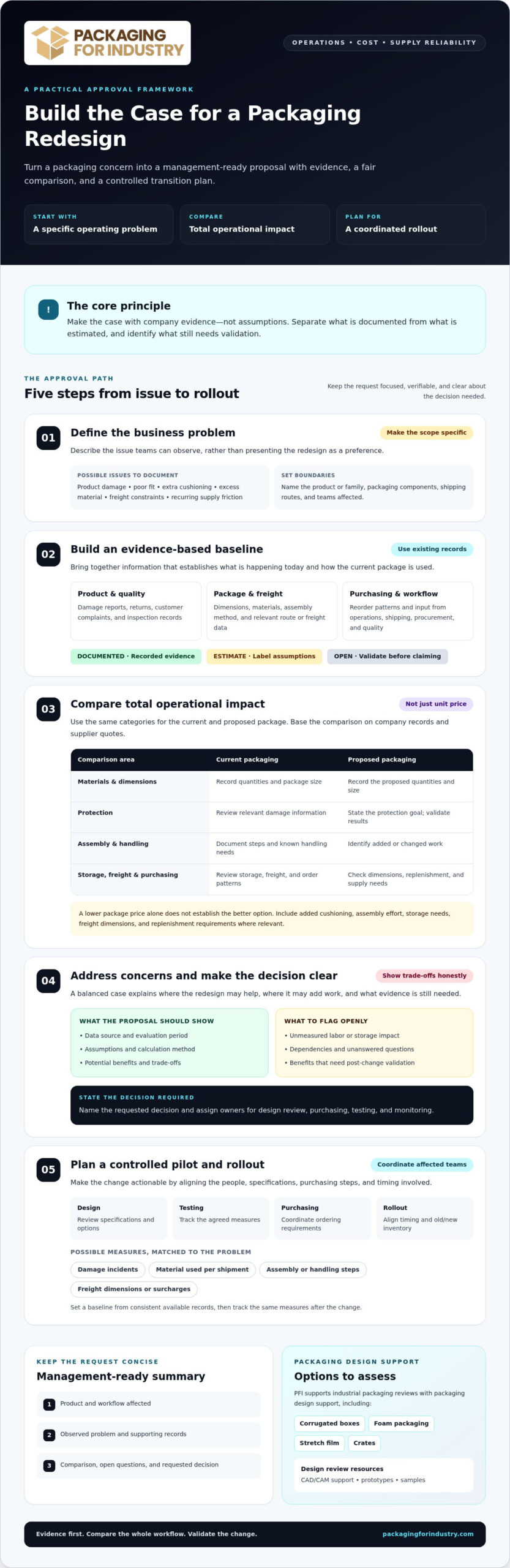
- To show how to get management approval for a packaging redesign, define the operational problem and identify the products, packaging components, routes, and teams affected.
- Compare the current and proposed packaging across protection, materials, dimensions, handling, and purchasing needs, not just unit price.
- Build a balanced business case that addresses management’s concerns, including trade-offs, dependencies, and questions that still need validation.
- Make the proposal actionable by naming the decision required and assigning owners for design review, purchasing, testing, and monitoring.
- Plan the rollout with affected teams so packaging specifications, purchasing steps, timing, and old and new inventory are coordinated.
How to Get Management Approval for a Packaging Redesign: Start With the Business Problem
Executives are more likely to review a packaging change when the request identifies a specific operating problem, not simply a preference for a different box. Start with what teams can observe: product damage, a poor fit that requires extra cushioning, excess packaging material, freight constraints, or recurring supply friction. Then define the scope by product or product family, packaging components, shipping routes, and teams affected. A redesign for one fragile part moving through a particular distribution route has a clearer case than a broad request to “improve packaging.”
Packaging serves physical protection and information needs, among other purposes, as outlined in this overview of packaging and labeling. Use those functions to frame the problem: identify what the current package needs to protect or communicate, and where it falls short. PFI’s custom packaging design services can support a review of an industrial packaging issue and potential design options.
What evidence should support a packaging redesign request?
Build a baseline from records your company already has. Review damage reports, returns, customer complaints, and product inspection records. Record the current package’s dimensions and materials, how it’s assembled, and how often it’s reordered. Freight data may help show route-specific constraints, while purchasing records can establish order patterns. Ask operations, shipping, procurement, and quality to confirm whether the issue occurs in practice and how it affects their work.
Separate documented facts from estimates. For example, label a recorded complaint as observed evidence, but don’t treat an unverified cause of damage as proven. If teams don’t track packaging use or handling time, flag that gap and decide how to collect it before presenting an estimated benefit as a result.
How do you define a measurable redesign objective?
Choose indicators that match the problem. These could include damage incidents, packaging material used per shipment, assembly or handling steps, or dimensional surcharges shown in freight records. Define the baseline period using available, consistent records, then specify how the same measures will be tracked after a change. This gives management a fair basis for evaluating whether the proposed design addresses the original concern.
Close with a brief, self-contained summary: name the product and workflow, describe the issue, cite the supporting records, and state what needs further validation. For example, if a package seems oversized, document its dimensions and relevant freight data before claiming a smaller design will lower shipping costs. This disciplined starting point makes how to get management approval for a packaging redesign a practical process: establish the problem first, then develop the proposal around evidence.
Build the Packaging Redesign Business Case Around Total Operational Impact
A lower unit price doesn’t automatically make packaging the better choice. Compare the current design with the proposed option across material use, package dimensions, product protection, assembly and handling, storage, freight, and purchasing requirements. The broader impact of packaging on logistics is why a redesign case should account for the full shipping and warehouse workflow, not just the packaging line item.
For example, a proposed box may use less material but require additional assembly steps or more protective cushioning. Another design might take up less storage space, but its shipping benefit depends on the actual package dimensions and freight profile. Compare costs and operational effects using your company’s records and supplier quotes. PFI’s packaging cost savings analysis can be a useful reference when framing the business case.
Which costs and benefits belong in the comparison?
Use the same categories for both options so reviewers can see where a change may help or add work. Include material quantities, assembly time, storage needs, shipping dimensions, replenishment requirements, and any relevant damage records. Treat reduced damage as a goal until post-change data confirms an outcome. For recurring packaging, consider ordering patterns and supply requirements alongside the per-unit quote.
Make the calculation easy to check. Show the data source, evaluation period, assumptions, and method for each comparison. If labor time or storage impact hasn’t been measured, identify it as an open question rather than presenting an estimate as a verified saving. This discipline supports how to get management approval for a packaging redesign without overstating the case.
How should teams compare packaging options fairly?
Hold the application constant: use the same product, shipment profile, protection requirements, and evaluation period for each option. A custom corrugated box may suit a product that needs a closer fit; protective foam may be relevant when cushioning is needed; a crate may be appropriate for a different handling or shipping requirement. Don’t add materials simply to make an option look more comprehensive.
Where the right design is not yet clear, involve packaging engineering and operations before finalizing the comparison. PFI provides custom packaging design support, including design assistance and prototypes or samples for custom projects, subject to project-specific confirmation. A fair comparison gives management a practical view of trade-offs and helps teams validate the option before a wider change.
Once you’ve documented the product, current packaging, shipment needs, and redesign goals, you can request a packaging quote that reflects the application under review.
Address Management’s Main Concerns Before Presenting the Redesign
Management will want to know whether the expected operational benefit justifies the cost, effort, and disruption of changing packaging. Address that question directly. Separate confirmed costs and current purchasing data from projected outcomes, and label assumptions clearly. A redesign may be intended to reduce damage or simplify handling, but present those as objectives until a controlled evaluation provides evidence.
Be candid about trade-offs. A new design could require different assembly steps, affect storage space, depend on custom-item production timing, or introduce a transition period where teams handle two packaging versions. Naming these issues doesn’t weaken the proposal. It shows that the team has considered what could affect production, product quality, inventory, and shipping.
How can you respond to cost and payback concerns?
Use a supplier quote and internal purchasing records to establish project-specific financial inputs. Then show which outcomes are confirmed and which remain estimates. If the projected benefit depends on fewer damage incidents or less handling time, explain how the team will measure it rather than presenting it as a guaranteed result. Where practical, propose a staged evaluation with agreed measures and a review point before broader adoption.
How do you reduce implementation and supply risks?
Map the change before approval: identify existing packaging inventory, custom-item lead times to confirm with the supplier, production changeover dependencies, and the teams that need updated instructions. Where the project allows, review samples or prototypes before wider use. Confirm that the packaging fits the product and workflow, then coordinate purchasing and inventory decisions to limit shortages, excess old stock, or mixed instructions.
Recurring supply needs deserve attention too. If a redesign changes order quantities or replenishment timing, include procurement and the supplier in the transition plan. PFI’s just-in-time packaging inventory management can be considered when planning recurring packaging supply; confirm how any program fits the specific project before relying on it.
Finally, make the request precise. Identify who needs to review the design, validate product quality, approve purchasing, and manage the rollout. State what decision management needs to make, such as approving further design work, a sample evaluation, or a controlled implementation, and list the resources required for that step. This is a practical way to approach how to get management approval for a packaging redesign: make the requested commitment clear while showing how the team will monitor risk and respond to findings.
Create a Management-Ready Packaging Redesign Proposal and Pilot Plan
Turn the evidence and cost comparison into a decision document that makes the next step clear. A concise approval brief should connect the operational issue to a proposed change, show what’s known, identify what still needs validation, and state exactly what management is being asked to approve. Keep the main summary to one page, with supporting records available as attachments.
What should a concise approval brief include?
Organize the request in a consistent sequence: problem, baseline, proposed packaging, comparison, risks, investment inputs, and decision needed. Summarize the product and workflow affected, then attach useful details such as package dimensions, photographs, damage records, sample feedback, and supplier estimates where available. Name the approver, the resources requested, and the next review point. This gives executives a clear route from the business need to the decision.
Assign an owner to each stage so work doesn’t fall between teams. Design or engineering can coordinate review; procurement can confirm purchasing requirements; quality and shipping can agree on evaluation checks; operations can plan implementation; and a designated owner can monitor results after the change. Adjust these responsibilities to match your organization’s structure.
How should you test a proposed packaging change?
Define the pilot before ordering or changing production. Specify which product or workflow is included, who will review the sample, what protection and handling checks are required, and when the team will assess the findings. Agree on success measures tied to the original problem, such as observed product condition, assembly steps, or fit in the shipping process. Set review dates and state what would trigger a design adjustment, a pause, or a decision not to proceed.
Record feedback and revisions before making wider purchasing commitments. If corrugated packaging fits the application, PFI’s custom corrugated boxes can be considered as part of the design review. The right format depends on the product and shipping requirements, so document the application rather than assuming one option suits every load.
For teams deciding how to get management approval for a packaging redesign, a defined pilot makes the request easier to evaluate: management can approve a specific next step, while the team retains clear criteria for reviewing performance and controlling the transition.
Move From Approval to a Reliable Packaging Redesign Rollout
Approval is the handoff, not the finish line. Before placing orders or changing the production floor, confirm the final packaging specifications, who owns each next step, how purchasing will proceed, and when affected teams will switch over. Make sure operations, shipping, procurement, and quality work from the same approved version so packaging instructions don’t conflict.
Plan the inventory transition with actual stock and replenishment needs in view. Coordinate use of existing packaging with the introduction of the new design to limit avoidable waste while protecting against shortages. Communicate the changeover point and update relevant work instructions. After rollout, review the measures agreed during approval, such as product condition, packaging use, or handling steps. Use the results to refine the design or replenishment plan rather than assuming the first version is final.
How can a supplier support a controlled redesign?
Give the supplier the product dimensions, protection requirements, shipping methods, and specific problem the redesign must address. Ask what design support, prototypes, or samples may be appropriate for the project. Depending on the application, a solution could combine corrugated packaging, foam, or crates. PFI provides custom packaging design services; confirm project-specific material suitability, prototype availability, and timing before building them into the rollout schedule.
What information should you provide when requesting a quote?
Share current packaging specifications, product details, order patterns, and known shipping or damage issues. Include the outcomes you’re targeting, expected usage, delivery requirements, and constraints such as existing inventory or a planned production changeover. Clear inputs help a packaging supplier assess relevant options and purchasing needs. They also make it easier to discuss how a proposed design can fit your operation and recurring supply plan.
With the approved goals and current packaging information in hand, you can request a project-specific discussion with Packaging For Industry about custom design, materials, samples, and ongoing supply needs.
Turn a Packaging Redesign Proposal Into a Controlled Next Step
A clear approval request starts with a documented business problem, compares packaging options across their operational impact, and makes risks and assumptions visible. A defined pilot and assigned owners then give management a practical way to review the proposed change without treating benefits as guaranteed. That evidence-led approach is central to how to get management approval for a packaging redesign.
Packaging For Industry can support the next stage with custom design services that include CAD/CAM support, prototypes, and samples, subject to project requirements. Designs can combine packaging materials into an integrated industrial solution, while vendor-managed inventory and just-in-time programs can support recurring supply needs. Share your product, current packaging, shipping requirements, and redesign goals to start a project-specific discussion.
With a measured proposal and the right operational partners, you can move toward packaging that better supports product protection, purchasing, and supply reliability.
Frequently Asked Questions
How do I convince management to approve a packaging redesign?
Connect the redesign to a documented operating problem and a clear decision request. Summarize the affected product and workflow, show relevant records, compare the current package with a practical alternative, and identify assumptions or risks that still need validation. To explain how to get management approval for a packaging redesign, focus on evidence tied to protection, handling, freight, or purchasing, then propose a controlled next step rather than promising unverified results.
What should a packaging redesign business case include?
Include the problem, current-state baseline, proposed design, comparison criteria, project-specific supplier quote, risks, and decision requested. Compare relevant factors such as materials, dimensions, assembly, storage, freight, and replenishment needs. Attach supporting records or samples where available, and distinguish confirmed information from estimates. Name the people responsible for design review, purchasing approval, testing, implementation, and monitoring so management can see how the project will proceed.
How can I measure whether a packaging redesign is successful?
Track measures that relate directly to the problem the redesign is intended to address. Depending on the project, these may include recorded damage incidents, material use per shipment, handling steps, package dimensions, or freight charges shown in company records. Define the baseline and review period before the change, then collect the same information after rollout. Document changes in shipment mix or workflow that could affect the comparison.
How do I prove a packaging redesign will reduce costs?
Use internal purchasing and freight records alongside a supplier quote to calculate project-specific inputs. Compare the current and proposed packaging using the same usage assumptions, product, and shipment profile. Include relevant material, labor, storage, freight, and replenishment considerations. Treat future savings as estimates until validated by actual results, and show the assumptions and calculation method so finance and operations can review or challenge them.
Should we test redesigned packaging before full implementation?
Where the project allows, review samples or prototypes before broader purchasing or production changes. Agree with quality, operations, and shipping teams on the product-protection and handling checks needed for the application. Record fit, assembly feedback, and any design changes, then decide whether the package is ready for a controlled rollout. Packaging For Industry offers custom design support, including CAD/CAM support, prototypes, and samples, subject to project requirements.
What information should I send a packaging supplier for a redesign quote?
Provide product dimensions and details, current packaging specifications, order patterns, shipping methods, and known damage or handling issues. Describe the outcome you want, expected usage, delivery requirements, and any inventory or changeover constraints. This helps a supplier assess relevant materials and design options. Packaging For Industry serves businesses in Orange County, Los Angeles, San Diego, and Riverside, as well as supporting nationwide needs through distribution and manufacturing partners.
Who should be involved in approving a packaging redesign?
Include the teams that understand the product, packaging workflow, cost, and supply requirements. Operations and shipping can review handling and workflow fit; quality can assess product-protection checks; procurement can review purchasing and supplier inputs; and finance can assess the business case. Assign an owner for design review, implementation, and post-change monitoring. The final approver and any additional reviewers depend on your organization’s decision process and the resources requested.