
A foam insert is only as effective as its fit and access. Custom foam inserts for aerospace components are designed around each part’s orientation, contact areas, cavity depth, and how technicians remove it, helping protect components while keeping tools organized.
That precision matters when packaging must secure satellite hardware, delicate parts, or aerospace tools while still allowing easy access. A well-planned layout can also keep a workstation orderly by giving each tool a defined place.
This article explains the design decisions behind aerospace foam inserts, including material selection, component fit, and packaging layout. You’ll also learn what information helps a packaging professional develop an insert for your parts and handling needs, and how foam protection can support organized storage and transport.
Key Takeaways
- Learn how fitted inserts differ from pick-and-pluck foam and what affects the choice of insert format and material.
- See how protective layouts can support satellite, communication, defense, and aerospace payloads, including optical equipment.
- Find out how defined storage locations can support 5S practices and make tool organization more consistent.
- Explore how foam packaging, custom design, stretch film, and vendor managed inventory can support aerospace packaging needs.
Custom Foam Inserts for Aerospace Parts and Tools
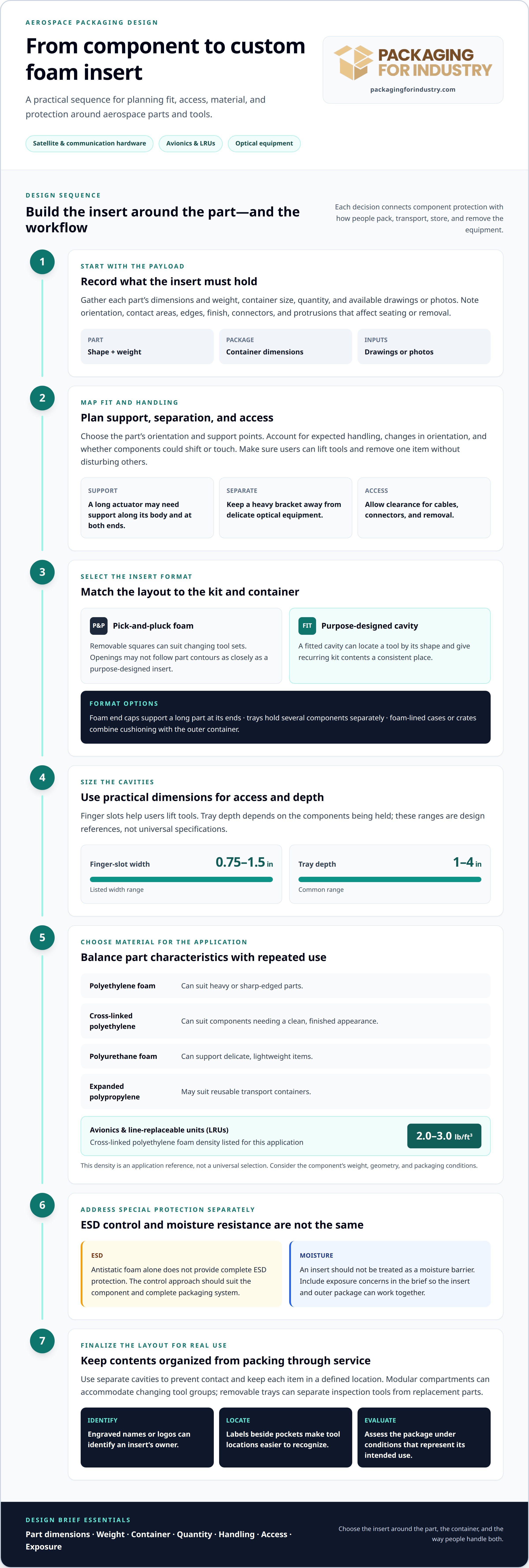
Custom foam inserts for aerospace components are designed around the part, not a standard cavity pattern. The designer considers orientation, contact areas, cavity depth, weight, and removal access. A long actuator, for example, may need support along its body and at both ends. A circuit assembly may need a shaped cavity that keeps neighboring parts apart. This approach matches the insert to the component and how it will be handled.
Pick-and-pluck foam has removable squares that users can take out to create cavities. It can suit changing tool sets, but the openings may not follow a part’s contours as closely as a purpose-designed insert. A fitted cavity can locate a torque wrench by its handle and head, while separate pockets keep sockets from contacting one another. For an aerospace kit with recurring contents, a fixed layout also gives each item a consistent place.
Providers compare insert formats against the component, container, and workflow. Foam end caps can support a long part at its ends, while a tray can hold several smaller components in separate cavities. A foam-lined case or crate combines cushioning with the outer container, so access, interior dimensions, and loading sequence matter. Finger slots help users lift tools; listed widths range from 0.75 to 1.5 inches. Tray depths commonly range from 1 to 4 inches.
Choose material based on the part’s weight, edges, finish, and use. Polyethylene foam can suit heavy or sharp-edged parts. Cross-linked polyethylene foam can suit components that need a clean, finished appearance. Polyurethane foam can support delicate, lightweight items, while expanded polypropylene may suit reusable transport containers. A satellite bracket with exposed edges, for example, needs different support from a lightweight optical cover. The design should also account for repeated handling and cavity wear.
Antistatic foam and moisture control are separate considerations. Antistatic foam alone does not provide complete ESD protection for an aerospace component or its packaging system. For electronic parts, the ESD-control approach should suit both the component and the complete packaging system. Moisture resistance is also a distinct requirement: an insert should not be treated as a moisture barrier. Include exposure concerns in the design brief so the insert and outer package can work together.
Fitted cases help keep equipment together during transport and between workstations. Modular compartments can work well when a kit contains changing tool groups. For example, a removable tray for inspection tools can sit above a separate compartment for replacement parts. Engraved names or logos can identify an insert’s owner, while labels beside pockets make tool locations easier to recognize. These markings help when several kits share a bench or storage area.
Before cutting, a packaging provider uses part dimensions, weight, container size, quantity, and available drawings or photos to plan the layout. The design should account for orientation changes, expected handling, and whether components can shift or touch. Aerospace packaging can then be evaluated under conditions that represent its intended use. For Los Angeles aerospace operations, aerospace packaging planning can connect component protection with the realities of transport and shop-floor access. The key takeaway is simple: choose the insert around the part, the container, and the way people handle both.
Industries Served: Satellite and Communication Hardware
Satellite payloads combine components with different shapes, surfaces, and handling needs. A communication package might contain an antenna assembly, a transceiver, and supporting hardware. Separate foam pads can layer items or protect contact surfaces inside the package, helping prevent components from rubbing together during handling. For a satellite assembly, plan for the payload’s orientation and how technicians will access each item. Optical equipment needs particular care around exposed lenses and other precision surfaces. A cavity layout can keep these surfaces clear of adjacent parts while supporting the equipment in transit.
Include impact, vibration, and changes in orientation in the packaging brief for aerospace parts. A communications module shipped in a case may experience different movement from hardware transferred between work areas. Use those handling conditions to plan support and separation. For example, a payload with a delicate optical unit and a heavier mounting bracket may need distinct cavities, with foam pads to keep the bracket away from the optical equipment. The interior should also let users remove one component without disturbing the others. These choices connect the payload’s configuration to how it will be packed and handled.
Optical equipment can include lenses, mirrors, sensors, and assemblies that need controlled placement. A custom-fit cavity follows the equipment’s profile and provides clearance around sensitive surfaces. Optical scanning can capture an item’s contours for a fitted layout; larger items can be engineered manually for a close fit. The design can also account for cables, connectors, and protrusions that affect seating or removal. For example, a sensor assembly with a projecting connector needs a cavity that accommodates it rather than pressing against it. This contour-focused approach makes the insert specific to the payload.
Avionics and navigation systems often travel as line-replaceable units, or LRUs, that must remain organized for handling and service. Cross-linked polyethylene foam density for avionics and LRUs is listed at 2.0 to 3.0 pounds per cubic foot. That figure provides a reference for the described application, not a universal choice for every unit. The component’s weight, geometry, and packaging conditions inform material selection. A navigation module with attached connectors may need a cavity that supports its body while leaving access points unobstructed. Separating cables from the unit can also reduce tangling during unpacking.
Defense payloads may combine electronic assemblies, communications equipment, and mission-specific hardware. Their package design needs to reflect the required handling conditions and the contents’ configuration. Digital engineering information also requires attention. Custom Case Pros identifies NIST SP 800-171 as the compliance framework it uses to safeguard controlled unclassified information and digital defense schematics across its engineering networks. That statement describes Custom Case Pros’ stated approach. It is distinct from the physical packaging design, which addresses how the payload is held and protected.
Review the complete package, not just the foam cavity. The design brief should include the part’s dimensions and weight, container size, order quantity, and available drawings or photos. Describe expected impact, vibration, and changes in orientation as well. These details help shape a layout for satellite, optical, communication, or avionics equipment. Evaluate the finished package under handling conditions that represent its intended use, checking for shifting, contact between parts, and visible damage. This ties the protection plan to the payload’s actual journey.
Benefits: 5S Lean Manufacturing and Tool Organization
In 5S Lean manufacturing, an organized tool station supports consistent work by giving each item a defined place. A fitted foam layout makes missing tools easier to spot because empty cavities remain visible. For example, a technician opening a maintenance kit can quickly see whether the torque wrench, inspection mirror, and socket set are present. That visual control can help reduce time spent searching and keep the work area focused on the task.
The five 5S practices are sort, set in order, shine, standardize, and sustain. Foam layouts can support each practice in practical ways. A team can sort out obsolete tools, arrange frequently used items within easy reach, and return each tool to its outline after use. A clean insert can also make residue or debris easier to notice during routine workstation checks. The layout then becomes a repeatable reference, rather than relying on each worker’s memory.
- Sort: Separate tools used for a specific task from unrelated equipment, such as keeping inspection tools apart from repair tools.
- Set in order: Assign each item a shaped cavity, with frequently used tools placed near the tray opening.
- Shine: Keep foam and tools clean so residue or damage stands out during checks.
- Standardize: Use the same arrangement across matching kits or workstations.
- Sustain: Return tools to their assigned cavities after each job and review the layout during regular work routines.
In a manufacturing cell, one insert might organize a caliper, gauges, and drivers used to adjust equipment. A second tray can hold replacement fasteners and small service parts. Keeping the groups separate helps technicians return items to the right place and gives supervisors a consistent visual reference when checking workstation readiness. Design the layout around the task sequence so the first tool needed is accessible without moving equipment used later.
Tool organization also supports handoffs between shifts. When an outgoing technician returns each wrench to its marked cavity, the next person can spot missing items before starting work. Labeled positions can distinguish similar-looking tools, such as different drivers or measuring instruments. Engraved labels or clear outlines can help. For shared equipment, a dedicated tray can move between a workstation and service area while keeping the contents together.
Foam inserts can make an organized workstation more practical when tools have different sizes or shapes. A large cavity for a bulky instrument can sit beside smaller pockets for bits, adapters, or protective caps. Separating delicate measuring equipment from heavier hand tools helps prevent contact during storage. The insert’s arrangement can also account for removal access, so users can lift a tool without shifting adjacent items. Manufacturing packaging needs often involve coordinating protection with the daily movement of tools and components.
Consistency matters when work is repeated. If multiple stations use the same insert arrangement, employees can recognize tool locations when moving between cells. A standard layout can also simplify training: a supervisor can point to each cavity and explain which tool belongs there. When a process changes, update the foam layout to match. This keeps the physical organization aligned with current equipment and procedures instead of preserving an outdated tool set.
For aerospace maintenance teams, a fitted tool tray can support both accountability and efficient setup. A technician can scan the cavities before work, return tools as tasks finish, and identify an empty space during closeout. That simple visual check does not replace formal inventory controls, but it gives the workstation a clear, repeatable organization method. Used consistently, a well-planned foam layout helps connect 5S principles with the real handling needs of manufacturing teams.
Packaging For Industry (PFI): Foam Packaging
Packaging For Industry (PFI) helps aerospace teams align component protection with recurring packaging needs. As a Los Angeles packaging supplier, PFI offers foam packaging and custom packaging design services for parts that need more than standard cushioning. A satellite instrument, for example, may need a dedicated insert to organize components inside a shipping package while keeping them accessible during work. PFI also offers stretch film and vendor managed inventory (VMI) for packaging to support related packing and inventory needs.
Custom design is useful when a component’s geometry, surface, or work sequence calls for a tailored layout. PFI’s design services include free prototypes to assess product fit before full rollout. A prototype can show whether an aerospace part sits correctly, whether the cavity allows removal, and whether the layout suits the intended container. This is particularly useful for a new part, a changed configuration, or a packaging process that needs to accommodate several components.
Give the design team practical starting details: component dimensions and weight, container size, order quantity, and drawings or photos, if available. Describe how parts are packed, moved, stored, and accessed. For example, a team may need to separate a delicate assembly from heavier tools or make key items easy to retrieve at a workstation. These details connect insert design to the package’s actual purpose, rather than treating foam as a standalone material.
PFI’s foam packaging can be considered as part of a broader packaging setup. For foam packaging in Los Angeles, a custom insert can protect and organize items within a container, while Stretch Film helps secure packaged loads for handling and transport. The two serve different functions. A manufacturer shipping boxed aerospace components may use fitted foam inside the package, then apply stretch film to stabilize grouped cartons on a pallet. Choosing the right combination depends on the product, packaging format, and movement through the operation.
Consistent supply matters when packaging is used repeatedly. PFI’s vendor managed inventory for packaging supports businesses seeking a managed approach to packaging stock. It can suit an aerospace operation that regularly uses foam packaging and stretch film in production or distribution. Just-in-time inventory management and packaging kitting can also align packaging supply with operational timing or assembly requirements. The right combination depends on how the facility uses and replenishes materials.
For aerospace companies in Los Angeles, Orange County, and San Diego, start by defining the packaging problem. Is a component shifting in transit? Does a workstation need a consistent place for each part? Are multiple packaging materials adding purchasing or inventory work? These details help focus a discussion about design, foam packaging, stretch film, or inventory support. They keep the solution centered on reducing damage, organizing work, and improving supply without adding unnecessary complexity.
Share the part or packaging challenge you need to address, such as a new component, a revised container, or recurring material requirements. Packaging For Industry can discuss the relevant packaging options for your operation. For packaging delivery in Los Angeles or a custom foam packaging quote, contact Packaging For Industry (PFI).
Frequently Asked Questions
How should a packaging provider select materials to reflect component requirements?
Compare the component’s surface finish, expected reuse, and handling environment before selecting foam. For custom foam inserts for aerospace components, a coated instrument may have different contact requirements from an unfinished tool. Consider how the insert will be stored between uses and whether the component requires clean handling. Documenting these requirements keeps material selection tied to the actual application.
What information is needed for an aerospace foam insert quote?
Along with part and package details, specify whether the project includes a prototype, a production run, or both. Include the current drawing revision and note planned design changes that could affect the insert. For a recurring kit, state whether each order uses the same configuration. This separates initial design work from repeat quantities and gives the design team a clear basis for preparing a quote.
What information should a packaging provider capture in an aerospace foam insert specification?
Record the part number, drawing revision, and any customer-specific acceptance criteria alongside the insert design. For custom foam inserts for aerospace components, the specification can also define cavity labels, identification markings, and approval steps for design revisions. These controls help purchasing, engineering, and production teams work from the same version. They are especially useful when a component changes while older packaging is still in circulation.
What transit risks should a packaging provider assess in an aerospace packaging brief?
Include package stacking, handoffs between facilities, and repeated opening and closing in the risk review. A container may remain intact while its contents move during loading, transfer, or field use. For example, a reusable case may protect an assembly on its first trip but need inspection after repeated deployments. Mapping each stage can reveal where packaging damage, loose components, or difficult unpacking might disrupt operations.
What types of foam inserts are used to package aerospace parts?
Common options include die-cut inserts, end caps, pads, and foam-lined boxes or crates. The right type depends on whether the package holds one component, several related items, or a replacement kit that changes over time. A fixed production configuration may suit a dedicated insert, while a service operation may prioritize easy access to components. The package specification should also state when worn or revised inserts need replacement.
Which foam materials meet aerospace packaging requirements for shock absorption and cleanliness?
No single foam type suits every aerospace application. Define acceptable surface contact, cleanliness expectations, and whether the insert will be reused. The design team can evaluate foam options against those requirements and the component’s packaging conditions. For sensitive assemblies, include the expected inspection process after unpacking. This connects material selection with both protective performance and the condition required when the part reaches its work area.