
What if the packaging protecting your outdoor equipment is also adding avoidable freight cost? Bulky products, irregular shapes, and loose components can make a standard box a poor fit, increasing the risk of shipping damage or taking up more space than necessary. Custom packaging for outdoor equipment manufacturers starts with the product and how it moves through packing, handling, and shipping.
It’s reasonable to weigh custom designs against stock materials. The right choice depends on the equipment’s dimensions, protection needs, shipping method, and order pattern. This guide explains how to specify packaging that balances product protection with efficient freight use, without adding materials that don’t serve a purpose.
You’ll learn what to assess before choosing corrugated boxes, protective foam, crates, or a coordinated combination. You’ll also see how packaging reviews can help identify opportunities to address damage and packaging costs, and how to evaluate a supplier’s design support, samples, and ability to support recurring orders through options such as vendor managed inventory or just in time replenishment. The goal is a practical specification that fits your equipment, shipping workflow, and supply needs.
Key Takeaways
- Custom packaging for outdoor equipment manufacturers should be specified around each product’s dimensions, packing configuration, and shipping profile.
- Use a step by step review, from defining the product and mapping the shipment to assessing materials and reviewing a prototype.
- Compare stock and custom packaging for fit, protection, material combinations, storage footprint, and ease of reordering.
- Prepare a comparable quote request with product dimensions, weight, photos or drawings, packing configuration, and known shipping requirements.
- Assess a supplier’s design support, coordinated materials, prototype process, and options for managing recurring orders.
Custom Packaging for Outdoor Equipment Manufacturers: Start With the Shipping Problem
A damaged product, a box that won’t accommodate its components, or a shortage of packaging can delay shipments and interrupt production. For procurement and operations teams buying packaging in commercial quantities, start by defining the shipping problem rather than selecting a box by habit. Outdoor equipment varies widely in size, shape, and handling needs, so one format may not suit every product.
Assess the full job: protection during packing and transit, fit with the shipping method, ease of handling, storage space, and dependable replenishment. A long component, for example, may need a different arrangement from a compact product shipped with removable accessories. The functions of packaging and labeling include physical protection and communicating information. The packaging also needs to work with your team’s day to day packing and shipping process.
Which outdoor equipment details should buyers assess first?
Start with product dimensions, weight, shape, and fragile or finished surfaces. Note parts that could scratch, crush, or shift, along with components that need separate protection. For athletic equipment makers like FiberSport USA, uniquely proportioned gear such as vaulting poles and field implements requires packaging built around exact dimensions. Then map how the product moves through packing, storage, handling, and shipment. Photos or drawings can help a packaging supplier understand unusual contours and how accessories fit with the main item.
Consider the handling steps your team uses and the shipping requirements you already know. This gives a supplier a practical basis for discussing corrugated boxes, foam packaging, crates, or a coordinated combination. PFI’s custom packaging design services include packaging reviews and design work around product specific needs.
When does standard packaging stop being a practical fit?
Compare stock box sizes with the product’s actual dimensions and the space needed for protective materials. If the product moves around inside the package, doesn’t fit cleanly, or requires workarounds during packing, stock packaging may not be serving the operation well. Excess space can affect storage and freight efficiency, while an inadequate fit may leave vulnerable areas exposed.
Custom packaging for outdoor equipment manufacturers may be worth evaluating when poor fit, repeated damage, or awkward packing creates an ongoing operational concern. Custom sizes and coordinated materials can address needs that standard packaging doesn’t cover. For a one time shipment or unusual project, stock packaging may remain practical. Recurring production makes repeatability and reliable supply important parts of the specification.
PFI supplies custom and stock industrial packaging and serves Southern California customers with local next day delivery. Discuss the product, shipment, order pattern, and storage constraints with a supplier before requesting a quote. That context helps buyers compare packaging options for protection, operational fit, and recurring supply, rather than box price alone.
How to Specify Protection for Outdoor Equipment in Transit
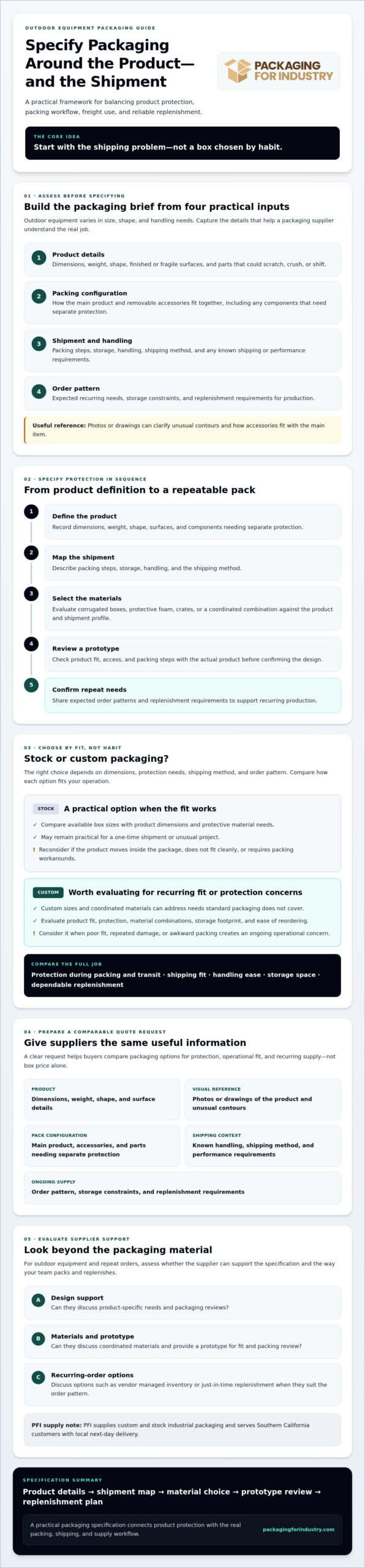
A useful packaging specification connects the product to the conditions it will actually encounter. Work through the decisions in sequence, and give the packaging supplier your known handling and shipping requirements rather than relying on assumptions about what a package should withstand.
- Define the product: Record dimensions, weight, shape, surfaces, and any parts that need separate protection.
- Map the shipment: Describe packing steps, storage, handling, and the shipping method.
- Select materials: Match the box and cushioning approach to the product configuration and shipment profile.
- Review a prototype: Check fit, access, and packing steps with the product before confirming the design.
- Confirm repeat needs: Share expected order patterns and replenishment requirements for recurring production.
This process gives custom packaging for outdoor equipment manufacturers a practical foundation: protection suited to the equipment and a format your team can pack consistently. If your company has specific performance or compliance requirements, provide them to the supplier and confirm what evidence is needed. Don’t assume a design has passed a test or meets a standard unless that has been verified.
Match corrugated packaging to product size and shipment needs
Choose box dimensions and construction based on product weight, configuration, and shipping method. A package holding a single assembled item may need a different layout from one carrying a product and removable components. Partitions, pads, dividers, or inserts can separate parts and help keep them positioned during transit. Review custom packaging design services when stock formats don’t address the product’s fit or packing needs.
Use foam and cushioning where product-specific protection is needed
Identify contact points before selecting foam or other cushioning. A finished surface may need separation from adjacent parts, while a projecting component may need support to limit movement. Depending on the design, custom inserts, end caps, pads, or foam lined packaging may be appropriate. Evaluate these options in a prototype and consider whether each element provides useful protection or adds unnecessary material.
Material choices can also reflect company goals for responsible resource use. The EPA’s sustainable packaging principles offer context for considering material use alongside protection and operational fit. The right balance depends on the product and shipping requirements you provide.
Once the material combination and packing configuration are clear, share them with a supplier to request a packaging quote based on your actual application.
Custom or Stock Packaging: Compare Fit, Freight, and Repeat Use
Custom packaging isn’t automatically the better choice. A stock box may already fit the product, protect it through the planned shipping process, and suit your team’s packing routine. Compare the full operational fit before deciding. Packaging cost is only one factor, alongside product protection, freight dimensions, storage, and reliable reordering. The right option for custom packaging for outdoor equipment manufacturers depends on the product and how often you ship it.
| Consideration | Stock packaging | Custom packaging |
|---|---|---|
| Fit | Works when available sizes suit the product and protective materials. | Can address unusual dimensions, shapes, or product configurations. |
| Protection | May meet needs if the product stays secure with standard cushioning. | Can be designed around vulnerable areas or components needing separation. |
| Material combination | Uses available formats and materials. | May coordinate corrugated packaging with foam or crates when one material isn’t enough. |
| Storage footprint | Depends on available sizes and how they fit your storage space. | Can be sized to the application, but confirm storage and order quantities with your supplier. |
| Reordering | Check stock availability against your usage and replenishment pattern. | Confirm repeat order details and supply arrangements before adopting a custom format. |
When can stock corrugated boxes meet the requirement?
Stock corrugated boxes can be practical when a product fits available dimensions and standard protective materials support the packing process. Confirm that the chosen format works with your actual shipping method and handling steps, not just the product at rest. Then check that the packaging supplier can support your recurring order pattern. A suitable stock option can avoid unnecessary design changes while meeting day to day needs.
When should a manufacturer evaluate a custom packaging system?
Consider custom dimensions if standard formats leave avoidable void space, complicate packing, or fail to hold the product securely. Review freight implications with your carrier or shipping team. Package dimensions can affect billable weight or trigger surcharges, but the result depends on the carrier’s rules and shipment details. Don’t assume a custom box will reduce freight costs without comparing actual package dimensions and the shipping profile.
For products that need more than a box alone, coordinated corrugated packaging, foam, and crates may provide a better fit for the shipment. PFI offers custom design support and integrated packaging options. Review its custom packaging design services when evaluating a system for recurring shipments. Use prototypes or samples to check fit and packing steps before confirming repeat use.
Prepare a Custom Packaging Quote Request That Buyers Can Compare
A clear quote request helps suppliers scope the same project and gives your team a fair basis for comparing options. Share enough detail to evaluate product protection, packing workflow, order volume, and delivery needs. If you’re seeing damage, excess packaging, limited storage space, or freight concerns, describe what’s happening without assuming the cause. This gives a supplier useful context to identify potential ways to reduce packaging costs without compromising requirements.
Include these details in your request:
- Product information: Dimensions, weight, photos or drawings, and a sample if available. Note whether custom sizes are available or needed.
- Packing configuration: What goes in each package, how components are arranged, and which parts need separate protection.
- Shipping and handling: Shipping method, known requirements, and relevant handling constraints.
- Order profile: Estimated quantities and reorder frequency, so suppliers can provide relevant bulk packaging pricing.
- Delivery and timing: Delivery locations, local packaging delivery needs, and desired launch timing.
- Current concerns: Damage patterns, material waste, storage pressure, or freight issues your team wants reviewed.
Providing these details together helps suppliers scope options and makes quote comparisons more useful. Ask each supplier to clarify what’s included, how proposed materials address your needs, and how repeat orders will be handled. That gives procurement and operations a clearer basis for comparing packaging pricing beyond the unit cost.
What information helps a supplier scope custom packaging?
Identify sensitive surfaces, projecting parts, and components that could shift or contact one another. Describe the packing workflow and any steps or equipment that constrain the design. Separate confirmed requirements, such as a known shipping method, from preferences you’d like the supplier to evaluate. This keeps the quote grounded while allowing the supplier to recommend practical alternatives.
How can prototypes and samples reduce design uncertainty?
A prototype or sample lets your team check product fit, component placement, and packing steps before broader production. Ask whether samples are available, what the review process involves, and which project terms apply. Confirm that the sample represents the intended product configuration and shipping use. If the product or packing method changes, review whether the design needs another evaluation.
Choose a Custom Packaging Supplier for Outdoor Equipment and Repeat Orders
A packaging design only works long term if the supplier can support the project beyond the first order. For custom packaging for outdoor equipment manufacturers, evaluate design capability, material coordination, communication, and how recurring orders will be managed. These factors affect product protection, packing efficiency, storage needs, and supply reliability.
What should manufacturers look for in a packaging supplier?
Confirm that the supplier can coordinate relevant products, such as corrugated boxes, protective foam, crates, and cushioning materials, when an outdoor product needs more than one type of protection. Ask how design reviews, prototypes or samples, order changes, and repeat requirements are handled. Compare packaging pricing with fit, packing workflow, and reliable replenishment rather than choosing on unit price alone.
Check whether a stocking program or just in time replenishment could suit your usage pattern. Ask what items and delivery arrangements are available for your location. These options can help manage recurring packaging needs while supporting production and shipping schedules.
How can PFI support a custom packaging project?
Packaging For Industry supplies custom and stock corrugated boxes, foam packaging, crates, and related industrial packaging. Its design support includes CAD/CAM, packaging reviews, prototypes and samples, and cost reduction analysis. Coordinating materials around the product may help manufacturers address protection and packing requirements without adding packaging that doesn’t serve a purpose.
PFI serves manufacturers and other industrial customers, including businesses in aerospace, electronics, medical device manufacturing, and warehousing and logistics. The company serves Southern California, with local next day delivery available throughout the region, and supports nationwide customers through distribution and manufacturing partners. Confirm project options and delivery arrangements for your location and order.
Share your product, shipping, and repeat order requirements to discuss packaging options suited to your operation.
Put a Reliable Packaging Plan in Place
Effective custom packaging for outdoor equipment manufacturers starts with the product and its shipping profile. Compare stock and custom formats based on fit, protection, freight considerations, storage, and repeat order needs. A clear quote request, supported by product details and known shipping requirements, helps suppliers recommend options that fit your operation.
PFI supports custom and stock packaging, with design services that include CAD/CAM, prototypes, samples, packaging reviews, and cost reduction analysis. Corrugated boxes, foam, crates, and other materials can be coordinated as part of an integrated solution. Local next day delivery is available throughout Southern California. Confirm project requirements and delivery arrangements for your location.
With clear specifications and a dependable supply plan, your team can work toward reducing shipping damage, avoiding unnecessary packaging, and keeping production supplied. Take the next step with a packaging plan built around your equipment.
Frequently Asked Questions
How do outdoor equipment manufacturers choose custom packaging?
Start with product dimensions, weight, configuration, vulnerable areas, and shipping method. Then assess how the item is packed, handled, stored, and replenished. These details help a supplier evaluate corrugated boxes, foam, crates, or a combination. For custom packaging for outdoor equipment manufacturers, a design review or sample can help confirm fit before production. Provide any performance requirements and verify they’re addressed before approving the packaging.
Is custom packaging better than stock packaging for outdoor equipment?
Not always. Stock packaging may work if the product fits an available size and receives adequate protection through your shipping process. Custom packaging is worth evaluating when unusual dimensions, multiple components, or handling requirements aren’t well served by stock options. Compare fit, protection, packing workflow, storage needs, and repeat supply before deciding. The right choice meets operational requirements without adding unnecessary material or complexity.
What information do I need for a custom packaging quote?
Provide product dimensions and weight, photos or drawings if available, the packing configuration, shipping method, and known handling or protection requirements. Include estimated order quantities, reorder frequency, delivery locations, and timing needs. Describe any damage, packaging waste, storage pressure, or freight concerns your team has observed, without assuming the cause. Complete information helps a supplier scope relevant options and makes it easier to compare quotes consistently.
Can custom packaging reduce shipping damage?
Packaging designed around a product can address fit, movement, and vulnerable areas more directly than a generic format. The outcome still depends on the product, materials, packing process, and shipment conditions. Share damage details and handling information with the supplier, then review the proposed design and a sample where appropriate. Don’t assume a specific reduction in damage without evidence from your own project and shipping experience.
What packaging materials can protect bulky or fragile outdoor equipment?
Depending on the product and shipment, manufacturers may evaluate corrugated boxes, foam inserts, cushioning materials, or crates. A combination can help separate components and address vulnerable contact points. For example, a box may provide the outer structure while foam positions a component inside. The right design depends on product dimensions and handling needs. Share drawings or a sample with the supplier, then review the proposed packaging before ordering.
How do I compare custom packaging suppliers?
Compare suppliers on design support, material coordination, quote clarity, sample review, repeat order support, and delivery coverage. Ask how they manage design changes and recurring requirements. Evaluate packaging pricing alongside fit, packing workflow, storage needs, and supply reliability, rather than focusing only on unit price. PFI serves industrial customers in Southern California and supports nationwide customers through partners. Confirm options and delivery arrangements for your location and project.
Can one supplier provide packaging materials for repeat production orders?
Yes, some suppliers can support recurring packaging needs through stocking programs or planned replenishment. Ask which items can be included, how inventory is reviewed, and how reorder levels are determined. PFI offers vendor managed inventory and just in time inventory management for packaging. These services may help organize repeat supply, but program fit, product availability, and delivery arrangements should be confirmed for your operation and location.