
A machinery crate should be designed around the load, not selected off the shelf. Heavy-duty machinery crating services in Santa Fe Springs need to account for equipment dimensions, weight, and vulnerable components, then cushion and secure the load for transport. The goal is a stable package that supports safe handling and helps protect the machinery in transit.
Shipping industrial equipment takes more than putting it in a box. Packaging must account for the machine’s shape, weight, and handling requirements, with each step coordinated to protect the equipment and keep the shipment moving smoothly.
This guide explains what custom and on-site crating can involve, how packing, palletizing, and boxing fit into the process, and what to consider when preparing machinery for shipping. You’ll also learn how Packaging For Industry’s custom packaging design services and protective packaging solutions can support equipment protection and supply reliability.
Key Takeaways
- Match crate design to the machinery’s dimensions, weight, fragility, and handling needs rather than relying on a standard size.
- Plan cushioning and securement inside the crate to help limit movement and reduce transit damage.
- For machinery that is difficult to move, on-site crating can keep preparation close to the equipment and its operating environment.
- Coordinate packing, palletizing, boxing, and shipping as one process so each packaging layer supports safe handling and transport.
- Explore foam packaging when equipment needs tailored cushioning as part of its broader packaging plan.
What are Crating Services?
Crating services plan a protective structure around machinery and secure the equipment for handling and transport. The process starts with measurements and load details, then matches the crate construction and internal supports to the machine.
Crate Design for Weight and Dimensions
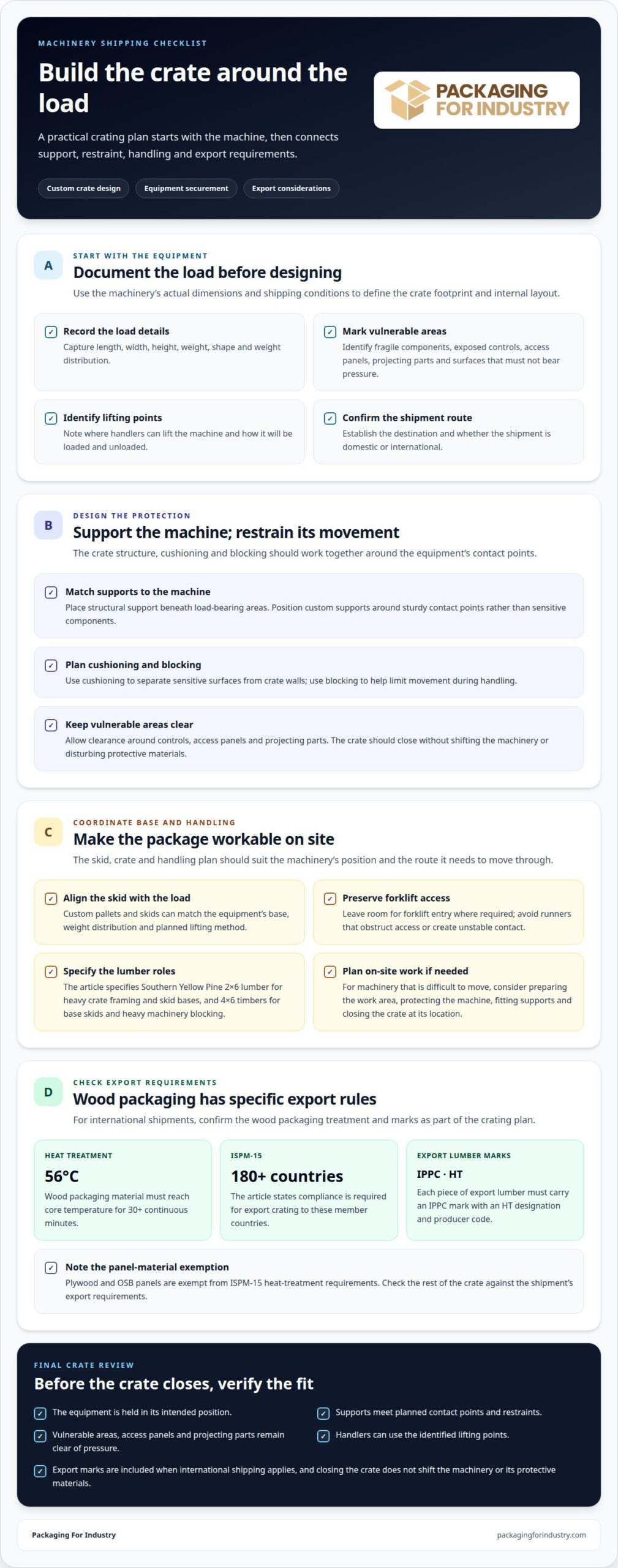
Custom crate design accounts for the machinery’s length, width, height, weight, shape, and fragile components. A tall control cabinet, for example, needs different support and restraint than a compact machine with a low center of gravity. Record the equipment’s dimensions and identify its lifting points before setting the crate footprint.
When comparing heavy machinery crating and shipping companies in Santa Fe Springs, look at how each plan addresses the load’s dimensions, crate support, internal restraint, and any export marking needed. These details reveal whether the packaging is designed for the specific equipment, not just its outside measurements.
Weight distribution affects the crate base and how the load rests inside it. Note projecting parts, access panels, and surfaces that must not bear pressure. These details help determine where blocking and cushioning belong while keeping the machinery stable for handling.
Heavy-Duty Industrial Equipment Crates
Heavy-duty crates protect industrial equipment with a fitted structure and internal securement. Their design should reflect the machine’s weight distribution, contact points, and handling requirements. Custom supports can leave room for cushioning and position contact around sturdy areas, rather than sensitive components.
Construction decisions also depend on whether the shipment travels domestically or internationally. For international trade, wood packaging material must be heat-treated to a core temperature of 56°C for 30+ continuous minutes. ISPM-15 compliance is required for export crating to 180+ member countries, and each piece of export lumber must carry an IPPC mark with an HT designation and producer code.
For heavy equipment crating services in Santa Fe Springs, define the service area by the equipment’s staging or pickup location, its destination, and the route. The Santa Fe Springs service-area page provides the local area reference.
A custom crating process for heavy industrial equipment starts by documenting dimensions, weight, vulnerable parts, and lifting points. The design then specifies crate supports and internal restraint before the crate is built to those requirements. A final review checks that the equipment is secure and that export marks are included when international shipping applies.
During the final review, check that the equipment is held in its intended position, supports meet the planned contact points, and restraints leave vulnerable areas clear. Make sure access panels and projecting parts are not under pressure, and that handlers can use the identified lifting points. The crate should close without shifting the machinery or disturbing its protective materials.
Plywood and OSB panels are exempt from ISPM-15 heat-treatment requirements. That exemption is useful when selecting panel materials, but the rest of the crate should still be checked against the shipment’s export requirements. Keep the material choice clear in the crating plan, and verify that the completed package matches the handling needs identified at the start. This helps align the crate’s construction with the equipment and its intended route.
Custom crating and packaging
Custom crating combines a protective enclosure with supports designed for the machinery’s shipping position. Record the equipment’s contact points, exposed controls, and surfaces that must remain clear. For example, a machine with a protruding control panel needs internal clearance, while its base still requires stable support. This information guides the crate layout and helps prevent pressure on vulnerable components.
Packaging details matter as much as the crate itself. Cushioning can separate sensitive surfaces from crate walls, while blocking helps limit movement during handling. The plan should also account for loading and unloading. Identify forklift access, lifting points, and the required orientation before construction so the finished package suits the actual handling process.
On-site custom crating can suit machinery that is difficult to move before packaging. Working at the manufacturing location allows the crate to be assembled around the equipment’s position and access conditions. The process typically involves preparing the work area, protecting the machine, fitting supports, and closing the crate after securement. Clear floor access and a planned handling route help coordinate each step.
Custom pallets and skids provide a base that matches the load and its movement needs. Southern Yellow Pine 2×6 lumber is specified for heavy crate framing and skid bases; 4×6 timbers are specified for base skids and heavy machinery blocking. Those members serve different roles, so the design should place structural support beneath the load and blocking where the equipment needs restraint.
For heavier machinery, the skid layout should align with the equipment’s base and planned lifting method. A machine with uneven weight distribution may need support beneath its stronger load-bearing areas. Leave room for forklift entry where required, and avoid placing runners where they obstruct access or create unstable contact. These decisions connect crate construction to practical warehouse handling.
Reviews of industrial machinery crating companies near Santa Fe Springs are most useful when they describe the equipment, on-site constraints, and shipping outcome. Comments about communication and coordination can also show how the work fit a manufacturing schedule.
Before requesting a packaging quote, gather the machine’s dimensions, weight, photographs, pickup conditions, and destination requirements. This project brief helps clarify the crate, skid, cushioning, and on-site work needed. Request a packaging quote with those details to support a more informed packaging plan.
On-site crating
On-site crating keeps machinery at its operating location while packaging is prepared around it. This can suit a production machine that is anchored, difficult to move, or connected to surrounding equipment. First assess its position, access routes, and handling points. These conditions shape the plan before materials are brought to the crating area.
Start with a site review. Record the equipment’s dimensions, exposed components, lifting points, and surfaces that need protection. Clear space for crate assembly and confirm how the packed load will leave the building. A machine beside a production line, for example, may need a planned route around other equipment and through the available doorways.
Site preparation affects packaging quality and production coordination. Keep the work area clear of stored materials, moving equipment, and routine traffic. Mark the machine’s position and separate loose components, cables, or accessories that need their own protection. If a control panel projects from the main frame, allow for its clearance before closing the crate. These steps help prevent last-minute changes during assembly.
On-site work can also suit sensitive industrial equipment that benefits from less movement before it is secured. A precision pump assembly, for example, may have exposed fittings or aligned components that need careful handling. The packaging plan should distinguish surfaces to protect from areas suitable for support or restraint, while keeping operating features clear.
Off-site crating and pickup may suit equipment that can be moved safely to a separate packaging location. This can work when the machinery is accessible, removable from its installation, and ready for transport before crating. Plan for its existing supports, loading method, and destination. Equipment that needs disassembly or has limited access may require more preparation before it leaves the facility.
Use these practical factors to compare the two approaches:
- Equipment access: Check whether the machine can pass through doors, aisles, and loading areas.
- Handling needs: Identify lifting points, removable parts, and areas that must stay protected.
- Facility conditions: Consider available floor space and the effect of packaging work on nearby production.
- Shipment sequence: Align crating with pickup timing, loading access, and the equipment’s destination.
For Santa Fe Springs facilities, record the pickup location, site constraints, and shipment destination before choosing an approach. These details help determine whether the equipment should be crated in place or prepared for off-site work.
Packing, palletizing, boxing, and shipping
Preparing machinery for shipment means coordinating protection, the base, outer packaging, and loading access. A machine with removable tooling, for example, may need accessories secured separately and identified before packing. Clear identification helps receiving teams match each component to the correct equipment.
List everything shipping with the machine, including cables, guards, and detachable parts. Protect exposed surfaces, then position the equipment so its weight rests securely on the base. Add cushioning at contact points and check that restraints hold the load without pressing on sensitive components. Before closing the crate, confirm that loose parts cannot shift.
Boxing can protect smaller accessories within the larger shipment. Choose a box with room for both the parts and their cushioning, then label it clearly for receiving. For example, a maintenance kit should be easy to distinguish from machine controls or installation hardware. Keep shipping documents accessible but away from areas vulnerable to handling damage.
Palletizing prepares packaged machinery for movement through a warehouse or shipping area. The base should support the load’s footprint while keeping forklift entry clear. Industrial pallets and skids support the shipment, while blocking and crate construction help hold the equipment in position. Align runners with the machine’s supported areas without obstructing access.
Southern Yellow Pine 2×8 lumber is listed in lengths from 8’-20′ for crate base runners and machinery skids. Southern Yellow Pine 6×6 timbers are listed in lengths from 8’-16′ for heavy export skids and industrial cribbing. Match the base members to the equipment’s support points and planned handling. A compact machine and a long production line component may need different runner layouts.
Knock-down crating uses components that can be assembled around a load and, when appropriate, disassembled afterward. This can make crate parts easier to store before use. Plan the panels, fasteners, and assembly sequence so the completed crate closes securely around the packaged equipment. Keep components organized for an orderly packing process.
Before dispatch, inspect the crate closure, base, labels, accessories, and forklift access. Coordinate pickup with shipment readiness, and share package dimensions and handling orientation with the receiving team. This helps warehouse staff prepare the right unloading area and equipment.
For machinery shipments from Santa Fe Springs, gather the package configuration, destination, and handling requirements before arranging transport. Request a packaging quote with those details to support a practical packing and shipping plan.
Crating machinery and industrial equipment
Industrial equipment presents distinct packaging challenges because its shape, contact points, and transport orientation vary. A CNC machine, for example, may have a rigid base alongside exposed controls and removable accessories. The crate plan must protect those components while supporting the machine through loading, transit, and unloading. Plan for the equipment and its accessories as one shipment, not as interchangeable cargo.
Start with a machine-specific inspection. Note parts that can move, surfaces that must stay clear, and components that should ship separately. Review the equipment’s lifting instructions and identify approved contact points. A forklift or hoist must move the load without pressing on control panels, guards, or delicate fittings. Include these handling details in the crate layout before securing the equipment.
A packaged machine may experience repeated handling and movement during transport. Internal supports should restrain it without concentrating pressure on vulnerable areas. For instance, a motor assembly may need support under its frame, while a projecting shaft needs clearance and protection. Separate loose tooling, secure it independently, and label it for receiving staff.
Before closing the crate, use a final inspection sequence:
- Confirm orientation: Mark the intended upright position and keep labels visible.
- Check restraints: Make sure supports hold the machine without bearing on sensitive parts.
- Account for accessories: Secure cables, tooling, and removable guards in identified positions.
- Review handling access: Keep lifting points and forklift entry clear for loading and delivery.
Industrial equipment may need a different packaging approach from general freight such as furniture or boxed inventory. A production machine can have uneven weight distribution, fixed projections, or components that cannot tolerate contact. Crate design should reflect those conditions rather than simply enclose the machine’s dimensions. Plan for the machine’s route and handling, not just its storage.
For shipments from Santa Fe Springs, align the crate plan with the destination’s unloading setup. Confirm that the receiving facility can accept the package in its marked orientation and access its lifting points. This information may affect how the equipment is positioned and labeled before dispatch. A clear handoff helps warehouse teams move the shipment without improvising around the crate.
For heavy-duty machinery crating services in Santa Fe Springs, prepare a project brief with equipment photos, handling instructions, accessories, pickup conditions, and destination details. These specifics help translate the machine’s operating requirements into a package ready for transport.
Packaging For Industry (PFI): Foam Packaging
Packaging For Industry (PFI) supports machinery protection with foam packaging, including custom foam inserts and other cushioning solutions for sensitive equipment and components. Foam can help separate the machine from surrounding surfaces inside a crate. Pairing foam with a planned crate layout addresses specific contact points rather than treating every load the same.
For operations managing recurring shipments, PFI also offers Vendor Managed Inventory (VMI) and Just-In-Time (JIT) inventory management for packaging. These programs help coordinate packaging supply with production and shipping needs. Stretch film can also help secure packaged loads during handling.
Share your equipment and packaging requirements with Packaging For Industry (PFI) to discuss custom packaging support.
Plan the Next Machinery Shipment
Use your next shipment to establish a repeatable packaging plan. Document equipment handling requirements, packaging materials, and the information receiving teams need. This gives purchasing and operations a shared reference for future shipments and helps identify packaging changes that could improve consistency.
For heavy-duty machinery crating services in Santa Fe Springs, Packaging For Industry (PFI) can support the wider packaging plan with foam packaging, stretch film, and Vendor Managed Inventory (VMI) for packaging. These options can help address cushioning, load containment, and packaging supply coordination around your operation’s needs.
Bring equipment details and shipment requirements together to start a focused conversation about your packaging needs.
A clear plan is a practical foundation for protecting equipment and keeping shipments moving.
Frequently Asked Questions
What materials are used for machinery crates, and how much weight can they support?
Crates may use lumber framing with plywood or OSB panels, selected to suit the shipment’s protection and construction needs. No single weight capacity applies to every crate. Capacity depends on the complete design, including the base and assembled structure. For a useful assessment, provide the machine’s documented weight, plus the weight of accessories and anything packed with it. Also note whether the crate will be reused or exposed to moisture during shipping.
industrial machinery crating companies near Santa Fe Springs reviews
Reviews are most useful when they describe the equipment, on-site constraints, and shipping outcome. Comments about communication and coordination can also show how the work fit a manufacturing schedule.