
A packaging change can look like a purchasing win and still put line reliability at risk. Getting operations team buy-in for a packaging material change starts with the work itself, not just the unit price. Operations teams are right to question unfamiliar materials: even a small change can affect packing steps, labor, product protection, storage, or shipping. A convincing case shows how the full packaging system performs under real operating conditions.
This article explains how to build that case around measures operations recognizes, including packing time, material use, damage, freight impact, and workflow consistency. You’ll learn how to involve affected teams before choosing a replacement, compare total costs rather than procurement price alone, and set safeguards for a controlled pilot. PFI’s custom packaging design, packaging reviews, prototypes, and samples help teams assess proposed combinations of corrugated boxes, foam, stretch film, and other materials before broader adoption. From setting baseline measures to reviewing pilot results, the goal is a decision shared across procurement and operations, backed by evidence.
Key Takeaways
- Build the case around operational realities, including handling, line fit, product protection, and shipping, not just material price.
- Getting operations team buy-in for a packaging material change is easier when affected teams agree on evaluation criteria before selecting an option.
- Compare current and proposed materials using available records, and clearly separate measured results from estimates.
- Use a controlled pilot with a representative product or workflow to gather practical feedback without disrupting broader operations.
- Document the decision, remaining risks, responsibilities, and approved packing method before expanding the change.
Why Getting Operations Team Buy-In for a Packaging Material Change Starts on the Floor
Packaging is part of the production process, not just a line item on a purchase order. Operators handle it, supervisors manage line routines, warehouse teams store and move it, and shipping relies on it to protect products in transit. A material change can affect each handoff, even if the new option appears less expensive per unit.
A purchasing-led announcement can trigger resistance because it presents a decision before the people who use the packaging have assessed its effects. A different box, foam insert, or stretch film may require a new handling step, take up storage space differently, or raise questions about product protection. Treat those concerns as useful risk information, not obstacles to address after a selection has been made. Getting operations team buy-in for a packaging material change means involving users while options are still open.
Packaging connects procurement, operations management, and logistics, a relationship also reflected in Supply Chain Management. Bring affected teams into the discussion early. Operations buy-in means agreeing on the workflow, protection, and supply criteria a packaging change must meet before it moves forward.
Identify who the packaging change affects
Map the people who handle the material and those who approve its use. Operators can describe packing steps; supervisors can flag effects on line routines; warehouse staff can identify storage and replenishment concerns. Quality can explain protection requirements, procurement can compare purchasing terms, and shipping can share handling or transit issues.
Ask each group where the current packaging creates friction, and request observed examples rather than broad impressions. Does an operator need to reposition an insert? Does the warehouse team frequently move packaging to access other stock? Are damage reports connected to a particular packing or shipping handoff? Record the examples and identify who can validate them.
Give daily users a defined role in identifying workflow risks and participating in practical evaluations. Approvers should define decision criteria and confirm what evidence is needed. This keeps feedback connected to the work while clarifying approval responsibilities.
Describe the change without dismissing the current process
Start with the problem, not a verdict on the existing material. Describe what teams have observed, such as recurring handling difficulty, excess material left after packing, or a documented pattern of product damage. Don’t assume a material caused a problem until the team has reviewed the evidence.
Then explain what would change and what should stay consistent. A proposed custom box or foam configuration might alter protective components while keeping the packing sequence familiar. A stretch film change may affect wrapping supplies without changing how the load is prepared. PFI provides custom packaging design services, including design work, prototypes, and samples to help teams evaluate options.
Invite specific objections before recommending a test. Ask what could interrupt a shift, make packing less repeatable, complicate storage, or create a supply concern. Operations staff understand the conditions a packaging design needs to meet. Listening first helps turn a proposed change into a shared problem-solving process.
Build a Packaging Change Case Around Measures Operations Can Validate
A useful comparison accounts for more than a material’s unit price. It considers protection, line fit, handling, supply, and the full cost of using the packaging. To compare packaging pricing fairly, include operational effects alongside purchase costs. This helps teams assess whether a change could lower packaging costs without assuming the proposed option will perform better.
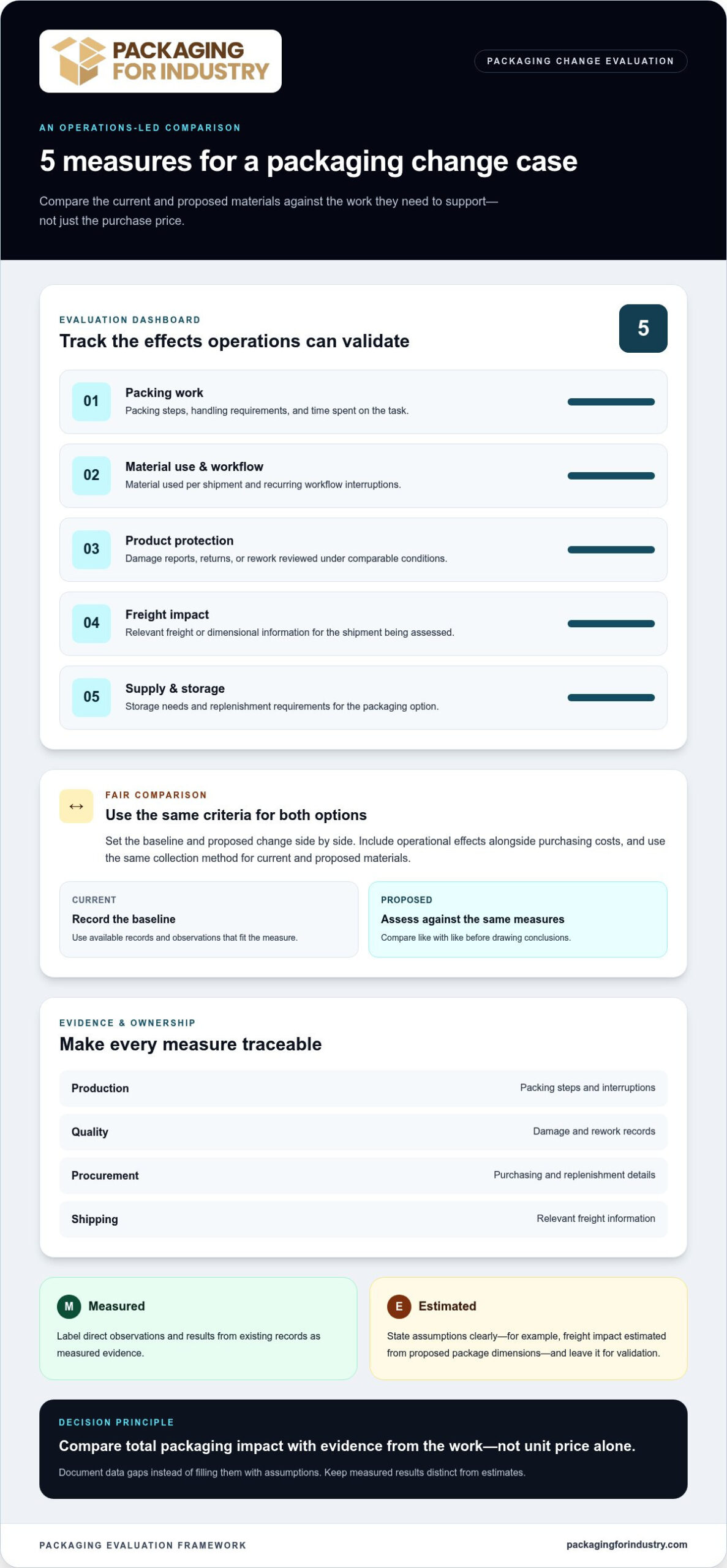
Before a pilot begins, assign each measure a data source and an owner. Production can document packing steps and interruptions, quality can review damage or rework records, and procurement can verify purchasing and replenishment details. Shipping can identify relevant freight information. This shared approach reflects the planning and communication discussed in Change Management in Manufacturing, while keeping the evaluation grounded in the facility’s actual work.
Choose measures that reflect the work
Select measures connected to the proposed change, then use the same collection method for current and proposed materials. For packaging for manufacturers, useful measures may include:
- Packing steps, handling requirements, and time spent on the task.
- Material use per shipment and recurring workflow interruptions.
- Damage reports, returns, or rework reviewed under comparable conditions.
- Relevant freight or dimensional information for the shipment being assessed.
- Supply considerations, such as storage needs and replenishment requirements.
Use existing records where they fit, and document gaps instead of filling them with assumptions. If packing time comes from direct observation, label it as measured. If freight impact is estimated from proposed package dimensions, state the assumption and leave it for validation. This distinction helps operations see what the evidence shows and what still needs testing.
Present a transparent current-versus-proposed comparison
Put both options side by side using the same criteria. Include the baseline, proposed change, evidence source, validation owner, assumptions, and unresolved questions. If a proposed custom box changes how a product is positioned, for example, record the current packing steps separately from the expected steps. Note any custom sizes included in the proposed design, but don’t present an untested labor estimate as a proven reduction.
PFI’s packaging cost-reduction analysis considers packaging choices in relation to broader costs, not just unit price. Ask operations to verify that the comparison reflects actual floor conditions before using it to support a decision. For a project-specific review of packaging options and costs, request a packaging quote.
Compare Packaging Material Options with Operations Before Choosing One
Once the evaluation criteria are clear, compare the proposed material with the current option against the same requirements. Don’t ask whether corrugated, protective foam, stretch film, or a combined system is best in general. Ask which configuration fits the specific product, packing process, storage conditions, and shipping method, and what tradeoffs each team would need to manage.
Start with product and shipment information available internally: dimensions, weight, known fragility, handling conditions, and how the product travels. Those details help the team assess whether a corrugated box, foam component, crate, or film is appropriate alone or as part of a combined solution. Don’t assume a heavier or more complex package is automatically safer, or that using less material will preserve protection.
Match the material to the product and shipping method
Review how the package must contain, cushion, or secure the item through its expected handling and shipping path. A corrugated box may provide the outer structure, while foam helps position a product inside it. For a unitized shipment, stretch film may secure a load, while corner or edge protection addresses contact at vulnerable points. The right combination depends on the product and shipment details, not a universal material preference.
PFI’s custom packaging design services help evaluate material and design combinations with prototypes and samples that teams can handle and review. Keep material selection separate from rollout timing. First determine whether an option meets the agreed criteria; then decide how to introduce an approved change.
Make tradeoffs visible to each affected team
Show the proposed option in terms each group can assess. Operators need to see how the packing sequence, material handling, or access to supplies would change. Quality and shipping teams need a clear basis for reviewing product fit and protection through relevant handling and shipment conditions. Procurement and operations should consider supply continuity and storage needs together, since a favorable purchasing comparison may still introduce practical constraints on the floor.
A side-by-side review keeps the conversation concrete. For each option, record the change, the benefit being explored, the potential drawback, and the team responsible for evaluating it. For example, a custom insert may position a product differently but also change how an operator loads the box. A different stretch film may alter the wrapping routine or storage requirements. Treat these as questions to evaluate, not established outcomes.
- Operators: Which steps, grips, or material movements change?
- Quality and shipping: How will product fit and protection be assessed?
- Procurement and operations: What changes in storage, replenishment, or supply planning need review?
This shared comparison makes getting operations team buy-in for a packaging material change a practical choice among tradeoffs, rather than a request to accept a material that has already been selected. Keep criteria consistent across options, record unresolved concerns, and carry them into the evaluation before deciding whether to test a design.
Run a Controlled Packaging Pilot That Protects Daily Operations
A pilot turns a packaging proposal into a limited, observable test. Keep the scope narrow: choose a representative product, workflow, or shipment with operations, and agree in advance how the team will assess the change. The purpose is to learn whether the material fits actual work, not to pressure the team to approve it.
A pilot is useful only when its measures and decision owner are agreed in advance. Name one person to coordinate the review, confirm who will provide feedback, and set conditions for stopping or adjusting the test. For example, pause if the proposed material disrupts a critical packing step or raises a product-protection concern. Define the criteria with affected teams rather than treating these examples as universal thresholds.
- Define the scope. Select a product, packing task, or shipment that represents the work the team wants to evaluate. Record what the pilot includes and excludes, who participates, and how the test fits around production and shipping needs.
- Prepare samples. Use prototypes or samples so operators can check product fit, material handling, and packing steps before wider adoption. PFI’s custom design services support this practical evaluation. For a project involving protective foam, review the sample alongside the relevant foam packaging options.
- Test under agreed conditions. Document the current and proposed methods using the same observation points. Keep the comparison fair by noting differences in the product, workflow, or shipment that could affect results.
- Gather structured feedback. Ask participating operators, supervisors, quality staff, and shipping staff to record observations against the agreed measures. Capture specific issues, not just a general rating, and identify whether each concern was observed during the test or remains a question.
- Review and decide. The decision owner brings the observations together and checks them against the success criteria and stop-or-adjust conditions. Record whether to proceed to a rollout plan, revise the design and test again, or stop the change.
Prepare samples and a realistic test
Before the pilot, make the test instructions clear enough for participants to use the proposed material consistently. Show how the sample is assembled or applied and how the product is positioned. Record the existing method too, so the team can compare actual steps rather than relying on memory. Schedule the test around production and shipping requirements identified by operations.
Collect feedback and decide what happens next
Use a brief, consistent feedback record: what worked as intended, what caused friction, what raised protection concerns, and what needs a design change. Review disagreements with the relevant teams and mark unresolved issues rather than averaging them away. Getting operations team buy-in for a packaging material change depends on a decision gate that reflects the evidence and names who approves the next step.
Turn Operations Approval into a Supported Packaging Rollout
Approval is a decision to move forward under agreed conditions, not a reason to stop monitoring the change. Before expanding beyond the pilot, document what the team tested, what the evidence showed, who approved the next step, and which risks remain open. Assign responsibility for ordering, stocking, work instructions, and escalation so operations knows who will address issues if the new method causes a problem.
Keep the decision record practical. Include the approved material and packing method, the pilot evidence behind the decision, any limits on where the material will be used, and who owns each follow-up task. Note the conditions that would prompt a pause or review. This gives teams a clear reference as the approved packaging moves into routine use.
Document the approved method and monitor the transition
Create concise work instructions that identify the approved packaging, show the packing sequence, and note relevant handling details. If the method uses a custom corrugated box with a foam component, specify how the components fit together and how the product should be positioned, based on the method evaluated in the pilot.
During the transition, gather feedback from the people doing the work and compare relevant measures with the pilot baseline. If results differ, document what changed and address the cause before expanding use. Treat early findings as operational evidence, not proof of a guaranteed outcome.
Connect packaging design with dependable replenishment
Testing may reveal a need to adjust fit, material combinations, or packing steps. PFI’s custom packaging design services address those requirements through tailored design work, prototypes, and samples. Once the team approves the configuration, align purchasing records and replenishment responsibility with the packaging plan. For recurring materials, PFI’s vendor-managed inventory program supports ongoing supply coordination.
Make the Next Packaging Decision a Shared One
A packaging change can be a starting point for a stronger working relationship between operations and purchasing. Keep that partnership active as product or shipping needs evolve, and raise new concerns before they become routine workarounds. This makes getting operations team buy-in for a packaging material change part of a repeatable decision process, not a one-time approval.
For your next packaging review, PFI can connect custom design work, including CAD/CAM support, with recurring supply planning through stocking programs. Share the product, shipping method, and operational priorities your team needs to address, then use that information to define a practical next step together. PFI supports manufacturers and warehouses across Orange County, Los Angeles, San Diego, and Riverside, with packaging solutions for local and recurring supply needs.
With operations involved from the outset, your team can move forward with a packaging plan built around real production needs.
Frequently Asked Questions
How do I get operations involved before selecting a new packaging material?
Invite operators to review the current packing task before you narrow the options. Ask them to identify steps that depend on material feel, fit, access, or placement, then include a representative from the relevant shift in early discussions. This gives the team a chance to shape evaluation criteria before a preferred option gains momentum. Early involvement is central to getting operations team buy-in for a packaging material change.
What information should I bring to a packaging change review?
Bring a sample of the current packaging, product dimensions and weight, the shipping method, and any available packing instructions. Add order or usage history, packaging invoices, and records of damage, returns, or rework if they’re relevant. Photos of how the product is packed or secured can clarify details that are hard to capture in a spreadsheet. Separate verified information from estimates so the team can assess the proposal accurately.
Can a packaging material change reduce shipping damage?
It may help address a specific damage cause, but a material change alone can’t guarantee fewer claims. First identify where and how damage occurs, such as movement inside a package or inadequate protection at a contact point. Then evaluate whether the proposed configuration addresses that cause and review comparable shipments for results. A packaging review can consider corrugated boxes, foam, crates, and other components as a coordinated system.
How can I respond when operators say the current packaging works?
Ask what “works” means to them and preserve those strengths as requirements for any alternative. The current method may be familiar, easy to load, and reliable for a particular product. Acknowledge that evidence, then discuss a specific issue only if records or observations support one, such as material waste or a recurring handling problem. If a test doesn’t meet the team’s criteria, revise the proposal or keep the current approach.
Who should approve a packaging material change?
Approval should follow your organization’s decision process and include the people accountable for the change’s key impacts. Operations can assess workflow fit, quality can review protection requirements, procurement can review purchasing and supply implications, and shipping can consider transit needs. Define who makes the final decision and who must provide input before testing begins. For businesses across Orange County, Los Angeles, San Diego, and Riverside, clear ownership also supports communication across teams or sites.
How do I maintain supply after operations approves a custom packaging change?
Coordinate purchasing and operations around actual usage, storage capacity, order patterns, and the lead time for the approved custom material. Keep the approved design and item details aligned across purchasing records and packing instructions to reduce confusion when reordering. For recurring needs, Packaging For Industry’s vendor-managed inventory program uses usage-based reviews and planned replenishment to help teams manage ongoing packaging supply after the change becomes part of routine production.