
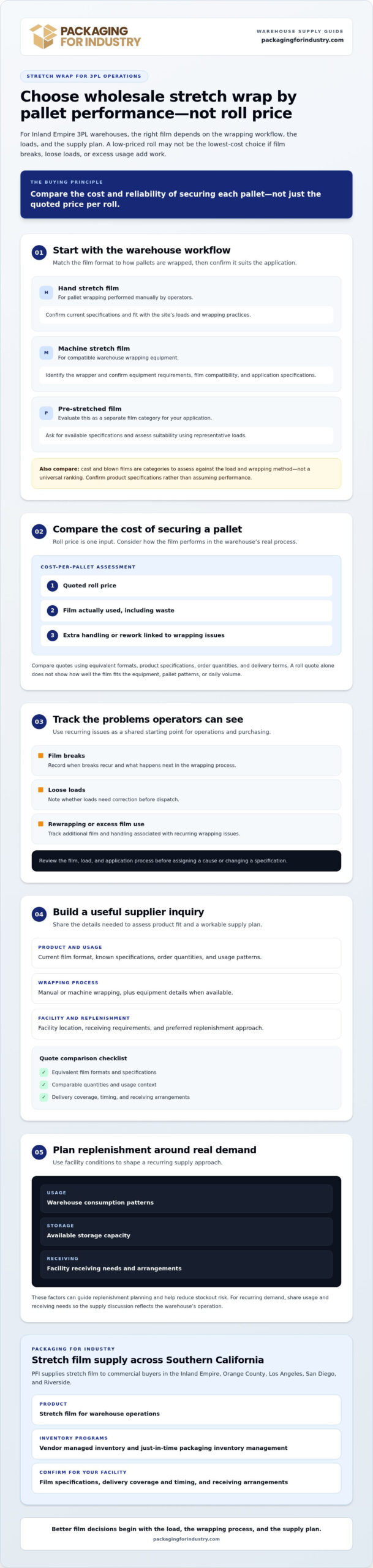
The lowest-priced roll may be the most expensive choice for a 3PL. When sourcing wholesale stretch wrap for 3PL warehouses Inland Empire teams can rely on, start with pallet performance, not just the quote. Film breaks, loose loads, and excess usage can mean extra handling and increase the cost of securing each pallet.
Roll price is useful to compare, but it does not show how well a film suits your wrapping equipment, pallet patterns, and daily volume. This guide compares hand, machine, and pre-stretched film, along with blown and cast options. It also explains how to compare quotes, estimate film cost per pallet, and plan replenishment around recurring demand.
Packaging For Industry supplies stretch film to commercial buyers across Southern California, including the Inland Empire, Orange County, Los Angeles, San Diego, and Riverside. PFI also offers vendor managed inventory and just-in-time packaging inventory management. Use the guidance below to assess film and supply options for your warehouse. When requesting pricing, confirm specifications, delivery coverage and timing, and receiving arrangements for your facility.
Key Takeaways
- Match hand, machine, or pre-stretched film to your wrapping equipment and palletizing workflow.
- Compare wholesale stretch wrap for 3PL warehouses Inland Empire quotes using equivalent formats, specifications, quantities, and delivery terms.
- Estimate the cost of securing each pallet by considering film use and waste, not just the quoted roll price.
- Use warehouse usage, storage capacity, and receiving needs to guide replenishment planning and reduce stockout risk.
- Ask PFI about stretch film, recurring inventory programs, and delivery coverage and timing for your Inland Empire facility.
What Inland Empire 3PL warehouses need from a wholesale stretch wrap supplier
For a 3PL, stretch wrap is part of the outbound workflow. Pallets need suitable containment, replenishment needs to keep pace with demand, and wrapping issues should not delay dispatch. The right wholesale stretch wrap for 3PL warehouses Inland Empire operations depends on the loads, wrapping method, and supply needs at each facility. Reviewing the film and process together can help teams identify avoidable waste and handling.
Distribution centers may handle varied pallet profiles, shipment types, and customer requirements under one roof. A roll’s quoted price is only one part of the buying decision. Also consider film use, recurring application issues, delivery terms, and stock continuity. These details help buyers compare options on overall fit rather than assuming the lowest roll price is the lowest-cost choice. Review stretch wrap basics, then ask a supplier to confirm which available formats and specifications suit your application. Packaging For Industry offers stretch film for warehouse operations.
Which stretch wrap problems should a 3PL solve first?
Start with problems operators and supervisors can observe. Record recurring film breaks, loose loads, rewrapping, and other wrapping issues. Note what follows, such as extra handling, additional film use, or pallets waiting for correction before dispatch. This gives purchasing and operations a shared basis for supplier discussions. Review the film, load, and application process before assigning a cause or changing a specification.
What should buyers include in a wholesale inquiry?
Give a prospective supplier enough detail to discuss product fit and a workable supply plan. Gather:
- Current film format, order quantities, usage patterns, and known product specifications.
- Whether wrapping is manual or machine-based, including equipment details when available.
- Facility location, receiving requirements, and preferred replenishment approach.
These details make quotes easier to compare. Ask the supplier to confirm available formats, specifications, quantities, delivery coverage, and timing for your facility. For recurring demand, share usage and receiving needs so the discussion reflects your warehouse’s operation rather than a generic order schedule.
Choose hand, machine, or pre-stretched wrap for your warehouse workflow
Choose a film format based on the wrapping process, not a general claim that one option works for every pallet. For wholesale stretch wrap for 3PL warehouses Inland Empire operations, identify whether operators wrap loads by hand or use a wrapper. Then compare the film with the loads and practices the warehouse handles each day. The Inland Empire logistics industry report provides regional context for warehousing and distribution, but film selection still needs to reflect each facility’s application.
| Format | Workflow context | What to confirm |
|---|---|---|
| Hand stretch film | For pallet wrapping performed manually by operators. | Current product specifications and fit with the site’s loads and wrapping practices. |
| Machine stretch film | For use with compatible warehouse wrapping equipment. | Wrapper requirements, film compatibility, and application specifications. |
| Pre-stretched film | A separate film category to evaluate against the warehouse’s application. | Available specifications and suitability for representative loads. |
When should a warehouse compare hand and machine stretch film?
If operators wrap pallets manually, compare hand film options. If a wrapper handles the work, identify the equipment and consider machine film that the supplier or equipment provider confirms is compatible. Use representative loads, including different pallet profiles across customer accounts. Do not assume a format will fit based on its name alone. Verify product specifications and application requirements before changing what the warehouse buys.
How do cast, blown, and pre-stretched films fit the decision?
Cast, blown, and pre-stretched describe film categories, not a universal ranking from best to worst. Ask the supplier for specifications for each option, then compare them with the load and wrapping method. Avoid assumptions about cling, strength, noise, or efficiency unless product documentation supports them. PFI supplies multiple stretch film formats. Confirm what is available for your order and application.
Takeaway: Choose a film format only after matching its documented specifications to the application and equipment. To compare options for your warehouse, share your film and application requirements for a quote discussion.
Compare wholesale stretch wrap quotes by application and delivered supply
A useful stretch film quote should make clear what the warehouse is buying and how it will arrive. Compare equivalent formats, specifications, quantities, and packaging units across suppliers. A lower roll price alone does not show how the product fits your load patterns, wrapping process, delivery needs, or stock plans.
Which details make stretch film quotes comparable?
Give each supplier the same application details and requested quantities. Record the responses in one comparison so purchasing and operations can review the same information.
- Product: Film format, product description, available specifications, and the packaging unit quoted.
- Order: Quantity, any stated order conditions, and whether the quote covers the same volume.
- Delivery: Shipping or local delivery terms, facility location, receiving hours, and any lead-time commitments.
- Application: Wrapping method, representative loads, and relevant equipment details.
Flag missing specifications or unclear terms before comparing totals. Ask suppliers to clarify differences rather than assuming similar product descriptions mean the quotes cover equivalent film. Include delivery and receiving details in the review, since a product quote may not meet the facility’s operating requirements.
How can a 3PL assess film performance without guessing?
Before an evaluation, have warehouse operations and purchasing agree on practical criteria, such as recurring film breaks, rewrapping, or observable load issues. If a supplier or equipment provider confirms that samples are available and suitable, agree on the evaluation process and transition steps before changing routine orders. Test representative pallet loads, keep wrapping practices consistent, and document what the team observes. The International Safe Transit Association publishes transport-packaging standards. Consult appropriate guidance if a formal transit evaluation is needed. Do not claim improved containment, safety, or savings without evidence relevant to the loads and process.
A supplier change does not have to disrupt outbound work. Confirm product compatibility, clarify delivery and order terms, and decide how any evaluation will fit alongside current stock. This gives the team a basis for judging the overall purchasing fit, not just the unit price.
For a wholesale stretch wrap for 3PL warehouses Inland Empire quote, provide film details, quantities, application, and facility receiving requirements. Request a stretch film quote and confirm available specifications and delivery terms for your location.
Plan stretch wrap replenishment for Inland Empire warehouse demand
Reliable replenishment starts with actual warehouse usage, not a stock threshold borrowed from another operation. A 3PL handling changing shipment volumes should connect stretch film orders to usage patterns, available storage, receiving capacity, and outbound schedules. Reviewing these factors gives purchasing and operations a shared basis for planning wholesale supply and can help reduce the risk of rushed orders or excess inventory.
What information helps set a useful replenishment plan?
Review existing records before setting a process. Usage history and purchasing frequency can show which film items recur. Storage space and receiving arrangements help define what the facility can accommodate. Include schedules that affect demand, along with any custom packaging or items with longer supplier lead times.
- Review historical usage and order frequency for each recurring stretch film item.
- Confirm available storage space, receiving hours, and any limits on deliveries.
- Agree on how stock levels will be checked, how often reviews occur, and who communicates replenishment decisions.
Choose a review interval that fits your purchasing and operating routines, then adjust it as usage or schedules change. Discuss supplier lead times as part of the plan. Avoid setting a fixed reorder point without reviewing demand, storage, and delivery details for the facility.
When should a 3PL consider managed inventory?
If recurring packaging demand creates repeated purchasing work or shortage concerns, ask whether vendor managed inventory (VMI) or just-in-time (JIT) inventory management could suit your process. PFI’s vendor managed inventory service is one option to discuss. Ask how inventory reviews, communication, and planned replenishment would work, and confirm the details for your location and stretch film requirements.
JIT inventory management may also be worth discussing if your team wants replenishment coordinated with ongoing needs. Either approach still requires a clear view of actual usage, available stock space, receiving arrangements, and supplier lead times. Set responsibilities and review intervals with the supplier so your purchasing team knows how inventory decisions will be shared and adjusted.
For wholesale stretch wrap for 3PL warehouses Inland Empire, a useful replenishment discussion should cover repeat usage as well as delivery and receiving requirements. Confirm program details and location-specific delivery availability before relying on a proposed schedule.
Request wholesale stretch wrap for your Inland Empire 3PL from PFI
Packaging For Industry (PFI) supplies stretch film and industrial packaging for warehouse and distribution operations. Its offerings include hand, machine, and other stretch film formats, with specifications and availability confirmed for each order. PFI serves the Inland Empire as part of its Southern California service area, which also includes Orange County, Los Angeles, San Diego, and Riverside. Confirm delivery coverage and timing for your facility before planning replenishment.
What should buyers send with a stretch film quote request?
Share the current film type or product description, whether wrapping is manual or machine-based, and your expected order quantity. Include the facility ZIP code, receiving requirements, and preferred replenishment approach. Describe recurring wrapping issues or related packaging needs that could affect the supply plan. These details help PFI assess the application and clarify which available options fit your warehouse’s requirements.
How can PFI support broader warehouse packaging needs?
PFI supplies corrugated boxes, foam packaging, pallets, crates, tapes, and corner and edge protection alongside stretch film. These products support warehousing, distribution, manufacturing, aerospace, electronics, and other industrial operations. For 3PLs, discussing related materials and recurring inventory needs with one supplier may help simplify purchasing and supply planning. PFI also offers vendor managed inventory and just-in-time inventory management services. Discuss your operation’s needs and confirm program details directly.
Build a stretch wrap plan that supports consistent outbound work
A useful guide to wholesale stretch wrap for 3PL warehouses Inland Empire buyers starts with application fit, not roll price alone. Match the film format to wrapping equipment and representative loads, then compare quotes using equivalent specifications, quantities, and delivery terms. For repeat demand, review usage, storage, and supplier lead times to shape a replenishment approach that fits the warehouse.
Packaging For Industry lists stretch film among its industrial packaging offerings and serves the Inland Empire as part of its Southern California service area, including Orange County, Los Angeles, San Diego, and Riverside. Delivery availability and timing should be confirmed for each facility and order. For recurring packaging needs, PFI also offers vendor managed inventory and just-in-time inventory management services to discuss as part of a supply plan.
Share your film format, application, expected quantity, facility location, and receiving requirements to make the quote discussion more useful. With those details, your team can compare supply options and plan next steps with greater confidence.
A well-matched film and replenishment plan can keep packaging decisions aligned with your operation. Start with what your warehouse uses and needs, then discuss product and supply options with PFI.
Frequently Asked Questions
How do I choose wholesale stretch wrap for a 3PL warehouse?
Match documented film specifications to your loads, wrapping method, and warehouse requirements. For wholesale stretch wrap for 3PL warehouses Inland Empire operations, consider the pallet profiles and customer applications handled at the facility. Review recurring breaks, rewrapping, and film use with operations and purchasing, then ask suppliers to confirm which available formats suit the application. Compare overall purchasing fit, not roll price alone.
Should a 3PL use hand stretch film or machine stretch film?
Use hand stretch film for pallets wrapped manually, and consider machine stretch film when a compatible wrapper handles the application. Identify the equipment and how operators currently wrap loads before comparing options. Confirm film compatibility and application requirements with the supplier or equipment provider. If the warehouse uses both methods across different areas or customer accounts, evaluate each workflow separately rather than assuming one format will serve every pallet.
What information should I provide to get a stretch film quote in the Inland Empire?
Share the current film type or product description, known specifications, and whether wrapping is manual or machine-based. Include expected quantities, usage patterns, facility ZIP code, receiving hours, and delivery or replenishment requirements. Note recurring issues, such as breaks or rewrapping, and identify which loads or customer applications are affected. This helps a supplier clarify available formats and prepare a quote around the warehouse’s requirements.
Can a packaging supplier help manage recurring stretch wrap inventory?
Yes. A supplier may offer inventory programs to organize repeat packaging replenishment. Packaging For Industry offers vendor managed inventory (VMI) and just-in-time (JIT) inventory management for packaging. Buyers can discuss usage history, storage capacity, supplier lead times, review frequency, and who will communicate replenishment decisions. Confirm how inventory reviews and planned replenishment would work for your facility and stretch film needs.
How can I compare wholesale stretch wrap quotes fairly?
Ask each supplier to quote equivalent film formats, specifications, quantities, and packaging units. Compare product descriptions alongside delivery terms, receiving requirements, any stated order conditions, and lead-time commitments. Clarify missing information before deciding. Then consider operational fit, including application requirements and observed film use. A lower quoted roll price alone does not establish lower cost per pallet or improved containment. Assess those outcomes using evidence from your warehouse.
Does Packaging For Industry deliver stretch film to Inland Empire warehouses?
Packaging For Industry supplies stretch film and serves the Inland Empire as part of its Southern California service area. The company offers local next-day delivery throughout Southern California, but timing and availability should be confirmed for the specific facility and order. Provide the warehouse ZIP code, quantity, and receiving requirements when asking about delivery. Confirm route coverage, timing, and receiving arrangements before relying on a replenishment schedule.
What stretch film types are available for warehouse pallet wrapping?
Packaging For Industry offers hand, machine, and pre-stretched film, as well as blown, cast, colored, opaque, and vented stretch film. These are product categories, not a universal ranking of quality or performance. Ask the supplier to confirm the formats, specifications, and quantities available for your order. Compare the documented details with your wrapping equipment, load patterns, and application requirements before selecting a film.