
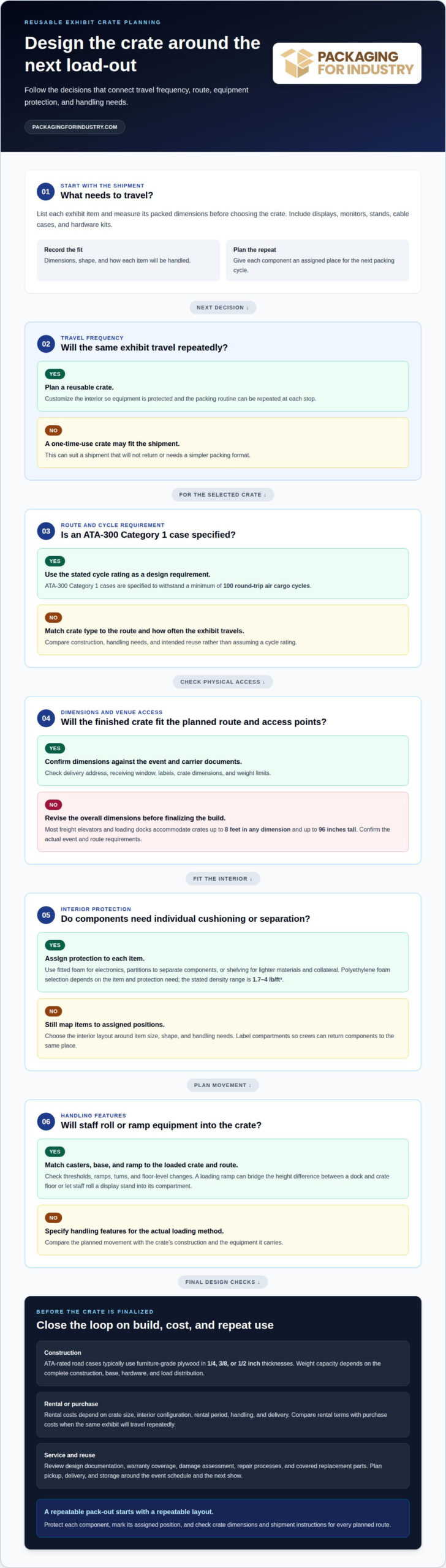
A reusable exhibit crate should do more than enclose equipment; it should make the next load-out just as orderly as the first. For reusable trade show equipment crates in San Diego, customize the interior to each item’s size, shape, and handling needs, using fitted foam, partitions, or dedicated compartments to keep equipment and show materials organized. ATA-300 Category 1 cases are specified to withstand a minimum of 100 round-trip air cargo cycles, so match the crate type to the shipment route and how often the exhibit travels.
That distinction matters when you’re choosing between a reusable crate and a one-time shipping option. The crate should protect the equipment and let your team follow the same packing routine at each stop. A clearly marked layout also helps staff return every item to its assigned place after the show.
This guide explains how to plan a crate around exhibit equipment, compare reusable and standard crate types, and organize compartments, labels, and packing routines for recurring shows. You’ll also learn which design choices affect handling, storage, and long-term value, so you can make a practical decision for your next shipment.
Key Takeaways
- Plan the crate around the exhibit inventory, including each item’s dimensions, shape, and protection needs.
- Choose handling features such as interior cushioning, casters, or ramps to suit how the crate is loaded and moved.
- Compare crate construction and assembly needs with how often the exhibit travels and how the crate will be reused.
- Use assigned compartments, clear labels, and a consistent packing sequence to make show-to-show packing easier to repeat.
- Match packaging materials and inventory planning to your shipping routine to support more reliable exhibit shipments.
What is a trade show crate?
A trade show crate is a protective shipping container designed for exhibit equipment, display parts, and show materials. For recurring shipments, its dimensions, interior layout, and handling features should match the actual load and route.
Custom Crate Builds and Interiors
Start with an equipment inventory: list each display, monitor, stand, cable case, and hardware kit, then measure its packed dimensions. A custom interior can use fitted foam inserts for electronics, partitions for separate components, and shelving for lighter materials or collateral. For polyethylene foam, the stated density range runs from 1.7 to 4 pounds per cubic foot; selection depends on the item and protection needs. Label compartments by item so crews can return components to the same position after each show.
Custom dimensions should also account for how the crate will travel and where it will be handled. Most freight elevators and loading docks accommodate crates up to 8 feet in any dimension and up to 96 inches tall. These limits make overall dimensions a practical design input, alongside the exhibit footprint. For wood crating and shipment planning, see wooden crate options.
Crate Types, Sizes, and Capacities
Reusable crates suit equipment that travels repeatedly, while one-time-use crates can fit a shipment that won’t return or needs a simpler packing format. Custom hard cases provide a rigid enclosure for individual components, while a larger crate can hold several items in organized compartments. ATA-rated road cases typically use furniture-grade plywood in 1/4, 3/8, or 1/2 inch thicknesses. Match construction to the load, handling, and intended reuse.
Weight capacity depends on the crate’s construction, base, hardware, and how the load is distributed. Compare the packed gross weight and crate dimensions with the carrier’s acceptance criteria and the event’s exhibitor instructions. For reusable trade show equipment crates in San Diego, confirm that the finished crate will fit the freight elevator, loading dock, and planned shipment route.
When comparing designs, review the proposed interior layout, materials, construction, warranty coverage, and stated repair process. Check how damage is assessed and which repairs or replacement parts the warranty covers.
Freight carriers and San Diego convention centers may have shipment procedures, while each event may provide specific exhibitor instructions. Confirm the delivery address, receiving window, labels, crate dimensions, and weight limits in that event’s shipping documents.
Rental costs depend on crate size, interior configuration, rental period, handling, and delivery. Request a quote to establish the applicable amount, then compare the rental terms with purchase costs if the same exhibit will travel repeatedly.
San Diego businesses can purchase reusable crates through packaging and crate suppliers, while rentals are generally arranged through exhibit logistics providers. Ask for a design that matches the equipment inventory and planned return route.
Businesses shipping exhibits in San Diego may work with crate manufacturers, custom case builders, or industrial packaging suppliers. Compare design documentation, warranty terms, repair processes, and how well each design matches the equipment and compartment requirements.
Available crate sizes and materials vary with the exhibit load and transport method. ATA road-case plywood thicknesses commonly include 1/4, 3/8, and 1/2 inch; weight capacity depends on the complete design, not material thickness alone.
Pickup, delivery, and storage are separate logistics needs from crate design. Schedule pickup around the event’s outbound plan, delivery around its receiving window, and storage around the next show’s packing needs.
Air and international shipping may be possible if the carrier accepts the crate’s dimensions, gross weight, and construction. Ensure the packed equipment, crate, and shipping documents meet the selected route’s and carrier’s requirements.
What Features Make These Crates Easier to Handle?
Handling features should suit the equipment, loading method, and route through the show floor. A crate carrying a monitor, display frame, and cable cases needs different interior support from one holding only lightweight graphics. Plan movement and protection together: cushioning limits contact inside the container, while casters and ramps can help crews move a loaded crate through docks and exhibit spaces.
Foam cushioning supports individual components and limits shifting during transport. A custom foam insert can hold a monitor by its edges, separate a power supply, and provide a dedicated space for cables. Partitions or foam-lined compartments keep hardware from contacting display surfaces. Carpet lining can cushion broad interior panels and help reduce scuffing when equipment rests against the crate wall.
Choose each lining based on the surface it protects. A painted display panel, for example, needs a clean, nonabrasive contact area, while loose metal brackets should be separated from screens and polished trim. Interior packaging can add protection around sensitive parts. Place removable components in separate sleeves or cushioning, then secure each item in its assigned compartment before closing the crate.
Casters help crews position a crate across a warehouse floor or exhibit hall, but the base and wheels must suit the loaded crate. Check the route for thresholds, ramps, turns, and changes in floor level. A loading ramp can bridge the height difference between a dock and the crate floor or let staff roll a display stand into its compartment. Stabilize the ramp and clear the path before moving equipment.
Vacuum packaging and desiccants serve a different purpose from foam. A sealed moisture-barrier pouch with a desiccant can protect suitable components from moisture exposure during storage or shipment. Vacuum packaging may work for compact parts, but not every display, cable assembly, or component is suitable. Keep delicate items in protective foam, and package moisture-sensitive hardware separately when the equipment and materials are compatible.
- Foam: Match insert shapes to the monitor, display components, and loose hardware.
- Partitions: Separate items that could rub, strike, or tangle during transit.
- Carpet lining: Cushion broad contact areas inside the crate.
- Casters and ramps: Plan for the actual loading route and crate movement.
- Moisture packaging: Use sealed pouches and desiccants for suitable components.
For a crate layout that combines cushioning, compartments, and handling access, request a packaging quote with the equipment list and packing sequence.
Benefits of reusable crates for recurring events
A reusable crate gives a recurring exhibit a consistent transport package instead of requiring a new container for each shipment. Its fitted interior stays in place between shows, allowing crews to return equipment to familiar locations and follow the same packing sequence. For a display that travels repeatedly, this consistency can reduce packing variation and help protect components during loading, transit, and unloading.
Reusable crates can reduce packaging waste sent to landfills because the same container serves multiple shipments. They may also save money over time for items shipped repeatedly. The comparison with disposable cardboard depends on how often the exhibit travels, the crate’s purchase cost, repair needs, storage, and freight handling. Reusable packaging becomes more practical as repeat trips increase; a one-time shipment may favor simpler packaging.
Weight can affect event handling charges. This example isolates the weight-related difference, not the crate’s purchase cost or total shipping expense. A lighter design can help when it still protects the exhibit and suits the handling route.
Exhibits traveling to four to six shows per year can break even quickly on reusable crate costs. The practical calculation compares the initial crate investment and upkeep against repeated disposable packaging, plus any shipment-weight effects. Track the exhibit’s event schedule and shipment pattern, then consider how long the crate will remain in service. Reusable wood trade show crates are described as having a typical lifespan of 30 or more round trips, making durability relevant to that comparison.
Durability also affects warehouse operations. A crate designed for repeated opening and repacking keeps exhibit components together between events, instead of requiring new packaging for every trip. A consistent container and interior layout help staff spot missing parts before dispatch. After each show, inspect the crate, closures, and protective materials, then address visible wear before the next shipment.
- Repeated travel: Reuse the same container and packing arrangement for recurring shipments.
- Waste: Keep a crate in circulation instead of discarding packaging after each event.
- Weight: Compare loaded crate weight because drayage can vary with shipment weight.
- Service life: Include expected reuse and maintenance in the long-term cost comparison.
For a single event, disposable cardboard may be practical. For recurring exhibits, reusable crates can offer value through repeated use, reduced packaging waste, and more consistent packing. Compare the full use pattern, not just the initial container cost.
Repeatable packing and equipment organization
A repeatable packing routine helps prevent components from being missed between exhibit shipments. Start with a master inventory covering the display, electronics, graphics, and hardware. Name each item as the exhibit team does, such as “monitor power supply” or “left display panel.” Match each inventory entry to a marked location inside the crate. This gives exhibitors a clear reference for packing and return handling.
Prepare the exhibit in a consistent sequence. Stage every item in one packing area, compare it with the inventory, and check its condition before loading. Pack components in the order the crew will need them at the venue. For example, place floor-level display supports where staff can unload them before the monitor and graphic panels. Keep setup tools accessible rather than buried beneath larger equipment.
- Stage: Gather the monitor, stands, graphics, cables, and show hardware in one location.
- Inspect: Check each component for damage, loose fittings, or missing accessories before packing.
- Pack: Return each item to its assigned position and secure removable parts separately.
- Record: Mark packed items on the inventory and note any condition changes.
- Close: Confirm the crate is fully packed, secured, and identified for its destination.
Use labels that connect the inventory to the physical packing locations. “Cable kit, compartment B” is more useful than a generic “accessories” label. Use the same names on the inventory sheet, crate labels, and handling notes. If a component changes, update every record together so the next crew doesn’t follow outdated instructions.
After each event, follow the return sequence before the crate leaves the venue. Check graphics, cables, fasteners, and display parts against the inventory. Record damage or missing items while the exhibit is accessible, then separate items needing attention from equipment ready to pack. This helps prevent a damaged bracket or missing cable from creating a setup problem at the next show.
Photos can supplement written instructions for equipment that has a specific orientation. Photograph a display panel seated correctly or a cable kit arranged in its case, then keep the images with the packing record. Don’t rely on photos alone: labels and an itemized inventory make individual pieces easier to identify across repeated shipments.
Assign packing tasks by category, such as electronics, graphics, or hardware. Clear responsibility helps exhibitors coordinate handling when several people share the load-out. Use the same inspection and sign-off process at dispatch and return. This creates a record of what traveled, what came back, and what needs repair before the next shipment.
Reusable and standard trade show crate types
Crate construction affects assembly, reuse, and handling at each event. For a recurring exhibit, compare how the crate closes, how crews open it, and which tools they need. A crate that protects a display but slows load-out can create operational friction. The right fit depends on travel frequency, equipment configuration, and the team’s packing routine.
Bolted reusable crates use hardware to secure panels for transport. Assembly requires specific hand tools, so include them in the packing plan and keep them accessible. This style can suit exhibits that need a sturdy shipping enclosure and allow time for deliberate assembly at the warehouse. Inspect bolts and connection points during each packing cycle.
Screw-assembled crates use screws to join the crate sections. With careful handling, they can withstand repeated use. Their practical lifespan depends on how crews remove and reinstall fasteners, handle the panels, and store the crate between shows. Follow the same assembly sequence each time to avoid misplaced screws and prevent components from being forced out of alignment.
Reusable wood trade show crates are built for repeated shipping and can have a typical lifespan of 30 or more round trips. That makes them relevant for exhibits with a continuing event schedule. Review the crate’s condition after each trip, especially its base, joints, fasteners, and closure hardware. Repairing wear before the next shipment helps keep the crate serviceable.
One-time-use crates can suit a single outbound shipment or equipment that won’t return through the same logistics cycle. They avoid managing a returnable container but aren’t designed for repeated opening and reuse. For a long-term exhibit program, compare the effort and materials needed across recurring shipments, not just the first trip.
Hard cases provide a rigid enclosure for specific equipment, such as a monitor or demonstration instrument. A larger crate can consolidate multiple exhibit components. Choose based on whether your team needs separate portable containers or one consolidated load. Match case interiors to the equipment, and keep delicate surfaces separate from loose hardware.
Use this sequence to choose: identify the shipment pattern, select the intended level of reuse, match construction to assembly skills, and confirm that the packing layout supports handling. This gives San Diego exhibitors a practical basis for comparing reusable and standard crate types. It also helps purchasing teams weigh designs against storage, return logistics, and recurring labor.
Packaging For Industry (PFI)
Packaging For Industry (PFI) supports recurring packaging needs for aerospace, electronics, and medical device manufacturers. Protective foam packaging can help protect sensitive components, while stretch film can secure packaged materials for transport. For repeat shipments, PFI’s Vendor Managed Inventory (VMI) and Just-In-Time (JIT) programs can help align packaging supply with operational demand.
These services can help when your team needs consistent packaging materials and a dependable replenishment process. Share your industry, packaging requirements, and shipment schedule with PFI to discuss an approach suited to your workflow in San Diego, Orange County, or Los Angeles.
Contact Packaging For Industry (PFI)
Plan Your Next Exhibit Shipment with Confidence
Planning reusable trade show equipment crates in San Diego is an opportunity to make exhibit logistics more deliberate. Start with the next event on your calendar and identify what your team needs to load, transport, and unpack smoothly. Then align the crate plan with the shipment route, warehouse workflow, and return process. These details help purchasing and operations teams make a decision that serves the full exhibit program, not just one outbound shipment.
A practical next step is to bring the equipment list, packing sequence, and known handling requirements together. This gives your packaging discussion a clear operational focus, whether you’re improving protection for delicate components or standardizing how crews prepare for each show. Packaging For Industry (PFI) can help you discuss packaging solutions that support your exhibit workflow.
A well-planned shipment gives your team a stronger starting point for every event. Choose a crate and packing approach built around the way your exhibit actually travels.
Frequently Asked Questions
How Do You Customize Crates for Exhibit Equipment?
Start with the approved equipment configuration and identify parts that must remain compatible across shipments. Record manufacturer model numbers for key components and mounting hardware so replacements don’t silently change the load. Before finalizing the design, test the actual equipment and accessories together in a representative packout. If a component changes later, repeat the fit check before sending the revised configuration to an event.
How Do You Ensure Equipment Fits the Same Way Each Time?
Keep the approved equipment configuration consistent and verify substitutions before packing. A replacement screen, bracket, or power unit can change connection points or how components fit together, even if it looks similar. Compare model numbers and accessory requirements with the approved configuration. If a substitute is necessary, test-pack the actual parts, then update the approved configuration so future shipments use the validated combination.
What Helps Booth Setup Go Faster On-Site?
Coordinate equipment readiness with the exhibit builder before the freight arrives. Confirm that display components, mounting hardware, and required tools support the planned booth design, then resolve missing dependencies before shipment. For example, installation may be delayed if mounting hardware travels separately or a designated connection point is unavailable. Sharing the final equipment configuration with the setup team helps prevent avoidable installation delays.