
You arrive at a high-stakes venue, pop the latches on your road case, and find your primary projector has shifted during transit, resulting in a cracked housing and a ruined setup. It’s a scenario that costs more than just equipment repairs; it damages your professional reputation. You likely agree that generic pluck-and-pull foam often fails under the rigors of industrial logistics. That is why precision-engineered custom foam inserts for audio visual equipment cases are no longer a luxury but a requirement for modern production teams.
This guide demonstrates how to secure your inventory with foam densities that meet ATA 300 standards and reduce shipping damage to zero. We’ll explain how custom-tailored inserts help you avoid the steep dimensional weight surcharges carriers like UPS and FedEx implemented in 2026, where every fractional inch is rounded up. Finally, we will detail how to streamline your transit logistics and improve equipment presentation with a reliable packaging supplier in Anaheim and Orange County.
Key Takeaways
- Identify why generic pluck-and-pull foam compromises equipment safety and how industrial-grade materials provide the structural integrity needed for repeated transit.
- Select the right density between Polyethylene and Polyurethane to provide optimal shock absorption for heavy gear while protecting delicate electronic components.
- Discover how custom foam inserts for audio visual equipment cases help you avoid dimensional weight surcharges and reduce long-term replacement costs for high-value inventory.
- Evaluate the benefits of CNC routing for low-volume precision and die-cutting for high-volume efficiency to maximize your packaging ROI.
- Streamline your supply chain by partnering with a local Southern California supplier that offers free prototyping and next-day delivery across Orange County and Los Angeles.
Why Standard Foam Fails High-Value Audio Visual Equipment
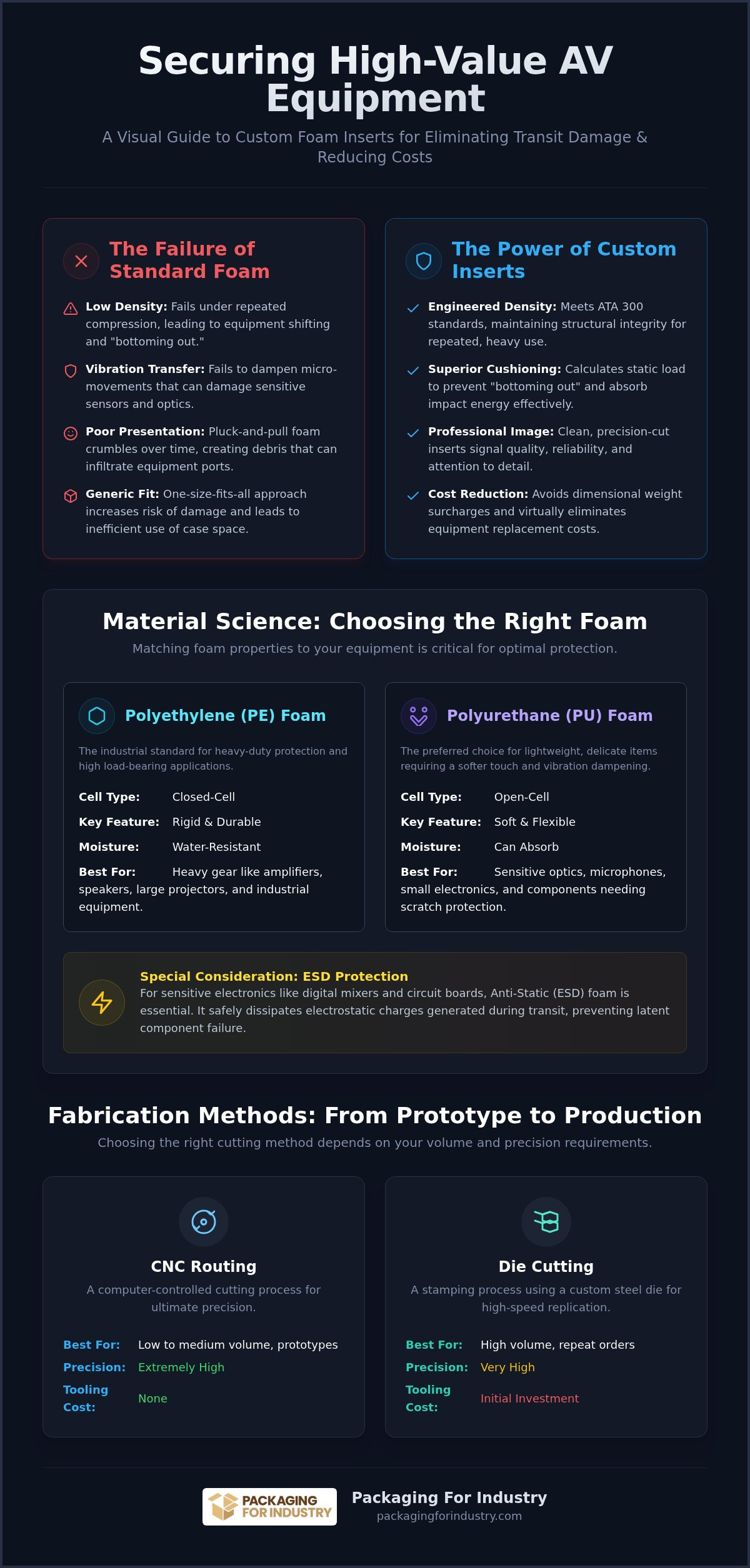
Standard “off the shelf” foam is designed for general applications, not the specific G-force ratings required for sensitive electronics. For AV rental houses and manufacturers, equipment is constantly in motion, moving from trucks to stages and back into storage. Standard foam lacks the density to withstand repeated compression cycles. Precision-engineered custom foam inserts for audio visual equipment cases are designed to maintain their structural integrity, ensuring gear stays seated even when cases are stacked or handled roughly by transit crews.
Vibration is a silent killer for high-end sensors and optical lenses. While a shipping case might look fine on the outside, internal micro-movements can knock delicate components out of alignment. Effective Package cushioning requires calculating the static loading of the gear against the foam’s deflection properties. This engineering prevents the “bottoming out” effect common with low-grade materials, where the foam fully compresses and transfers the impact energy directly into the equipment.
Beyond protection, there is the matter of professional presentation. Generic “pluck-and-pull” foam eventually crumbles into small pieces that can infiltrate cooling fans or ports. When your gear arrives at a client site in a clean, precision-cut insert, it signals that your operation values quality and reliability. This attention to detail builds trust and reinforces your brand as a leader in the industrial AV space.
The Hidden Costs of Shipping Damage
Shipping damage is never just a repair bill. It represents equipment downtime that halts project deadlines and results in missed rental revenue. Your operations team often bears the administrative burden of filing insurance claims and coordinating logistics for replacement units. Custom-engineered inserts pay for themselves by virtually eliminating product return rates and keeping your inventory in the field where it generates profit.
Industrial vs. Consumer Grade Protection
Retail solutions often fail in the rigorous warehouse and logistics environment because they aren’t built for the high-frequency use typical of AV fleets. You need protective foam that stands up to daily wear without losing its shape. High-density industrial foam supports long-term operational cost reduction by protecting the equipment’s resale value and extending its service life. Switching to custom foam inserts for audio visual equipment cases allows you to scale your fleet with a consistent, reliable packaging supply that protects your bottom line as much as your gear.
Material Science: Choosing Foam for AV Transit
Selecting the right material is a balance of engineering and economics. If the foam is too stiff, it transmits shock directly to the gear; if it’s too soft, the equipment bottoms out against the case wall during a drop. Matching density to the equipment load is the first step in designing effective custom foam inserts for audio visual equipment cases that actually reduce shipping damage. Density is typically measured in pounds per cubic foot, and choosing the wrong grade can lead to permanent foam deformation or equipment failure.
Polyethylene vs. Polyurethane: Which is Right?
Polyethylene (PE) is a closed-cell foam known for its high load-bearing capacity and rigidity. It’s the industrial standard for heavy AV equipment like amplifiers, speakers, and large-format projectors because it doesn’t crush easily under sustained weight. One major advantage of PE is its moisture resistance. Since it’s closed-cell, it doesn’t absorb water, making it ideal for outdoor event logistics where humidity or rain can compromise standard packaging.
Conversely, Flexible polyurethane foam (FPF) is used in packaging to protect lightweight, delicate components that require a softer touch. PU is an open-cell foam, meaning it’s much more flexible and provides excellent vibration dampening for sensitive optics and microphones. While PE provides superior shock absorption for heavy impacts, PU excels at cradling fragile items. You can explore our specific material grades on our foam packaging page to see which density fits your specific inventory needs.
ESD Protection for Sensitive Electronics
Standard foam can generate static electricity during transit. This poses a significant risk to digital mixers, lighting controllers, and internal circuit boards. Electrostatic discharge (ESD) can cause latent component failure, which means your gear might arrive looking perfect but fail to power on during a high-stakes show. We provide anti-static foam, typically identified by its pink color, to neutralize static buildup and protect these sensitive electronics.
For manufacturers shipping new units, combining these specialized inserts with custom corrugated boxes creates a multi-layered defense system. This integrated approach ensures the outer container handles the structural load of the warehouse environment while the internal foam manages the delicate electronics. If you’re unsure which material density your gear requires, you can request a packaging quote to speak with one of our engineers about a custom prototype.
Custom Cut Foam vs. Die-Cut Inserts: Fabrication Methods
Fabrication methods determine the success of your protective system by balancing precision with production volume. Choosing the wrong technique for your equipment rollout can lead to unnecessary overhead or compromised protection levels. If you are searching for a reliable packaging supplier near me in the Southern California area, it’s vital to partner with a team that understands how to match machinery to your specific logistical goals. Whether you need a single rack unit protected or a thousand retail-ready kits, the manufacturing process must align with your budget and lead-time requirements.
Water-jet cutting is an essential tool for the audio visual industry, specifically for oversized gear that requires deep cavities. This method uses a high-pressure stream of water to cut through thick foam planks without heat distortion, ensuring that custom sizes available for large-format projectors or LED wall panels are cut with surgical accuracy. For these heavy, oversized items, we often provide integrated solutions like foam-lined wooden crates. These combine the structural rigidity of timber with the internal cushioning of precision-cut foam to eliminate shipping damage during long-haul transit.
Precision CNC Routing for Complex Gear
If you’re outfitting a fleet of existing road cases, CNC routing is the most effective path for low-to-medium volume orders. This computer-controlled process carves custom foam inserts for audio visual equipment cases directly from solid blocks of material, allowing for a “glove-like” fit for microphones, lenses, and small accessories. CNC routing excels at creating multi-layered storage. You can store a camera body in the top layer while keeping cables or batteries in a recessed sub-layer, maximizing every square inch of case space. Our custom design services provide full engineering support to help you map out these complex tiered configurations before production begins.
Die-Cutting for Volume and Speed
Manufacturers and high-volume distributors typically prefer die-cutting for its speed and cost efficiency. This process uses a steel-rule die to punch out shapes in a single motion, which significantly lowers per-unit costs for large-scale AV equipment rollouts. It’s the standard method when you need to integrate protective foam components into corrugated boxes for wholesale distribution. By scaling production with die-cutting, you can meet high manufacturing demand without sacrificing the quality of the protection. This method ensures every insert is identical, which is critical for standardized warehouse picking and packing operations and overall supply reliability.
Maximizing ROI: Bulk Pricing and Local Delivery
Engineering a precise fit is only the first step; managing the economics of procurement is where operations managers realize the most significant savings. Bulk packaging pricing allows AV rental houses and manufacturers to lower the total cost of ownership for their equipment fleets. By consolidating orders, you reduce the per-unit cost of your custom foam inserts for audio visual equipment cases. This strategy ensures that even the largest inventory rollouts receive industrial-grade protection without exceeding your quarterly maintenance budget.
National catalog suppliers often ship from distant regional hubs, which leads to high freight expenses for bulky foam planks and oversized cases. Local packaging delivery eliminates these hidden logistics costs. This is particularly vital given that carriers like UPS and FedEx now round up every fractional inch and apply additional handling surcharges for packages exceeding 10,368 cubic inches. Sourcing your materials locally prevents these dimensional weight penalties from eroding your margins.
Southern California Logistics Advantage
Operating in industrial hubs like Anaheim or Irvine provides a distinct logistical edge. We offer next-day delivery throughout Los Angeles, Orange County, and San Diego, which enables a Just-In-Time (JIT) replenishment model. This approach clears your warehouse floor of empty cases and raw foam sheets, allowing you to repurpose that square footage for active production or equipment testing. You get the protection you need exactly when the gear is ready for deployment.
VMI: Never Run Out of Protective Packaging
Managing a growing AV fleet involves constant inventory tracking that can overwhelm a purchasing department. A Vendor Managed Inventory (VMI) program simplifies this by shifting the monitoring of stock levels to us. We track your usage of custom foam inserts for audio visual equipment cases and replenish them automatically. This system eliminates emergency rush orders and ensures that your production line never stops due to a packaging shortage. It provides a steady, predictable supply chain that supports long-term operational flow.
Request Your Custom Foam Insert Quote from PFI
Securing your inventory with industrial-grade protection requires a technical partner who understands the intersection of material engineering and logistical efficiency. At Packaging For Industry (PFI), we’ve built our reputation as a leading Southern California supplier by focusing on tangible outcomes: zero shipping damage and lower operational costs. Whether you’re outfitting a new line of amplifiers or replacing worn-out inserts for a rental fleet, our process is designed for precision and speed. Transitioning from generic cushioning to a professional custom packaging quote ensures your gear is show-ready the moment it arrives at the venue.
To begin the design phase, our team requires either physical equipment dimensions or existing CAD files. If you have 3D models of your gear, we can integrate those directly into our design software to ensure a microscopic level of accuracy. For firms without CAD data, we provide technical support to map out the equipment layout, ensuring that every knob, lens, and connector is protected. This level of detail is what separates professional custom foam inserts for audio visual equipment cases from the unreliable “pluck-and-pull” options that often fail during high-impact transit.
Our Design and Prototyping Process
Our workflow is structured to eliminate guesswork and reduce product damage. We start with an initial consultation to identify gear fragility and specific transit risks, such as long-haul trucking vibrations or frequent air transport. Once these environmental factors are established, we move into the CAD design phase. This is where we calculate the necessary foam density and thickness to prevent the gear from bottoming out during a drop.
The most critical stage of our process is free prototyping. We believe a physical fit-check is the only way to guarantee performance. We produce a sample insert for you to test with your actual equipment, allowing for adjustments before the final production run begins. Once the prototype is approved, we schedule final production using our CNC routing or die-cutting equipment, followed by local delivery across Orange County and Los Angeles.
Get Started with a Professional Quote
When you request a packaging quote from PFI, you aren’t just getting a price for foam. You’re gaining access to a full suite of industrial solutions. We can combine your inserts with a corrugated box quote for retail distribution or a stretch film quote for stabilizing bulk pallet shipments. This integrated approach allows you to compare packaging pricing across your entire supply chain and identify opportunities for bulk packaging pricing savings. We can combine your inserts with heavy-duty corrugated boxes or foam-lined wooden crates to create a complete shipping system.
Our local presence in Anaheim ensures that we can meet tight deadlines that national catalog suppliers simply can’t match. We understand that in the AV world, equipment downtime is lost revenue. By streamlining the design, prototyping, and delivery phases, we help you lower packaging costs and get your gear back into the field faster and safer than ever before.
Secure Your AV Inventory with Industrial Precision
Protecting high-value electronics requires more than just a sturdy outer shell; it demands an engineered internal environment. By selecting the correct foam density and fabrication method, you eliminate the risks of equipment downtime and damage to your professional reputation. Investing in custom foam inserts for audio visual equipment cases is a strategic move that pays for itself by reducing shipping damage and lowering total logistics costs.
Packaging For Industry (PFI) provides the aerospace and industrial-grade expertise needed for these complex configurations. Our team offers free prototyping and samples to ensure a perfect fit before your full production run begins. With local next-day delivery across Southern California, including Orange County, Los Angeles, and Anaheim, you can maintain a lean inventory without sacrificing gear safety.
Take the guesswork out of your transit logistics. Our engineers are ready to help you build a reliable protection system that keeps your equipment show-ready for every event.
Frequently Asked Questions
What is the best foam for audio visual equipment cases?
The ideal material depends on your gear’s weight and G-force sensitivity. As discussed in our material science section, Polyethylene provides the rigidity required for heavy rack units, while Polyurethane offers soft vibration dampening for delicate optics. We specialize in providing industrial-grade packaging for manufacturers/warehouses/distribution centers that need to protect high-value inventory. Our engineering team ensures your custom foam inserts for audio visual equipment cases meet the specific protection requirements of your AV fleet.
How do I measure my AV gear for a custom foam insert?
To ensure a precision fit, we recommend providing CAD files or physical equipment dimensions. This allows us to make custom sizes available for any irregular AV component, from handheld microphones to large-format projectors. Our free prototyping process then provides a physical sample for you to test. This step eliminates fitment errors before full production, ensuring your gear is perfectly secured against the rigors of industrial transit and repetitive handling by stage crews.
Can you provide custom foam for existing Pelican or SKB cases?
We provide precision retrofitting for any existing case brand, including Pelican, SKB, and specialized road cases. If you are looking for a packaging supplier near me in Southern California, our Anaheim facility is equipped to CNC-route foam to your exact specifications. This allows you to upgrade the protection of your current fleet without the expense of buying new outer cases, maximizing your existing assets while improving gear safety and professional presentation.
What is the lead time for custom foam prototypes in Southern California?
Our Anaheim headquarters allows us to produce CNC foam prototypes rapidly, often within a few business days of receiving your gear dimensions. This local speed is a significant benefit for production houses in Riverside and the Inland Empire that can’t afford the long lead times of national catalog suppliers. We prioritize fast turnaround to ensure your equipment returns to rotation quickly, helping you maintain operational flow and meet tight event schedules without logistical delays.
Do you offer bulk packaging pricing for large AV equipment rollouts?
We provide competitive bulk packaging pricing specifically for manufacturers and rental houses managing large-scale rollouts. Ordering in higher quantities significantly reduces your per-unit cost and helps you reduce shipping damage across your entire inventory. We also offer stocking programs to help you manage these large orders without overwhelming your warehouse space. This financial flexibility allows you to protect your entire fleet while maintaining a healthy operational budget and improving supply reliability.
Is anti-static foam necessary for all audio visual electronics?
Anti-static (ESD) foam is essential for any equipment with sensitive circuit boards, such as digital mixers, lighting controllers, and signal processors. Standard foam can generate static charges that cause latent component failures during transit. By using ESD-safe materials in your custom foam inserts for audio visual equipment cases, you neutralize static buildup. This protection is critical for ensuring your electronics function perfectly upon arrival at high-stakes venues and demanding client sites.
How does a VMI program work for my recurring packaging needs?
Our Vendor Managed Inventory (VMI) program puts the responsibility of stock management on us. We perform scheduled reviews of your packaging usage and replenish items based on agreed-upon levels. This prevents production stops caused by shortages and eliminates the need for emergency rush orders. When you request a packaging quote for VMI, you’re choosing a pragmatic solution for operations managers who want to simplify purchasing and optimize their warehouse floor space.
Do you provide local delivery for custom boxes and foam in Orange County?
We provide local next-day delivery across Southern California, covering Anaheim, Irvine, Los Angeles, and Riverside. By utilizing our regional delivery network, you can lower packaging costs and avoid the steep freight surcharges typically applied to bulky, oversized items by national carriers. This local support ensures that your custom boxes, crates, and custom foam inserts for audio visual equipment cases arrive exactly when your warehouse team needs them for a rollout.