
Which Irvine supplier can protect high-value circuit boards with custom-fit shielding and keep packaging replenished without long waits? For manufacturers, a stockout can disrupt production, while generic ESD supplies may leave boards poorly protected or add unnecessary cost. Choosing static-shielding packaging for circuit boards Irvine operations can source locally helps address both risks.
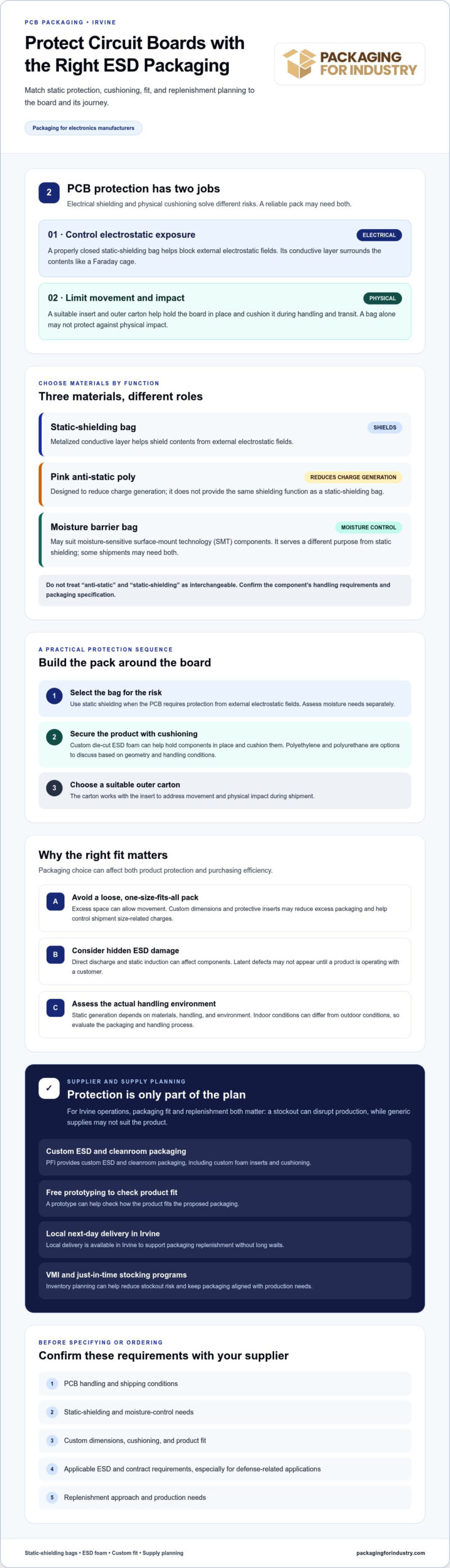
Putting a PCB in any anti-static bag is not enough. Static-shielding bags are designed to block external electrostatic fields, while custom die-cut foam can help limit movement and impact during transit. The right fit supports reliable protection without relying on oversized, one-size-fits-all packaging.
This guide explains what to consider when comparing ESD packaging suppliers, selecting shielding bags and foam, and planning a dependable supply. PFI provides custom ESD and cleanroom packaging, free prototyping to check product fit, and local next-day delivery in Irvine. You’ll also learn how VMI and just-in-time stocking programs can help reduce stockout risk and keep packaging aligned with production needs.
Key Takeaways
- Learn how static-shielding packaging for circuit boards Irvine manufacturers source differs from basic anti-static materials, and why packaging choice matters during transit.
- Compare static-shielding bags, moisture barrier bags, and cushioning options to identify what fits your PCB’s handling and shipping needs.
- Assess how custom dimensions and protective inserts may reduce excess packaging and help control shipment size-related charges.
- Know which ESD and contract requirements to confirm with a supplier before ordering, especially for defense-related applications.
- See how a packaging supplier can coordinate custom solutions and inventory planning to support more reliable purchasing.
Protecting Irvine’s Electronics: The Role of Static-Shielding Packaging
A circuit board can arrive without visible damage and still fail later. Static-shielding packaging helps protect sensitive PCBs from external electrostatic fields during storage and shipping. A properly closed shielding bag works like a Faraday cage, surrounding the contents with a conductive layer that helps redirect static charge around them. When comparing static-shielding packaging for circuit boards, Irvine operations should match the material to the board, handling process, and shipping conditions.
Irvine’s semiconductor and medical-device activity makes dependable electronics packaging a practical purchasing concern. Businesses in and around the Irvine Spectrum district may ship high-value components where a packaging failure can lead to troubleshooting, returns, warranty claims, or production disruption. Packaging cannot prevent every failure, but suitable ESD protection can help reduce avoidable exposure in transit.
Why Irvine Manufacturers Prioritize ESD Protection
Static generation depends on materials, handling, and the environment. Southern California’s humidity varies, and indoor conditions can differ from outdoor conditions. Dry, climate-controlled spaces can allow charge to build up during routine handling. Manufacturers should assess their actual packaging and handling environment rather than assume local weather alone determines risk. Consistent protection from the workstation through shipment can help limit damage that may otherwise surface after delivery.
Types of Static Damage in Circuit Board Logistics
A direct electrostatic discharge occurs when accumulated charge transfers to a component. Static induction can also create an electrical charge in a nearby component without direct contact, which may discharge later during handling. Latent defects are hidden component weaknesses caused by ESD exposure that may not appear until the product is operating with a customer. These failures can complicate root-cause analysis and contribute to returns or warranty claims.
Material selection matters. Metalized static-shielding bags provide a conductive outer layer intended to shield contents from external electrostatic fields. Pink anti-static poly is designed to reduce charge generation, but it does not provide the same shielding function. The Antistatic bag overview explains common differences between bag types. Don’t treat “anti-static” and “static-shielding” as interchangeable when specifying packaging for PCBs.
Fit and cushioning matter, too. An oversized bag can leave room for movement, while a bag alone may not protect a board from physical impact. PFI can combine ESD bags with custom die-cut foam and cushioning, and offers free prototyping to check product fit. Explore custom packaging design services to match protection to the product, or review packaging delivery in Irvine and local supply options.
Static-Shielding Materials: Bags, Foam, and Cushioned Inserts
Reliable PCB protection is a system, not just a bag choice. A static-shielding bag helps protect against external electrostatic fields, while cushioning and a suitable outer carton address movement and physical impact. For surface-mount technology (SMT) components that are also sensitive to moisture, a moisture barrier bag may be appropriate. Confirm the component’s handling requirements and packaging specification before selecting materials.
Metalized shielding bags and moisture barrier bags serve different purposes, so don’t assume one replaces the other. Some shipments may need both static protection and moisture control. Bulk shipments may also use anti-static bubble wrap or void fill for separation and cushioning, but those materials shouldn’t replace a shielding bag when the PCB requires shielding. The ESD Association’s ESD Association standards can help buyers understand the broader standards framework for ESD control and packaging.
Engineering the Fit with Custom ESD Foam
A board that rattles inside its package can shift, rub against other parts, or take impact during transit. Die-cut ESD foam inserts help hold components in place while adding cushioning. Polyethylene and polyurethane are material options to discuss with a packaging supplier. The appropriate choice depends on product geometry, handling conditions, and required cushioning. PFI offers custom foam inserts, ESD cushioning, and free prototyping for Irvine electronics firms. Explore custom foam packaging to see how an insert can be designed around the board rather than forcing the board to fit generic stock foam.
Combining Corrugated Boxes with ESD Shielding
Use each packaging layer for its intended role. A suitable heavy-duty corrugated box provides an outer structure for handling and shipment, the shielding bag provides ESD protection, and fitted foam helps limit movement inside the box. Corrugated material alone shouldn’t be relied on for static shielding. For palletized electronics, corner and edge protection can help protect carton edges during handling and stacking. Select the carton and protective layers together, based on the packed unit and distribution route.
For static-shielding packaging for circuit boards that Irvine manufacturers can source as a coordinated solution, evaluate the bag, insert, and outer package as one design. Share board dimensions, shipping conditions, and applicable packaging requirements when you request a packaging quote. That information helps a supplier assess fit and propose a practical combination of ESD materials and cushioning.
Custom vs. Stock ESD Packaging: A Cost-Benefit Analysis
Stock ESD bags can be a practical choice for samples, engineering work, and changing production needs. But a bag that’s much larger than the board may require extra cushioning, take up more storage space, and leave the product room to shift. With repeat shipments, those material and handling inefficiencies can add up. The better comparison isn’t simply unit price. Weigh packaging cost against fit, protection, storage, and shipping dimensions.
Custom-sized bags and inserts can reduce excess space around a PCB, which may help limit package dimensions and billed dimensional weight on applicable carrier services. Actual FedEx or UPS charges depend on the shipment and service, so compare quotes using packed dimensions rather than assuming custom packaging will eliminate surcharges. For Irvine buyers sourcing static-shielding packaging for circuit boards, the best option is the one that meets protection requirements while supporting efficient packing and predictable replenishment.
When to Invest in Custom Static-Shielding
Custom packaging is worth evaluating for repeat, higher-volume runs where excess material and packing time recur, or for irregular boards and kits with multiple components that need separate, secure positions. A prototype can check fit before a production rollout and help identify excess movement or a difficult pack-out. PFI offers free prototyping to assess product fit. If a contract specifies military packaging requirements, confirm the applicable requirements and the supplier’s documentation for the packaging under consideration. PFI’s military packaging solutions page provides information about that offering.
Stock Solutions for Prototyping and Early Runs
For research and development, a small supply of standard shielding bags can support builds while board designs or quantities change. Stock corrugated boxes may also suit non-sensitive components, provided the packaging meets their shipping needs. As a product moves into repeat production, compare stock and custom options using practical measures:
- Fit: Does the bag or insert hold the board securely without unnecessary excess?
- Pack-out: How much material and handling does each shipment require?
- Freight: Do packed dimensions affect carrier charges for the routes and services you use?
- Purchasing: How does bulk pricing compare with the storage and replenishment needs of each option?
Ask suppliers to compare bulk pricing for expected repeat orders, not just a one-time sample quantity. That gives procurement a clearer basis for balancing unit cost with material use and supply reliability. For a tailored comparison of stock and custom packaging, request a packaging quote with board dimensions, order patterns, and shipping requirements.
Compliance and Standards for Electronic Packaging
Packaging specifications should come from the product’s contract, customer requirements, and ESD control process, not from a supplier’s general product description. For commercial electronics, ANSI/ESD S20.20 provides a framework for an organization’s ESD control program. Packaging material selection is a related but distinct consideration. Buyers can consult the ESD Association standards and confirm which requirements apply to their operation and shipment.
Defense contracts may call out MIL-PRF-81705 for packaging materials. Requirements can depend on the contract and specified material, so don’t assume every shielding bag meets a particular military requirement. Before ordering, give the supplier the applicable specification and ask what supporting documentation is available for the exact packaging being quoted. Verify any required certifications or certificates of conformance for the specific ESD bag type rather than relying on a general claim of MIL-SPEC compliance.
MIL-SPEC Packaging for Irvine Aerospace Firms
Aerospace and defense buyers should align packaging selection with contract language, handling needs, and receiving documentation. Confirm the required specification, any material identification or traceability details, and the documentation expected with each shipment. PFI provides military packaging solutions. Discuss the specific contract requirements before selecting materials. This helps procurement evaluate fit without assuming that a product category alone demonstrates compliance.
ESD Labels and Secure Sealing
Labels and closure methods support clear handling instructions, but they don’t replace the protective function of qualified packaging. Place ESD caution labels where handlers can see them on the outer carton, and ensure the message matches the organization’s procedures. For tapes, confirm that the selected product and its unwind process are compatible with the facility’s ESD controls. Don’t assume ordinary carton tape is suitable for every use near exposed electronics. If a shipment requires a tamper-evident seal, treat that as a separate security requirement and confirm the method with the customer.
Semiconductor cleanroom packaging adds another layer of control. The facility or customer should specify cleanliness expectations, where packaging may be opened, and whether materials need to be transferred or repacked before entering a controlled area. Don’t assume a package is cleanroom-suitable based only on its ESD properties. For static-shielding packaging for circuit boards that Irvine buyers can specify confidently, document the ESD, contract, labeling, and cleanliness requirements together before requesting pricing.
Reliable ESD Packaging Supply in Irvine: The PFI Advantage
For Irvine manufacturers, packaging reliability depends on more than choosing the right shielding bag. Late replenishment can interrupt production, while excess inventory takes up warehouse space. A local supplier can coordinate packaging selection and delivery around operating needs. PFI provides custom ESD and cleanroom packaging, including static-shielding bags, moisture barrier bags, and anti-static foam, with local next-day delivery in Irvine. Learn more about PFI packaging service in Irvine.
Industries PFI Supports in Irvine
PFI serves electronics and semiconductor manufacturers, medical device companies, and aerospace businesses that need industrial packaging suited to sensitive components and recurring production. Requirements vary by shipment. A PCB assembly may need shielding and fitted cushioning, while another shipment may call for cleanroom packaging or contract-specific materials. Share the product and handling requirements to identify suitable packaging rather than assuming one solution fits every industry.
A coordinated review can bring the protective layers together: shielding bags for ESD protection, custom foam inserts to secure boards, and corrugated boxes for outer protection. Manufacturers can compare the complete configuration instead of sourcing each item separately, making it easier to assess fit, purchasing, and replenishment needs.
Local Stocking Programs for Irvine Manufacturers
Vendor Managed Inventory (VMI) and Just-In-Time (JIT) programs can align packaging replenishment with actual use. Rather than keeping more bags and foam on-site than needed, work with a supplier to establish inventory targets and a review cadence suited to production. Agree on review frequency and responsibilities in advance. Packaging kitting can also group required materials for a circuit board assembly process, supporting a consistent pack-out.
PFI offers VMI and JIT stocking programs, along with packaging kitting and assembly services. These options can help manufacturers plan for recurring needs and reduce dependence on emergency orders, especially when production schedules change or several packaging components must be available together.
Request a Custom ESD Packaging Quote
For an accurate quote, prepare board or kit dimensions, order quantities, required ESD or moisture protection, current packaging concerns, typical usage, delivery needs, and any customer or contract specifications. This gives the supplier a practical basis to review fit, materials, and replenishment options.
PFI offers free prototyping to check product fit. A packaging review can consider the protection system and supply plan together, helping your team evaluate custom and stock options before committing to a production rollout.
Build a More Reliable PCB Packaging Plan
Protecting circuit boards starts with matching each packaging layer to its job: shielding bags address ESD exposure, fitted foam helps limit movement, and an appropriate outer box supports shipment. Compare stock and custom options by considering fit, packing workflow, freight dimensions, and replenishment needs, not unit price alone.
For static-shielding packaging for circuit boards that Irvine manufacturers can source locally, PFI combines custom ESD packaging with local next-day delivery in Irvine. Free prototyping helps assess fit for custom ESD foam and box designs before a broader rollout. Manufacturers can also compare PFI as a cost-saving alternative to major catalog suppliers and discuss VMI or JIT programs to support more dependable inventory planning.
Bring your board dimensions, protection requirements, order patterns, and delivery needs together for a practical packaging review. This can help your team make informed choices, reduce avoidable packaging waste, and keep production supplied with suitable materials.
Frequently Asked Questions
What is the difference between anti-static and static-shielding bags for circuit boards?
Anti-static bags help limit the generation of static charge on the packaging surface, while static-shielding bags are designed to protect contents from external electrostatic fields. They serve different functions, so don’t treat the terms as interchangeable. For circuit boards shipped outside an ESD-protected area, specify the protection required by your handling process and customer requirements. The right bag is one part of a complete packaging plan that may also include cushioning and an outer box.
Do you offer local delivery for ESD packaging in Irvine, CA?
Yes, PFI offers local next-day delivery to Irvine for packaging needs. Confirm the items and order details when requesting a quote. PFI provides custom ESD and cleanroom packaging, including static-shielding bags, moisture barrier bags, and anti-static foam. Share your required materials and delivery location so the team can discuss availability and fit. Local replenishment can help Irvine manufacturers plan supply without relying only on distant catalog shipments.
Can PFI provide custom foam inserts for static-sensitive electronics?
Yes, PFI provides custom foam inserts and ESD cushioning for electronics packaging. Inserts can be designed around a board’s shape and components to help keep it positioned inside the package and reduce movement during transit. PFI offers free prototyping to check product fit before a production rollout. Provide board dimensions, fragile or protruding features, and the intended packaging configuration so the proposed insert can be assessed against your handling needs.
What are the common MIL-SPEC standards for circuit board packaging?
Requirements depend on the contract and packaging material. Defense buyers may encounter MIL-PRF-81705 for packaging materials and MIL-STD-1686 for an ESD control program; contracts may also reference ANSI/ESD S20.20. For packaging materials, ANSI/ESD S541 is another relevant standard. Don’t assume a bag meets a specification based on its category alone. Confirm the exact contract requirement and request documentation for the specific material being quoted.
How can a VMI program help my Irvine-based electronics company?
A Vendor Managed Inventory (VMI) program can help coordinate replenishment of recurring packaging supplies based on usage, lead times, storage space, and production needs. PFI’s VMI programs include inventory reviews and planned replenishment, with review cycles arranged to suit the operation. For an Irvine electronics manufacturer, managing items such as shielding bags and foam through an agreed stocking plan can reduce purchasing guesswork and help prevent packaging stockouts.
Are custom-sized static-shielding bags more expensive than stock sizes?
Not in every case. Pricing depends on the bag, order quantity, and specifications, so compare quotes for the actual use case. A custom size may reduce excess material or package dimensions, while a stock size may be practical for prototypes or changing requirements. Consider unit pricing alongside packing time, storage, fit, and applicable shipping charges. Request comparable pricing for expected order quantities before choosing between custom and stock options.
Can I get a prototype for my custom circuit board packaging?
Yes, PFI offers free prototyping to check product fit for custom packaging. A prototype gives your team a chance to assess how a board sits in its foam insert and packaging before moving into a larger production rollout. Provide the board’s dimensions, relevant features, and current packaging concerns to support the design review. This can help identify fit issues early and inform decisions about the combined ESD bag, foam, and box configuration.
What industries in Irvine do you typically serve with ESD packaging?
PFI serves electronics and semiconductor manufacturers, medical device companies, aerospace and defense businesses, and other industrial manufacturers that need protective packaging. ESD and cleanroom packaging can support products with specific handling needs, but material selection should follow each customer’s process and contract requirements. For static-shielding packaging for circuit boards, Irvine buyers can discuss bags, moisture barrier packaging, foam, and replenishment needs for recurring production with local support.
Share your board dimensions, protection requirements, and replenishment needs with PFI to discuss a packaging solution for your Irvine operation.