
What if you could assess packaging fit before committing to a production run? Medical equipment that shifts in transit or packaging that does not account for the product’s shape can lead to avoidable damage and added shipping costs. Custom foam packaging for medical equipment San Diego buyers need should be designed around the device, its outer package, and how it will travel.
Medical device teams need packaging that protects the product, fits the shipping method, and can be reviewed before production. Packaging For Industry serves San Diego County and offers custom packaging design services, including CAD/CAM support, prototypes, and samples. Depending on the project, the design may include foam inserts, pads, end caps, or foam-lined boxes and crates.
This article covers the product and shipping details to gather for a quote, how to evaluate a supplier’s design process, and what to check in a sample before approving a design. It also explains when foam may need to work with a corrugated box or crate as part of a complete packaging solution.
Key Takeaways
- Define the foam design around the equipment’s shape, handling needs, and shipping method.
- Share product measurements and shipping details so a supplier can develop a practical design concept with CAD/CAM support.
- Review a prototype or sample for fit and packing workflow before approving production of custom foam packaging for medical equipment San Diego shipments.
- Compare quotes by checking material assumptions, design scope, prototype inclusions, revision steps, and production quantities.
- Decide whether the shipment needs inserts, end caps, pads, or foam assemblies, and whether they should be combined with a box or crate.
Custom Foam Packaging for Medical Equipment in San Diego: What Buyers Need to Solve
Custom foam packaging cushions a product by shaping support around it within the package. For medical equipment, the design should locate and support the device while allowing necessary clearance for sensitive parts. A loose fit can allow movement, while a poor fit can press on surfaces or components that need protection. Before requesting custom foam packaging for medical equipment San Diego shipments, identify the specific fit, handling, or damage concern the design should address.
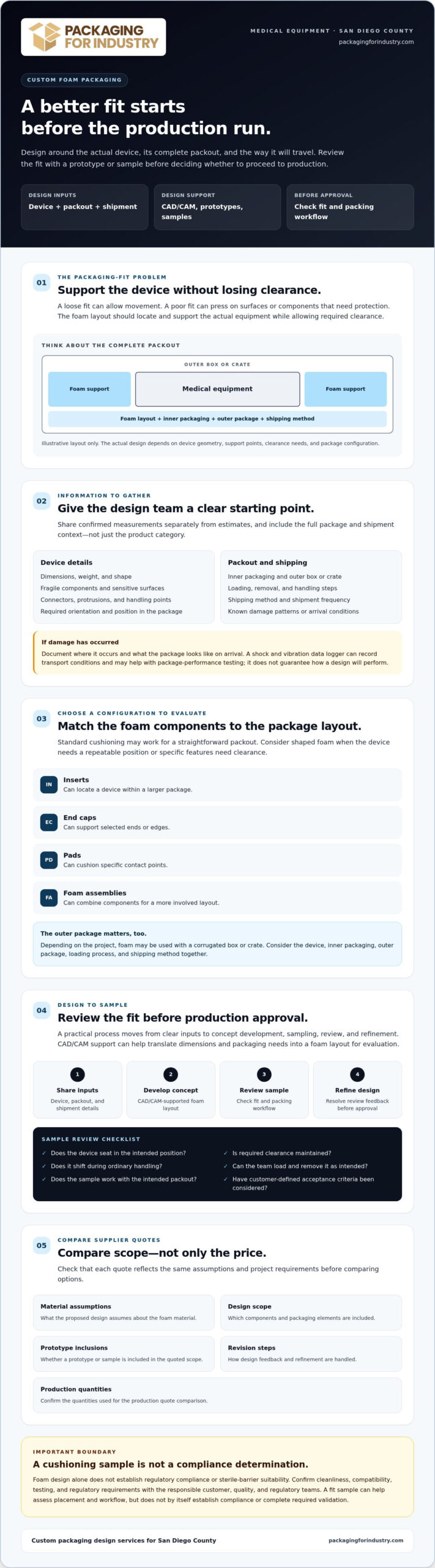
Base the design on the actual device and complete packout, not just a general product category. Consider inner packaging, the outer box or crate, how the equipment is loaded and removed, and the shipping method. If damage is recurring, document where it occurs and what the package looks like on arrival. A shock and vibration data logger can record transport conditions and may help teams when testing package performance. Its use is one part of an evaluation, not a guarantee that a design will perform as intended.
Foam design alone does not establish regulatory compliance or sterile-barrier suitability. Confirm cleanliness, compatibility, testing, and regulatory requirements with the responsible customer team. Protective cushioning should not be treated as proof that a device’s sterile barrier or other requirements have been met.
Which medical equipment details influence a foam design?
Provide the device’s dimensions, weight, shape, and features that need support or clearance. Identify fragile components, sensitive surfaces, connectors, protrusions, and designated handling points. Include the required orientation and position in the package, along with details of the inner and outer packaging. Mark which measurements and requirements are confirmed and which are estimates, then ask the appropriate product stakeholders to review uncertain details before design approval.
When is custom foam a better fit than standard cushioning?
Standard cushioning may work for a straightforward packout. A shaped insert may be worth considering when the device needs to sit in a repeatable position or has features that require specific clearance. The right configuration depends on the product and package layout:
- Inserts can locate a device within a larger package.
- End caps can support selected ends or edges.
- Pads can cushion specific contact points.
- Foam assemblies can combine components for a more involved layout.
Use a sample to review fit, loading, removal, and clearance rather than assuming a particular design will prevent damage. PFI provides custom foam packaging and design services, including prototypes and samples. Explore custom foam packaging options when planning a project-specific solution.
How Custom Foam Design and Prototyping Fits Medical Equipment
A useful prototype process starts with clear inputs, then moves through concept development, sampling, review, and refinement. CAD/CAM support can help translate device dimensions and packaging needs into a foam layout for evaluation. For buyers sourcing custom foam packaging for medical equipment San Diego, a sample provides a practical opportunity to check the design before deciding whether to proceed to production.
What should buyers provide before requesting a prototype?
Share product drawings or measurements and identify which details are confirmed versus estimated. Include the device’s weight, required orientation, handling needs, and intended outer box or crate. Describe the shipping method and frequency, along with known damage patterns, such as a component arriving displaced or a surface showing contact marks. These inputs help the packaging team consider the whole shipment rather than designing around the device alone.
Share any customer-defined acceptance criteria as well. A fit sample can help assess placement and workflow, but it does not by itself establish regulatory compliance or complete required validation. Consult your organization’s quality and regulatory stakeholders about applicable obligations and testing. The FDA’s device packaging requirements reference is one resource to review with those stakeholders.
How should teams review a foam prototype?
Evaluate the sample with the intended packout and handling steps. Check whether the device seats correctly, shifts during ordinary handling, or catches when inserted or removed. Confirm that the foam does not obstruct required handling points and that the packed device fits the outer container as planned. If the shipment uses a box or crate, assess that configuration too, not just the foam on its own.
Record specific observations so requested revisions address clear issues. Include engineering, operations, quality, and shipping stakeholders in the review. Each team can consider a different part of the process, from product contact to packing efficiency. The customer should define acceptance criteria and decide whether additional testing is required before production approval.
Packaging For Industry offers CAD/CAM support, prototypes, and samples through its custom packaging design services. Before you request a project-specific foam packaging quote, gather the product and shipping inputs above to help clarify the scope.
Compare Foam Materials and Packaging Configurations for the Shipment
Select the foam and outer package as a coordinated system. A foam option may fit the device but still be a poor match for the container, packing process, or shipping conditions. For custom foam packaging for medical equipment San Diego projects, compare polyethylene and polyurethane against documented product and shipment requirements rather than assuming one material is always better.
How should buyers compare polyethylene and polyurethane foam?
Ask the supplier to assess the product geometry, cushioning needs, and intended package configuration. Confirm density, firmness, and performance specifications for the project instead of relying on the material name alone. Share the requirements the foam must meet, then ask the supplier to explain the basis for its recommendation and identify any assumptions that need customer review.
Verify material suitability and any customer-required testing with the project team. If the device has cleanliness, compatibility, or regulatory requirements, confirm them with the appropriate customer stakeholders. Foam used for protective cushioning does not establish sterile-barrier compliance on its own. For applicable sterile-device packaging considerations, consult quality or regulatory experts and review the ISO 11607-1 standard.
Should foam ship inside a box or a crate?
First check whether the existing outer packaging is appropriate for the shipment and has been confirmed by the customer. If so, a foam-only design may be the right scope. If the shipment needs a coordinated container and cushioning approach, consider foam-lined corrugated boxes or crates. Choose based on the equipment, handling, and shipping configuration rather than a universal rule about which container is best.
PFI offers custom foam packaging, including inserts and foam-lined packaging, and can pair foam with a box or crate when the project calls for an integrated solution. Its custom packaging design services can help buyers assess the complete packout. Review how the foam fits within the container, how the equipment is loaded and removed, and whether the finished package suits the intended shipping method.
Keep the quote scope specific: list the assumed foam material, the outer container, and each included component. Clear scope makes it easier to compare proposed configurations and request revisions before approving production.
Evaluate a San Diego Medical Equipment Packaging Quote Before Approval
A useful quote makes the design scope and supply assumptions clear. Compare material choices, prototype inclusions, revisions, and production quantities, not only the price. For medical equipment packaging, clear scope helps procurement compare options and identify potential cost reductions without overlooking shipment requirements.
What should a custom foam packaging quote include?
Provide product details, shipment information, the target configuration, and expected recurring quantities if known. Ask the supplier to state which materials and prototype work are included, which production quantities the quote covers, and whether custom sizes are available. If the shipment may need a corrugated box or crate, confirm whether those components are included or quoted separately.
Ask about bulk pricing when recurring demand makes it relevant, and specify whether the project includes packaging kitting. These details help manufacturers compare complete solutions rather than quotes built on different assumptions.
How can teams reduce uncertainty before approving production?
Agree on sample acceptance criteria with engineering, quality, operations, and procurement before reviewing the prototype. Test the intended packing process with representative equipment and packaging components. Document requested revisions and confirm how customer approval will be recorded before production begins.
Consider how the approved design will work at a manufacturer’s site, warehouse, or distribution center, including storage and handling. For global suppliers and exporters like IMT Medical Devices, dependable protective packaging ensures sensitive equipment remains secure throughout transit. For local sourcing, confirm current San Diego County availability and delivery details for the specific project.
Work With a San Diego-Area Supplier on Custom Medical Equipment Foam
Medical device packaging needs to suit both the equipment and the shipping operation. Packaging For Industry serves medical device manufacturers and lists San Diego County among its Southern California service areas. Confirm service and delivery availability for your specific project when discussing requirements.
What can PFI support during the packaging project?
Products: PFI provides custom foam inserts, end caps, pads, foam assemblies, and foam-lined packaging. Boxes or crates can be included when the shipment calls for an integrated solution.
Design support: Custom packaging services include CAD/CAM support, prototypes, and samples, giving your team a way to review the design and make project-specific decisions before production.
Project fit: A configuration developed around the product and shipment can address fit, handling, and supply needs. Confirm material suitability and any customer-required testing with the appropriate project stakeholders.
Learn more about custom packaging design services.
What information helps move from prototype to a supply plan?
Supply planning: Once the design is approved, share expected order quantities, order frequency, and storage constraints. For recurring demand, discuss whether packaging kitting or a managed inventory program fits your operation, then confirm the scope with the supplier.
Before finalizing, verify San Diego County availability and delivery details for your project. A clear supply plan helps align approved packaging with purchasing and warehouse needs.
To discuss foam options, design support, and project requirements, request a custom foam packaging quote.
Move Your Foam Packaging Project Forward With a Tested Design
Effective custom foam packaging for medical equipment San Diego shipments starts with clear product and transit requirements, followed by design, sample review, and refinement before production. Compare material and configuration assumptions, and agree on sample acceptance criteria with your team. A prototype can help assess fit and packing workflow, but confirm customer-required testing and regulatory or compatibility needs with the appropriate stakeholders.
Packaging For Industry supports custom foam design with CAD/CAM, prototypes, and samples. Options include foam inserts, end caps, pads, and foam-lined packaging, with boxes or crates considered when the shipment calls for them. San Diego County is among PFI’s service areas; confirm project-specific availability and delivery details when discussing your requirements.
With a defined scope and a sample your team can evaluate, you can make a more informed packaging decision and plan the next step. Request a quote for custom foam packaging.
Frequently Asked Questions
How do I get custom foam packaging designed for medical equipment in San Diego?
Start by sharing the device’s drawings or measurements, weight, handling needs, and shipping configuration with a packaging supplier. For custom foam packaging for medical equipment San Diego projects, Packaging For Industry offers custom design support, including CAD/CAM, prototypes, and samples. Those inputs can help develop a concept for review. Confirm the project scope, material suitability, and San Diego County service availability before moving forward.
What information should I provide for a medical equipment foam packaging quote?
Provide product dimensions, weight, shape, and details about fragile components, sensitive surfaces, or areas needing clearance. Include the intended orientation, outer box or crate, shipping method, shipment frequency, and any known transit damage patterns. Drawings are useful, but identify which measurements are confirmed and which are estimates. Also share expected order quantities, material or customer requirements, and whether you need a prototype or sample.
Can a foam packaging prototype be tested before production?
Yes. A prototype or sample can be reviewed before a production decision. Use representative equipment and packaging components to assess fit, movement, insertion and removal, access, and the packing workflow. Define acceptance criteria and any required testing in advance. A fit review alone does not establish regulatory or sterile-barrier compliance, so confirm applicable requirements with your quality and regulatory stakeholders.
Which foam is best for medical equipment packaging?
There is no single best foam for every device or shipment. Compare polyethylene and polyurethane against product geometry, cushioning needs, and package configuration. Ask the supplier to explain its recommendation and confirm relevant density, firmness, and performance specifications for the project. Verify material compatibility, cleanliness needs, and customer-required testing with the appropriate stakeholders rather than relying on assumptions based on foam type.
Should medical equipment foam packaging include a box or crate?
Include an outer box or crate if the existing container is unsuitable or the shipment calls for an integrated packaging design. If your current outer packaging is appropriate and confirmed, the project may need only foam components. PFI can provide foam-lined boxes or crates alongside foam inserts, end caps, pads, and assemblies. Review the complete packout, including how the equipment is loaded, handled, and shipped.
Does PFI serve medical device companies in San Diego County?
Yes. Packaging For Industry serves medical device manufacturers and lists San Diego County among its Southern California service areas. PFI provides custom foam packaging and design support, including CAD/CAM, prototypes, and samples. Confirm current service and delivery availability for your location and project. Discuss required materials, packaging configuration, and customer-defined testing or compatibility needs as part of the quote process.
What should I compare when choosing a custom foam packaging supplier?
Compare design scope, material assumptions, prototype and sample inclusions, revision process, and quoted production quantities. Ask how customer review and approval are handled, and whether the supplier can assess the complete packout, including a box or crate if needed. Confirm project-specific service and delivery availability for San Diego County. Clear assumptions make quotes easier to compare and help your team avoid approving a design before reviewing it.
To discuss your equipment, shipping requirements, and custom foam packaging options, request a project quote from Packaging For Industry.