
Could the film on your wrapping line be limiting consistency as much as the wrapping process itself? Manual pallet wrapping can constrain throughput, but switching to machine grade stretch film in Southern California isn’t a standalone fix. Film, load, and wrapping equipment need to work together to support secure, repeatable pallet loads without unnecessary material use.
A machine wrapping setup may make packaging more consistent, but the right choice depends on your workflow and load requirements. Before requesting a stretch film quote, document where pallets are wrapped, what the loads look like, and which equipment is in use. Then coordinate film selection with your equipment provider and plan supply around recurring demand. This guide explains what manufacturers, warehouses, distributors, and fulfillment operations should review when evaluating machine wrapping. Packaging For Industry supplies machine stretch film from its Anaheim base and supports recurring needs through Vendor Managed Inventory and just-in-time programs. Local next-day delivery is available throughout Southern California; confirm availability for your location and order. Use the steps below to prepare for a focused comparison and a reliable supply plan.
Key Takeaways
- Map where pallet wrapping takes place and assess whether machine or automated wrapping fits the workflow before changing materials or processes.
- Evaluate film, pallet loads, and wrapping equipment as a system, and confirm film suitability with your equipment support team.
- Compare cast, blown, and pre-stretched film by intended workflow and buyer requirements, not by assumed performance rankings.
- Use a structured review with operations, procurement, warehouse staff, and equipment support to document needs and plan replenishment.
- When sourcing machine grade stretch film Southern California businesses can discuss current film options, order patterns, and recurring supply planning with PFI.
Machine Grade Stretch Film in Southern California: Where Automation Fits
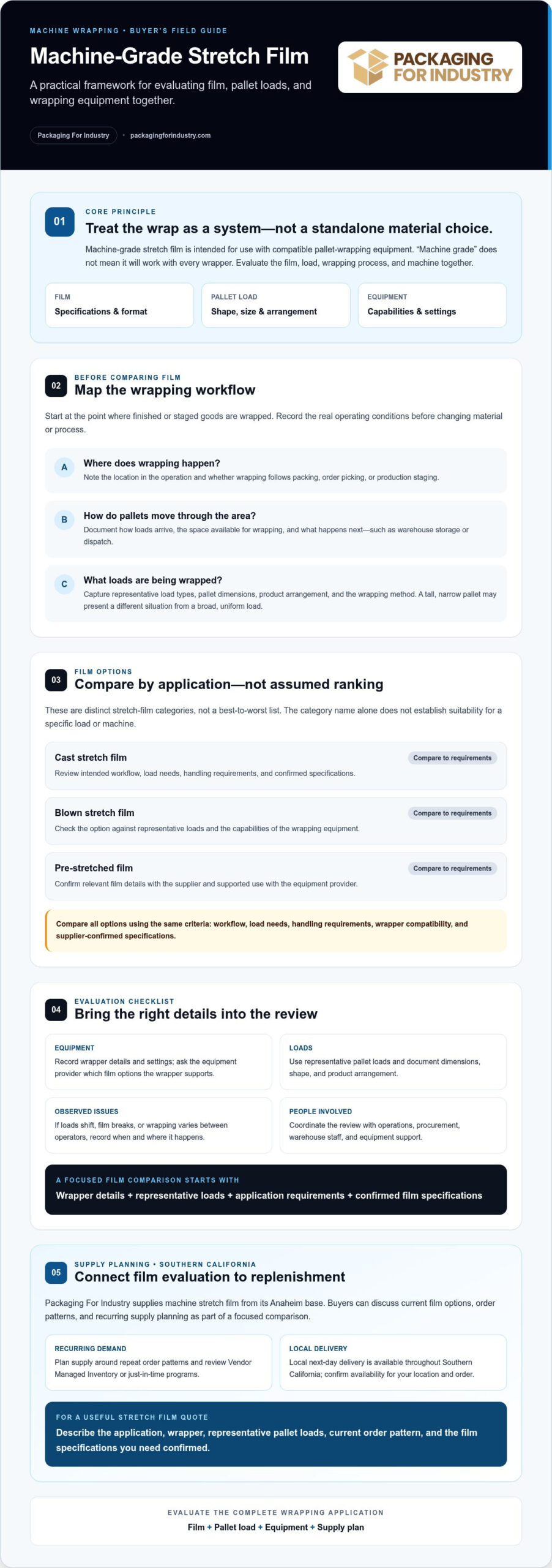
Machine grade stretch film is film intended for use with compatible pallet-wrapping equipment to secure unit loads for handling and shipment. “Machine grade” describes its intended application, not a promise that it will work with every wrapper. Evaluate the film, load, wrapping process, and machine together.
In industrial operations, pallet wrap helps contain goods grouped on a pallet as they move through a warehouse or distribution process. This differs from household or consumer wrapping, which typically serves smaller, non-palletized tasks. For manufacturers and distributors considering machine grade stretch film Southern California, start by identifying where pallet wrapping occurs and whether that recurring step is a candidate for machine assistance.
Stretch wrap, also called stretch film, is a broad category with different applications and types; Wikipedia’s overview of stretch wrap provides neutral background. For product selection, confirm film details with a supplier and the intended use with the equipment provider. Packaging For Industry supplies stretch film for business packaging needs. See its stretch film page for product information.
Which packaging line tasks might benefit from machine wrapping?
Map the points where finished or staged goods are wrapped. A recurring step after packing, order picking, or production staging may be worth assessing when staff repeat the same manual motions across a regular flow of loads. Record where wrapping takes place, how pallets reach the area, and what happens next, such as warehouse storage or dispatch. Also note the space available for wrapping and the types of loads moving through that point. Equipment suitability depends on the existing line, available space, and loads being wrapped.
What does machine grade mean for an industrial buyer?
Machine grade indicates intended use with pallet-wrapping equipment; it doesn’t establish universal machine compatibility. Film format and properties are separate from the wrapper’s capabilities and settings. Before changing materials, share the wrapper details and representative load information with the film supplier and equipment provider. Ask them to confirm the relevant specifications and compatibility for your application. This keeps the evaluation grounded in your operation rather than assumptions based on the label.
How Machine Stretch Film, Pallet Loads, and Wrapping Equipment Work Together
Film choice can’t be evaluated in isolation. Pallet dimensions, load shape, product arrangement, wrapping method, and machine settings all affect how the load is contained. A tall, narrow pallet presents a different wrapping situation from a broad, uniform load, so assess representative loads rather than assuming one film will suit every shipment.
Compatibility must be assessed across the film, the pallet load, and the wrapping equipment as one system. The wrapper’s capabilities and settings need to align with the film specifications confirmed by the supplier and the load’s requirements. If a load shifts, film breaks, or wrapping varies between operators, document when and where the issue occurs before changing materials or settings. That record gives operations, procurement, and equipment support a clearer basis for review.
How should buyers compare cast, blown, and pre-stretched film?
Cast stretch film, blown stretch film, and pre-stretched film are distinct categories for industrial applications, not a simple ranking from best to worst. Compare them by intended workflow, load needs, handling requirements, and the formats and specifications your supplier can confirm. Ask the equipment provider which options the wrapper supports. Don’t assume a category name alone establishes suitability for your loads or machine.
For a local sourcing discussion, a buyer seeking machine grade stretch film Southern California can request a quote that describes the application and asks the supplier to confirm current film options and specifications. This keeps the comparison tied to operational requirements instead of assumptions about category names.
What load and equipment details matter before a film trial?
Prepare a short, practical record before testing an option:
- Typical pallet dimensions and representative load profiles, including differences in shape or arrangement.
- Where wrapping occurs in the workflow and how loads move to and from the wrapping area.
- The wrapping equipment in use and which film formats or specifications its provider confirms it can handle.
- Current issues, such as inconsistent wrapping, film breaks, or load movement, and how the team will assess any change.
Agree on the review method before a trial so the team compares like with like. Operations and warehouse staff can describe everyday load conditions; procurement can track film usage and replenishment needs; equipment support can confirm machine requirements. The Future of Automation in Packaging and Processing offers broader industry context on packaging automation, while your own line and load data should guide the film evaluation.
For a supplier conversation, request a stretch film quote with your equipment and load details available. That gives the discussion a practical starting point without presuming compatibility or results.
Compare Machine Grade Stretch Film Options for Southern California Operations
Compare film by how it will be used, what your wrapping equipment supports, and how your site handles recurring pallet volume. Cast, blown, and pre-stretched film are categories to discuss with a supplier, not automatic indicators of which option is right for a particular load. Include hand stretch film in the comparison if some pallets are wrapped manually or your site is assessing whether to change its process.
| Film category | Intended workflow | Equipment confirmation | Buyer questions |
|---|---|---|---|
| Cast stretch film | Consider for the operation’s identified pallet-wrapping needs. | Ask the equipment provider to confirm supported formats and specifications. | Does the supplier-confirmed option suit the loads and process being evaluated? |
| Blown stretch film | Evaluate as another industrial film category for the site’s wrapping workflow. | Confirm suitability with the wrapper provider before selecting it. | What specifications are available for the intended application? |
| Pre-stretched film | Discuss where this category could fit in the operation’s pallet-wrapping process. | Verify equipment compatibility and operating requirements. | What load and workflow details should guide selection? |
| Machine stretch film | Used with compatible pallet-wrapping equipment. | Confirm the film and machine requirements together. | Which currently available options match the equipment and loads? |
| Hand stretch film | Manual wrapping by an operator rather than machine-assisted wrapping. | Not selected on the basis of wrapper compatibility; assess the manual application. | Is manual wrapping still appropriate for the site’s volume and workflow? |
For a broader look at machine stretch film and pallet wrap, review the product category and confirm current options and specifications with the supplier. To discuss your application and order pattern, request a machine stretch film quote.
Machine stretch film or hand stretch film: which workflow are you evaluating?
Machine-assisted wrapping and hand wrapping are different process contexts. Assess how often pallets are wrapped, where wrapping fits into the line, and whether recurring volume makes equipment-based film worth evaluating. Include storage space for rolls and supplies in the review. A change should account for actual workflow, not just the film category.
What should Southern California buyers ask a stretch film supplier?
For machine grade stretch film Southern California operations, share the wrapper details, representative load requirements, and current order patterns. Ask which confirmed film options suit the application, what bulk packaging supplies can be planned, and whether local delivery is available for your site and order. Buyers in Anaheim or elsewhere in Orange County, Los Angeles County, the Inland Empire, or San Diego should also discuss recurring replenishment needs. PFI supports recurring packaging through Vendor Managed Inventory and just-in-time programs, which may help align supply with site demand.
Plan a Machine Stretch Film Evaluation Before Changing Your Packaging Line
A controlled evaluation gives your team a basis for comparing options without assuming a change will reduce costs, speed up wrapping, or prevent damage. Start with your operation’s own records, then involve the people who handle film, loads, equipment, purchasing, and replenishment. This connects a film quote to the packaging workflow it needs to serve.
Build a baseline before making changes
Document how the current process works and agree on what the team will review. Use a numbered sequence to keep the evaluation organized:
- Record current film use, wrapping practices, and the types of pallets being wrapped.
- Note recurring issues, such as film breaks, inconsistent wrapping, or load movement.
- Capture available internal measures, such as film used per pallet, wrapping labor steps, or reported load problems.
- Ask equipment support to confirm compatible film formats and any relevant operating requirements.
- Review proposed film specifications with the supplier before a trial.
- Confirm order patterns, storage capacity, and replenishment needs before adopting a new option.
Operations, procurement, warehouse staff, and equipment support each contribute different information. Involve them early so the review includes both day-to-day handling and purchasing requirements.
Prepare useful details for a film quote
Describe the application, recurring order needs, and representative pallet or load profiles. Share known equipment requirements, but ask the supplier to confirm current film options and specifications rather than assuming a match. Include the delivery location and whether you need a one-time order or recurring supply. PFI also provides manufacturing packaging support for businesses reviewing their packaging requirements.
Assess any proposed change consistently
Before a trial, decide which internal measures matter and how the team will record them. Keep the comparison consistent by tracking the same kinds of loads and process conditions, and consult equipment support before changing machine settings or film specifications. Interpret results against your own baseline rather than treating them as guaranteed savings, speed gains, or damage reduction.
For machine grade stretch film Southern California operations, also plan how stock will be replenished if the selected option fits the application. PFI can discuss order patterns and recurring supply through stocking, Vendor Managed Inventory, or just-in-time programs. Confirm local delivery availability for your location and order.
Source Machine Grade Stretch Film Locally from PFI in Southern California
Packaging For Industry (PFI) is an Anaheim-based industrial packaging supplier serving manufacturers, warehouses, distributors, and fulfillment operations across Southern California. For businesses evaluating machine stretch film, PFI can discuss current options and specifications for the application, as well as related industrial packaging needs where relevant.
Products
PFI supplies machine stretch film and other industrial packaging materials, including pallets, corrugated boxes, and foam packaging. Explain how film fits into your packaging process so the supplier can confirm which current options and specifications are appropriate to discuss.
Industries Served
PFI supports packaging needs for manufacturers, warehouses, distributors, and fulfillment operations. These settings rely on packaging to keep production, storage, and shipping workflows moving, so a dependable supply plan matters when film is used regularly.
Benefits of Planned Local Supply
Planning replenishment around actual usage, order patterns, lead times, and available storage can help teams manage inventory and reduce the risk of emergency purchasing or shortages. PFI supports recurring demand through stocking, Vendor Managed Inventory, and just-in-time programs. Learn more about packaging Vendor Managed Inventory and discuss whether it fits your site’s needs.
Why Choose PFI?
PFI serves Southern California from its Anaheim base and offers local next-day delivery throughout the region. Delivery availability depends on the location and order, so confirm timing when discussing supply. PFI can also review your application, known equipment requirements, and ordering pattern to support a practical quote discussion.
What should buyers include in a Southern California quote request?
Include your machine stretch film application, relevant pallet or load details, known equipment information, delivery location, and whether the order is one-time or recurring. Add typical ordering patterns and any related packaging requirements. Ask PFI to confirm suitable current options, specifications, availability, and delivery details for your order.
Build a More Reliable Wrapping and Supply Plan
Machine wrapping decisions work best when film, pallet load, equipment, and replenishment are reviewed together. Before switching materials, document current usage, confirm film requirements with your equipment provider, and assess any proposed change against your operation’s own baseline. This helps your team make a practical choice without relying on unsupported assumptions about performance or savings.
For businesses sourcing machine grade stretch film Southern California, Packaging For Industry offers machine stretch film from its Anaheim base and serves businesses throughout the region. Local next-day delivery is available across Southern California, subject to confirmation for your location and order. For recurring demand, PFI can also discuss stocking, Vendor Managed Inventory, and just-in-time supply options.
Share your application, equipment details, and order pattern with PFI to start a focused supplier conversation. With that information, your team can plan packaging supply with greater confidence.
Frequently Asked Questions
What is machine grade stretch film?
Machine grade stretch film is stretch film intended for use with compatible pallet-wrapping equipment. Industrial buyers use it to wrap palletized goods as part of warehouse, production, or shipping workflows. “Machine grade” describes the intended application, not universal compatibility with every wrapper. Confirm available film specifications with the supplier and check that they meet the requirements provided by your equipment provider and the loads you plan to wrap.
Is machine stretch film different from hand stretch film?
Yes. Machine stretch film is intended for use with compatible wrapping equipment, while hand stretch film is applied manually by an operator. The appropriate option depends on the wrapping process, equipment, and load requirements at your site. If you’re considering a process change, review how often pallets are wrapped and where wrapping fits into the workflow. Don’t assume one type is suitable for every load or application.
How do I choose machine grade stretch film for my packaging line?
Start by documenting representative pallet dimensions, load profiles, current wrapping practices, and recurring issues. Ask your equipment provider which film formats and specifications the wrapper supports, then confirm available options with a stretch film supplier. Involve operations, procurement, and warehouse staff so the choice reflects actual workflow and replenishment needs. If you evaluate a change, agree on internal measures beforehand and compare results against your own baseline.
Can machine stretch film work with any pallet wrapper?
No. Machine stretch film isn’t automatically compatible with every pallet wrapper. Equipment capabilities and requirements vary, and the film must be assessed against the machine and the loads being wrapped. Before ordering or changing film, provide equipment details to your supplier and confirm requirements with the equipment provider. Avoid changing film specifications or machine settings based only on a general film category or label.
Where can I buy machine grade stretch film in Southern California?
Packaging For Industry (PFI), an Anaheim-based industrial packaging supplier, offers machine stretch film to Southern California businesses. PFI serves manufacturers, warehouses, distributors, and fulfillment operations, with local next-day delivery throughout the region. Delivery timing depends on the location and order, so confirm availability when requesting a quote. Ask PFI to verify current film options and specifications for your equipment and application before selecting an option.
What information should I provide when requesting a stretch film quote?
Share the application, typical pallet or load profiles, and any known film requirements from your equipment provider. Include available wrapper information, your delivery location, and whether you’re placing a one-time order or planning recurring supply. It also helps to describe current order patterns and related packaging needs. PFI can use these details to discuss suitable available options and confirm specifications, availability, and delivery details.
Can a supplier help manage recurring machine stretch film inventory?
Yes. A supplier may help plan recurring supply through stocking, Vendor Managed Inventory (VMI), or just-in-time programs. PFI supports recurring packaging needs with these options. Discuss actual film usage, ordering patterns, lead times, and available storage to determine what approach may fit your operation. Planned replenishment can help your team manage supply more deliberately, but confirm program details with PFI based on your site’s requirements.