
When an aerospace component shifts or gets damaged in transit, the foam may not be the only issue. The insert, component, and outer box or crate need to work together. For Los Angeles aerospace teams, custom foam inserts for aerospace component transit should be specified around the part’s geometry, protection needs, and packing process. The insert must support the component and fit the way your team packs, handles, and ships it.
A well-specified insert can help secure a complex part and make repeat shipments easier to pack consistently. This guide explains how to assess component geometry, handling needs, foam material, and outer packaging. It also covers how CAD/CAM design support, prototypes, and samples help teams review fit and workflow, and how foam can be combined with corrugated boxes or crates. The goal is a practical packaging plan that helps reduce avoidable transit damage and supports reliable operations.
Key Takeaways
- Specify custom foam inserts for aerospace component transit around the part’s shape, contact points, handling, and packing workflow.
- Use requirements gathering, design development, prototype review, and production planning to create a repeatable pack-out process.
- Compare inserts, end caps, pads, and foam-lined boxes or crates based on the role each plays in the packaging system.
- Review fit, stability, access, removal, and compatibility with the outer package before approving a design for production.
- Include component details, shipping context, and expected quantities when requesting a foam packaging quote.
Why aerospace component transit calls for a component-specific foam insert
A custom foam insert is shaped cushioning designed around a particular component and its packaging system, helping support the part in line with its transit requirements. Design should start with the component’s features and how it will be packed, handled, and shipped, rather than a generic foam layout.
A shipping insert works inside an outer package, such as a corrugated box or crate, to address the component’s needs during shipment. A fitted case interior may serve a different packing and handling setup. Neither format suits every shipment. For aerospace teams in Los Angeles, aerospace packaging solutions can bring the foam and outer package into one coordinated design.
What transit risks should an aerospace packaging brief identify?
Begin with what your team knows. Record observed damage separately from anticipated risks, and note concerns related to handling, stacking, vibration, or impact without assuming a specific test condition. Include shipment frequency, route context, and whether the packaging will be reused. These details help shape a brief around actual operations instead of broad assumptions.
Why component geometry changes the insert design
Shape, mass distribution, delicate surfaces, and protrusions all affect where an insert should support a part. Support locations should help limit movement without pressing on sensitive areas. Drawings, a physical sample, or clear measurements can communicate design intent and reveal features that an overall dimension alone may miss.
For example, a component with an off-center mass distribution may need support in different locations than a more uniform part. A protruding connector or exposed surface can also affect the cavity layout and how the component is placed or removed. The goal is a stable fit, but the appropriate fit depends on the part and packaging system, not a universal tolerance.
Foam structure is one material consideration, not a substitute for understanding the part and shipment. For background on closed-cell foams and other foam structures, see the general overview. The practical design decision still depends on the component’s requirements and operating context.
Clear inputs can prevent avoidable design revisions. For custom foam inserts for aerospace component transit, include part information, known handling concerns, pack-out steps, and reuse expectations in the initial brief. This gives the insert a defined job: support the component, fit the outer package, and work consistently in the shipping process.
How custom foam inserts are engineered around aerospace components
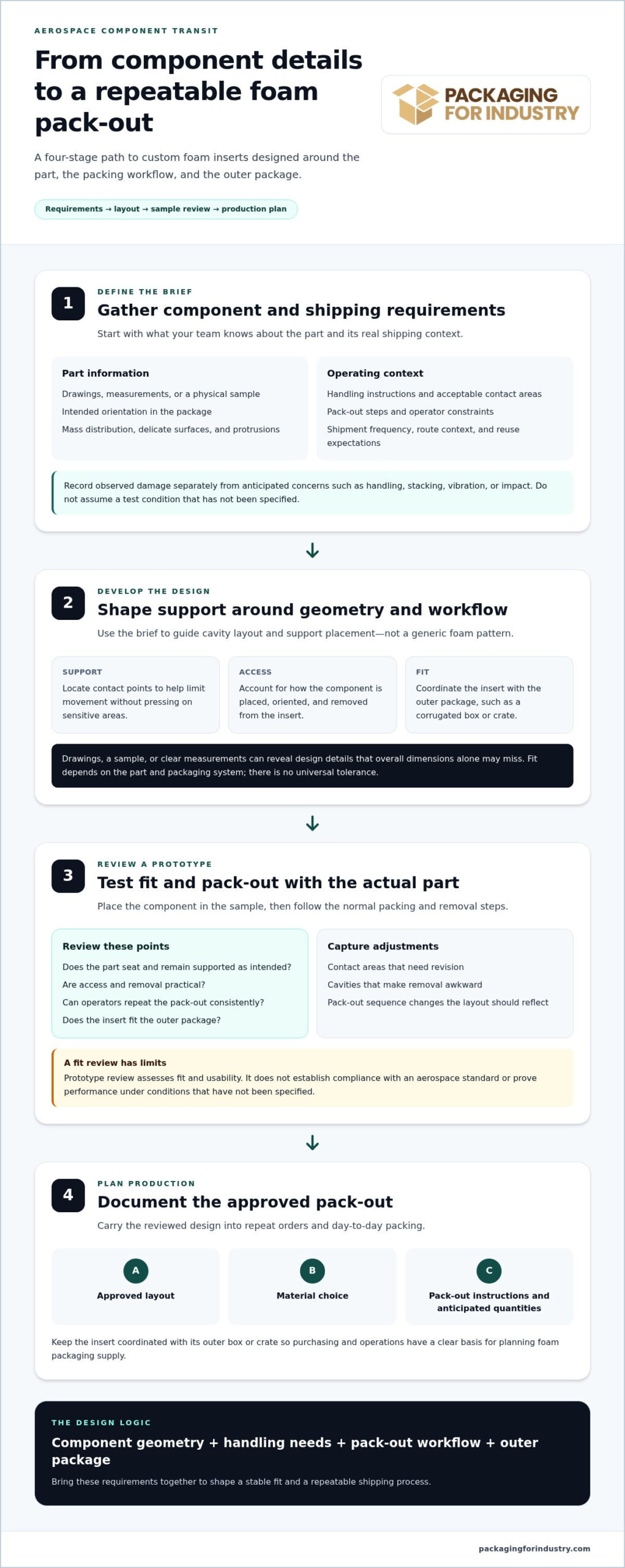
A reliable insert design moves through four stages: gather component and shipping requirements, develop the layout, review a prototype, then plan production around the approved design and expected quantities. Reviewing a prototype before broader production gives the team an opportunity to assess fit and pack-out steps.
For custom foam inserts for aerospace component transit, the design brief should capture both the part and the way people handle it. Useful inputs include:
- Component drawings, measurements, or a sample, plus the intended orientation in the package.
- Handling instructions and identification of protected surfaces, vulnerable features, and acceptable contact areas.
- Pack-out steps, operator constraints, expected quantities, and relevant packaging reuse expectations.
These details guide cavity layout and support placement. If an operator needs to position a part in a particular orientation or remove it without pressing on a vulnerable feature, that requirement should shape the insert. PFI’s custom packaging design services use CAD/CAM support to develop packaging around project requirements and the complete packaging system.
How do prototypes help validate fit and packing steps?
A prototype or sample gives the team a physical design to review. Place the component in the insert and follow the normal removal and pack-out steps. Check how the part seats, whether support is positioned as intended, whether access is practical, and whether operators can repeat the process consistently.
Record requested adjustments before approving the design for production. Notes might identify a contact area that needs revision, a cavity that makes removal awkward, or a pack-out sequence that should be reflected in the layout. Addressing these points during review helps align the insert with the real workflow and resolve design questions before a larger production run.
A prototype review assesses fit and usability. It does not establish compliance with an aerospace standard or prove performance under conditions that have not been specified. If a project has defined performance criteria, include them in the requirements and distinguish them from observations made during a fit review.
How should production planning use the approved design?
After sample review, document the approved layout, material choice, pack-out instructions, and anticipated quantities. This connects the design to repeat orders and day-to-day packing. It also gives purchasing and operations teams a clearer basis for planning foam packaging supply and coordinating the insert with its outer box or crate.
For a project-specific custom foam packaging quote, share component information, workflow requirements, and expected quantities so the design discussion starts with practical inputs.
Choosing foam, inserts, and outer packaging for aerospace transit
The right configuration depends on the component, its handling requirements, and how the package moves through your operation. An insert can locate a shaped part, end caps can support selected ends, and pads can cushion or separate surfaces and package layers. The outer box or crate provides structure around the foam design. PFI supplies these foam packaging formats for consideration alongside corrugated boxes or crates as one transit system.
Match the configuration to its role
Use the comparison below to frame the design discussion. It describes typical functions, not a universal recommendation for every aerospace shipment.
| Configuration | Suitable packaging context | Design considerations |
|---|---|---|
| Shaped foam insert | Box or crate holding a component in a defined orientation | Cavity shape, support locations, access, and removal sequence |
| Foam end caps | Components where localized support at the ends fits the packing approach | End geometry, contact areas, and how caps stay positioned |
| Foam pads | Layered or separated items within an outer package | Pad placement, contact surfaces, and packing sequence |
| Foam-lined box or crate | Transit packaging that integrates cushioning with the outer container | Interior layout, container dimensions, access, and handling workflow |
A foam-lined crate can combine component support with a defined outer structure. For wood crate projects, consider how the foam layout, crate interior, and pack-out steps work together instead of treating the cushioning as a separate choice.
How should material selection reflect component requirements?
Polyethylene foam, polyurethane foam, and ESD foam are material categories to evaluate against the part and its packaging requirements, not a simple ranking from best to worst. Geometry, handling needs, packing workflow, and project criteria all inform selection. If the component requires static-control packaging, ESD foam can be considered as part of the specification rather than assumed by default.
Describe the component, contact areas, and shipping context in the design brief, then evaluate material and configuration together. Foam that suits the component still needs to fit the box or crate and work for the people packing and unpacking it. This integrated approach helps align custom foam inserts for aerospace component transit with operating requirements and supports a repeatable pack-out.
How to specify and review a custom aerospace foam insert
A clear specification gives engineering, packaging, and purchasing teams a shared reference for design review and repeat orders. For custom foam inserts for aerospace component transit, document component requirements alongside the complete pack-out, including the outer package and any materials used with the insert.
What should a packaging specification capture?
- Part data: Record component identification, dimensions, orientation, and handling instructions provided by the engineering team. Include drawings, measurements, or a sample as design references.
- Protection needs: Mark surfaces and features that need protection, areas that can contact the foam, and handling concerns relevant to shipment.
- Packing workflow: Describe the loading sequence, operator access, removal method, and practical constraints during pack-out.
- Supply pattern: Note expected quantities, order patterns, and recurring production or shipping requirements. These details help align the design with how the packaging will be replenished and used.
- Complete configuration: Identify the required box or crate, labels, and other packing materials so the insert can be reviewed as part of the full package.
Packaging reviews can help teams identify opportunities to address known damage concerns or simplify packing steps. Treat these as design options to evaluate, not guaranteed outcomes. PFI’s custom packaging design services support design development and prototype review around project requirements.
What should teams assess during prototype review?
Review the prototype using the intended component and normal pack-out steps. Confirm that the part seats consistently, rests on the intended support areas, and can be loaded and removed without disrupting the insert. Check operator access, how the insert sits inside the outer package, and whether the full configuration works with the planned handling process.
Keep observations specific. Note where the component shifts, where removal feels awkward, or where the insert moves within the box or crate. Record approved revisions and update the packaging specification to match the final design. This gives operators and purchasing teams a consistent reference for recurring shipments and helps prevent outdated instructions from conflicting with the approved layout.
Distinguish fit and workflow observations from any separate project performance criteria. Document what was reviewed, what changed, and which design is approved for production. That record supports clear communication across engineering, operations, and procurement.
PFI custom foam inserts for aerospace packaging programs
Aerospace components often need packaging that works as a complete transit system, not as separate foam and container purchases. Packaging For Industry combines custom foam packaging with corrugated boxes or crates, helping align the insert’s support layout with the outer package and the way teams pack shipments. PFI serves aerospace and defense customers with aerospace packaging solutions tailored to project requirements.
CAD/CAM support helps translate component and packaging information into a design for review. Prototypes and samples let teams evaluate the proposed configuration before production. This supports informed design decisions while keeping project-specific performance criteria distinct from fit review.
How can integrated packaging support repeat shipments?
For recurring shipments, the insert, box or crate, cushioning materials, and pack-out instructions should work together. A defined configuration gives operators a consistent reference for positioning, packing, and removing the component. It also helps purchasing and operations plan for repeat quantities and supply needs. Evaluate custom foam inserts for aerospace component transit not only for component fit, but also for how reliably the complete pack-out fits the shipping workflow.
Packaging reviews can identify opportunities to refine the layout or simplify packing steps. Consider those opportunities alongside outer-package requirements and expected order patterns, with the goal of supporting dependable supply and reducing avoidable damage or packaging inefficiencies.
What to include when requesting a foam packaging quote
Share the information that defines the packaging system: component measurements or drawings, protection requirements, and relevant shipment context. Include preferred outer packaging, such as a corrugated box or crate, along with expected quantities and repeat-order needs. Pack-out instructions and handling considerations can clarify how the design needs to work in daily operations.
These details connect the foam design to the part, container, and supply plan from the start. A clear quote request also gives the project team a practical basis for discussing design review, prototypes, and production requirements.
Build a packaging plan around your component
Reliable aerospace transit protection starts with component geometry, vulnerable areas, handling exposure, and pack-out process. Custom foam inserts for aerospace component transit should be evaluated as part of the complete package, including the box or crate and the steps operators follow for recurring shipments.
PFI supplies custom foam inserts, foam end caps, and foam-lined boxes or crates for aerospace and defense customers. CAD/CAM support, prototypes, and samples help teams review design fit and packing workflow before production. Aligning these elements can support a consistent pack-out and help address avoidable damage concerns.
Bring component drawings or measurements, protection requirements, shipment context, and expected quantities into the packaging discussion. These details give the design process a practical starting point and connect foam selection with the outer packaging and operational needs.
For aerospace packaging support in Los Angeles, Orange County, San Diego, and Riverside, request a custom packaging quote from PFI. Share your component details and expected quantities to start planning a foam and outer-packaging solution for your operation.
Frequently Asked Questions
How are custom foam inserts designed for aerospace components?
Custom foam inserts are designed around the component, its protection requirements, and the packaging used for transit. The process considers drawings or measurements, orientation, vulnerable features, contact areas, handling instructions, and pack-out steps. CAD/CAM support can translate those inputs into a proposed layout, while a prototype or sample lets the team review fit and usability before production. The final configuration should reflect project-specific requirements.
What information is needed for an aerospace foam insert quote?
Provide component measurements or drawings, intended orientation, protected areas, and relevant handling instructions. Include shipment context, preferred outer packaging, expected quantities, and whether shipments recur. Pack-out steps can clarify how operators need to place and remove the part. These details help define a foam packaging quote around the component and shipping workflow, rather than treating the insert as a standalone item.
Which foam material is suitable for aerospace component transit?
The suitable material depends on the component’s requirements and packaging system. Polyethylene foam, polyurethane foam, and ESD foam are categories to evaluate against part geometry, handling needs, and project criteria. There is no single material for every aerospace shipment. If static-control packaging is required, include it in the design brief. Material selection should reflect the project’s stated needs rather than assumed performance rankings.
Can foam inserts be used inside corrugated boxes or crates?
Yes. Custom foam inserts can be designed for corrugated boxes or crates, creating an integrated package for component support and transit. Foam end caps, pads, or foam-lined interiors may also suit specific configurations. The choice depends on the component, outer package, handling process, and shipment requirements. Reviewing foam and container together helps ensure the insert fits the packaging system and pack-out workflow.
How does a prototype help assess a custom foam insert?
A prototype gives the team a physical sample to assess component seating, support, access, and removal. Operators can follow the intended pack-out steps and identify adjustments that may improve fit or make the process easier to repeat. Record the review findings and approved revisions before production. A prototype review evaluates fit and workflow, but does not by itself demonstrate compliance with a standard or performance criteria not included in the project requirements.
When should aerospace buyers consider ESD foam packaging?
Consider ESD foam packaging when the component’s requirements call for static-control packaging. Identify that need in the packaging brief alongside protected surfaces, handling instructions, and the intended outer container. This helps the design team assess ESD foam as part of the complete configuration instead of adding it by default. Material and performance criteria should come from the project requirements, particularly when the component needs specific handling.
Can custom foam inserts support recurring aerospace shipments?
Yes. A reviewed insert design paired with defined packing instructions gives operators a consistent reference for recurring shipments. Share expected quantities, order patterns, and preferred boxes or crates during design and supply planning. Packaging For Industry serves aerospace customers in Los Angeles, Orange County, San Diego, and Riverside with custom foam inserts and integrated packaging options tailored to project and operational requirements.