
A kit is more than a box of parts: kitting groups related items in one container for shipment or use, while assembly joins components to create a finished product or item. For manufacturers considering packaging kitting and assembly services in California, the distinction matters: kitting organizes components into a set; assembly brings parts together. Kits can be prepared on demand or in advance, with items received and stored until needed.
You may already know that managing separate components takes warehouse space and adds steps before an order is ready to ship. The key is finding a process that keeps each kit organized and connects preparation with the next stage of fulfillment. This article explains what kitting includes, how components are received and arranged, and how providers combine assembly with fulfillment, shipping, and third-party logistics (3PL). You’ll also learn how inventory approaches such as vendor managed inventory and just-in-time delivery can fit into the workflow, and what to consider when deciding whether these services suit your operation.
Key Takeaways
- Separate kitting from assembly when defining the work: one groups components into a kit, while the other joins parts into an item.
- Map receiving, inventory organization, kit preparation, and shipping as one workflow to clarify handoffs and fulfillment needs.
- Use clear component identification and bill-of-materials checks to keep kits aligned with production requirements.
- Assess outsourced secondary assembly by the tasks, quality controls, and coordination your operation requires.
- For packaging needs tied to product protection or inventory flow, Packaging For Industry offers foam packaging, VMI, and just-in-time packaging inventory management.
What are kitting services?
Industrial kitting groups related components into a prepared package for a defined use. Assembly may also join parts, while kitting organizes them for production, distribution, or shipment.
Industrial Kitting and Bundling
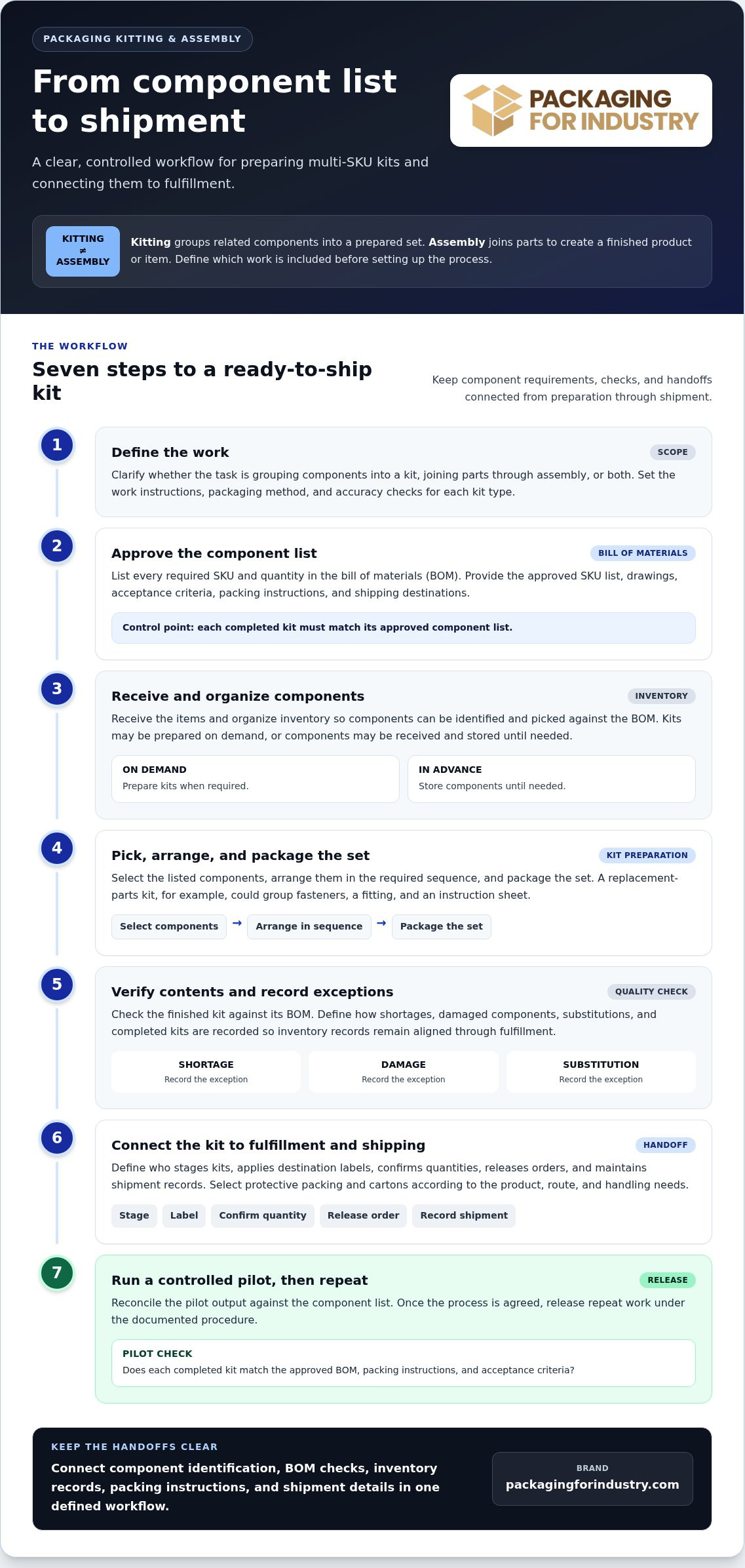
A kitting workflow handles multiple components as one bundle, such as a replacement-parts set containing fasteners, a fitting, and an instruction sheet. Staff follow a defined component list, arrange items in the required sequence, and check the bundle before it moves forward. For California operations, review the work instructions, packaging method, and accuracy checks for each kit type.
Combining Multiple SKUs into Kits
A multi-SKU kit combines separate stock-keeping units into one finished unit for a specific order or production task. The bill of materials lists each required SKU and quantity; inventory systems can use it to guide picking and record stock. For example, a maintenance kit might combine several distinct replacement parts. The key check is matching each completed kit to its approved component list.
Multi-SKU Kit Assembly
Multi-SKU kit assembly adds a repeatable process to bundling: select the components, arrange them, package the set, and verify it against the bill of materials. A kit may receive a new SKU when the combined set is managed as one sellable or operational unit. Confirm how substitutions, shortages, and completed kits are recorded so inventory records stay accurate through fulfillment.
Set quality expectations based on product and customer requirements, then review documented procedures, inspection records, traceability, and corrective actions. Include ISO compliance in the quality review rather than assuming one certificate applies to every product.
California and federal requirements depend on the product and work performed. Labor, workplace safety, labeling, and industry-specific handling may affect operations. Define applicable obligations before launch with the responsible compliance team, especially for regulated components.
California’s state minimum wage for 2026 is $16.90 per hour, according to the California Department of Industrial Relations. That figure is relevant when assessing labor-intensive kitting workflows, but the work content and process design also shape operational planning.
To onboard a provider, supply the approved bill of materials, SKU list, drawings, acceptance criteria, packing instructions, and shipping destinations. Run a controlled pilot, reconcile the output against the component list, then release repeat work under an agreed procedure.
California manufacturers can review the scope of packaging kitting and assembly services when defining how kits should be prepared and handled.
Kitting, assembly, fulfillment, shipping, and 3PL services
In California, contract packaging operations may combine packaging, kitting, assembly, order fulfillment, shipping coordination, and 3PL functions. The scope depends on whether the need is preparing products, processing orders, or coordinating delivery. For manufacturers evaluating packaging kitting and assembly services in California, define the workflow before assigning responsibilities.
Shipping and Fulfillment Integration
Shipping integration connects completed kits with order release, protective packing, carrier handoff, and shipment records. Define who stages kits, applies destination labels, confirms quantities, and releases orders. For example, an industrial distributor may need kits packed by branch and shipped against separate purchase orders. A clear sequence reduces extra handling and keeps shipment details tied to the right order. Choose packaging materials and cartons according to product protection, route, and handling needs.
Retail and E-commerce Fulfillment
Retail and e-commerce workflows turn inventory into customer-ready orders. Staff pick the required items, combine them with inserts or instructions, pack each order, and apply the correct shipping label. A store replenishment order may need grouped cartons, while an online order may require separate packing for each unit. Define quantities, labeling, presentation, and how exceptions are recorded. Clear instructions help fulfillment teams manage repeat orders and changing product combinations.
Order Fulfillment and Tracking
Order fulfillment links the order record to picking, packing, and shipment confirmation. A useful process records which components were picked, which kit was packed, and when the shipment left the facility. Barcode scans and customized labels can help match each industrial kit to its bill of materials with 100 percent accuracy. Define what happens when a component is short, damaged, or substituted. That exception path keeps inventory records and customer updates aligned.
Subscription Box Fulfillment
Subscription programs require repeatable packing that accounts for scheduled variations. A cycle might include a standard product, a seasonal component, and a printed instruction card. The pack plan should identify the correct version, sequence, and destination for each order. Before release, staff can compare the packed contents with the current order specification, helping prevent an insert or component from an earlier cycle entering the next shipment.
A 3PL arrangement can combine storage, order processing, packing, and shipping coordination within an agreed workflow. Define which party owns inventory records, order release, packaging instructions, and shipment communication. Packaging kitting and assembly services in California can connect prepared kits with downstream fulfillment. A clear scope shows where internal teams hand off work and where records must stay synchronized.
Map order flow, kit instructions, packaging requirements, and shipping handoffs before setting up a program. To scope packaging needs alongside order preparation, request a packaging quote.
Component receiving and organization
Reliable kitting starts before assembly, when incoming components are matched to purchase records and routed into controlled inventory. A clear receiving sequence helps prevent shortages, misidentification, and delays at the workbench.
At receiving, staff compare each shipment with its packing list and purchase order. They record the part number, quantity, supplier, and receipt date in the inventory system. For example, fasteners and fittings should be logged as separate components, not as one undifferentiated delivery. Those records give planners a usable view of available stock.
Inspect packaging and component condition before items enter storage. Separate damaged cartons or visibly compromised parts from usable inventory, then document the discrepancy for follow-up. Comparing the received quantity with the order also reveals shortages early. A missing connector found at receiving is easier to address than one discovered during final kit assembly.
Clear identification prevents similar-looking parts from getting mixed. Apply or retain labels showing the internal part number, description, and lot or supplier reference when those details are part of the operation’s records. Store each component in a marked location. The bin label and inventory record should identify the same part, so pickers can distinguish visually similar fasteners.
Arrange storage locations according to handling needs, picking frequency, and kit-preparation sequence. Keep frequently used components accessible without crossing the receiving area. Store items for separate products or revisions in distinct, clearly marked locations. This reduces unnecessary movement and helps prevent an outdated component from entering a current production kit.
Inventory systems connect receipts, storage locations, picks, and replenishment. Configure the system to show available quantities, allocated stock, and incoming components separately. When a work order calls for a defined set, allocation reserves those parts for the job. Staff can identify a shortfall before work starts rather than interrupting an assembly run.
Demand also shapes how inventory should be organized. A steady production schedule may support planned replenishment, while variable orders require close visibility into stock and allocations. Review usage records to identify components that repeatedly hold up kit completion. For subscription programs, separate version-specific inserts and parts so each shipment cycle gets the correct contents.
Before components move to assembly, reconcile the pick against the work order and transfer only the required quantities. Record the remaining stock and return unused parts to their assigned locations. This handoff keeps inventory records aligned with the completed kit, supports traceability, and helps planners schedule the next production run.
Industries served
California manufacturers and distributors use kitting when products, components, or delivery requirements call for organized preparation. The work varies by industry: aerospace parts need clear identification, while e-commerce orders may require consistent combinations and destination-specific labels. Define the product, handling needs, and destination first. These details shape the kit instructions and final handoff.
Aerospace and industrial manufacturing: A production line may need a job-specific set of hardware, maintenance items, or subassemblies staged together. Work instructions should identify applicable part numbers and revisions, then specify how staff verify the kit before delivery to production. This supports orderly handoffs between inventory, kitting, and manufacturing teams. California aerospace operations can define traceability and documentation requirements within their quality processes.
Food companies: Food-related operations may bundle equipment parts, production supplies, or promotional items rather than the food itself. For example, a maintenance kit for a processing line can group replacement components by task. The work order should name each item and destination. Reflect product-specific handling or labeling requirements in established company procedures, rather than assuming a generic kit template covers them.
Medical and electronics businesses: A medical-device operation may organize accessories and instructions for a specific finished product, while an electronics manufacturer may group boards, cables, and protective components for a build. In both cases, use controlled instructions and distinct identification for similar parts. ESD-sensitive components require handling and packaging suited to the product. Let the manufacturer’s requirements guide the process and its records.
Construction suppliers: A delivery may require project-specific bundles of fittings, fasteners, or installation materials. Grouping items by job, location, or work phase helps receiving crews identify what belongs at each site. Ensure the packing list and exterior labels match the project documentation. This helps distribution staff route each bundle without mixing separate deliveries.
Warehouses and distribution centers: These facilities may prepare replenishment sets for branches, dealer orders, or field teams. A branch order, for example, can be grouped by destination and labeled to match its transfer record. Define cut-off handling, order changes, and shortage reporting before launch. These steps connect picking and packing with transportation planning and reduce confusion at receiving locations.
Retail and e-commerce: Store replenishment often calls for store-ready groupings, while individual online orders need order-specific combinations. Subscription shipments may also change contents between cycles. Maintain separate instructions for each version and match each packed order to its destination label. Clear labels and an updated pack plan help fulfillment staff select the right configuration for outbound shipping.
Across industries, assess the same practical factors: component variety, order variability, labeling needs, product protection, and delivery destinations. A stable production kit may follow a repeatable sequence; a distribution program with frequent order changes may need tighter version control. Match the process to the actual workflow to define a useful scope for manufacturers and logistics teams.
Outsourcing secondary assembly operations
Secondary assembly covers work performed after a primary product or component is made. California manufacturers may outsource repeatable tasks that use floor space, labor, or production capacity. Examples include adding accessories, grouping parts, applying labels, or preparing a finished item for distribution. Define where outsourced work begins and where the completed product re-enters the supply chain.
Start by listing each operation, its inputs, and its required output. A manufacturer might send a completed device, accessory set, and printed instructions for final bundling. Document the approved parts, sequence, packaging method, and acceptance criteria. Distinguish routine work from tasks requiring specialized equipment or technical judgment. This helps identify which steps suit an external partner and which should remain in-house.
Outsourcing risks include quality variation, inventory discrepancies, shipment delays, and unclear responsibility for defective or incomplete work. California businesses should also account for confidentiality, product handling, and continuity if demand or component supply changes. Define ownership, recordkeeping, escalation paths, and corrective actions before production transfers.
A controlled launch limits disruption. First, provide current work instructions, drawings, bills of materials, and labeling requirements. Then run a pilot batch and compare finished units with the acceptance criteria. Record defects, rework, shortages, and handling issues. Resolve process gaps before repeat production begins, and communicate revisions through a single controlled document source.
Inventory management requires clear handoffs. Identify who receives components, updates stock records, tracks work in process, and reconciles unused parts. For example, a plant sending housings and fasteners should agree how quantities move from its inventory to the partner’s records and back. Clear transaction points help prevent duplicate counts and show what material is available for the next production run.
Review the operation using measures tied to the work, such as completed quantities, defect types, rework, and order status. A packaging or labeling change should prompt updated instructions before the next run. For recurring assembly, schedule reviews around product revisions and demand changes. These checks keep procedures aligned without adding unnecessary steps to daily operations.
The right partner fits the task’s volume, handling requirements, and delivery plan. Compare the proposed workflow with internal capacity, inventory controls, and production priorities. A focused scope makes responsibilities clear and lets operations assess whether outsourcing improves efficiency without weakening quality oversight. Manufacturers defining that scope can request a quote for packaging and assembly work.
Packaging For Industry (PFI): Foam Packaging
Packaging For Industry (PFI) helps manufacturers protect products with foam packaging and stretch film. Foam cushioning can help prevent product contact during handling and shipment, while appropriate packaging choices support the needs of warehouses and distribution centers.
PFI also offers Vendor Managed Inventory (VMI) for Packaging. Purchasing teams can compare packaging and bulk-order needs with storage capacity to shape a practical supply plan. Consider how local packaging delivery fits your receiving schedule and available warehouse space.
PFI is a practical partner for operations that need industrial packaging alongside recurring inventory support. Contact Packaging For Industry to discuss your foam packaging requirements.
Set a Practical Starting Point
Move from planning to a defined scope by selecting one product family or recurring workflow. Identify the issue to address, such as product protection, packaging availability, or time spent preparing kits. A focused starting point gives your team a clear basis for assigning responsibilities and fitting the process to production needs.
Packaging For Industry (PFI) connects packaging needs with foam packaging, stretch film, and Vendor Managed Inventory (VMI) for Packaging. These offerings can support manufacturers reviewing product protection or packaging stock management alongside their assembly workflow. The right scope depends on how materials enter, move through, and leave your operation.
For manufacturers evaluating packaging kitting and assembly services in California, start with the product, packaging requirements, and supply challenges affecting the workflow. Share the process you want to improve, then define a manageable next step with Packaging For Industry.
A clear starting scope helps your team make a confident, informed decision about the next stage of its packaging operation.
Frequently Asked Questions
What is product kitting?
Product kitting prepares a coordinated set of items for use or delivery in one package. A field-service package, for example, might include equipment accessories, mounting hardware, and job-specific paperwork. The kit specification should identify the intended user, product version, and destination. These details help purchasing and operations teams prevent outdated materials from being packed with current orders.
How do you keep kitting accurate?
Use controlled kit instructions that show approved components, revisions, and acceptance checks. At the work area, keep materials for different kit versions clearly separated and remove outdated instructions when specifications change. Review a sample kit after each approved revision, then document corrections before routine work resumes. This gives supervisors a practical way to catch process drift before it affects multiple orders.
How is kitting priced?
Kitting costs depend on the scope, component handling, packaging materials, inspection needs, and order pattern. A program with varied components or frequent instruction changes may require different labor and process planning from a stable, repeatable kit. Provide the kit specification, expected order cadence, and required finished presentation to support a relevant quote. Pricing is case-specific and provided after a quote request.
Is there a minimum order or unit count?
Minimum quantities depend on the setup and handling required for a particular program. Sorting many component types or preparing unique configurations can affect how a small run is organized, while repeat orders may follow an established process. Share expected order frequency, product variations, and packaging requirements when defining the scope. This helps match the work plan to actual demand rather than assuming one quantity fits every project.
What is a product assembly?
A product assembly is the completed output of specified joining or fitting steps. For example, a production task might require positioning and attaching an accessory to a finished housing, followed by a visual check against approved instructions. The work definition should identify the correct configuration, acceptable condition, and required documentation. These criteria distinguish completed units from items needing rework.
What is kitting and assembly?
Kitting and assembly can be planned as connected stages in one production workflow. A team may first stage the materials for a job, then perform the specified joining steps and prepare the output for its next destination. Define the handoff point, inspection responsibility, and inventory record for each stage. This makes it easier to identify whether a delay occurred during material preparation or assembly.
What industries in California use packaging kitting and assembly services?
California aerospace, electronics, medical-device, automotive, food and beverage, and industrial-equipment businesses may use these services. A contract manufacturer, for instance, may need a repeatable process for preparing customer-specific production orders. Requirements vary by product, documentation, protection, and delivery channel. Companies in Orange County, Los Angeles, and San Diego can define their scope around the items they handle and the teams receiving completed work.
How much do packaging, kitting, and assembly services cost in California?
Total cost depends on packaging materials, product handling, labor steps, inspection scope, and order frequency. A project that adds protective packaging or custom work instructions has a different scope from one using an established packing process. For a relevant quote, describe the product, required finished condition, order pattern, and shipping needs. Pricing is case-specific and provided after a quote request.