
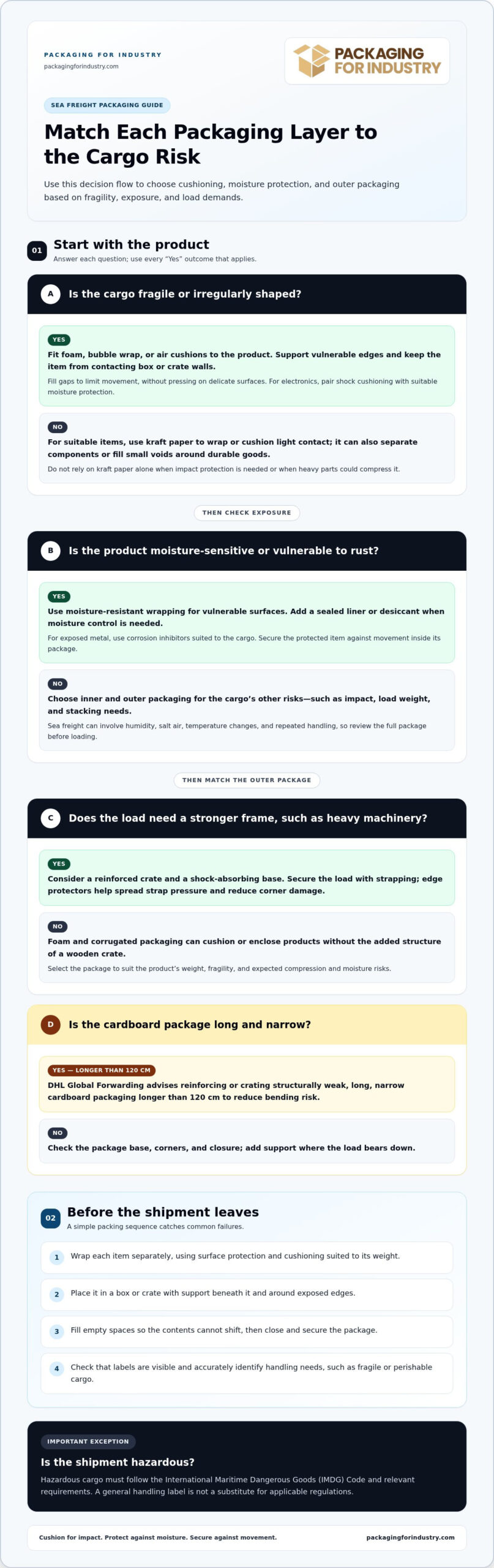
The outer package often determines whether fragile or heavy cargo arrives intact. The best packaging materials for sea freight depend on the cargo’s weight, fragility, moisture exposure, and stacking demands. Fragile items may need foam inserts or bubble wrap, while heavy machinery may require a reinforced crate, secure strapping, and a shock-absorbing base.
For manufacturers and distribution teams in Orange County, Los Angeles, and San Diego, shipping through Southern California ports makes packaging decisions part of day-to-day logistics. Padding matters, but it can’t compensate for an outer package that buckles under load or cargo that shifts in transit. Clear labels help identify fragile, hazardous, or perishable goods and reduce the risk of mishandling. This guide explains how to match cushioning and outer packaging to cargo, then choose pallets, stacking patterns, and dunnage to keep loads stable. Use this practical framework to protect products while making efficient use of packaging space.
Key Takeaways
- Match cushioning and moisture protection to the cargo’s fragility, weight, and exposure risks.
- Use kraft paper to wrap or cushion suitable items, and fill internal gaps so cargo stays stable inside its package.
- Protect fragile or irregularly shaped goods with fitted cushioning that keeps them from contacting the box walls.
- Build stable pallet loads with even weight distribution, appropriate stacking patterns, and dunnage to limit movement.
- Choose durable outer packaging for the load, and consider foam packaging when products need tailored cushioning.
1. Packaging choices based on product and protection needs
Sea freight exposes cargo to long transit times, humidity, salt air, temperature changes, and repeated handling. Choose packaging by assessing the product’s weight, fragility, moisture sensitivity, and stacking needs. A machined steel component, for example, needs corrosion protection, while glass parts need impact cushioning and a rigid outer container. These risks can combine: condensation may weaken packaging while vibration shifts the load. Matching each packaging layer to a specific risk helps reduce damage and avoid unnecessary materials.
Weight, cost, and durability vary by material and package design. Foam and corrugated packaging can cushion or enclose products without the added structure of a wooden crate. Crates provide a stronger frame for heavy machinery but use more material. Total cost depends on dimensions, protection needs, handling, and whether the packaging can be reused. The best packaging materials for sea freight balance cargo weight and fragility against the compression and moisture risks expected in transit.
There is no single packaging material required for every sea freight shipment to or from the United States. Select packaging to protect the commodity through handling, stacking, and environmental exposure; hazardous cargo must follow the International Maritime Dangerous Goods (IMDG) Code and relevant requirements. Match labels and package design to the cargo, then secure closures and any internal load. A routine shipment of non-hazardous machine parts and a shipment of hazardous goods have different packaging and handling needs.
For fragile cargo, fit foam around the product to absorb shocks and limit movement inside its box or crate. Foam may also help buffer temperature changes within a package, which can matter for sensitive components. Shape the cushioning to the product, support vulnerable edges, and close empty spaces where impacts could occur. For electronics, combine shock-absorbing foam with suitable moisture protection rather than relying on padding alone. The packaging should protect the item without leaving it loose or pressing on delicate surfaces.
Humidity and salt air can promote rust on exposed metal. Protect vulnerable surfaces with moisture-resistant wrapping and corrosion inhibitors suited to the cargo. Add a sealed liner or desiccant when moisture control is needed, and keep water-sensitive goods away from potential contaminants. For a metal assembly, wrap the protected surface before placing it in a crate, then secure it against movement. Strapping holds the load together; edge protectors spread strap pressure and reduce damage to package corners.
Choose each layer for its job: cushioning absorbs shock, a liner limits moisture exposure, and strapping stabilizes the load. Maritime containers are manufactured under ISO standards, according to the International Organization for Standardization, but container construction does not replace cargo-level protection. For fragile or irregularly shaped items, cushioning materials can help fill voids and protect contact points. Review the product, its outer package, and its securing method together before loading.
2. How to Avoid Common Packaging Mistakes in Sea Freight?
Packaging problems often begin with a mismatch between the product and its inner support. Kraft paper can wrap a ceramic component and cushion light contact, but it shouldn’t be the only shock absorber. Pair it with fitted foam, bubble wrap, or air cushions when impact protection matters. Crumpled kraft paper can fill small voids around durable items, while heavy parts need support that won’t compress under their weight.
Fragile goods on long ocean routes need cushioning that limits movement and absorbs impact. Foam inserts, bubble wrap, and air cushions suit different shapes, but the package must keep the item away from the box walls. For example, secure a glass instrument in a fitted insert, then close gaps without pressing on delicate fittings. Kraft paper can separate components or prevent finished surfaces from rubbing together.
Use this packing sequence to catch common failures before a shipment leaves the warehouse:
- Wrap each item separately, using kraft paper for surface protection and cushioning suited to the product’s weight.
- Place the wrapped item in a box or crate with support beneath it and around exposed edges.
- Fill empty spaces so items cannot shift, then close and secure the package.
- Check that labels are visible and accurately describe handling needs, such as fragile or perishable cargo.
Labels guide handlers, but they don’t replace physical protection. Mark fragile, hazardous, or perishable goods clearly, and keep labels readable after wrapping or strapping. For electronics, a fragile label should accompany protective cushioning and suitable moisture-resistant packaging. Packaging and labels for hazardous goods must follow applicable regulations, not rely on a general handling label.
Long, narrow cartons can bend when their contents concentrate weight in one area. DHL Global Forwarding advises reinforcing or crating structurally weak, long, narrow cardboard packaging longer than 120 cm. A wooden crate or added reinforcement can reduce bending risk for an elongated machine part. For less rigid packages, check the box’s base, corners, and closure, then add support where the load bears down.
Recyclable or lower-waste options for sea freight include recyclable paper-based packaging and biodegradable materials, when they provide the protection the cargo needs. Kraft paper can be reused or recycled where local collection accepts it. Keep it free of materials that prevent recovery. Match sustainability choices to the shipment’s moisture and impact risks, since damaged goods can create additional waste.
Before loading, press gently on the package sides and check for movement inside. If a component shifts or cushioning collapses, add fitted support instead of simply adding more loose fill. A tailored packaging quote can help compare suitable materials for a specific cargo and packing method.
3. Bubble wrap for fragile and oddly shaped items
Irregular cargo needs wrapping that follows its contours without leaving vulnerable features exposed. First identify narrow projections, open cavities, sharp transitions, and delicate surfaces. For a cast-metal housing, for example, note its mounting ears and recessed connectors before cutting the wrap. This quick review helps determine where material must overlap and where separate wrapping sections will fit more cleanly.
Wrap projections individually before covering the main body. Bring the material around a handle, stem, or connector, then secure it without pulling so tightly that pressure concentrates on the feature. For a component with branching arms, wrap each arm from its tip toward the central body, overlapping the sections where they meet. This layered approach keeps exposed contours covered during routine packing and handling.
Large fragile items may need a couple of bubble-wrap layers. Apply the first layer to follow the product’s shape, then add another across seams and exposed transitions. Keep tape on the wrap, not directly on finished surfaces. On a ceramic assembly with a raised rim, overlap the wrap across the rim and body so the edge remains covered during handling.
Use separate pieces when one continuous sheet bunches around a complex shape. A valve body with a handwheel and side ports, for instance, may be easier to wrap as a main section plus smaller pieces around each projection. Trim excess material instead of folding a thick wad over one spot. Even coverage makes the wrapped profile easier to position and inspect during packing.
Check the completed wrap from several angles before placing the item in its shipping package. Look for exposed tips, open seams, and areas where material has pulled away from curved surfaces. Rotate the product carefully to inspect the underside, too. A covered top can hide an unprotected base or a small connector beneath the main body.
For repeat shipments, record the wrapping sequence in a simple packing diagram or annotated work instruction. Show where each section starts, where overlaps meet, and which features need individual coverage. A drawing of a pump housing, for example, can show the order for wrapping its ports, handwheel, and body. This helps different packers reproduce the same fit without relying on memory.
Bubble wrap is useful for contour-following protection on fragile pieces with irregular shapes. A deliberate sequence prevents material from bunching in one spot and leaves fewer exposed details. Match the wrapping method to the product’s geometry, then inspect the finished package before it enters the shipment workflow.
4. Palletization, stacking patterns, and dunnage
A stable pallet load starts with a base suited to the cargo’s weight and footprint. Pallets keep goods off the container floor, reducing exposure to moisture on the floor. For ocean freight LCL, individual pieces weighing more than 70 kg must be packed in a fork-movable crate or secured to a pallet. Pieces weighing 30–70 kg are recommended for a pallet or crate; any box must support the goods’ full weight.
Stacking patterns affect whether cartons retain their integrity under pressure. For LCL shipments, column-stack boxes on the pallet so their vertical edges carry the load. Keep every box within the pallet edges and make the top surface level. Overhanging cartons can catch during handling, while an uneven top makes upper loads unstable. A flat, aligned stack helps distribute pressure across package faces.
Interlocking stacks may look secure, but they can weaken boxes with non-rigid contents. In those cases, interlocking can reduce compression strength by as much as 50%. Choose column stacking when carton strength matters, and avoid placing heavy cartons on packages that can deform. A pallet of industrial parts, for example, needs a consistent base and a top layer that won’t concentrate weight on a few lower cartons.
For FCL cargo, place heavy items at the bottom and lighter or more fragile goods above them. Distribute weight evenly across the container rather than loading one side heavily. Wooden braces, dunnage bags, and cargo straps can secure freight and limit movement. Mooring belts, air bags, steel cables, or wooden supports can also immobilize cargo inside a sea-freight container. Select restraints that fit the load and prevent shifting without crushing cartons.
Dunnage fills gaps between cargo and container walls, helping prevent movement during handling and transit. Use wooden supports to brace rigid machinery, or dunnage bags to fill suitable voids between secured loads. Straps hold grouped cargo together, while edge protection can reduce pressure where straps meet carton corners. A well-secured load ensures that restraints, pallet, and packaging work together rather than transferring force to a fragile item.
Wood packaging used in international freight also needs attention. Many countries require wooden pallets and crates to comply with ISPM-15. Build this requirement into the packing plan when selecting wood packaging for an international route, and ensure the wooden components used for the shipment meet the applicable standard.
Before closing a container, review the load from floor to ceiling. Check that pallets sit evenly, carton edges stay within their bases, heavy freight remains low, and empty spaces are braced. This final inspection catches loose dunnage, shifted cargo, and uneven stacking while adjustments are still practical.
5. Durable outer packaging materials
Choose the outer package to suit the cargo’s weight, shape, and expected stacking load. Double-wall corrugated cartons provide more strength than single-wall board, while wooden crates offer a rigid frame for heavy machinery. Plastic containers and metal drums suit some cargo, including liquid or semi-liquid goods. For international shipments, consider both the product’s protection needs and the destination’s handling conditions.
Corrugated packaging works well for boxed goods that need firm sides and manageable weight. In suitable applications, heavy-duty corrugated packaging can support top loads of up to one ton. Double-wall board has two fluted layers, compared with one in single-wall board, providing added structure. Match carton construction to product weight and stacking pressure rather than choosing by outside dimensions alone.
For a large machine or irregular industrial part, a wooden crate can protect against compression and handling impacts. For ocean-freight LCL, crates for heavier or larger goods should use fully enclosed quality hardwood with diagonal bracing. Machinery often needs heavy-duty wooden crating. Check that the base supports the load and the bracing keeps the product from shifting inside the enclosure.
A hybrid crate can combine a wooden base with corrugated fibreboard sides and a top. Wood supports the load, while board encloses it, balancing structure with material use. Add plywood panels when the design needs more stability, or frame corrugated board with wooden slats. The best option depends on the product’s weight, shape, and stacking requirements.
Bulk cargo needs a different outer package from individual machinery. Flexible intermediate bulk containers made from woven polypropylene carry grains, fertilizers, minerals, and powdered materials. Steel, plastic, and fiber drums are common choices for liquid and semi-liquid cargo. Select a container based on the cargo’s form and containment needs, rather than treating cartons and crates as universal solutions.
For hazardous materials transported by ocean, use packaging that complies with the International Maritime Dangerous Goods (IMDG) Code. Hazardous goods require certified containers and clear labeling. Keep the packaging, closure, and identifying labels appropriate to the shipment so handlers can recognize the cargo and its requirements.
Before choosing an outer package, compare its strength, weight, reusability, and fit with the cargo. Corrugated packaging can serve multiple supply cycles when its condition and design remain suitable. A crate may be better for machinery that needs a rigid base and braced sides. This material-level decision helps protect cargo without adding structure where it serves no purpose.
Packaging For Industry (PFI): Foam Packaging
Packaging For Industry (PFI) provides foam packaging for manufacturers in aerospace, electronics, medical devices, and industrial equipment. It can help when standard cushioning doesn’t fit a product’s shape or repeat packing needs call for a consistent approach. Foam packaging, stretch film, and packaging inventory programs support different parts of the shipping and supply process.
PFI’s industrial focus helps purchasing and operations teams compare packaging pricing, consider bulk packaging pricing, and identify practical ways to lower packaging costs without overlooking product protection. For businesses in Orange County, Los Angeles, and San Diego, local packaging delivery can support recurring operational needs. Share your product and packing requirements to request a packaging quote.
Contact Packaging For Industry (PFI) to discuss foam packaging for your shipments.
Put a Repeatable Packaging Plan in Place
Turn packaging decisions into a repeatable specification for purchasing and warehouse teams. Record product dimensions, handling risks, cushioning arrangement, outer package, and load-securing method for each shipment type. This gives staff a consistent reference for repeat orders and helps identify when a packaging change may be needed as cargo or destinations change. The best packaging materials for sea freight are selected for the actual product and route, not chosen by habit.
Packaging For Industry (PFI) offers foam packaging, stretch film, and Vendor Managed Inventory (VMI) for Packaging. These options can support businesses refining protective packaging or coordinating ongoing packaging supply. Share your cargo type and current packing challenges to discuss a practical next step for your operation.
A clear packaging plan gives your team a stronger starting point for each shipment. Take the next step with confidence.
Frequently Asked Questions
How Important Are Labeling And Padding?
Labels and padding work together: labels communicate handling needs, while padding physically protects the product. Use clear, legible labels on visible package surfaces, and make sure they match the shipment contents. A fragile label on a crate, for example, can alert handlers, but it won’t prevent an unpadded instrument from striking the crate interior. Review both label placement and internal fit before releasing each shipment.
How to Avoid Common Packaging Mistakes in Sea Freight?
Avoid common mistakes by testing a representative packed unit before preparing the full shipment. Check whether the product shifts, closures stay secure, and the outer package supports the load. Confirm that the packing instructions match the actual product and handling method. For repeat orders, document the approved materials and packing sequence so warehouse staff don’t substitute a weaker carton or omit a protective layer.
What packaging materials best protect goods during sea freight?
The best materials depend on the cargo’s main vulnerability. Use fitted foam or bubble wrap for delicate surfaces, corrugated cartons for enclosed goods, and crates for heavy equipment requiring a rigid frame. Add moisture barriers for products vulnerable to damp conditions, and restraints for loads that could move. A sensitive electronic assembly, for example, may need cushioning, moisture protection, and a stable outer package rather than a single material.
How do corrugated cardboard, plywood, and plastic shipping containers compare for ocean transport?
Corrugated cardboard provides enclosed protection with less rigid construction than plywood, making it suitable for boxed products whose weight and stacking needs match the carton. Plywood can form a sturdy crate or crate panel for cargo needing a rigid enclosure. Plastic containers resist water exposure, but their shape and strength vary by design. Choose based on cargo weight, stacking demands, exposure risks, and destination handling.
What moisture-barrier packaging protects cargo from humidity and salt air at sea?
Moisture-resistant wraps, plastic liners, sealed pouches, and shrink wrapping can help limit exposure, while corrosion inhibitors can protect vulnerable metal surfaces. Choose a barrier based on the product’s sensitivity and how it will be packed. For a metal component, protect the surface first, then enclose it in a suitable moisture barrier. An outer carton or crate adds structure but doesn’t replace the barrier.
Which desiccants and container liners prevent condensation and mold in sea freight?
Desiccants absorb moisture inside a protected package, while plastic liners and moisture-resistant wraps create a barrier against damp exposure. Desiccant salts and VCI aluminum are also used for humidity and corrosion protection. The right combination depends on cargo materials, the packaging enclosure, and moisture sensitivity. A corrosion-sensitive component, for instance, may need a sealed liner and corrosion-control measure, with the desiccant positioned inside the protected space.
How do you package and secure cargo to prevent shifting or damage inside a shipping container?
Secure cargo by building stable unit loads, closing voids, and restraining each load against movement. For example, place machinery on a supported base, brace open spaces around it, and use suitable straps or supports to hold it in position. Keep restraints from pressing directly on vulnerable surfaces. Before closing the container, inspect the load from several sides and correct loose supports or gaps that could let cargo shift.
What are the most common sea freight packaging failures and how can they be prevented?
Common failures include crushed cartons, products moving inside packages, moisture reaching vulnerable goods, and loads shifting during handling. Prevent them by matching package strength to cargo weight, supporting products internally, sealing moisture barriers properly, and securing pallets or crates. Compare the packed shipment with its approved packing instructions as a final check. If the contents, materials, or load arrangement have changed, reassess protection before dispatch.