
Packaging can do more than protect a shipment. It can make routine work clearer and easier to manage. Packaging that makes our customers’ lives easier helps teams see whether materials are ready to use, understand what to do when shipments or processes go off track, and identify sources of operational friction.
It’s reasonable to focus first on the box, cushioning, or film. But packaging also affects how quickly staff can find the right supplies, handle products, and respond to problems. Clear readiness signals, practical recovery instructions, and insight into workflow issues can turn packaging from a passive supply into useful operational support.
This article explains how these three kinds of information can support daily work, reduce avoidable friction, and inform packaging decisions. You’ll learn what each can reveal, where it fits into a workflow, and how to connect those insights to packaging choices that better support your operation.
Key Takeaways
- Match cushioning and packaging design to the product and its shipping risks to help reduce damage, spills, and returns.
- Weigh handling convenience, material use, cost, and product protection together when choosing packaging for daily operations.
- Use readiness scores and recovery information to help teams identify packaging needs and respond more consistently when problems arise.
- Look for stress points in packing and replenishment workflows; clearer processes can reduce avoidable friction for staff.
- When products need added cushioning, Packaging For Industry’s foam packaging can support a more considered protection plan.
3. How can packaging reduce product damage, spills, and returns during shipping?
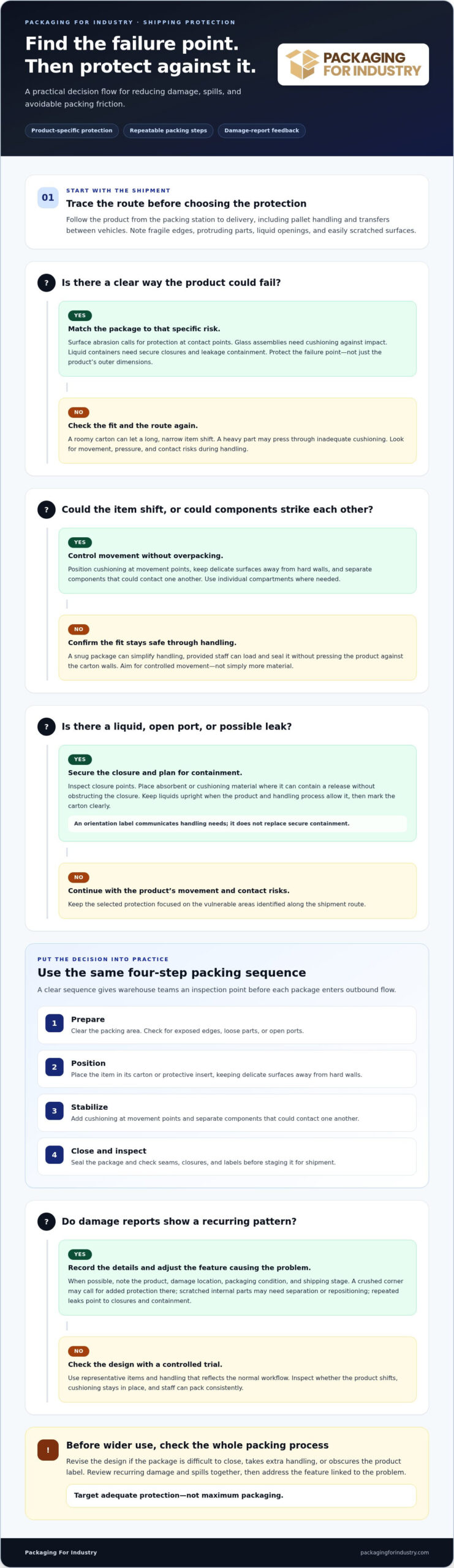
Preventing shipping damage starts with identifying how a product could shift, break, leak, or become contaminated. A metal component may need protection from surface abrasion, while a glass assembly needs cushioning against impact. A liquid container faces a different risk: a loose cap or punctured inner seal can damage surrounding cartons. Match the packaging design to the product’s failure points, not just its outer dimensions.
Start with the product and its route through your operation. Note fragile edges, protruding parts, liquid openings, and easily scratched surfaces. Then trace the shipment from the packing station to delivery, including pallet handling and transfers between vehicles. A long, narrow item may shift inside a roomy carton, while a heavy part may press through inadequate cushioning. These observations show where packaging needs restraint, separation, or impact absorption.
Fit matters. A carton with too much empty space lets a product gain momentum during handling. A tight fit can also cause problems if pressure bears directly on a delicate surface. Position cushioning to limit movement and separate vulnerable areas from the outer container. For products with several components, individual compartments can prevent parts from striking one another. The goal is controlled movement, not simply adding more material.
To prevent spills, inspect every closure point before choosing the shipping configuration. A bottle, container, or machine component with residual fluid needs a secure closure and a barrier against leakage. Place absorbent or cushioning material where it can contain a release without obstructing the closure. Keep liquids upright when the product and handling process allow it, then mark the carton clearly. An orientation label helps communicate handling needs, but it cannot replace secure containment.
Build a repeatable packing sequence so different employees protect the same shipment consistently. A practical sequence is:
- Prepare: Clear the packing area and check the product for exposed edges, loose parts, or open ports.
- Position: Place the item in its carton or protective insert, keeping delicate surfaces away from hard walls.
- Stabilize: Add cushioning at movement points and separate components that could contact each other.
- Close: Seal the package and inspect seams, closures, and labels before staging it for shipment.
This sequence gives warehouse teams a clear inspection point before a package enters the outbound flow. It also makes recurring packing errors easier to spot.
Use damage reports to improve the design instead of treating every return as an isolated event. When possible, record the product, damage location, packaging condition, and shipping stage. If the same corner arrives crushed, reinforce protection in that area. If internal parts arrive scratched, add separation or adjust their placement. A pattern of leaks points to closures and containment, not automatically to a stronger outer carton.
Evaluate packaging changes against the actual product and packing method. Run a small, controlled trial with representative items, then inspect the contents and package after handling that reflects the normal workflow. Check whether the product shifts, cushioning stays in place, and staff can pack it consistently. If the package is difficult to close, takes extra handling, or obscures the product label, revise the design before wider use.
Right-sized protection can reduce the combined burden of damaged goods, replacement handling, customer service, and returns. It can also prevent overpacking, which may add material without addressing the actual failure point. Packaging that makes our customers’ lives easier should help shipments arrive intact while keeping the packing process clear. Review recurring damage and spills together, then adjust the feature causing the problem.
5. What are the trade-offs between convenient packaging, sustainability, cost, and product protection
A packaging choice rarely meets every requirement at once. A lightweight mailer may be quick to handle but may not protect a heavy machined component. A rigid carton can add protection, yet take more storage space and packing time. For a Los Angeles warehouse, the right balance depends on the product, its handling route, packing labor, and what happens after delivery. Compare the full workflow, not just the material.
Convenience starts at the packing station. A box that opens easily, fits the item, and closes consistently can simplify training and reduce awkward handling. An oversized carton, however, may need extra cushioning and take up more shelf and pallet space. A snug package can save handling steps, provided staff can load and seal it without pressing the product against the walls. Review the actual packing sequence before approving a design.
Protection and material use can pull in different directions. A delicate electronic assembly may need cushioning around exposed edges, while a robust metal bracket may need less internal protection. Removing cushioning without testing can expose a product to movement or contact damage. Adding layers everywhere can consume material without protecting the weak points. Map the product’s vulnerable areas, then focus protection there. The goal is adequate protection, not maximum packaging.
Sustainability depends on the entire packaging setup. A package that uses less material may be difficult to pack consistently or leave the product vulnerable. A protective insert may use more material but help prevent damage that leads to a replacement shipment. Consider the product, packaging components, packing process, and end-of-use handling together. Don’t assume that choosing a single material makes the overall system more sustainable.
Material selection affects operations and disposal options. A package might combine a corrugated box, foam insert, plastic bag, and tape. This combination can protect a product, but may take extra effort to separate after unpacking. A simpler material setup can be easier for staff to handle, provided it still protects the product. Consider how packaging is used and sorted at the receiving site, not only at the shipping station.
Cost includes more than the price of each packaging component. A larger box can take up more storage space and require more void fill. A complex insert may add packing steps, while an easy-to-load design can streamline work. Product damage can also create handling, replacement, and return costs. Compare options based on their combined effects on materials, labor, storage, and product condition. This gives purchasing and operations teams a clearer basis for decisions.
A practical evaluation can compare three designs for the same product: the current configuration, a lower-material option, and a design focused on easier packing. Use the same product and packing instructions for each trial. Ask packers to note loading difficulty, closure problems, and material use. Then inspect the product and package after normal handling and shipment. Record observations for each design so teams can identify trade-offs instead of relying on impressions.
Convenience also means clarity for the next person handling the shipment. Clear labels, accessible closures, and consistent orientation can help a warehouse receiver unpack a product without damaging it. For example, a fitted insert that stabilizes a component but blocks its identification label may create unnecessary work. Review the package from the receiving team’s perspective, including how staff remove the product and handle leftover materials.
Set priorities before requesting a packaging quote. Identify the product’s protection needs, the packing steps that slow work, and the material concerns that matter to your operation. Then compare options against those priorities, rather than choosing solely by unit price or appearance. A packaging quote request can help translate the product, workflow, and supply requirements into a suitable packaging discussion.
4. How readiness scores, recovery information, and workflow insights simplify operations
Readiness scores help warehouse teams see whether a packing station can process its next order. A useful score reflects specific conditions, such as whether required materials and current instructions are available. In a Los Angeles distribution center, teams could display each station’s status beside its work queue. That makes supply gaps visible before staff reach the packing step.
Keep the score simple and connect it to an action. A station could be marked “ready” when materials and instructions are present, “attention” when replenishment is needed, or “blocked” when work cannot proceed. Define each status clearly so employees and supervisors interpret the labels consistently. If a status doesn’t show what to do next, it’s a report, not a useful operational tool.
Recovery information guides staff when normal work is interrupted. If an approved packing material is unavailable, for example, instructions can identify who handles the issue and how to record the affected order. If a packing instruction is unclear, the process can direct staff to pause and contact the person responsible for packaging standards. Clear recovery steps reduce guesswork during busy shifts.
Make instructions easy to find at the point of work. A station card, work order, or digital workflow can identify the affected item, responsible role, and next action. Keep directions specific. “Resolve the shortage” leaves room for inconsistent decisions, while “record the missing supply and notify the shift lead” gives staff a clear starting point.
Workflow insights can reveal where routine tasks create unnecessary friction. Track observable issues such as repeated searches for supplies, approval delays, unclear instructions, or extra handling. If workers repeatedly leave a station to find packaging materials, the storage layout or replenishment process may need attention. Review the process and its conditions, not individual performance.
A practical review connects each signal to a decision. First, record the work step where the issue occurs. Next, identify the material, instruction, or approval involved. Then determine whether the cause relates to availability, placement, training, or workflow design. For example, a supervisor could review notes from different shifts and move commonly used supplies closer to the packing area.
Consider the measures together instead of treating them as separate reports. A station marked “ready” may still face delays if instructions are confusing. Repeated “attention” statuses may point to a recurring replenishment problem. Recovery notes can show whether staff have a clear path when a supply interruption occurs. This combined view helps teams choose operational changes based on observed patterns.
- Readiness: Show whether required supplies and instructions are available for the work ahead.
- Recovery: Give staff a clear next action when materials or instructions interrupt the process.
- Workflow review: Record recurring friction points and use them to guide process improvements.
Use these insights to make packaging that makes our customers’ lives easier through practical daily decisions. Review one recurring workflow issue, identify its cause, and decide what information or process change would help staff handle it consistently.
Packaging For Industry (PFI): Foam Packaging
Packaging For Industry (PFI) provides foam packaging for businesses that need cushioning tailored to a product’s shape and handling needs. For manufacturers in Orange County, Los Angeles, and San Diego, a suitable foam design can protect components while keeping packing steps practical.
Consider foam when products need separation or support inside a shipping container. Compare packaging costs alongside fit, material use, and packing workflow. For recurring orders, bulk pricing and local delivery can also factor into purchasing decisions.
Explore foam packaging options for your operation, or contact Packaging For Industry to discuss your packaging needs.
Make your next packaging decision easier to act on
Choose one recurring operational friction point as the starting place for your next review. It might be a product that needs more controlled cushioning, a pallet that takes extra effort to stabilize, or packaging supplies that are difficult to keep available. A focused review gives your team a practical way to compare options against daily workflow needs.
Packaging that makes our customers’ lives easier should support both the product and the people handling it. Packaging For Industry (PFI) offers foam packaging, stretch film, and Vendor Managed Inventory (VMI) for packaging. These services can help when you’re evaluating product protection, shipment preparation, or packaging supply management.
Bring your product, packing process, and supply concerns into the same discussion. This connects packaging decisions to the work your team needs to do, rather than treating each material as an isolated purchase.
A clear next step can turn an operational concern into a packaging plan your team can put to work.
Frequently Asked Questions
What packaging features make products easier for customers to open, use, store, and dispose of?
Clear opening points, accessible closures, stable inserts, and practical labels make packaging easier to handle. A parts carton, for example, can separate components by assembly step, helping a technician find the right item without unpacking everything. Boxes that stack securely can simplify storage on warehouse shelving. Separating different materials where practical can also make disposal easier. Consider the receiver’s workspace and unpacking sequence when choosing these features.
What are examples of packaging innovations that improve customers’ lives?
Custom-shaped foam inserts can keep a particular component organized and make it easier to remove from its container. Clear identification labels can help warehouse teams match packages to orders or workstations. For recurring operations, vendor managed inventory can organize packaging replenishment around usage needs. The most useful solution addresses a specific handling, identification, protection, or supply problem in the customer’s daily workflow.