
Recycled paperboard is a common choice for industrial cardboard tubes: most are made from 100 percent recycled paperboard. For businesses sourcing custom-size cardboard tubes across Orange County, Los Angeles, San Diego, and the greater Anaheim area, the right fit also depends on the tube’s length, diameter, and wall strength. Those dimensions should match the product and the way it will be stored and shipped.
Sustainability matters, but material choice also affects durability and performance in your operation. Packaging For Industry (PFI) provides this guide to help you compare recycled and other material options, specify dimensions, and assess the factors that shape wholesale quotes and production schedules.
You’ll also learn what information makes a quote useful, how to plan regional shipping, and when a custom tube from Packaging For Industry (PFI) may suit your packaging needs better than a standard size. The goal is a practical path to a specification that balances product protection, material considerations, and purchasing efficiency.
Key Takeaways
- Specify a tube’s inside diameter, length, and wall strength around the product and how it will be handled in storage and transit.
- Compare recycled and other material options alongside the protection and performance your operation needs.
- Wholesale quotes depend on the tube specification, order quantity, and production requirements, so prepare those details before requesting pricing.
- Build production and shipping time into your purchasing plan, especially when custom manufacturing is involved.
- For related packaging needs, Packaging For Industry (PFI) offers foam packaging, stretch film, and inventory programs that can support more reliable supply.
Custom tube dimensions and wholesale ordering
Choose tube dimensions based on the item being packed, the protection it needs, and how the order will move through your operation. For wholesale purchasing, settle on the specifications and quantity before comparing quotes.
Custom Tube Dimensions
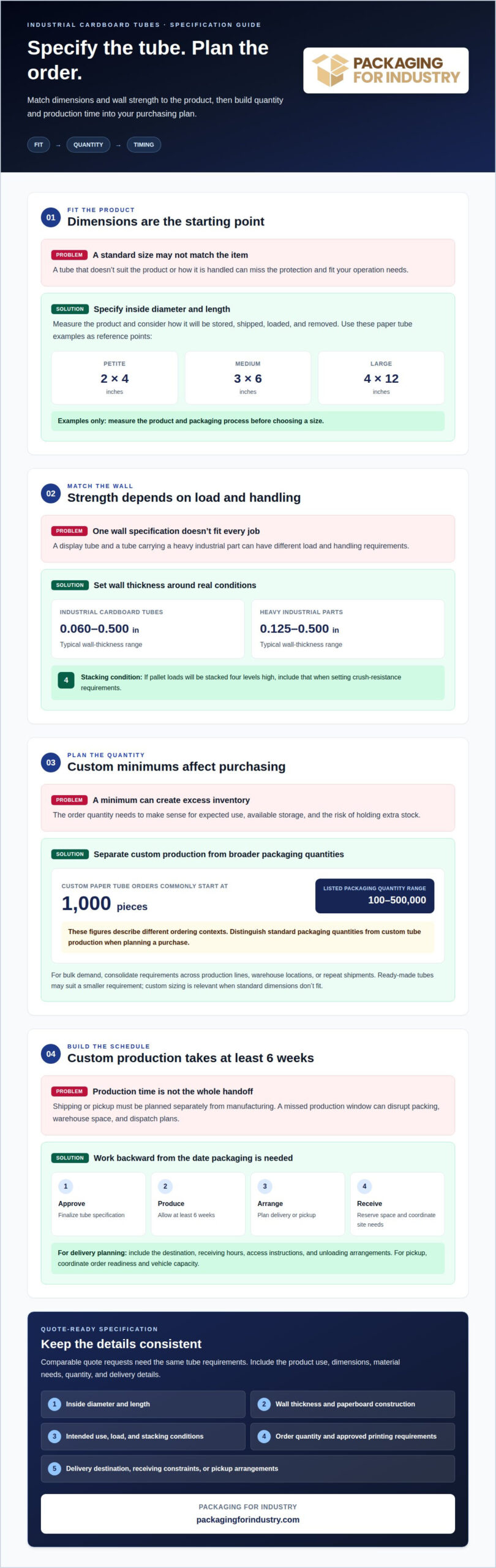
Specify the tube’s inside diameter and length based on the product it must hold. Typical paper tube examples include petite sizes of 2 x 4 inches, medium sizes of 3 x 6 inches, and large sizes of 4 x 12 inches. These examples provide reference points, not a substitute for measuring your product and packaging process.
Then consider wall thickness against load and handling needs. Industrial cardboard tube walls typically range from 0.060 to 0.500 inches, while heavy industrial parts typically call for 0.125 to 0.500 inches. If pallet loads will be stacked four levels high, include that condition when setting crush-resistance requirements. A display tube and a tube carrying a heavy part may need different specifications.
Minimum Order Quantities
Custom paper tube orders commonly start at a minimum order quantity of 1,000 pieces. That threshold matters for purchasing plans: compare the required quantity with expected usage, storage capacity, and the risk of holding excess inventory. Ready-made tubes may suit a smaller requirement, while a custom specification is relevant when standard dimensions do not fit the product.
Quantity also affects how you evaluate a wholesale quote. Request pricing for the same dimensions, material requirements, and order quantity so each quote covers a comparable job. A larger order isn’t automatically a better fit: weigh the commitment against available storage and expected use.
For bulk orders serving Orange County operations, first consolidate demand across production lines, warehouse locations, or repeat shipments. The listed packaging quantity range spans 100 to 500,000, while custom paper tube orders commonly have a 1,000-piece minimum. These figures describe different ordering contexts, so distinguish standard packaging quantities from custom production before planning a purchase.
Prepare a quote request with the tube dimensions, intended use, required quantity, and any load or stacking conditions. Add the delivery destination and receiving constraints for local planning. Anaheim buyers can use the Anaheim service-area information when aligning packaging supply with their facility’s location.
For a useful wholesale price comparison, keep specifications consistent across quote requests. Different wall thicknesses or order quantities can change production requirements, making headline totals difficult to compare. A clear specification helps purchasing teams assess the full order and choose a quantity that protects products without creating avoidable inventory pressure.
Production and shipping timelines
Custom paper tube production takes at least 6 weeks, so include manufacturing time in your purchasing schedule. Around Anaheim, plan shipping or pickup separately from production, using the order’s readiness date, destination, and receiving arrangements to organize the handoff.
Minimum order requirements matter when cardboard tubes support a retail launch, production run, or scheduled shipment. Work backward from the date your operation needs the packaging, allowing time for specification approval, manufacturing, and delivery. An order that misses its production window can disrupt packing schedules, warehouse space, and dispatch plans.
Production timing depends on the approved tube design and order requirements. Clear details on dimensions, paperboard construction, printing, and quantity help prevent avoidable specification changes. A tube for a long component, for example, may need different handling and packaging from one intended for a small retail display. Finalize the details before production so the schedule is based on a defined order.
For Anaheim-area delivery or pickup, plan the handoff around the receiving site. Include the delivery address, receiving hours, access instructions, and unloading arrangements in your logistics plan. If your business prefers pickup, coordinate it with order readiness and vehicle capacity. These details help align the shipment with warehouse staffing and prevent a delivery from arriving when the site cannot receive it.
Product protection also influences tube selection. A properly sized tube can help limit scuffing, bending, and handling damage during storage and transport. For a printed poster or product sample, match the inner diameter to the item and consider how it will be loaded and removed. Paperboard tubes aren’t sealed freshness barriers, so moisture-sensitive goods may need a separate protective layer.
Retail packaging brings another scheduling consideration: presentation. If the tube’s exterior helps a product stand out on display, include approved artwork and print requirements in production planning. Corrugated and paperboard packaging serve different roles, so specify whether the tube protects the product, supports presentation, or does both. A precise brief keeps those priorities clear during production.
Before placing an order, map the sequence: approve the specification, schedule the production window, prepare receiving or pickup, then reserve warehouse space for the shipment. Businesses with repeated orders can also use this sequence to plan replenishment before existing inventory runs low. To organize packaging requirements and timing, submit a packaging quote request with the intended use, required quantity, and delivery details.
Custom quotes
A useful quote starts with a clear tube specification, not a broad request for “custom packaging.” Provide enough detail to price the job your operation needs: product fit, construction, quantity, printing, and delivery destination. This gives purchasing teams a practical basis for comparing wholesale proposals without confusing different specifications with different prices.
Prepare the request in a consistent order:
- Application: Describe what the tube will hold, such as a rolled drawing, long component, or retail display item.
- Dimensions and construction: State the inside fit, tube length, wall requirements, and material preference.
- Order quantity: Give the planned quantity and note whether repeat orders are expected.
- Print and identity: Include artwork needs, brand marks, and any handling information that belongs on the packaging.
- Delivery: Provide the Anaheim-area destination and receiving details for shipping planning.
Discuss quantity and minimum order requirements together. A custom run may have a minimum that shapes the quote, while a larger order changes the total quantity produced. Compare the complete order value with your usage and storage plans instead of treating a lower per-unit figure as the only deciding factor. Overstock takes up warehouse space and ties up purchasing capacity.
Pricing depends on the order and is provided after a quote request. Key factors include dimensions, wall construction, paperboard choice, quantity, printing, and delivery. These details can affect material use, production setup, and shipment handling. A quote should clearly describe the specified order so you can compare any alternative proposal against the same requirements.
An unprinted tube for internal packing, for example, differs from a printed tube used to present a product at retail. The latter should specify its display role and brand identity; both requests should include product fit and quantity. Custom boxes may be part of the same packaging program, but list their specifications separately rather than combining them with tube pricing.
When requesting quote revisions, preserve the original specification and identify every change. If the quantity changes, show the new quantity; if the material or printing changes, label the adjustment. This makes comparisons more useful and helps purchasing teams understand what has changed. For Anaheim businesses, include the delivery location from the outset so shipping assumptions match the destination.
Before approving a quote, check its dimensions, material, printing, quantity, and delivery details against your packing requirements. A complete request reduces ambiguity and gives the supplier a clear basis for pricing and production planning.
Local supply chains and lead times
For buyers sourcing custom-size cardboard tubes in Anaheim, local planning means coordinating purchasing, production, and receiving as one process. Compare the stated production window with your required arrival date, then identify the steps that happen before shipment. This helps purchasing teams see where artwork approval, manufacturing, and delivery fit into the schedule.
What should you compare when choosing a custom cardboard tube supplier in Orange County? Consider specification support, quote clarity, material options, printing coordination, production timing, and delivery arrangements. Relate each factor to your actual packing needs rather than relying on broad promises of speed or competitive pricing.
Lead time is a sequence, not just a shipping estimate. Record when the final design is approved, when production starts, and when the finished order is expected to be ready. Then account for transit and receiving at your Anaheim facility. If retail packaging needs printed graphics, include artwork review in the schedule instead of leaving printing until the last minute.
For repeat purchasing, track tube consumption against inventory on hand and planned production. A packaging warehouse supporting several departments can group demand by tube specification and destination. This makes replenishment easier to manage and can help prevent urgent orders caused by incomplete stock visibility. Keep separate records for each size, print version, and production use.
Compare how suppliers handle changes, too. A revised diameter, print file, or quantity can affect the production plan. Request a clear schedule update whenever a specification changes, and keep the approved version with your purchasing records. This helps receiving teams identify the expected shipment and avoid confusion between similar tube orders.
Include environmental requirements in your supply-chain review. Compare recycled paperboard options and ask how material choices align with your packaging goals. Mono-material designs can simplify recycling, while plant-based inks may suit environmental preferences when printing is needed. In California, document your organization’s material and print criteria, then apply them consistently to custom packaging requests.
Printing can strengthen product identity and presentation, but artwork should suit the tube’s intended use. A tube protecting a technical drawing, for example, may prioritize legibility, while a branded display tube may emphasize visual presentation. Include the approved design file, print expectations, and packaging function together in the supplier brief.
For an Orange County operation, compare local delivery coordination alongside production communication. Confirm the receiving location, dock or access requirements, and who will accept the order. A structured review of these details helps connect supplier performance to warehouse planning. Put the specifications and target schedule into a custom packaging quote request so the requirements are clear from the start.
Which Anaheim-area manufacturers make custom cardboard tubes?
For an Anaheim purchase, distinguish a tube manufacturer from a packaging distributor that coordinates custom production. The difference affects who manages the specification, production schedule, and shipment. Ask each prospective supplier to describe its role in the order, then compare how it handles design changes and delivery to your facility.
Assess fit against the product requirements. A supplier should be able to work from the tube’s intended use, dimensions, material, quantity, and printing needs. A tube for a long industrial component, for example, has different priorities from one designed for a retail display. A useful response connects the proposed construction to the product’s handling and packaging requirements.
Before comparing Anaheim-area suppliers, prepare a consistent request with these details:
- Application: Identify the item and how it will be packed, stored, or shipped.
- Specification: Provide dimensions, wall requirements, material preferences, and artwork needs.
- Order plan: State the requested quantity and whether repeat orders are expected.
- Delivery: Include the Orange County destination and receiving arrangements.
Then assess each response for completeness. Check that the proposed tube fits your use case, the quote reflects the same quantity, and production timing is distinguished from transit. An explanation of how the supplier handles artwork approval or specification changes can also show whether your purchasing team will have a clear process.
Local proximity alone doesn’t establish manufacturing capability or shorten production time. A custom order may need to be made before it can ship to Anaheim, so assess the full sequence rather than distance alone. Ask whether the quoted schedule includes design approval, production, and delivery planning. For repeat orders, consider how the supplier will keep specifications consistent across purchase cycles.
Compare environmental and presentation requirements as well. If you prefer recycled paperboard, include that requirement in every quote request. If printing is needed, provide the artwork and explain whether the tube protects a product, supports a retail display, or does both. These details help distinguish proposals that meet your packaging needs from those that only match the dimensions.
Keep the final specification and approved quote together. This gives purchasing, production, and receiving teams in Anaheim a shared reference for the order. For custom tube requirements, use custom packaging design services to develop a specification around the product and its handling needs.
You can order through an Anaheim-area tube manufacturer or a packaging distributor that coordinates custom production. When requesting a quote, share the tube dimensions, material, quantity, printing needs, and delivery requirements in Orange County.
Packaging For Industry (PFI): Foam Packaging
Packaging For Industry (PFI) supports manufacturers with protective foam packaging for their shipping materials. Aerospace, medical device, electronics, and industrial equipment teams in Orange County, Los Angeles, and San Diego can use foam to cushion products during packing and transport. Foam packaging can complement a tube or other outer packaging when a product needs added protection.
PFI also offers stretch film to secure packaged loads and Vendor Managed Inventory (VMI) for recurring packaging needs. These services help businesses coordinate product protection with supply planning. Contact Packaging For Industry (PFI) to discuss your operation’s packaging requirements.
Turn your tube requirements into a clear next step
For buyers sourcing custom size cardboard tubes in Anaheim, the next step is to turn packaging goals into a purchasing brief. Bring together product fit, intended use, material preferences, printing needs, order volume, and receiving constraints. A shared specification gives purchasing and operations teams one reference for evaluating the order.
Consider how each tube fits into the broader packing workflow. A product that needs cushioning or stabilization may require coordinated materials around the tube, while warehouse teams need packaging suited to their storage and handling processes. Defining these operational needs alongside the tube requirements keeps the packaging plan focused on product protection and supply flow.
Packaging For Industry (PFI) can help with related industrial packaging needs. Share the requirements that matter to your operation and take the next step toward a practical packaging plan.
A clear brief is a solid starting point for a dependable packaging plan. Take the next step when you’re ready.
Frequently Asked Questions
Are your cardboard tubes made from sustainable or recycled materials?
Ask for the material composition of the complete tube, including labels, coatings, and attached components. This helps your team assess whether the finished packaging fits your waste-sorting process, rather than judging sustainability by the paperboard alone. For programs serving multiple facilities, document the selected material and disposal instructions in the item specification so purchasing and warehouse teams follow consistent guidance.
What are the standard lead times for custom tube production in Southern California?
Custom production requires advance planning, and the schedule depends on approval and production requirements. Separate the date your team approves the specification from the date the finished order is needed at your facility. Include artwork or internal sign-off in your purchasing calendar. This gives production and receiving teams a shared target without confusing transit time with manufacturing time.
What custom tube diameters, lengths, and wall thicknesses are available?
Custom orders can be specified to fit the item and its intended use. Before requesting a quote, measure the product at its widest point and note any sleeves, end fittings, or protective wrap. Identify how workers will load and remove it, too. These details help distinguish a tube that simply holds the item from one that supports an efficient packing process.
What materials and grades are used for custom cardboard tubes?
Tube construction can use paper-based materials selected for the application, with the specific grade stated in the order specification. Ask the quote to identify the construction and finish instead of relying on a general label such as “heavy duty.” For repeat orders, retain the approved specification with your purchasing records. This gives receiving teams a reference if a later shipment looks or performs differently.
What are the minimum order quantities for custom cardboard tubes near Anaheim?
Custom orders may have a production minimum, so match the purchase quantity to projected use and storage capacity. A prototype or limited production run, for instance, may have different needs from a recurring shipment program. If demand varies by department, combine forecasts before ordering, then track consumption by tube specification. This helps purchasing plan replenishment without confusing different sizes or applications.
How much do custom cardboard tubes cost, and what affects pricing?
Request an itemized quote to see how the order is presented. Compare equivalent specifications and clarify whether printing, special finishing, and delivery are listed separately or included in the total. A printed display tube and an unprinted tube for internal protection, for example, are different jobs. Matching the use case and scope makes pricing comparisons more meaningful for procurement.
What are typical production lead times and delivery options in Anaheim?
Delivery planning depends on the destination and your facility’s receiving process. Decide whether the order should go to a central warehouse or directly to a production site, and identify who will receive it. For split deliveries, organize quantities and destinations before arranging the order. This reduces internal handling confusion and helps each Anaheim-area team prepare for the packaging it will use.
Can local suppliers provide custom printing, cutting, caps, or other tube finishes?
State printing and finishing requirements as part of the tube design, and supply artwork in the format used by your production workflow. Specify print placement and orientation, finished cut length, and whether the ends need caps or another treatment. A sample or approved proof can help your team assess graphics on the curved surface before production, especially for branded display packaging.