
More inflation doesn’t mean better cargo protection. For dunnage air bags for intermodal container shipping, most standard bags are recommended to operate at 2 to 3 PSI, but the correct pressure depends on the bag’s rating, the cargo, and the void being braced. These considerations matter for shippers moving freight through Los Angeles, Orange County, and San Diego.
It’s easy to focus on filling a gap and overlook how the transport mode changes the demands on a load. Intermodal shipments can face prolonged movement and moisture exposure, while over-the-road shipments may involve more predictable handling. Choose a suitable bag and place it against stable surfaces to brace the cargo without putting unnecessary pressure on the load or packaging.
This guide explains how to select inflation pressure, measure and fill voids, and position bags in containers and trailers. It also compares intermodal and over-the-road considerations, including when bag material and load conditions matter. Use these points to build a more reliable load-securing plan and reduce the risk of cargo shifting in transit.
Key Takeaways
- Choose bag pressure to suit the bag’s rating, cargo, and measured void; overinflation can reduce cushioning and put cargo or packaging at risk.
- Brace cargo between stable opposing surfaces, and protect bags from sharp edges or protrusions before inflation.
- Account for transport mode when selecting bag material, especially when moisture, abrasion, vibration, or extended transit may increase wear.
- Measure uneven gaps at their widest point and consider pallet overhang and load shape when planning placement.
- Match protective packaging and inventory support to shipping needs to help reduce damage and improve supply reliability.
How much PSI should I use for dunnage air bags?
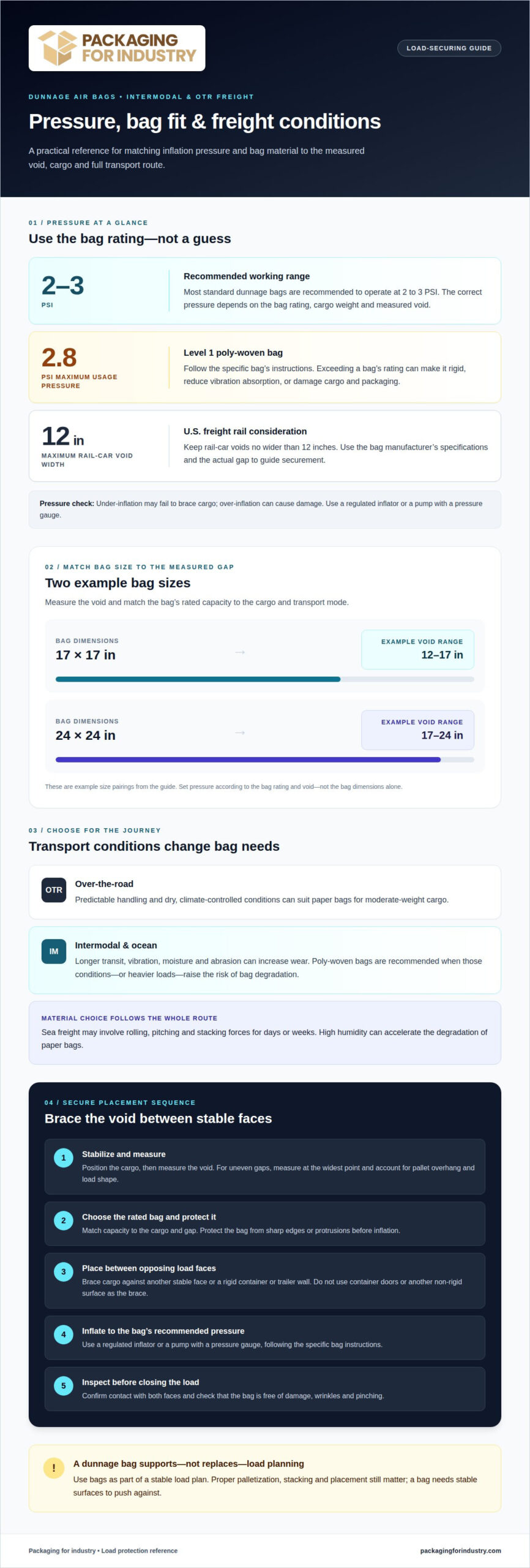
Most standard dunnage bags are recommended to operate at 2 to 3 PSI. The correct pressure depends on the bag’s rating, cargo weight, and measured void.
Working Pressure and Over-Inflation Risks
Working pressure is the air pressure a bag needs to brace cargo without exceeding its rated limit. A bag inflated beyond its rating can become rigid, lose its ability to absorb vibration, or damage the load and packaging. Level 1 poly-woven bags have a maximum usage pressure of 2.8 PSI, so follow the specific bag’s instructions rather than relying on a general target.
Inflating and Securing Bags
Inflatable dunnage bags use compressed air held inside by an air-lock mechanism. First, stabilize and position the cargo, then place the bag between opposing load faces. Protect sharp edges where needed. Use a regulated inflator or a pump with a pressure gauge, and inflate to the pressure recommended for that bag. Before closing the load, confirm that the bag contacts both faces and is free of damage, wrinkles, and pinching.
Matching Bag Size and Pressure to the Load
Calculate bag size by measuring the void and matching the bag’s rated capacity to the cargo and transport mode. Available options include paper and poly-woven bags in different dimensions; examples include 17-inch-square bags for voids from 12 to 17 inches and 24-inch-square bags for voids from 17 to 24 inches. In the United States, typical prices vary with material, dimensions, quantity, and inflation equipment, so compare quotes using the same specifications. Set pressure according to the bag rating and void, not a guess. Under-inflation may fail to brace cargo; over-inflation can cause damage.
How dunnage airbags help prevent cargo shifting
Dunnage bags fill voids between cargo units, creating a brace that limits movement in transit. Their effectiveness depends on correct placement within a stable, well-planned load.
Stabilizing Cargo During Transport
A properly positioned bag presses against opposing cargo faces or a rigid container wall, helping hold pallet rows in place. For example, bags between pallet columns in a 40-foot container can reduce lateral movement as the container rolls, pitches, or changes direction. This support helps limit shifting during braking and handling, while keeping the load arranged for arrival and unloading.
Risks of Unfilled Cargo Voids
An open gap gives adjacent cargo room to move as transport forces change direction. Even a small gap can allow a load to shift, bringing pallets into contact or changing weight distribution. Repeated handling can compound that movement, increasing the risk of damaged packaging or displaced goods.
Match the securement plan to the load rather than treating every open space alike. Dunnage bags can brace cargo, but they don’t replace proper palletization, stacking, or load planning. A bag also needs stable surfaces to push against; it shouldn’t brace a container door or another non-rigid surface. For a shipment with mixed pallet sizes, identify gaps between rows and at the container sides before choosing brace locations. For related shipping protection needs, request a packaging quote based on your load and packaging requirements.
What is the difference between intermodal and OTR dunnage bag requirements?
Choose bag material and load limits to suit all freight modes in the shipment. Road, rail, and sea journeys expose packaging to different handling and environmental conditions.
Dunnage Bags Across Freight Modes
OTR shipments with predictable handling and dry, climate-controlled conditions can suit paper bags for moderate-weight cargo. Intermodal journeys combine transport modes, so cargo may experience longer transit and greater vibration. For U.S. freight rail, keep rail-car voids no wider than 12 inches. Match bag capacity and placement to the cargo, the gap, and the route.
Ocean Conditions and Bag Materials
Sea freight exposes loads to rolling, pitching, and stacking forces, sometimes continuously for days or weeks. High humidity can accelerate the degradation of paper bags. Poly-woven bags are recommended when moisture, abrasion, heavier loads, higher vibration, or extended intermodal transit increase the risk of wear. Select a material for the entire journey, not just the initial truck leg.
International Shipping Specifications and Standards
For international cargo, match bag specifications to the load and transport mode, and follow the model’s published pressure, positioning, and load limits. The CTU Code provides general principles for load securing and void filling. For ocean freight, check that the bag specifications suit the shipment and its transport conditions. For U.S. rail movements, use rail-car void dimensions and the bag manufacturer’s specifications to guide securement. A general recommendation is not a universal rail rule.
Strategic placement in containers and trailers
Position the bag to brace the measured void without pressing against a weak surface. Measure the load during loading, then match the bag’s dimensions to the gap and cargo shape.
Bag Placement Principles
Place each bag between stable cargo faces or between cargo and a rigid container or trailer wall. This forms a barrier that limits movement without loading pressure onto container doors. Measure an uneven void at its widest point, and account for vertical height, pallet overhang, and irregular load geometry. For gaps wider than 8 inches, larger 24-36 inch bags or multiple bags may be needed.
Practical Placement and Storage Advice
Position bags where they can contact both opposing faces, then check for wrinkles, pinching, or damage before securing the load. Protective boards or corner protectors help shield bags from sharp edges, protruding bolts, and pallet straps. For truck voids from 0 to 26 inches, a 52-inch-wide dunnage bag is recommended. Keep the bag clear of non-rigid surfaces during filling.
During container or trailer loading, use the load layout to identify gaps before they become difficult to reach. For example, a pallet overhang can create an uneven space that must be measured at its widest point, not only at floor level. Store unused bags flat and dry so they are ready for later use. Before reusing a bag, inspect its seams, valve function, and surface for wear.
Dunnage bags for intermodal container shipping
In intermodal container shipping, dunnage bags fill spaces between pallet loads and container walls. They brace cargo across transport modes, helping limit lateral movement as the same shipment moves by truck, rail, or vessel. By reducing shifting, they support load stability throughout the combined journey. This is especially important when a shipment changes modes.
A mixed palletized shipment may use 50 cm wide bags between pallet columns in a 40-foot container. Placement across rows fills open spaces that could let one pallet move independently of another. Bags should brace the load against stable opposing faces; a container door is not suitable support. The arrangement must keep pallet columns aligned.
During intermodal handling, direction changes can cause lateral movement, while vibration continues across road and rail segments. A properly positioned, compressed bag takes up the gap and restrains pallet movement. Its air cushion can absorb some vibration and shock. Keep each bag in contact with both load faces, and avoid pinching it between irregular cargo or pallet straps.
Intermodal load planning should account for every transfer point, not just the final container arrangement. If a pallet column leaves a changing gap after loading, choose a bag profile that fits without pushing cargo out of alignment. A placement map can help crews maintain the intended layout during transfers. Bags support securement, but they do not replace stable palletization, stacking, or load planning.
Packaging Products and Solutions
Intermodal load protection works best as part of a packaging system. Dunnage bags brace open spaces, while other materials protect products inside cartons and help organize pallet loads. Match each component to its job: cushioning protects the item, stretch film secures the palletized unit, and inventory support helps keep packaging supplies available for scheduled shipments.
For components that need cushioning inside a package, protective foam packaging can help limit contact and movement around the product. Foam is useful when a part’s shape or handling needs call for support beyond the outer carton. It complements load securement, but it doesn’t fill container voids or replace dunnage bags.
Stretch film wraps palletized cartons into a more stable unit for warehouse handling and loading. Applied consistently, it helps keep cartons aligned on the pallet before the shipment enters a container or trailer. Choose a film and wrapping method suited to the load and packing process. Stretch wrap is not a substitute for bracing gaps between separate pallet columns.
Supply planning matters, too. Packaging For Industry offers Vendor Managed Inventory (VMI) and Just-In-Time (JIT) inventory management for packaging. These programs can help manufacturers and distribution teams coordinate packaging availability with shipment schedules and recurring use.
Review the entire packaging setup together: product cushioning, pallet wrapping, void filling, and replenishment. This helps purchasing teams compare packaging options by application and plan bulk supplies around actual shipping needs. A packaging plan can be tailored to the products, quantities, and workflow of your operation.
Industries Served
Packaging needs vary with product shape, handling, and shipping schedules. Manufacturers, warehouses, and distributors need materials suited to routine packing work and capable of protecting goods in storage and transit. For example, a plant shipping finished assemblies may use foam to cushion vulnerable components and stretch film to secure palletized cartons during handling.
Aerospace operations often handle components with specific fit and protection needs. Foam Packaging can provide cushioning around parts, while packaging planning can account for how items are packed, stored, and shipped. In electronics, packaging teams may also assess how foam fits the product and its handling process. Manufacturing packaging requirements can vary by product and workflow.
Food and medical businesses coordinate packaging with production and distribution schedules. Warehouses and fulfillment operations need supplies near packing stations, while distributors may manage mixed loads and changing order volumes. Stretch film can help secure palletized shipments as they move through these operations.
Construction suppliers often ship bulky or irregular goods, while industrial businesses handle components of varied dimensions. In both cases, packaging choices should reflect the product, packing method, and destination. Foam packaging can provide cushioning, while stretch film serves a separate role in securing pallet loads.
Inventory programs can support consistent packaging operations. Packaging For Industry offers Vendor Managed Inventory (VMI) and Just-In-Time (JIT) inventory management to help organize packaging stock and align supply with operational demand. These programs can suit manufacturers, warehouses, and distribution teams seeking reliable access to materials. The right approach depends on the products handled, shipping workflow, and replenishment needs.
Benefits of Working with a Packaging Supplier
A coordinated packaging plan helps purchasing and operations teams manage materials according to actual product and shipping needs. Packaging For Industry can review how goods are packed, protected, and shipped, then help match supplies to the workflow. This avoids relying on one-size-fits-all choices and makes it easier to plan packaging for manufacturers, warehouses, and distribution centers.
Fit matters when preventing damage. Foam packaging cushions products inside packages, while stretch film secures palletized loads for handling. These materials serve different purposes, so select them for the product and packing process to avoid gaps in protection. Packaging For Industry can help connect these choices to the broader packaging setup, without treating any one material as a substitute for proper load planning.
Supply planning also affects operating costs. Comparing packaging specifications and quantities can reveal where materials are excessive or poorly matched to the job. Bulk purchasing can inform buying decisions, while consistent material choices can simplify packing procedures. The goal is to reduce packaging costs through better fit and planning, not by removing protection a shipment needs.
For operations with recurring demand, Packaging For Industry’s Vendor Managed Inventory (VMI) program can support packaging stock management. Its Just-In-Time (JIT) inventory program aligns supply with operational demand. Both approaches help teams plan replenishment around packaging use and shipping schedules, supporting access to the materials needed for production and dispatch.
Share your products, packing workflow, and supply needs with Packaging For Industry to discuss suitable options and build a practical packaging plan.
Packaging For Industry (PFI)
Packaging For Industry (PFI) is a practical partner when intermodal securement planning reveals broader packaging needs. Its products and services help manufacturers and shipping teams match protective materials and supply planning to their products and workflows. Dunnage bags address voids between loads; complementary packaging can protect individual items and prepare palletized shipments for warehouse handling and dispatch.
For products that need cushioning inside their packages, foam packaging can help protect items from contact during handling. Stretch film serves a different role, securing palletized cartons as they move through the warehouse and toward loading. These materials complement cargo securement but do not replace properly selected dunnage bags or a sound load plan. Match each material to its job in the shipping process.
PFI also supports packaging supply planning through Vendor Managed Inventory (VMI) and Just-In-Time (JIT) inventory programs. These options are relevant when recurring shipments make packaging availability part of daily operations. Aligning supply with operational needs helps teams plan replenishment and reduce disruptions caused by missing materials.
For an intermodal load, useful planning details include the product’s cushioning needs, how pallets are wrapped, the packing workflow, and packaging demand. Sharing these details helps connect protection requirements with relevant products and inventory support. Buyers can also use them to compare packaging options and plan bulk supplies around operational needs. Explore PFI’s stretch film options for palletized loads.
Contact Packaging For Industry (PFI) to discuss your packaging needs.
Plan the Next Shipment with Confidence
Use your load plan as a working reference for future shipments. Record where cargo needs support, how products are protected inside their packaging, and which supplies the packing team uses. These notes help refine decisions about dunnage air bags for intermodal container shipping while keeping each load’s requirements in view.
Consider the full packaging system, not only the space between pallets. Packaging For Industry (PFI) offers foam packaging for product cushioning, stretch film for palletized loads, and Vendor Managed Inventory (VMI) to support stock management. Selecting dunnage air bags for intermodal container shipping alongside related materials helps teams plan protection and supply needs as one workflow.
Bring changes in products, packing processes, or shipment schedules to your next packaging discussion with PFI. These details can help shape a practical plan for protecting goods and maintaining packaging availability.
A well-planned packaging system gives your team a clearer starting point for the next load.
Frequently Asked Questions
How do I choose a dunnage bag size for my void gap?
Choose a bag by matching its dimensions and rated load capacity to the measured space and cargo. For an uneven opening, account for variations in width and height instead of relying on a single measurement. Consider how the cargo is arranged and which transport modes the shipment will use. If the gap falls outside the bag’s recommended application, choose another size or seek guidance for that load.
What are pneumatic airbags used for in shipping?
Pneumatic dunnage bags brace cargo inside a shipping unit by filling space between loads. They are cargo-securing devices, not vehicle safety airbags. For example, a shipper might use one to stabilize palletized industrial goods when the load layout leaves a gap that could allow movement. The bag model’s instructions define its rated use, including applicable pressure, positioning pattern, and load limits.
When should I contact a load securement specialist instead of selecting bags myself?
Involve a packaging specialist when cargo geometry, load weight, or the route creates a securement problem that standard bag selection cannot resolve. This can be useful for mixed cargo, unusual pallet shapes, or voids requiring multiple bags. Share a load diagram, cargo details, and the planned route so the securement approach accounts for the complete shipment, not just one gap.
Why Choose Dunnage Over Other Forms of Cargo Securement?
Dunnage bags can conform to a void without requiring a rigid brace cut to fit its shape. This makes them useful for filling spaces between palletized units when the load and supporting surfaces are suitable. Rigid blocking may be better for applications requiring fixed support. Choose the method based on cargo arrangement, available contact surfaces, and the transport plan, rather than assuming one approach suits every shipment.
How do you install and inflate dunnage air bags in an intermodal container?
Follow the instructions for the specific bag model. One sequence is to position the bag between shipping units before inflation, then fold its adhesive strip over to help retain pressure. Keep inflation equipment accessible during loading, and place the bag before surrounding cargo blocks access. Include the model’s positioning pattern and load limits in the container’s securement plan.
How do dunnage air bags compare with wood blocking, bracing, and other cargo-securing methods?
Dunnage bags fill space with an inflatable barrier, while wood blocking and bracing provide rigid restraint. Bags can adapt to a suitable gap between cargo units; rigid materials may be preferable when a load needs a fixed support point. Cargo layout and transport conditions determine the method. A bag is not a universal substitute for other securement, and a shipment may require a broader load plan.
What cargo types and gaps are suitable for dunnage air bags in containers?
Dunnage bags suit stable cargo units, such as palletized goods, when the load leaves a gap that can be braced between supportive faces. The bag must fit the void and be rated for the cargo and transport mode. Address loose, unstable, or poorly stacked goods by stabilizing their arrangement first. Do not use a bag to compensate for a weak contact surface.
What are the risks of dunnage air bag failure, overinflation, or improper placement?
A damaged seam or faulty valve can prevent a reusable bag from holding pressure, while surface wear can make it vulnerable during loading. If the bag loses its brace, the cargo may shift. Before use, inspect reusable bags for seam integrity, valve function, and wear, and remove damaged bags from the securement plan. Bag condition matters just as much as its rating and placement.