
Need a packaging supplier for architectural glass and windows? Choosing the right protective film, cushioning, and support can help limit scratches, dirt, and impact damage during manufacturing, construction, and transport. Specify the glass and handling conditions when you request a packaging quote so suppliers can recommend suitable materials and pricing.
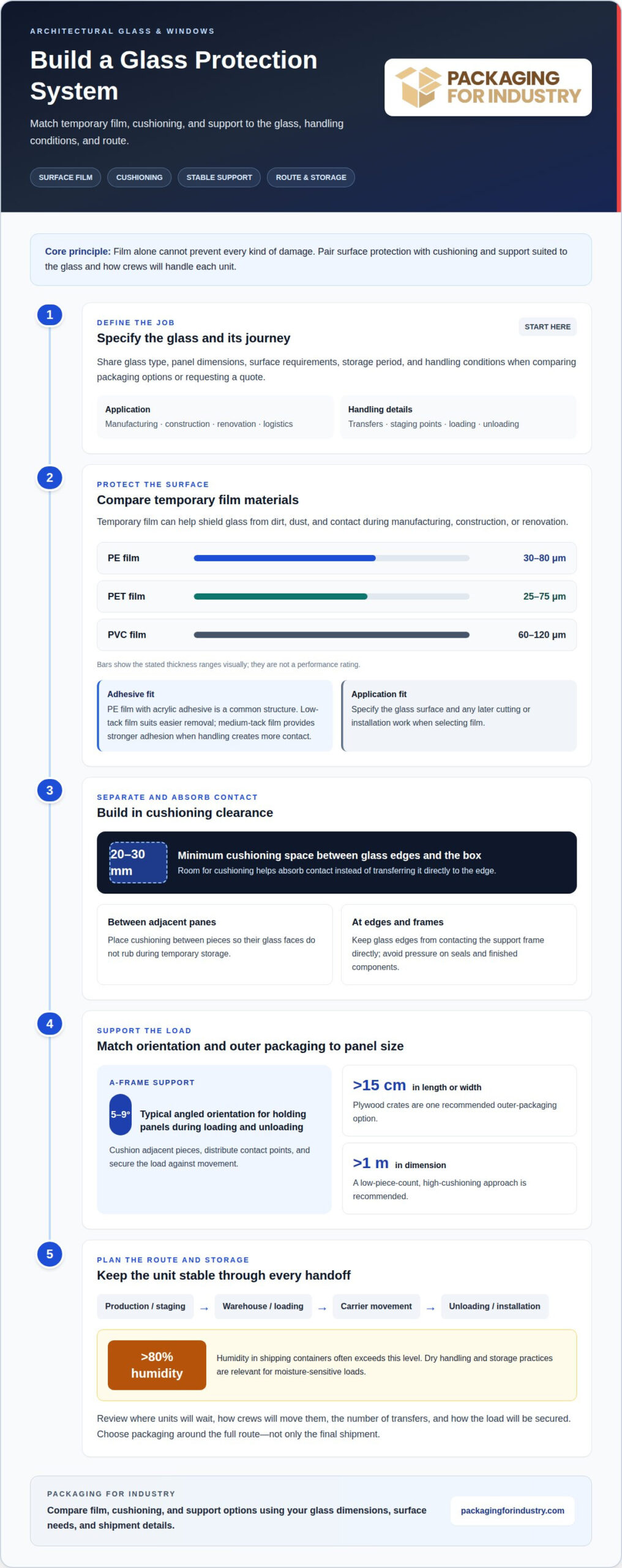
Film alone cannot prevent every kind of damage. The packaging system needs to suit the glass, handling conditions, and time in use. Surface protection works alongside cushioning and support, with choices guided by the route and how crews will handle each unit.
When comparing packaging options, consider how temporary films differ, what to expect from adhesive strength and protection duration, and how cushioning and support fit into the system. Match the approach to the job, whether windows are moving through manufacturing, a construction site, or transit, while avoiding unnecessary packaging.
Key Takeaways
- Compare protective film options based on the glass surface, adhesive needs, and time the film will remain in place.
- Include support and cushioning in your packaging quote to help limit movement and edge contact during handling and transport.
- Choose protection for the setting, whether glass is moving through manufacturing, construction, renovation, or logistics.
- Specify temporary film to help shield glass from scratches, debris, dirt, and other contaminants during work.
- Ask PFI about foam packaging, stretch film, VMI, and JIT services to coordinate packaging supplies and plan replenishment.
Industries Served
For glass shipments, condensation can leave moisture between surfaces or inside protective layers during storage and shipping. Temperature changes can create thermal stress, while pressure or abrasion at the frame can damage seals. PFI can help businesses assess packaging materials and sourcing options for dry storage, controlled contact, and careful loading.
Construction projects move architectural glass through staging, installation, and punch-list work, often across changing site conditions. A window waiting near a loading area can encounter dust, tools, and contact with adjacent materials. Temporary surface protection and stable supports can help limit contamination and keep units separated during movement. For panes exceeding 15 cm in length or width, plywood crates are one recommended outer-packaging option. PFI can help evaluate packaging for the route from delivery point to installation location.
Renovation brings a different handling pattern: crews remove existing windows, stage replacement units, and work around occupied or active spaces. A replacement pane may pass through a corridor before reaching its opening, exposing edges and corners to contact. Protective packaging for architectural glass and windows can help shield the surface during staging, while the support system should suit the pane’s size and orientation. PFI can help source cushioning to separate adjacent units and prevent their glass faces from rubbing during temporary storage.
Manufacturers handle glass across production, inspection, assembly, and outbound staging. Each transfer creates a chance for surface contact, so packaging should fit the actual process, not just the final shipment. At a fabrication line, operators may need to inspect a clear surface before applying film or placing a unit into a rack. For glass exceeding 1 meter in dimension, a low-piece-count, high-cushioning approach is recommended. PFI can help manufacturers assess packaging options for handling and cushioning that reduce opportunities for edge impact. Packaging should also avoid pressure on frame seals and other finished components.
Logistics teams manage several transitions: warehouse storage, loading, carrier movement, and unloading at the destination. A unit can shift if its support does not restrain movement, even when the surface film remains intact. Glass packaging should leave at least 20-30 mm of cushioning space between the glass edges and the box. That clearance gives cushioning room to absorb contact rather than transferring it directly to the edge. In shipping containers, humidity often exceeds 80%, making dry handling and storage practices relevant to moisture-sensitive loads. PFI can help review packaging supplies and loading plans to keep glass stable and prevent contact with other freight.
These applications also differ by shipment profile. A local construction delivery may involve repeated site handling, while a manufacturer’s outbound load may travel through a warehouse and carrier network. Packaging choices should reflect the number of transfers, storage conditions, glass dimensions, and installation sequence. In Southern California, projects may coordinate deliveries among manufacturers, distributors, and active construction sites. A practical packaging plan identifies where units will wait, how crews will move them, and which surfaces or frame components need protection at each stage. Packaging for manufacturing operations can be planned around those process handoffs, with PFI helping assess packaging and supply needs.
For architectural glass teams, the goal is a packaging system that follows each unit from production or renovation staging through delivery. Matching film, cushioning, and support to the application helps protect the finished surface and supports controlled handling. PFI can help manufacturers, site crews, and logistics teams coordinate packaging requirements across a shared shipment.
Protective Packaging Products for Architectural Glass and Windows
Source packaging that fits your glass type, storage period, and transport route. Share panel dimensions, surface requirements, and handling conditions when requesting a quote so you can compare options for protecting surfaces and supporting safe handling and installation.
Protective Packaging Options
Protective packaging combines surface film, cushioning, separators, and stable supports. Each component addresses a different risk, from scratches during fabrication to movement in transit. For insulated glass units, laminated glass, and coated glass, packaging should protect finished surfaces without putting pressure on edges, seals, or coatings. The right combination depends on the unit’s construction and handling conditions. Include those details when sourcing packaging supplies or requesting a custom packaging quote.
Glass Orientation and A-Frame Support
Glass A-frame supports are typically angled at 5-9°. This orientation holds panels securely while allowing crews to load and unload them. Place cushioning between adjacent pieces, and keep edges from contacting the frame directly. For shipping and storage, match the support to panel dimensions, distribute contact points, and secure the load against movement. Provide panel dimensions and shipment details when discussing packaging options with a supplier.
Temporary Protective Films
Temporary film shields glass from dirt, dust, and contact during manufacturing, construction, or renovation. Common glass-protection materials include PE film at 30-80 μm thick, PET film at 25-75 μm thick, and PVC film at 60-120 μm thick. PE film with acrylic adhesive is a common structure. When sourcing film, specify the glass surface and application, including any later cutting or installation work.
Adhesive Strength and Protection Period
Low-tack film suits surfaces that need easier removal; medium-tack film provides stronger adhesion when handling creates more contact. Choose adhesive strength to match the substrate and time in use, since residue or difficult removal can disrupt finishing. Short-term film use is recommended for 7-30 days. For long-term projects lasting 60-90 days, UV-resistant film is recommended. A peel-test sample helps assess removal requirements before applying film across multiple panels. Include the intended protection period in your packaging quote request.
Loading, Transport, and Insurance
Before transport, position the supported glass, cushion contact points, and secure the load against shifting. Drop-test references for glass packaging include ISTA 1A/2A. Shipping insurance and carrier handling terms depend on the shipment booking and policy; document packaging condition and visible damage at handoff. Share the handling plan for each transfer, from warehouse staging through unloading at the destination, when selecting packaging for your shipment.
Reusable and Recyclable Options
Reusable options can include durable A-frame supports and separators used across repeated shipments when their condition remains suitable. Recycling depends on the packaging material and available recovery systems. Protective glass film is designed for single use and cannot be reused, so separate it from reusable supports after removal. Remove film at a 45-degree angle to help manage the release across the glass surface.
For packaging that fits your glass construction, adhesive compatibility, support geometry, and shipment route, share your requirements and request a packaging quote.
Benefits of Protective Packaging for Architectural Glass and Windows
Protective film can help reduce glass damage, dirt, and contamination during handling and shipping. Choosing a suitable option can reduce product damage and avoid added cleanup costs.
Scratch Protection
Protective film creates a temporary barrier between the glass surface and contact during handling. It can help prevent scratches from gloves, tools, packaging, or nearby materials. For manufacturers and distributors, reducing incidental contact during transfers can help lower damage-related costs and protect products before delivery.
Friction is a common concern when panels are stacked, moved, or repositioned. A film-covered face is less exposed to direct rubbing from dust or adjacent packaging. Compare film options based on the surface and next operation. A coated or finished face may need a different adhesive approach from uncoated glass.
Installation planning matters, too. Film should cover areas exposed to handling while leaving edges accessible for fitting or sealing. At a jobsite, crews can remove it after nearby drilling, fastening, or finishing work ends. This helps limit scratches from tools and construction materials without obstructing installation.
Debris Protection
Temporary surface coverage helps keep loose debris away from glass during fabrication, renovation, and construction. Fine particles can settle on a window stored near cutting or sanding work. If a panel is wiped before installation, trapped grit may drag across the surface. Keeping the protective layer in place during dusty tasks helps reduce the risk of damage and cleanup.
Protective film also helps shield glass from dust and water during handling. That matters when a window waits in a staging area or moves through a building where work is underway. For example, a panel stored beside drywall cutting can be exposed to airborne residue. Film provides a sacrificial surface that crews can remove when the dusty work is complete.
Coverage works best as part of an orderly handling routine. Keep wrapped glass separate from loose hardware, fasteners, and tools. Before installation, remove visible debris from the film’s exterior so particles do not transfer during peeling. This helps protect the glass as the unit moves from storage to its opening and can reduce damage-related costs.
Contamination Protection
Construction residue, fingerprints, and moisture can interfere with a clean finish. Temporary film shields glass from direct exposure while crews complete nearby work. During a renovation, for example, paint or sealant may be applied near newly installed windows. Keeping the film on until those tasks are finished helps reduce cleanup on the glass itself.
Contamination control also supports inspection and handoff. A clean, protected surface makes it easier to identify marks caused during handling rather than confuse them with jobsite residue. At delivery, teams can inspect the film, note damage to the packaging, and keep the glass protected until the installation area is ready.
Removal is part of the protection plan. Peel the film carefully after dusty or wet work ends, and avoid dragging its exposed side across the glass. For a multi-panel installation, remove film in a consistent sequence, then inspect each surface under the available work lighting. This helps reveal residue or marks before handoff.
For packaging that helps reduce glass damage during handling, request a packaging quote.
Why Choose Packaging For Industry (PFI)
Packaging For Industry (PFI) helps manufacturers and construction suppliers align packaging materials and replenishment with how glass moves through their operations. Protective packaging decisions depend on the glass, handling sequence, storage conditions, and shipping method. PFI offers foam packaging, stretch film, Vendor Managed Inventory (VMI) for packaging, and Just-In-Time (JIT) inventory management. Together, these services and materials can support coordinated cushioning and keep packaging supplies available.
Foam packaging can cushion or separate glass and window units within a packaging system. Its role depends on the package design and where contact or movement may occur. For example, foam can cushion panels from surrounding materials. Select the material and placement for the specific unit rather than treating every shipment as the same packaging problem.
Stretch film can help stabilize a packaged load for warehouse handling and transport. Use it around the outer load, not directly on exposed glass, where contact could affect the finish. A well-planned sequence separates surface protection from load containment: protect the glass, cushion and support the units, then secure the shipment as appropriate. This helps operations teams coordinate packing without relying on one material to address every risk.
Supply planning matters, too. VMI for packaging aligns inventory management with the customer’s operating needs. JIT inventory management focuses on timing replenishment to support production and fulfillment. For a manufacturer handling recurring window orders, these services can help organize supply around usage and planned demand. They are especially relevant when packaging stock needs to be ready alongside production, rather than managed through repeated last-minute purchases.
PFI can help coordinate cushioning materials, load containment, and supply continuity for your packaging operation. The discussion can focus on how units are packed, where materials are used, and how often packaging is consumed. This operational view connects packaging choices to manufacturing, warehouse, and delivery workflows instead of treating materials in isolation.
For businesses in Orange County, Los Angeles, and San Diego, steady packaging availability can help keep manufacturing and distribution moving. VMI and JIT offer inventory-management approaches for teams seeking more organized replenishment. Foam packaging and stretch film address different parts of the system, so choose them according to the load and workflow. This supports a considered approach to glass shipments, handling risks, and packaging purchasing without unnecessary steps.
When requesting a packaging quote, provide the glass or window unit type, how it is handled, the materials already in use, and your operation’s supply pattern. These details focus the discussion on relevant materials and inventory support rather than a generic package. PFI can discuss how its foam packaging, stretch film, VMI, and JIT inventory management fit your operation.
Contact Packaging For Industry (PFI) to discuss packaging needs for architectural glass and windows.
Plan the Next Glass Shipment with Confidence
Make packaging decisions part of the job plan, not a last-minute response to handling problems. A protection plan works best when it reflects the unit, work sequence, storage conditions, and shipment route. Bringing these details together early gives purchasing, production, and logistics teams a shared basis for planning.
For a new project or a changing shipping pattern, consider how packaging fits existing workflows and replenishment needs. Clear specifications help teams order consistently, prepare loads efficiently, and reduce avoidable damage without adding unnecessary complexity. Packaging For Industry (PFI) can discuss your operational requirements and the packaging support that fits them.
A considered plan helps move valuable glass from production to installation with greater control. Start with the needs of the next shipment and build from there.
Frequently Asked Questions
Why Should You Use Protective Film for Windows, Doors, and Glass Surfaces?
Protective film helps keep finished glass clean and less exposed to surface scratches during handling and nearby work. On an Orange County renovation, for example, glazing may remain in place while crews complete trim or paint work around it. A temporary barrier can reduce direct contact with dust, splashes, and tools. Keep film in place only while it suits the work stage, then remove it before final inspection.
What Packaging Materials Prevent Scratches, Breakage, Moisture, and Edge Damage?
Use different materials for different risks: film shields the face, cushioning separates surfaces, and edge protection helps limit impacts at vulnerable corners. Foam packaging can cushion a window within a shipping pack, while a crate or rigid outer package supports it in transit. For a shipment moving between Los Angeles and San Diego, combine these layers to suit the panel and handling route. No single material addresses every point of contact.