
Scratches often occur before a product reaches its shipping carton, during handling, staging, stacking, or movement through a warehouse. Effective packaging solutions to prevent surface scratching keep sensitive finishes apart from materials or products that could rub against them.
Anti-scratch corrugated is one option, but it isn’t automatically scratch-proof. The term describes corrugated packaging designed with surface protection in mind, including materials or additives intended to help the packaging retain its appearance. Film, sheeting, foam, and other packaging solutions to prevent surface scratching can also shield finished goods during storage and transit.
This guide explains how anti-scratch corrugated works, why scratches occur, and how to match protective materials to a product and its handling process. It also covers using film and sheeting to protect staging areas, and the difference between surface protection and shipment containment. These practical distinctions help you choose an approach that fits your operation.
Key Takeaways
- Prevent surface contact during handling, storage, and transit by choosing protection suited to the product’s finish and shape.
- Anti-scratch corrugated is one option, but foam, film, and sheeting can also help protect sensitive goods without relying on bubble wrap for spacing.
- Match sleeves, rolls, or pre-cut protective pieces to the product and workflow to make application and replacement more practical.
- Keep staging areas and handling surfaces clean, and use separate stretch film when a load needs containment and stability.
- Foam packaging, stretch film, and packaging inventory programs can support damage reduction and more reliable supply for industrial operations.
Protecting Furniture, Glass, Mirrors, Electronics, and Other Sensitive Surfaces
Furniture finishes, glass, mirrors, electronics, and metal parts can scratch when grit or neighboring surfaces rub against them. Protective layers should prevent contact and stay in place through storage and transport.
Selecting Protective Materials
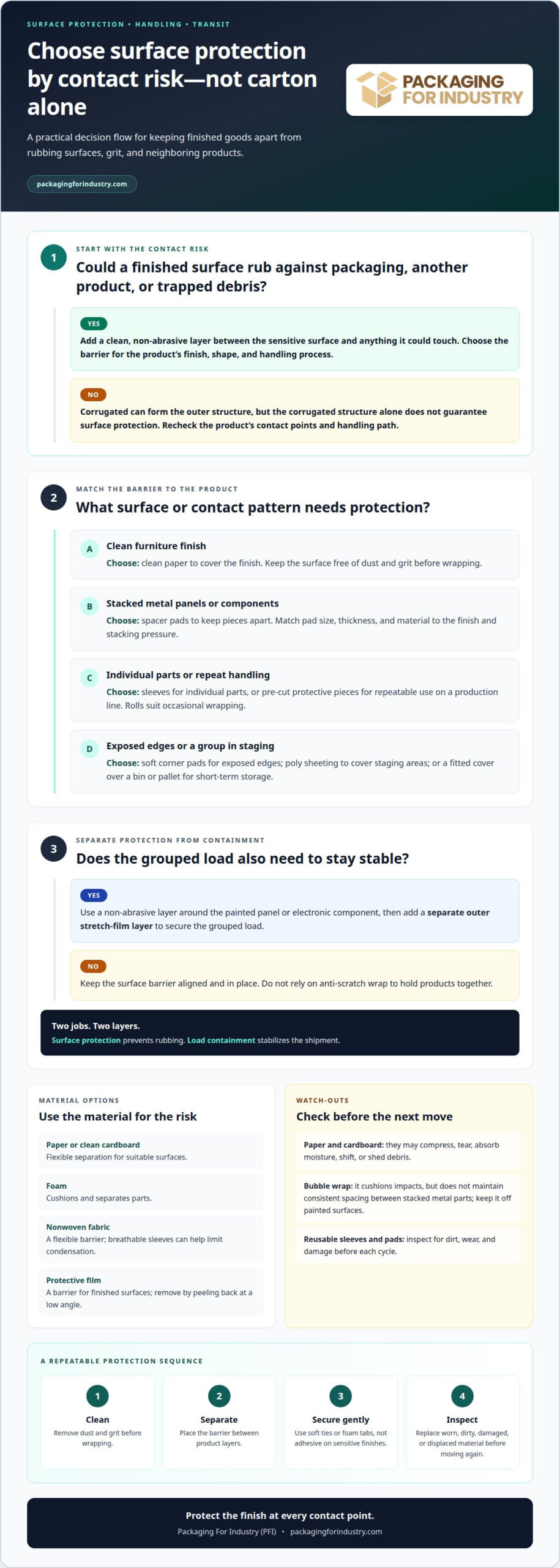
Paper, clean cardboard, foam, and protective film can separate finished goods from surrounding materials. Choose based on the surface and contact risk: paper can cover a clean furniture finish, while spacers can keep stacked metal panels apart. Cardboard and paper may compress, tear, absorb moisture, shift, or shed debris, so inspect them and replace damaged material. Keep glass and mirrors from rubbing against other items.
Applying and Replacing Protective Materials
Clean dust and grit from a surface before wrapping, since trapped particles can abrade a finish. Place protective material between product layers, and secure it with soft ties or foam tabs instead of applying adhesive to sensitive finishes. For repeat handling, use sleeves for individual parts or pre-cut pieces on a production line. Replace worn, dirty, or displaced material before moving the product again.
Separating Surface Protection from Load Containment
Surface protection prevents rubbing; load containment stabilizes the shipment. Wrap a painted panel or electronic component in a non-abrasive layer, then use a separate outer stretch-film layer to secure the grouped load. Do not rely on anti-scratch wrap to hold products together. Separating these functions helps protect finishes without allowing shifting cartons or components to press directly against them.
Protection Across Handling, Storage, and Transport
Apply protection after finishing or cleaning, before staging, stacking, or transport. Inspect reusable sleeves or pads for debris, wear, and damage before each cycle. During warehouse handling, keep protected surfaces away from dirty carts and tables; poly sheeting can cover staging areas. In transit, padded strips beneath straps can reduce scuffs on furniture edges, framed glass, and other exposed surfaces.
What Is Anti-Scratch Corrugated?
Anti-scratch corrugated is corrugated packaging designed to help reduce abrasion against a product’s finish. Packaging may use anti-scratch additives to help it retain its appearance, but the corrugated structure alone does not guarantee surface protection. The right setup depends on the product and whether its surfaces could rub against packaging or other components.
Foam can cushion and separate parts, while paper and nonwoven fabric provide flexible barriers. Bubble wrap cushions impacts, but it does not maintain consistent spacing between stacked metal parts and should not touch painted surfaces directly. Select materials for the specific risk: impact, friction, direct contact, or debris trapped against a finish.
For example, put a clean barrier between painted components, then use corrugated packaging to form the outer structure. For stacked metal parts, spacer pads can maintain separation within the load. Breathable nonwoven sleeves can protect stored items from abrasion while helping limit condensation. Inspect reusable sleeves and pads for dirt, wear, or damage before use, and replace compromised material.
Remove protective film by peeling it back at a low angle to reduce stress on the finish. After removal, inspect for scratches, scuffs, or residue, and follow the product’s approved cleaning procedure for minor residue. Keep dust and grit away during unpacking, since particles beneath the film can create friction as it moves.
For repeat shipments, align the corrugated design and surface barrier with the product’s contact points and handling process. A request for a packaging quote can help define those requirements.
Flexibility for Products of Different Shapes and Sizes
Product geometry determines where a barrier must sit and how it stays in place. A flat powder-coated panel needs broad, even separation, while an aluminum extrusion may need narrow pads at contact points. Curved housings, protruding connectors, and glass corners create different abrasion risks. Match surface protection to the shape, not just the outer carton.
Choose pad specifications based on the finish and stacking pressure. Powder-coated panels, stainless steel components, and aluminum extrusions may require different pad sizes, thicknesses, or materials. An effective spacer has a non-abrasive face, consistent thickness, anti-skid performance, and compression resistance. If a pad shifts or compresses unevenly, adjacent pieces can touch even if they were separated during packing.
For irregular parts, sleeves can cover each item without folds bunching near the edges. Rolls suit occasional wrapping, while pre-cut pieces support repeatable use on a packing line. A custom-cut separator can follow a panel profile or leave clearance around a handle. This reduces loose material and helps keep the protective layer aligned as products move through handling.
Grouped products need a different approach from individually packed units. A fitted cover over a bin or pallet can shield several finished items during short-term storage, while plastic liners protect container interiors. Keep each piece from pressing against the next, especially where painted faces or polished metal meet. Choose a cover that protects the group without trapping debris against exposed surfaces. Soft corner pads can help protect exposed edges during handling.
Causes of Scratches During Storage and Transit
Vibration from trucks and forklifts can make unprotected surfaces rub against packaging or adjacent products. Stacked weight adds compression, which can press metal sheets or finished panels together. If a pad shifts, tears, or breaks down, contact points may be exposed during transport. Even short warehouse moves can damage a sensitive finish when dust or grit gets trapped between surfaces.
Storage conditions can affect the protective layer, too. Temperature changes and moisture may weaken or distort some packaging materials, while loose paper or cardboard can shift, tear, or shed debris. Reused pads with embedded particles can create friction against polished components. Inspect materials for dirt and wear before use, and replace pieces that no longer separate the product securely.
Handling introduces another source of abrasion. A dusty workbench, cart, glove, or tool can transfer particles onto a clean surface before packing. Place finished products on a clean, protected area, and keep straps from rubbing directly against painted edges. These process controls reduce contact damage before a package enters storage or a truck.
Packaging tests for scratch and abrasion resistance compare a product surface before and after representative rubbing or handling. Test the actual finish with its protective layer in place, then inspect for scuffs, transferred debris, or changes under consistent lighting. Include the packed configuration and likely transport movement so the test reflects contact between sheets, components, and packaging.
Film and Sheeting for Surfaces and Staging Areas
Film and sheeting can protect the work area as well as the product. Cover a bench, cart, or inspection table with clean poly sheeting before finished goods arrive. This creates a replaceable contact surface for electronics housings, glass panels, or coated components. A marked staging zone also helps keep unpacked products away from tools, loose hardware, and dusty work surfaces.
Roll film suits variable shapes and occasional packing because teams can cut it to fit each item. Place the product on the film and wrap outward, keeping the contact face clean. For repeat orders, pre-cut sheets can make coverage more consistent and reduce measuring at the packing station. Store rolls and cut sheets in a clean, dry area between uses.
Staging surfaces need routine attention. Replace a sheet if it collects grit, tears, or gets damp. A damaged cover can transfer debris to the next item, especially during a busy shift with multiple product types. Keep replacement material near the work area, and define when it should be changed in the workflow rather than waiting for visible contamination to reach a product.
Match coverage to the work zone: a narrow cart may need a fitted strip, while a large inspection bench needs broad coverage with edges secured out of the product path. Organize cut pieces by use, and keep excess material from bunching beneath parts. These layout choices make film and sheeting easier to apply consistently and help maintain a clean contact area during staging and inspection.
Packaging Products
Scratch protection combines a contact barrier with packaging that keeps products secure during handling and shipment. Foam packaging can cushion individual parts, separate surfaces, and help limit rubbing inside a pack. Choose the format based on the product’s shape, finish, and contact points. A screen, polished panel, or finished metal component may need a different layout from a part with no exposed finish.
Foam packaging solutions can be designed around the item and its packing arrangement. Foam inserts help hold components in position, while protective layers can separate items that might otherwise touch. For repeat shipments, a consistent insert can make placement more repeatable for packing teams. Avoid leaving loose gaps where parts can shift and rub against each other.
Stretch film has a separate role. Applied around a pallet or grouped shipment, it helps contain the load during movement. It should not replace the non-abrasive barrier against a sensitive finish or be relied on alone to prevent products from rubbing together. Keep the film outside the surface-protection layer so containment pressure does not pull directly across a painted or polished component.
Combining foam and stretch film keeps their functions distinct: foam protects contact points, while film secures the packed load. The right balance depends on how items are packed, handled, and shipped. Custom packaging design can align protection with the product and packing workflow while avoiding unnecessary material. When requesting a quote, share the product dimensions, finish, and packing method so the proposed configuration addresses the actual handling risk.
Industries Served
Surface protection needs vary with the product, finish, and route through a facility. Packaging for manufacturers, warehouses, and distribution centers must account for production handling, staging, and shipment conditions, not just the final carton. In Orange County, Los Angeles, and San Diego, goods may move across multiple sites, making consistent packing methods important.
Aerospace operations handle components where fit, finish, and careful movement matter. Protective foam packaging and custom-designed layouts can suit parts with specific handling requirements. Electronics businesses also need packaging arrangements that keep housings, screens, and components organized through production and distribution.
Furniture, glass, and mirror suppliers deal with broad surfaces and exposed edges. Their packaging needs differ from those of medical device manufacturers, food and beverage producers, or construction suppliers. Each operation must consider its product’s form and how teams handle, stage, and dispatch it. Packaging design should reflect the goods and workflow rather than assume one material suits every surface.
Construction suppliers and industrial businesses often move parts through busy warehouses, where products may be staged, stacked, or transferred before dispatch. Matching packaging to each item can support consistent handling at every step. PFI’s aerospace packaging support is relevant for operations protecting sensitive components during shipping and handling. Across sectors, custom packaging design can fit product geometry, packing methods, and supply requirements. Start by identifying the product, its handling path, and the requirements the packaging must meet.
Benefits of PFI Packaging Solutions
Packaging that fits the product and workflow can help reduce avoidable damage and material waste. A foam insert designed around a component can limit movement and surface contact, while a suitable outer pack supports handling and shipment. This coordinated approach helps manufacturers protect finished goods without relying on extra material to solve every packaging problem.
Reducing damage can also protect operational costs. Scratched products may require additional inspection, rework, or replacement, disrupting production and delivery plans. Thoughtful packaging design addresses contact points and packing steps directly. The aim is to choose suitable protective materials for the item, rather than add layers that do not address the source of abrasion.
Reliable supply matters as much as package performance. Vendor Managed Inventory for Packaging can coordinate packaging replenishment with operational needs. Just-In-Time inventory management can help align packaging supply with production schedules. These approaches can help when shortages or excess stock put pressure on warehouse space, purchasing, or production flow.
Consistent packaging also supports repeatable work. Packaging kitting and assembly services can organize the materials needed for a defined packing process, helping teams use the intended components together. For a new product or recurring damage issue, custom packaging design can address the item’s geometry, finish, and handling path. PFI’s packaging solutions help businesses lower packaging costs, reduce product damage, and improve supply reliability through fit-for-purpose design and inventory support.
Packaging For Industry (PFI)
Packaging For Industry (PFI) helps manufacturers and warehouse teams address product protection and supply needs with packaging suited to each item and its handling workflow. Contact PFI when recurring scuffs point to gaps in product separation, packing methods vary across a production line, or packaging availability disrupts operations.
Foam Packaging can cushion products and separate surfaces inside a pack. For sensitive finishes or irregular components, packaging design can account for the product’s shape and contact points. This is useful when standard packing methods leave parts free to shift or rub during storage and transit.
Stretch Film serves a different purpose: securing grouped goods for movement. Use it as outer load containment, not as the protective layer against a delicate finish. Pairing it with suitable product-level protection helps address both surface contact and load stability.
Supply planning matters, too. Vendor Managed Inventory (VMI) for Packaging can coordinate replenishment with operational needs. Just-In-Time (JIT) Inventory Management for Packaging can help align supply with production schedules. These options can suit operations where packaging stock levels affect warehouse space, purchasing routines, or production flow.
For a useful discussion, share the product type and finish, how items are packed, and where damage occurs. These details help connect the scratch risk to the right packaging approach and supply process. PFI can help assess whether foam, stretch film, inventory support, or a combination fits the operation. A packaging discussion is especially relevant when products change, damage patterns recur, or current materials complicate packing.
Make Surface Protection Part of the Workflow
Treat recurring damage as a signal to review the packaging process, not just the material touching the product. A useful next step is to connect each scratch pattern to where it appears: production handoff, warehouse staging, storage, or shipment preparation. This helps clarify which packaging solutions to prevent surface scratching should address and where the process needs adjustment.
For a practical packaging discussion, bring the product type and finish, the current packing arrangement, and the point where damage tends to occur. These details help focus the conversation on your operation and handling requirements. Packaging For Industry (PFI) can help assess the packaging need and discuss an approach suited to your products and workflow.
A clear starting point can help your team improve product protection and create a smoother packing process.
Frequently Asked Questions
What Can I Use Between Metal Parts to Prevent Scratching?
Choose separators that stay aligned with parts during packing and unpacking. For long components, place support where pieces could bow or shift; for small parts, use individual pockets or sleeves to keep pieces from knocking together. A packing trial using the actual product arrangement can show whether separators stay in position after the package is moved and reopened.
What causes scratches on finished goods in manufacturing?
Scratches can start at different points in production, so record where a defect first appears. Compare a part after finishing, internal movement, and packing to narrow down the stage associated with damage. For example, repeated marks on one edge may point to a consistent contact point, while scattered marks may suggest varied handling. This record helps teams target the right process change.
When should protective packaging be added?
Add protection at the process handoff where the finished item would otherwise become exposed to routine movement. A written packing standard can identify that handoff, the material used, and how the protected product should be placed in its container. For a new product, run a short packing trial before scaling the method across the line, then update the standard if the package shifts or slows packing.
What packaging solutions are best for protecting painted, polished, or coated surfaces?
Base material choice on the coating’s sensitivity, the product shape, and whether packaging touches the finish directly. A flat coated panel may need broad contact coverage, while a polished component with protruding features may need protection focused on those points. Keep material selection consistent within a product family, and assess a representative packed item before standardizing the method across production.
How do anti-scratch films and protective tapes work, and when should they be used?
Protective films cover exposed surfaces during handling or storage, while tapes generally secure packaging materials rather than cushion products. Suitability depends on contact with the particular finish and the conditions during use. Test a small sample on a representative area, then inspect for changes in appearance or adhesive residue after removal. Include the removal method in packing instructions so teams handle it consistently.
Can packaging materials or adhesives damage product finishes or leave residue?
Yes. A material that works well on one coating may not suit another, and adhesive can leave residue or affect a finish. Check compatibility on a discreet sample area before using a material across a production run. Record the material and result so purchasing and operations teams can repeat the approved combination and avoid substituting untested tape or film if supplies change.