
In 2026, a high-performance foam insert isn’t just a luxury for protecting sensitive electronics; it’s a regulatory necessity for any manufacturer operating under California’s SB 54 mandates. Finding a reliable cross-linked polyethylene foam supplier in Los Angeles has become a strategic priority, as businesses must now balance ASTM D3575 technical standards with the urgent need for 10% weight reductions by the January 1, 2027 deadline. You’ve likely felt the frustration of inconsistent foam densities from national catalog suppliers or, worse, the financial sting of high-value components arriving at a job site with avoidable shipping damage.
We understand that your operations depend on precision and predictability. This guide will show you how to specify, source, and optimize cross-linked polyethylene (XLPE) foam to eliminate transit failures while staying ahead of shifting environmental regulations. We’ll examine how local CAD/CAM engineering support, free prototyping, and Southern California logistics can turn your protective packaging from a cost center into a competitive advantage. By focusing on technical accuracy and local delivery, you can ensure your products remain safe and your supply chain stays efficient.
Key Takeaways
- Learn how to select the right XLPE foam density to ensure your high-value components meet strict G-force protection standards during transit.
- Discover how free CAD/CAM support and custom die-cut inserts help you reduce shipping damage while lowering your total packaging costs.
- Partnering with a reliable cross-linked polyethylene foam supplier Los Angeles businesses trust provides access to next-day delivery and VMI programs that keep your operations lean.
- Understand how 2026 California regulations like SB 54 impact your material selection and why precision engineering is vital for meeting weight reduction targets.
- Request a packaging quote to see how integrated foam and corrugated solutions provide superior protection for specialized industries like aerospace and medical.
What is Cross-Linked Polyethylene (XLPE) Foam?
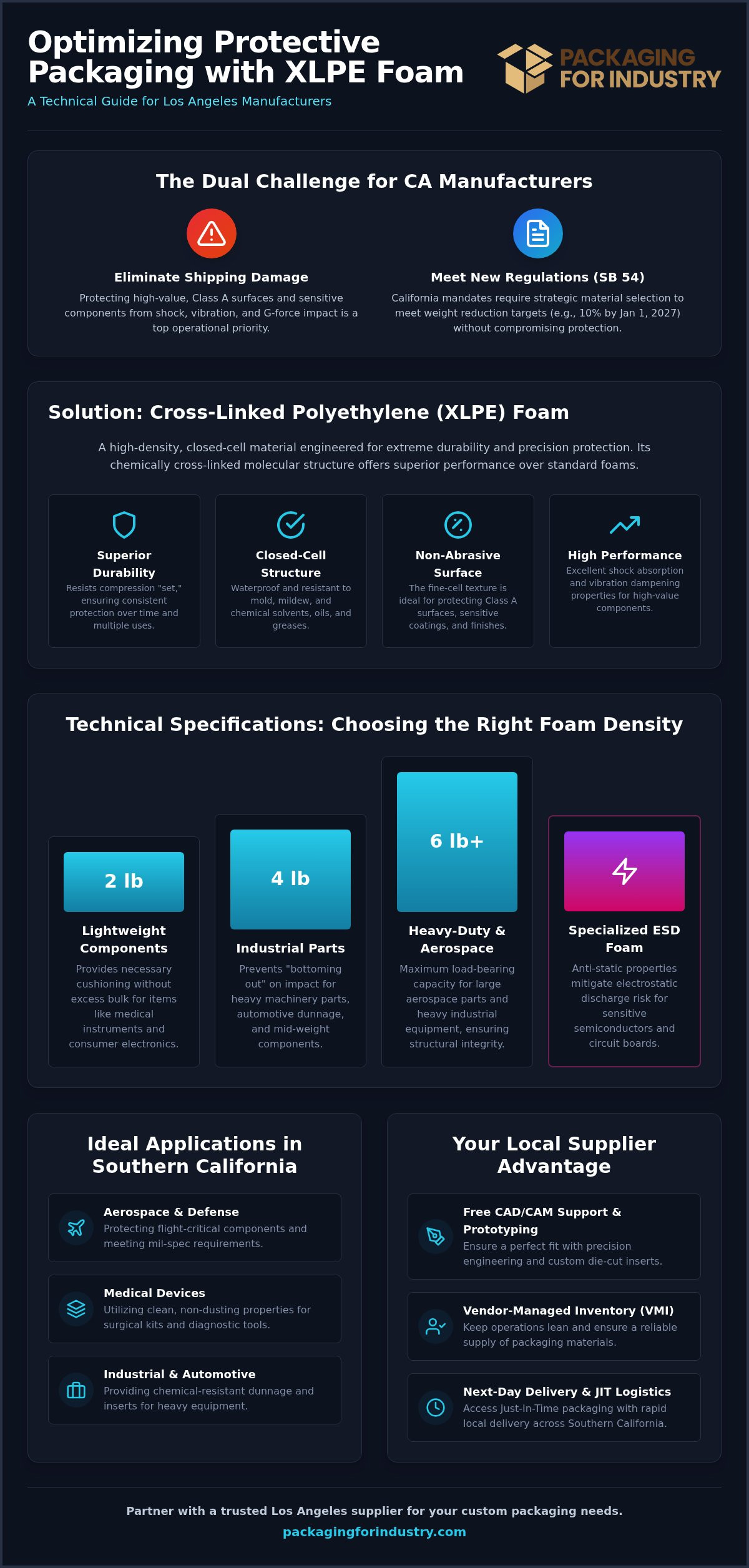
Cross-linked polyethylene (XLPE) foam represents a high-density, closed-cell material engineered for extreme durability and precision. Unlike standard foams that might degrade or lose shape under repeated stress, XLPE is chemically bonded at the molecular level. This chemical process, known as Cross-linked polyethylene, creates a fine-celled structure that offers superior shock absorption and chemical resistance. Cross-linked polyethylene foam is the recognized industrial standard for protecting Class A surfaces due to its unique non-abrasive properties.
Choosing a cross-linked polyethylene foam supplier Los Angeles manufacturers can rely on is critical when standard polyethylene falls short. While basic PE is effective for commodity shipping, XLPE provides enhanced aesthetics and significantly better recovery from compression. This means the foam doesn’t “set” or flatten over time, ensuring your high-value components remain secure through multiple transit legs or long-term warehouse storage. It’s a pragmatic choice for any operation focused on reducing shipping damage and maintaining product integrity.
Closed-Cell Structure and Durability
The closed-cell nature of XLPE is its primary defense against environmental hazards. Because the cells are tightly sealed, the material is essentially waterproof, preventing the growth of mold or mildew during long-term storage. Compared to open-cell polyurethane foams, which can act like a sponge and trap moisture, XLPE remains inert and structurally sound. Its fine-cell texture is specifically designed to protect sensitive coatings, ensuring that vibration during transport doesn’t lead to surface marring or burnishing of the product finish.
Ideal Industrial Applications in Los Angeles
In the Southern California industrial corridor, XLPE is the material of choice for several high-stakes sectors. Aerospace contractors in areas like Carson and Torrance use custom XLPE inserts to protect flight-critical components from vibration. Medical device manufacturers require the clean, non-dusting properties of XLPE to maintain strict standards for surgical kits and diagnostic tools. Additionally, automotive dunnage and heavy-duty equipment manufacturers utilize this foam for its chemical resistance, as it doesn’t break down when exposed to oils, greases, or industrial solvents. Working with a dedicated cross-linked polyethylene foam supplier Los Angeles businesses trust ensures these specific industry standards are met without compromise.
Technical Specifications: Choosing the Right Foam Density
Selecting foam density is more than a procurement checkbox; it’s an engineering calculation that dictates the survival of your shipment. As a premier cross-linked polyethylene foam supplier Los Angeles manufacturers rely on, we provide materials ranging from lightweight 2lb options to heavy-duty 8lb XLPE. The density rating refers to the weight of the material per cubic foot. Higher density foam offers greater load-bearing capacity and resistance to deformation, which is vital for maintaining the structural integrity of heavy industrial components during long-haul transport.
Material Density vs. Product Weight
For lightweight electronics or medical instruments, 2lb foam typically provides the necessary cushioning without adding unnecessary bulk. However, heavy machinery, automotive dunnage, or large aerospace parts require 4lb or 6lb foam to prevent the product from “bottoming out” during an impact. This decision directly impacts G-force protection. Recent research on cross-linked polyethylene materials highlights how cross-linking improves the energy absorption capacity compared to non-cross-linked variants. Finding the sweet spot between foam thickness and density allows you to maximize protection while minimizing material costs. You don’t want to over-engineer and pay for 8lb foam if a 4lb solution meets your drop-test requirements.
ESD and Specialized Protection
Sensitive semiconductors and circuit boards require anti-static XLPE to mitigate the risk of electrostatic discharge (ESD). This specialized foam is treated with conductive agents to ensure that static electricity doesn’t build up and fry expensive internal components. For Los Angeles tech manufacturers, meeting military or aerospace standards often requires documented ESD compliance. Our engineers design custom ESD inserts that provide both physical shock protection and electrical grounding. These solutions are essential for maintaining the reliability of high-value electronics during the shipping cycle.
Beyond protection, we offer custom color options to support 5S methodology and tool shadowing. Using contrasting foam colors in a “sandwich” layout allows warehouse staff to instantly identify missing equipment or tools. If you are unsure which density or specialized coating fits your specific application, you can compare packaging pricing and technical specs with our local team. This proactive approach ensures your high-value assets are protected by the exact grade of material they require while helping you manage your overall packaging spend.
Custom Engineering: Die-Cut Inserts and Integrated Solutions
As a specialized cross-linked polyethylene foam supplier Los Angeles manufacturers rely on, we move beyond supplying raw materials to providing fully engineered protection. Our process starts with CAD drawings that translate your product’s complex geometries into precise digital patterns. We utilize two primary fabrication methods. High-speed die-cutting works best for high-volume production; CNC waterjet cutting handles complex, low-volume designs that require extreme precision without the cost of a physical die. This versatility ensures you don’t overpay for tooling on small runs while maintaining the speed needed for bulk orders. Choosing a cross-linked polyethylene foam supplier Los Angeles businesses can partner with for end-to-end design is the most efficient way to manage these complex requirements.
Effective protection requires a holistic approach. We don’t just provide the foam; we integrate these inserts into custom corrugated boxes or heavy-duty shipping crates. This creates a ready-to-use unit that streamlines your packing line. Our kitting services take this a step further by combining foam, boxes, and necessary fasteners into a single SKU. This significantly reduces the labor time your warehouse team spends on assembly and simplifies your inventory management. By engineering precise fits, we help Los Angeles manufacturers meet the 10% weight reduction targets mandated by SB 54 for 2027 without sacrificing protective quality.
The Prototyping Advantage
Industrial rollouts for high-value components can’t afford errors. We offer free prototyping and CAD/CAM support to ensure a perfect fit before you commit to a large-scale production run. This is especially critical in the aerospace and aviation sectors, where parts often have irregular shapes and strict tolerance requirements. Testing the foam fitment early helps you avoid the high costs of transit damage or late-stage design changes. It’s a pragmatic step that ensures your operational goals stay on track without unexpected budgetary hits.
Integrated Foam-Lined Packaging
For high-volume manufacturing lines, custom foam end caps provide a fast and secure way to suspend products within a box. This “floating” protection is often paired with corner and edge protection to reinforce the outer packaging against rough handling. For heavy industrial equipment, we design foam-lined crates that absorb the high-impact shocks common in international transit. By combining multiple materials, we help you achieve the durability of a custom crate with the lightweight efficiency of advanced XLPE foam. This integration is essential for lowering packaging costs and improving the overall reliability of your supply chain.
Procurement and Logistics for Los Angeles Manufacturers
Sourcing from a local cross-linked polyethylene foam supplier Los Angeles businesses can reach quickly is a matter of fiscal responsibility. Foam is mostly air; shipping it across state lines means paying to transport volume rather than weight. By ordering in bulk from a local partner, you significantly lower packaging costs and eliminate the logistical delays inherent in national catalog suppliers. This proximity allows for a more agile supply chain where you can respond to production spikes without the fear of your protective materials being stuck in a transit hub. We act as a logistical fixer, ensuring that your protective packaging is always ready for the next shipment.
The VMI Advantage for Los Angeles Businesses
Industrial real estate in Southern California is at a premium. Every pallet of foam sitting in your warehouse is space that could be used for revenue-generating production. Through Vendor Managed Inventory (VMI), we manage your stock levels for you. We monitor your usage and replenish supplies on a scheduled cycle, ensuring you never face a production stoppage due to a shortage. This off-site stocking model frees up floor space while simplifying your procurement workflow. It shifts the burden of inventory management from your warehouse team to ours, allowing you to focus on manufacturing and distribution.
Local Service Areas and Shipping
Our proximity to major industrial hubs allows us to provide local next-day delivery to facilities in Torrance, Carson, and Santa Fe Springs. This speed is essential for just-in-time (JIT) production lines that cannot afford to wait for cross-country freight. While we maintain nationwide shipping capabilities for multi-state operations, our core strength lies in our dedicated support for Los Angeles County and the Inland Empire. Working with a local cross-linked polyethylene foam supplier Los Angeles manufacturers trust means you get technical support and material delivery exactly when your production schedule demands it. We eliminate the hidden costs of freight and lead-time variability, ensuring your logistics flow remains uninterrupted.
Request a Quote: Partnering with a Local Los Angeles Supplier
Selecting a cross-linked polyethylene foam supplier Los Angeles manufacturers trust involves more than a simple price comparison. It requires finding a partner that understands technical accountability. Large national catalog suppliers like Uline provide convenience for retail needs, but they often lack the engineering depth required for high-stakes industrial protection. PFI serves as a cost-saving alternative for bulk industrial foam because we provide direct access to packaging engineers. You aren’t just purchasing a material; you’re securing a customized system designed to reduce damage rates and simplify your assembly line. Our Anaheim-based headquarters ensures we’re positioned to provide the rapid response and logistical oversight that national distributors can’t match.
Why Choose PFI as Your XLPE Supplier?
We bring decades of practical, industrial-focused experience to every project. Our team specializes in solving complex shipping challenges for high-value sectors, including Aerospace and medical device manufacturing. We don’t just sell components; we provide integrated solutions. By consolidating your purchasing with PFI, you can source your heavy-duty corrugated boxes, XLPE inserts, and stretch film from a single reliable source. This consolidation reduces your administrative overhead and ensures that every part of your packaging system is engineered to work in unison. We prioritize fiscal responsibility by helping you lower packaging costs through precise material selection and local delivery efficiency.
How to Request Your Custom Foam Quote
Submitting a request for a custom quote is a straightforward process designed for busy procurement and operations managers. You can start by providing your CAD files or physical product dimensions for a comprehensive technical review. To ensure we provide the most accurate volume-based pricing, please include the following information in your request:
- Product Dimensions: Accurate measurements of the items requiring protection.
- Estimated Volume: Your expected production run numbers or annual usage requirements.
- Material Specifications: Any specific density requirements or specialized needs like ESD protection.
- Logistical Requirements: Mention if you require Vendor Managed Inventory (VMI) or just-in-time delivery to your facility.
Our engineers will review your data and provide a quote that balances superior protection with economic efficiency. We also offer free prototyping to verify the design and fitment before you commit to a large-scale production run. This steady, methodical approach eliminates professional stress and ensures your products are protected by the highest industrial standards. When you’re ready to optimize your protective packaging and improve your supply chain reliability, we’re here to help.
Optimize Your Industrial Protection for 2026
Securing high-value components requires a transition from generic cushioning to engineered precision. By utilizing free prototyping and CAD/CAM support, you can ensure your foam inserts provide maximum protection with minimal material weight. This approach is essential for meeting the strict 2027 weight reduction targets set by California’s SB 54 regulations. Choosing a cross-linked polyethylene foam supplier Los Angeles businesses trust allows you to bypass the high freight costs and long lead times of national catalog suppliers.
Our Anaheim headquarters is positioned to provide local next-day delivery and Vendor Managed Inventory programs that solve the chronic warehouse space challenges in Southern California. We act as a pragmatic partner, helping you lower packaging costs while maintaining the reliability your customers expect. Whether you’re shipping sensitive medical devices or heavy aerospace parts, a localized supply chain is your best defense against transit damage and operational stress.
We look forward to helping you streamline your logistics and protect your bottom line with superior material engineering.
Frequently Asked Questions
What is the difference between polyethylene and cross-linked polyethylene foam?
XLPE is chemically bonded at the molecular level, creating a finer cell structure and significantly better recovery from compression than standard polyethylene. While basic PE is suitable for one-way commodity shipping, XLPE is the industrial standard for Class A surfaces and reusable dunnage applications. It offers superior chemical resistance and long-term durability, making it a better fiscal investment for manufacturers who need to protect high-value components throughout multiple transit legs.
Can you provide custom-sized XLPE foam inserts in Los Angeles?
Yes, we provide custom-sized inserts tailored to your specific product dimensions and shipping requirements. As a dedicated cross-linked polyethylene foam supplier Los Angeles manufacturers trust, we offer precision die-cutting and CNC waterjet cutting services. We help you specify the exact dimensions needed to secure your items within corrugated boxes or crates, ensuring a perfect fit that eliminates internal movement and reduces the risk of transit damage during local or nationwide shipping.
Do you offer anti-static or ESD cross-linked foam for electronics?
We supply specialized anti-static and ESD (Electrostatic Discharge) XLPE foam specifically for the electronics and semiconductor industries. This material is treated with conductive agents to prevent static buildup that can damage sensitive internal components. Our engineering team can design custom ESD inserts that meet rigorous military and aerospace standards, providing both physical cushioning and electrical protection for your high-value gear throughout the entire distribution cycle.
What are the common densities available for industrial foam packaging?
Industrial XLPE foam typically ranges from 2lb to 8lb densities. A 2lb density is the standard for lightweight electronics and medical devices, while 4lb and 6lb densities are required for heavier aerospace parts or automotive dunnage to prevent bottoming out. We stock a variety of density ranges to help you find the sweet spot between material cost and the required G-force protection for your specific load requirements.
How does the prototyping process work for custom foam designs?
Our prototyping process begins with your CAD files or product samples to ensure geometric precision. We provide free prototyping and CAD/CAM support to test fitment and performance before you commit to a full production run. This iterative approach allows us to refine the design, select the optimal density, and verify that the foam insert integrates perfectly with your outer corrugated boxes or wood crates to ensure total product safety.
Do you offer local delivery for foam packaging in Southern California?
We offer local next-day delivery to industrial hubs throughout Southern California, including Torrance, Carson, Santa Fe Springs, and the Inland Empire. By sourcing from a cross-linked polyethylene foam supplier Los Angeles businesses can reach quickly, you eliminate the high freight costs and lead-time variability associated with out-of-state catalog suppliers. Our Anaheim headquarters ensures rapid response times for both standard orders and urgent production spikes in the local market.
Can XLPE foam be integrated with custom wood crates or corrugated boxes?
Yes, we specialize in integrated packaging solutions that combine foam inserts with heavy-duty corrugated boxes or custom-built wood crates. This holistic design ensures that the internal cushioning and external structural protection work together to maximize safety. We also offer kitting services, where we deliver your foam, boxes, and fasteners as a single ready-to-ship unit to streamline your warehouse operations and lower your total assembly labor costs.
Is there a minimum order quantity for custom die-cut foam inserts?
Minimum order quantities vary based on the complexity of the design and the specific material requirements. While we cater to high-volume industrial rollouts, our CNC waterjet cutting capabilities allow us to support smaller, specialized runs without the upfront cost of physical dies. We recommend that you request a packaging quote to discuss your specific volume needs, as bulk orders typically provide the best path to lowering your total packaging costs.