
Can a mailing tube protect rolled materials and carry your brand at the same time? Custom mailing tubes in Southern California can be printed using digital, offset, or flexographic methods, with artwork and tube dimensions selected to suit the product and shipping needs.
Branding matters, but the tube also needs to fit its contents and close securely for transit. For posters, artwork, and blueprints, the right length, diameter, wall construction, and end closures balance presentation with practical protection.
This article explains how to specify tube dimensions, select materials and end closures, and prepare printed artwork. It also covers considerations for rolled graphics and technical drawings, the details needed to define a custom specification, and how a packaging partner can coordinate tube design with broader packaging needs.
Key Takeaways
- Match tube length and inside diameter to the rolled item so it fits securely without excessive movement or pressure.
- Specify wall construction, material, printing, and closure together to align tube performance with shipping and branding needs.
- Choose end closures based on how the package will be handled, opened, and reused in your operation.
- For artwork, posters, and blueprints, a suitable tube helps keep rolled materials organized and protected during shipping.
- PFI’s custom packaging design, foam packaging, stretch film, and Vendor Managed Inventory services can support broader packaging and supply needs.
How Are Mailing Tube Dimensions Selected?
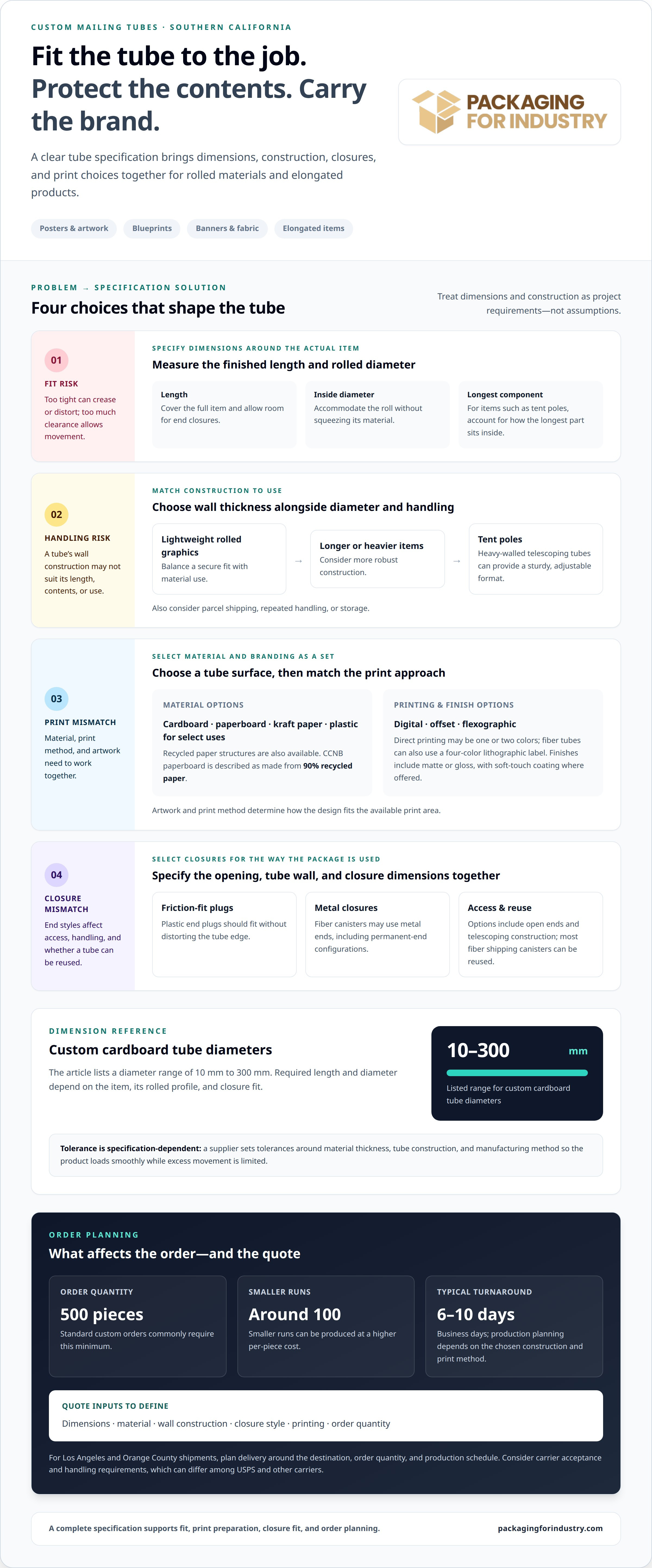
Start with the item’s finished length and rolled diameter. The tube must cover the full item and leave room for its end closures. Its inside diameter should accommodate the roll without squeezing fabric, printed graphics, or other materials. A close fit limits excess movement, while too little clearance can crease or distort the contents.
Fabric samples and banners benefit from a tube sized to keep the material rolled rather than folded. Posters and blueprints need enough length to avoid bent edges. For elongated items such as trade-show tent poles, account for the longest component and how it will sit inside the package. Heavy-walled telescoping tubes can provide a sturdy, adjustable format for tent poles.
Select wall thickness alongside tube diameter and intended handling. A longer tube or heavier item may need more robust construction than lightweight rolled graphics. Consider whether the tube will travel through parcel shipping, be handled repeatedly, or protect a product in storage. These details help balance protection, fit, and material use.
When comparing suppliers of custom mailing tubes in Southern California, look for a clear process for turning item dimensions and shipping conditions into a specification. Customer reviews can offer insight into fit, closure performance, print quality, and order consistency. Treat dimensions and wall construction as project requirements, not assumptions: each affects how well the tube protects its contents. A clear specification helps purchasing and operations teams compare quotes and plan packaging for rolled or elongated products.
What Tolerances Can Be Achieved on Custom Tube Lengths and Diameters?
Custom cardboard tube diameters range from 10 mm to 300 mm. Required length and diameter depend on the item, its rolled profile, and the closure fit. A supplier sets tolerances around these dimensions by considering material thickness, tube construction, and manufacturing method. The tolerance must allow the product to load smoothly while limiting excess movement inside the tube.
Fiber mailing tubes are available in different wall thicknesses. Construction should suit the tube’s length, contents, and expected handling. For a long blueprint tube, straightness and consistent diameter help the end closures seat properly. For a compact paperboard package, the design may prioritize a smooth exterior for branded printing.
Material choices include cardboard, paperboard, kraft paper, and plastic for select uses. Recycled paper structures are also available. CCNB paperboard is described as made from 90% recycled paper. These materials form different surfaces and structures, so the chosen stock affects tube dimensions, durability, and print preparation.
Branding options include direct printing in one or two colors, as well as digital, offset, and flexographic printing. One listed custom mailing tube option offers one-color printing. The printing process and artwork determine how the design fits the available print area. Fiber tubes can also use a four-color lithographic label when more detailed graphics are needed.
End closures include metal, plastic, or paper caps. Fiber tubes can use friction-fit plastic end plugs or metal closures. A plastic plug should fit the opening without distorting the tube’s edge. Specify the opening diameter, wall thickness, and closure dimensions together. This supports a repeatable fit and gives purchasing teams clear specifications for custom tube orders.
Which End Closure Styles Are Available for Custom Shipping Tubes?
Choose a closure based on how the tube will be packed, handled, and opened. Fiber canisters can have open ends or telescoping construction with metal ends. A three-piece design can use permanent metal ends, while another pairs a permanent metal end with a metal top plug. These configurations suit different access and reuse needs.
Ordering typically moves from defining the contents and tube specification to selecting closures, artwork, and quantity. Production planning then accounts for the chosen construction and print method. Standard custom orders commonly require a 500-piece minimum; smaller runs of around 100 pieces can be produced at a higher per-piece cost. Typical turnaround is 6-10 business days.
For shipments to Los Angeles and Orange County, plan delivery around the destination, order quantity, and production schedule. Closures should remain seated through normal package handling, and the package must meet the selected carrier’s acceptance and handling requirements. Requirements can differ among USPS and other carriers, so consider the shipping service and package dimensions.
Custom mailing tube pricing depends on dimensions, material, wall construction, closure style, printing, and order quantity. A quote assesses these production factors for the specific order. Bulk orders can maintain a consistent specification across a production run, while smaller runs suit limited quantities or specialized applications. Clear specifications also help coordinate production and Southern California delivery planning, especially when packaging must arrive before a scheduled fulfillment or distribution cycle.
Material and finish choices matter. The custom round mailing tube product is described as a two-piece design, and most fiber shipping canisters can be reused. Custom shipping tubes can use cardboard, paperboard, kraft paper, or plastic for select applications, and may use recycled paper structures. Available finishes include matte or gloss, with soft-touch coating where offered.
Packaging for Artwork, Posters, and Blueprints
Print shops and graphic design studios use mailing tubes for posters, prints, and artwork. A tube keeps rolled pieces together and helps prevent creasing from folds. Architecture, engineering, and construction teams also ship blueprints and technical drawings in tubes. Specify the drawing length and roll diameter, and consider how often staff will handle the documents during delivery and storage.
Custom packaging design starts with the product and how it will be used. Consider the contents, tube dimensions, closure, and printed artwork as one package. For a large-format poster, the tube must cover the sheet without bending its edges. For a set of plans, the opening should allow removal without forcing the roll through a tight fit. These choices support practical packing and consistent presentation.
Cosmetics and jewelry call for a different approach. A tube may hold a promotional insert, product information, or a lightweight retail item, while fragile contents need suitable cushioning inside. A jewelry gift set, for example, should not rely on the tube alone to prevent movement. Match the packaging design to the contents, retail display, and shipping route.
Retail and promotional teams can use printed tubes for posters, branded graphics, or campaign materials. Color printing and a clear layout help identify the contents and support brand recognition at events or during fulfillment. A trade-show exhibitor, for example, can group rolled booth graphics in a labeled tube for transport and storage. Matching the tube to the item and handling process keeps packaging functional rather than oversized or difficult to pack.
Mailing Tube Materials, Wall Thicknesses, and End-Cap Options
Fiber mailing tubes suit rolled documents, posters, and other paper products. Available wall thicknesses allow construction to match the contents and handling needs. A blueprint tube kept for occasional use may need a different structure from one repeatedly moved through shipping and warehouse operations. Fiber canisters can also be open-ended or telescoping, depending on access and closure requirements.
Material choices include cardboard, paperboard, kraft paper, and plastic for select applications. Recycled paper structures offer another option. CCNB paperboard is made from 90% recycled paper. Material selection affects the tube’s surface, structure, and suitability for printing. For example, a branded retail package may prioritize a printable surface, while a shipping tube is specified around its protective function.
Wall thickness works together with tube diameter and length. A wide tube with a long span may need different construction from a compact tube carrying lightweight prints. Specify the structure by considering the contents, handling, and storage conditions together. For a batch of rolled drawings, consistent wall construction helps keep the packaging uniform across the order.
End-cap options include friction-fit plastic plugs and metal closures. Open-ended fiber tubes can use separate plugs, while telescoping designs may use metal ends. Some custom constructions have three pieces with permanent metal ends; another has a permanent metal end and a metal top plug. The closure affects how staff access, load, and reseal each tube. Match the cap to the opening and tube structure for a complete package suited to storage, fulfillment, or transit.
Industries Served
Manufacturers use mailing tubes for rolled plans, labels, and elongated products moving through production workflows. Tubes keep these items together between workstations, warehouses, and shipping docks. Match packaging specifications to the item and handling process. For example, production drawings can travel between engineering and assembly without being folded.
Architecture, engineering, and construction firms ship blueprints and technical drawings to project sites. Print shops and graphic design studios use tubes for posters, prints, and artwork. These applications have distinct needs. A construction plan must remain readable on site, while a retail poster may also need branded presentation. A manufacturing operation may use tubes for elongated components or rolled materials moving between facilities.
Distributors and fulfillment centers handle incoming and outgoing orders across different product lines. A defined tube size helps packers choose the right format for rolled documents or long items. Clear specifications also support repeatable packing across shifts and locations. E-commerce operations can use mailing tubes for products that ship rolled, helping avoid the creases caused by folding.
Commercial shipping teams in aerospace, electronics, and construction may handle technical drawings, product documentation, or promotional graphics. The tube’s dimensions, construction, and closure should reflect what the operation ships and how staff handle it. An engineering team sending plans to a job site, for example, has different packing priorities from a distributor shipping printed materials to customers.
Across these industries, start with the operational questions: what needs to travel, where must it arrive, and how will staff pack it? The answers help align tube specifications with manufacturing, distribution, and fulfillment workflows instead of treating every shipment as the same packaging task.
Benefits of Custom Mailing Tubes
Well-specified mailing tubes match an item’s length, rolled diameter, and handling demands. The fit helps limit shifting in transit and prevents contents from being compressed. For businesses sourcing custom mailing tubes for Southern California operations, a clear specification can align the package with local shipping workflows. Engineering drawings, for example, need enough clearance for loading without excessive room for movement. Wall construction and closures also contribute to protection during routine handling.
Right-sizing supports packaging cost control. An oversized tube uses more material than the contents require and takes up extra storage space. A tube that is too small can make packing difficult or risk product damage during loading. Matching the tube to a poster, fabric sample, or long component aligns material use with the shipment and supports efficient storage.
Consistent specifications simplify packing operations. When a fulfillment team regularly ships the same rolled product, a defined tube size and closure reduce variation between shifts. Clear product specifications help purchasing plan repeat orders and compare packaging prices on a consistent basis. Predictable packaging formats also make storage and order preparation easier for distribution teams to manage.
Reliable supply depends on matching replenishment to how the operation uses packaging. Teams can track tube consumption alongside other packaging supplies and plan purchasing around production or fulfillment needs. Vendor Managed Inventory and just-in-time inventory management can coordinate replenishment with operational demand. Consistent specifications also help purchasing maintain continuity across repeat orders. These practices support supply planning while keeping the tube suited to the product and shipping process.
Packaging For Industry (PFI): Custom Packaging Design Services
Packaging For Industry (PFI) helps businesses coordinate packaging design with product protection and shipping workflows. For a mailing tube application, its Custom Packaging Design Services can help assess how the package fits within a broader packaging system. This is useful when rolled materials ship alongside other products or when existing packaging creates handling or damage concerns.
Tube selection is only one part of the shipping plan. If a shipment includes fragile items that need additional cushioning, PFI’s Foam Packaging can protect those components. Stretch Film can help secure grouped packages or palletized loads for warehouse handling. The right combination depends on the products, packing process, and distribution route.
Packaging supply planning matters too. PFI’s Vendor Managed Inventory (VMI) for Packaging helps businesses coordinate replenishment with ongoing operational needs. It can suit manufacturers and fulfillment teams that use packaging supplies regularly and want a more organized purchasing process. VMI complements design work by connecting packaging requirements with inventory planning.
For businesses in Los Angeles and Orange County, these services are a practical next step when a packaging specification affects several parts of an operation. PFI can bring design, protective materials, and supply planning into a coordinated discussion. Share the product type, shipping workflow, and packaging challenges so the team can understand the operational context. The goal is to align packaging choices with the shipment and handling process without adding unnecessary complexity.
Contact Packaging For Industry (PFI) to discuss your packaging needs.
Frequently Asked Questions
Can Tubes Be Printed or Color Matched for Branding?
Yes, mailing tubes can carry printed branding, though color matching depends on the printing process, material, and artwork. Digital, offset, and flexographic printing are used for custom shipping tubes; fiber tubes may also use direct printing or lithographic labels. For a brand-critical design, provide approved artwork and color references early. A production proof helps review the layout and appearance before a full run proceeds.
Where Can Businesses Source Custom Mailing Tubes in Southern California?
Packaging For Industry (PFI) serves industrial packaging buyers across Southern California, including Orange County and Los Angeles. For operations planning a mailing tube project, PFI’s custom packaging design services can help address broader packaging requirements, while its listed offerings include foam packaging, stretch film, and packaging inventory programs. The right supplier relationship should align packaging specifications with how purchasing, warehousing, and shipping teams work.
Which Southern California Cities and Service Areas Are Covered?
PFI serves businesses in Orange County, Los Angeles, and San Diego, with local next-day delivery available across Orange, Los Angeles, and San Diego counties. Relevant business locations include Anaheim, Irvine, Huntington Beach, Long Beach, and Los Angeles. Plan delivery around the destination and shipment schedule. Companies with multiple facilities can also discuss how packaging supply needs fit their broader operations.
What Custom Mailing Tube Sizes, Diameters, and Lengths Are Available?
Custom cardboard tube diameters are available from 10 mm to 300 mm. Length is selected to suit the item, with the rolled product and closure dimensions considered together. For example, a long technical drawing needs adequate tube coverage, while the opening must still accommodate the roll. A clear specification should distinguish inside diameter from outside diameter so the fit and packing process are understood.
What Printing and Artwork Details Should a Buyer Prepare?
Prepare the logo, approved colors, text, and required placement before production planning. Include tube dimensions and identify any areas that must remain clear for labels or handling. Printing options include digital, offset, and flexographic methods; direct printing is also used on fiber tubes. Assess the artwork against the selected process and printable area to catch layout issues before production.
What Are Custom Mailing Tube Minimum Orders and Bulk Discounts?
A commonly listed standard minimum for custom tubes is 500 pieces. Smaller runs of around 100 pieces may be produced at a higher per-piece cost. These are general market order quantities, not a PFI price or commitment. Bulk pricing depends on the production specification and quantity; request a quote to compare the exact costs for the planned run without assuming a discount applies.
How Long Do Custom Mailing Tube Production and Shipping Take?
A typical market turnaround for custom tube orders is 6-10 business days, with shipping time separate from production. The schedule depends on production planning, order specifications, and destination. Southern California delivery timing also varies by location and shipment arrangement. For a launch, event, or replenishment date, build production and transit into the planning window instead of treating the listed turnaround as a delivery date.
How Does a Supplier Process Orders and Prepare Artwork?
Start by gathering the application, quantity, dimensions, material, closure, and printing requirements. Then review the artwork against the selected tube format and printing method, resolving layout questions before production. Buyers can help by providing approved logo files, color references, and final copy together. PFI coordinates the specification and production plan, then schedules shipment to the intended business location.