
When components shift in transit or have no defined place, a sales demo kit can look disorganized before the presentation even begins. Well-designed die-cut inserts for sales demo kits keep each item positioned, protected, and ready to present.
A polished layout also needs to work in everyday packing and handling. The insert must fit the kit contents, work with the outer package, and support a consistent setup across repeat orders. Choosing the right material and layout is easier when you can review a prototype with the actual components.
This guide explains how to document component sizes and placement, compare insert materials, and check fit before production. It also covers coordinating the insert with the outer box and kitting workflow. Packaging For Industry provides custom packaging design, CAD/CAM support, and prototypes and samples to help manufacturers develop a practical demo-kit design before production.
Key Takeaways
- List every kit component, including dimensions, orientation, weight, and handling needs, before planning insert placement.
- Choose die-cut inserts for sales demo kits based on component shape, how the kit will be handled, and how it will be used.
- Compare foam and corrugated options as part of the complete packaging system, not in isolation.
- Test a prototype with the actual kit contents to assess fit, removal, return, and presentation sequence before approval.
- Include kit contents, quantities, and outer-package details in your quote request so the insert, box, and assembly plan can be considered together.
Why die-cut inserts make sales demo kits easier to present and pack
A die-cut insert is a shaped interior component with spaces or contours that hold kit items in planned positions. Instead of placing products, tools, samples, and sales literature wherever they fit, the layout gives each component a defined place. For an overview of the process behind shaped cuts, see What is die cutting?
A repeatable layout helps packing teams place components consistently, reduces time spent arranging items, and makes missing pieces easier to spot. During a demonstration, a purposeful arrangement guides the presenter and helps the audience follow the products and supporting materials. Manufacturers preparing kits for sales teams in Orange County can build presentation needs into the packaging plan from the start.
Presentation and transit protection are related, but they are different requirements. An insert can make a kit orderly and easy to use, while the complete package must also account for handling and shipping. Consider the insert, its contents, and the outer box together. PFI’s custom packaging design services can bring these elements into one packaging plan.
What should a sales demo kit insert accomplish?
A useful insert gives components distinct positions and supports a deliberate opening sequence. It should make items easy to identify, remove, and return after a demonstration. Place frequently used tools within easy reach, and arrange samples and printed materials so the presenter can introduce them in order. The layout should match the kit’s actual workflow, not just look orderly when closed.
When is a custom insert preferable to loose cushioning?
Loose cushioning can work when packing needs are less structured, especially if contents vary or presentation order is not important. However, it may shift between uses and does not show where each component belongs. A custom layout is often a better fit for kits with multiple shapes, dedicated accessories, or components that need consistent positions for repeat presentations. That repeatability helps teams pack and reset kits the same way.
For example, a kit might contain a product sample, a small tool, replaceable components, and a brochure. Without defined locations, accessories can move around and the presenter may need to sort items before starting. Die-cut inserts for sales demo kits give each piece a planned position. The overall package can then be designed to address both transit handling and presentation at the meeting.
How to specify die-cut inserts for sales demo kits
A workable insert design starts with accurate information about the kit, not a guess based on the outer box. Before requesting a quote, list every item and record its dimensions, orientation, weight, and handling needs. Note fragile areas, protrusions, cables, and parts that must stay with a specific accessory. These details help translate a component list into a layout that works for packing and presenting.
Build a component and measurement schedule
Include every product, sample, tool, cable, accessory, and document intended for the kit. Measure each component in the orientation it will have in the insert. Note features that affect fit, such as a handle or connector, and distinguish them from the main dimensions. Flag items that change between kit versions or customer presentations so the design can account for those variations.
Then map the placement to the presenter’s sequence. Decide what should be visible first, which item needs direct access, and where supporting literature belongs. A product that must be lifted out before a related component may need a different position from one shown alongside it. Effective sales kit packaging depends on making the contents easy to follow, not simply fitting everything inside.
- Inventory: List all kit contents, including easy-to-overlook items such as cables and printed materials.
- Measure: Record dimensions, preferred orientation, weight, and handling considerations for each component.
- Map: Arrange positions to match the reveal order and allow practical removal and return.
- Select: Choose an insert material based on the components, layout, outer package, and handling needs.
- Review: Check a prototype with the actual contents before approving the design for repeat production.
Turn the component list into a reviewable prototype
A sketch or CAD layout helps communicate the proposed arrangement, but a sample lets your team assess the kit in use. PFI provides CAD/CAM support, prototypes, and samples through its custom packaging design services. Check how items fit, whether the presenter can remove and replace them easily, and whether packing follows a clear sequence. Use the review to identify refinements before production.
A sample can reveal issues that a component schedule may not show, such as a document obscuring a product or an accessory being difficult to grasp. When preparing a new kit or revising an existing layout, share the contents, measurements, intended use, and outer-package details in a custom packaging quote request.
Foam or corrugated: compare insert options for demo kits
The right insert material depends on what the kit contains and how the components need to be presented, handled, and packed. Foam can provide shaped pockets around individual items, while corrugated dividers and partitions create separation within a box. Neither option is automatically the better choice. Compare component shapes, the intended layout, the outer package, and how the kit will be used as one system.
When a foam insert fits the kit requirements
Consider foam when individual components need defined positions or a shaped pocket would make an item easier to identify and remove. A product sample, tool, or irregularly shaped part may benefit from a cavity designed around its form. Protective foam packaging includes custom die-cut foam inserts. Polyethylene and polyurethane are material categories to discuss during design. Select based on the kit’s contents and intended handling rather than the material name alone.
Review the foam insert alongside the outer box. Available interior space, how the kit opens, and the arrangement of other contents all affect the design. A foam pocket may position a component well by itself but still leave too little room for accessories or sales literature. Coordinating the insert and box keeps fit and presentation in view together.
When corrugated inserts may suit the layout
Corrugated dividers, partitions, and inserts separate components into distinct spaces within a box. This approach may suit a kit where the main requirement is keeping items apart and organized, rather than creating a close-fitting pocket around each one. For example, a set of similarly sized samples or accessories could sit in separate compartments, with printed materials in their own area.
Consider how the corrugated layout fits the outer box, including how the contents will be packed and accessed. PFI’s corrugated box options can be coordinated with the insert so the interior arrangement and package work as a complete kit. A design might use foam for selected components and corrugated partitions for others. The right combination depends on the products, layout, and handling needs.
To compare options, assess each against the same kit contents. Does it keep items in their planned positions? Can the presenter remove and return them easily? Is there room for supporting materials? A prototype can help answer these questions before production. Share the kit contents and packaging requirements in a custom packaging quote request to develop an insert and outer-package plan suited to the application.
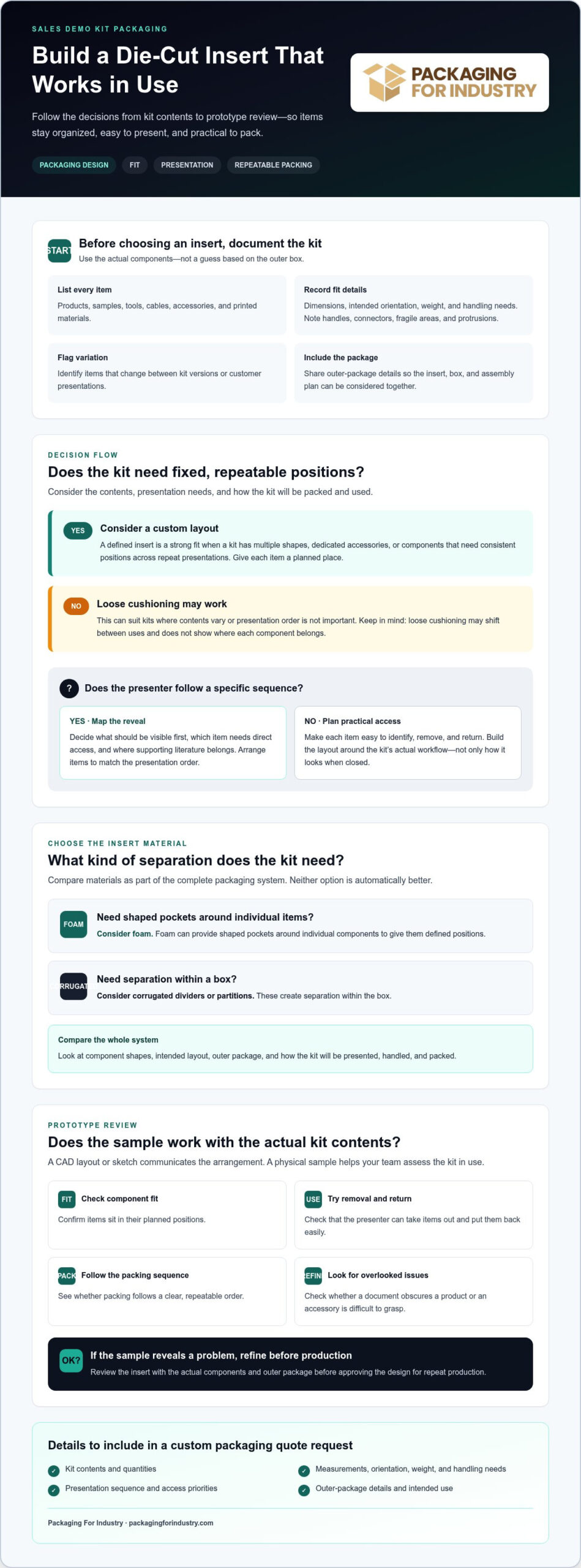
What buyers should review before approving a demo-kit insert
A drawing can show the intended layout, but it cannot confirm how the complete kit works in someone’s hands. Before approving die-cut inserts for sales demo kits, test a sample with the actual components and outer package. This review can reveal fit or access issues before they affect repeat orders.
Check fit, access, and presentation with real components
Load every item into its assigned position. Confirm that each component sits as intended without crowding or obstructing nearby items. Remove and replace the contents in the order the presenter will use them. Check whether an item can be lifted out without shifting other components and whether it returns to its position easily.
Review the open kit from the presenter’s point of view. Products should be visible in the planned sequence, accessories easy to identify, and documents accessible without covering key components. Then place the loaded insert in the outer package and check that the full arrangement fits and closes as intended.
- Fit: Do the actual components sit correctly in their planned positions?
- Access: Can users remove and return items without disturbing the rest of the kit?
- Sequence: Does the open-kit layout support the demonstration order?
- Package match: Does the insert work with the outer box and its closure?
Plan for repeat orders and kit changes
Before production, document the approved component list, insert layout, and outer-package details so future orders can follow the same configuration. Identify which items must remain consistent and flag components that may change between kit versions. A revised product, accessory, or document can affect pocket dimensions and placement. Recording versions helps prevent mismatches during repeat production.
Include expected order quantities and timing when requesting a tailored quote. For kits assembled in batches, coordinated packaging kitting and assembly can align insert placement with the packing workflow. This gives the team a defined process for assembling complete kits while keeping the approved layout in view.
Use the sample review to record adjustments, then approve the final arrangement against the actual contents and packaging. This creates a clear reference for purchasing and assembly teams as the kit program continues.
Source custom demo-kit inserts with a complete packaging plan
A useful quote request describes the full kit, not just the insert. Share what goes inside, how the kit will be presented or transported, and how the insert must work with the outer package. This gives the design process a practical starting point and helps align the insert, box, and assembly requirements for packaging for manufacturers.
Prepare a useful custom packaging quote request
Include a component list with dimensions, available drawings or samples, and the order in which a presenter will use or reveal each item. Explain whether the kit will be shipped, hand-carried, reused, or mainly used for in-person demonstrations. Add outer-package details, expected quantities, and recurring order timing. This information gives PFI a basis for discussing a tailored design and comparing packaging pricing for the complete kit.
For bulk orders, include anticipated quantities so the quote can address bulk packaging pricing. Note whether kit contents vary by customer or version. A stable component list can support a repeatable layout, while planned variations should be considered during design. Reviewing the insert, box, and assembly needs together can also identify practical ways to lower packaging costs without sacrificing the kit’s requirements. Request a packaging quote with your kit contents and packaging details.
Coordinate design, supply, and kit assembly
PFI coordinates custom packaging design, prototype review, corrugated boxes, foam inserts, and packaging kitting and assembly within one project workflow. A prototype gives your team an opportunity to refine the layout with the kit contents before production. Bringing the insert, outer package, and assembly plan together can reduce handoffs between packaging steps.
Custom and stock packaging can both be considered based on the kit’s dimensions, contents, and use. For repeat orders, share the approved configuration, expected quantities, and anticipated product changes. This information helps shape a practical supply plan and keeps revisions visible as the program develops. PFI provides local next-day delivery across Southern California and fast nationwide shipping.
Build a Demo Kit That’s Ready to Present
A well-planned insert gives every component a place, supports an intentional presentation sequence, and helps teams pack repeat kits consistently. To specify die-cut inserts for sales demo kits, begin with an accurate component list, then compare foam and corrugated options against the kit’s contents, handling, and outer package. Reviewing a prototype with the actual components helps catch fit and access issues before production.
Packaging For Industry coordinates custom packaging design with CAD/CAM support, prototypes, and samples, then aligns foam inserts, corrugated boxes, and packaging kitting and assembly with your requirements. Local next-day delivery is available across Southern California, including Orange County, Los Angeles, San Diego, and Riverside, with fast nationwide shipping.
Share your kit contents, dimensions, intended use, and order needs to start planning a practical, presentation-ready packaging solution.
Frequently Asked Questions
How do I choose the right die-cut insert for a sales demo kit?
Start with the complete kit contents and intended presentation sequence. Record each component’s dimensions, orientation, handling needs, and any expected changes between kit versions. Then compare foam and corrugated layouts against the kit’s protection, access, and packing requirements. Reviewing a prototype of die-cut inserts for sales demo kits with the actual contents helps confirm the layout before approving a repeatable design.
What information should I provide for a custom demo-kit insert quote?
Provide a component list, dimensions or drawings, preferred orientation, expected order quantities, and details about how the kit will be handled or presented. Include the outer-box dimensions if established, along with any documents or accessories that need dedicated positions. Share the order in which a presenter will use the contents. These details give the packaging team a practical basis for developing the design and identifying what to assess in a prototype.
Are foam inserts or corrugated inserts better for sales demo kits?
Neither material is universally better. Foam may suit kits where shaped pockets and cushioning are priorities, while corrugated inserts can work well when the main need is separating and organizing components. The right choice depends on the products, handling, presentation sequence, and outer package. Compare both options against the actual kit contents, then review a sample to check how items fit, come out, and return to their planned positions.
Can a die-cut insert be designed around different product samples?
Yes. A custom layout can be planned around the components selected for a particular kit. Document the dimensions and placement needs of every sample, accessory, and document, including items that differ between kit versions. Identify those variations during design so each configuration can be considered in the layout. Prototype review with the relevant contents helps assess fit and access before wider production.
How can I check whether a demo-kit insert will fit before ordering?
Review a prototype or sample with the actual kit components, not just a drawing. Check that each item sits in its intended position, can be removed and returned easily, and appears in the planned presentation order. Confirm that the insert also works with the outer package and packing process. Packaging For Industry provides prototypes and samples as part of its custom packaging capabilities, giving your team a practical way to evaluate the design.
Can the insert and outer box be designed as one packaging solution?
Yes. Coordinating the insert with the outer box lets the design account for component placement, available interior space, and packing sequence together. Share established box dimensions early, or include outer packaging in the project discussion. Packaging For Industry provides corrugated boxes, protective foam packaging, custom packaging design, and packaging kitting and assembly. An integrated plan keeps the insert, box, and kit workflow aligned.
Can PFI support repeat orders for die-cut demo-kit inserts?
Yes. Packaging For Industry (PFI) supports custom packaging and recurring packaging needs for manufacturers and other industrial businesses, including aerospace and electronics companies. Share expected usage, order patterns, and planned changes to kit contents so the packaging plan can account for repeat orders and design revisions. PFI serves Orange County, Los Angeles, San Diego, and Riverside, with local next-day delivery across Southern California and fast nationwide shipping.