
Why are you spending thousands of dollars on premium finishing only to let abrasive, low-grade packaging ruin your product before it reaches the customer? For manufacturers of high-end tables and cabinetry, a single scratch on a delicate edge isn’t just a nuisance; it’s a financial drain that results in costly returns and labor-intensive refinishing. Selecting the right foam edge protectors for finished wood furniture is the only way to ensure your craftsmanship survives the rigors of the modern supply chain without surface marring.
We understand that inconsistent supply from large catalog distributors often leaves your production line vulnerable and your shipping costs unpredictable. This guide will teach you how to select and implement industrial-grade protection that prevents finish damage and significantly reduces shipping claims. You’ll learn how the right material choice lowers your total landed costs while protecting your brand’s reputation for quality. We will cover technical foam specifications, custom sizing for unique furniture profiles, and the logistical advantages of local bulk delivery for Southern California manufacturers who need reliable, just-in-time inventory.
Key Takeaways
- Identify why high-density polyethylene is the preferred material for foam edge protectors for finished wood furniture to prevent both impact damage and surface marring.
- Learn how to select the correct profiles, such as U-Channel and L-Profiles, to provide structural reinforcement for specific furniture designs like tabletops and cabinets.
- Discover how to optimize your assembly line kitting process to lower packaging costs and reduce the frequency of expensive shipping damage claims.
- Explore the advantages of custom sizing and local Southern California delivery to maintain steady inventory levels and improve overall supply reliability.
The Industrial Need for Foam Edge Protectors in Furniture Shipping
Industrial foam edge protectors are not simple padding; they’re high-density, engineered profiles designed to withstand the heavy impacts of freight transit. For furniture manufacturers, the edges and corners of finished wood pieces are the most vulnerable points in the entire supply chain. While many operations still rely on standard corrugated edge protectors, these often fail when supporting heavy solid wood pieces. Cardboard lacks the material memory to recover after a crush event, leaving the wood exposed to subsequent shocks during transit. Our focus is on providing high-performance corner and edge protection that maintains finish integrity while absorbing significant energy.
The Hidden Costs of Shipping Damage
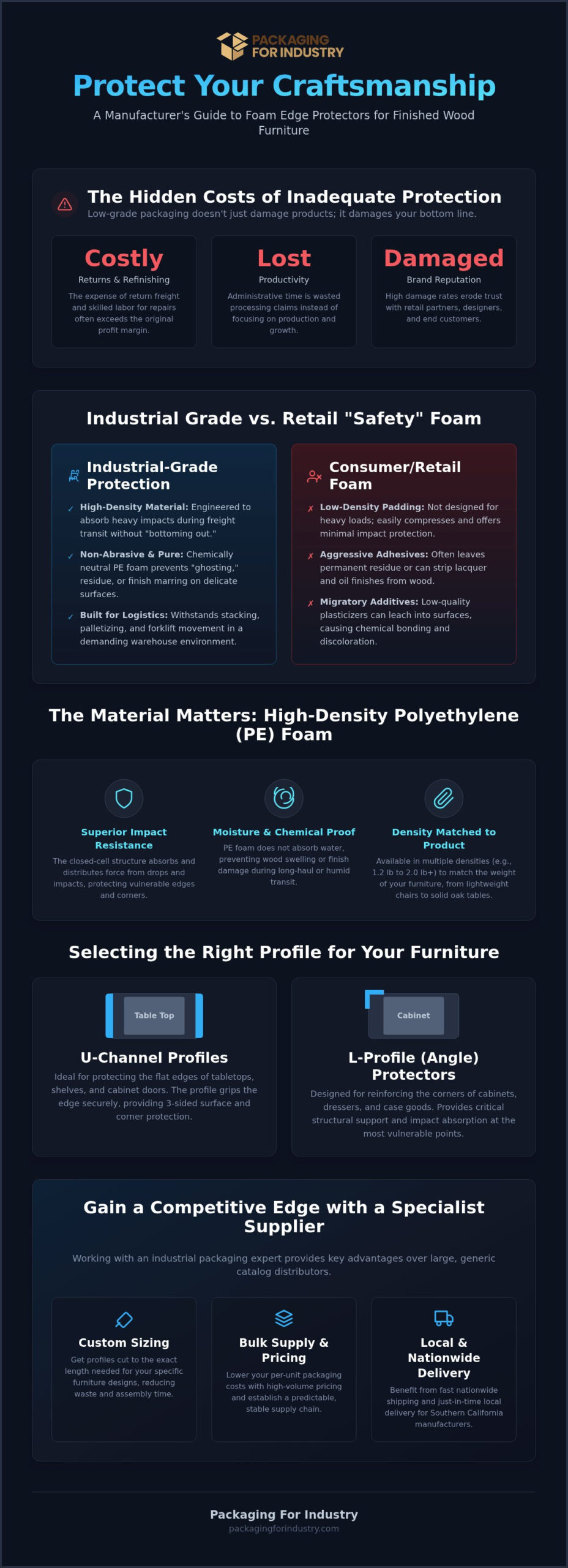
When a dining table or dresser arrives with a crushed corner, the financial impact extends far beyond the initial shipping fee. You’re looking at the cost of the return freight, the administrative time to process the claim, and the skilled labor required for refinishing. In many cases, the cost of repair exceeds the original profit margin of the piece. High rates of shipping damage also erode trust with retail partners and interior designers who rely on your delivery schedules. By utilizing high-quality foam edge protectors for finished wood furniture, you can significantly reduce shipping damage and lower your overall claims volume with carriers like UPS and FedEx. Effective Package cushioning is a strategic investment in your bottom line, helping you eliminate professional stress and protect your brand reputation.
Retail vs. Industrial Grade Protection
It is a common mistake to confuse industrial packaging with retail safety foam or “baby-proofing” products. Consumer safety foams often use soft, low-density materials with aggressive adhesives that can leave permanent residue or even strip delicate lacquer and oil finishes from wood. Industrial-grade solutions are built for the rigors of the warehouse environment, where products are stacked, palletized, and moved via forklift. Manufacturers require durability that survives multi-stop freight transit without degrading or compressing permanently. PFI specializes in bulk packaging pricing for these high-performance materials, ensuring your production line has a consistent supply of professional-grade protection. If you’re looking to lower packaging costs without sacrificing the safety of your high-end goods, switching to a dedicated industrial supplier is the first step. You can request a packaging quote today to see how our bulk supply and custom sizes can streamline your operations.
Selecting the Right Foam Material for Finished Wood
Choosing the correct material for foam edge protectors for finished wood furniture requires a technical understanding of both foam chemistry and surface finish vulnerability. Polyethylene (PE) foam is the recognized industry standard for high-end furniture due to its closed-cell structure. This material provides exceptional impact resistance and does not absorb moisture, which is critical for preventing wood swelling or finish degradation during long-haul transit. When you select a foam, you must match the density rating to the weight of your product. A 1.2 lb density foam may suffice for lightweight chairs, but heavy solid oak dining tables require 2.0 lb density or higher to prevent the foam from “bottoming out” under the pressure of stacked loads.
One of the most persistent issues in furniture shipping is “ghosting,” or the faint residue left on high-gloss surfaces after the packaging is removed. This often occurs when manufacturers use low-quality foams containing migratory additives or unreacted plasticizers. These chemicals can leach out of the foam and bond with the furniture’s topcoat, especially in high-heat warehouse conditions. To avoid this, we recommend non-abrasive, high-purity PE profiles that maintain a neutral chemical interface with common wood finishes like lacquer, polyurethane, and oil rubs. If you’re unsure which density fits your current product line, you can request a packaging quote to receive a professional assessment of your requirements.
Polyethylene (PE) vs. Polyurethane (PU) Foam
While PE foam excels at structural support and impact protection, polyurethane (PU) foam offers a different set of benefits. Flexible polyurethane foam in packaging is often utilized for its extreme softness and ability to conform to irregular shapes. However, PU foam is open-cell, meaning it can compress easily and lacks the “kick-back” force needed to protect heavy edges during a drop. For most industrial furniture applications, we recommend PE profiles for the primary edge protection and using PU only as a light surface wrap for ultra-delicate artisanal pieces. Our team can help you explore our foam packaging solutions to find the right balance between impact absorption and surface softness.
Anti-Static and Specialized Coatings
Modern furniture designs frequently incorporate integrated electronics, such as LED lighting or built-in charging stations. In these cases, using standard foam can lead to static discharge that damages sensitive components. Anti-static foam edge protectors are essential for these specific applications. Additionally, it’s vital to ensure that the foam does not react with uncured lacquers. If your production cycle is fast, the wood finish may still be “off-gassing” when it enters the box. We provide custom-engineered solutions that account for these chemical variables, ensuring your packaging supports your production speed rather than hindering it.
Comparing Foam Profiles: U-Channel, L-Profile, and O-Foam
Selecting the correct profile is a critical engineering decision that impacts both the safety of your product and the efficiency of your packaging line. Unlike generic flat strips that often slip during high-vibration shipping, specialized foam edge protectors for finished wood furniture utilize mechanical tension to remain secure. By matching the profile shape to the specific geometry of your furniture, you eliminate the need for aggressive adhesives that can compromise a delicate wood finish. PFI provides a range of high-density polyethylene profiles designed to address the unique challenges of furniture manufacturing and bulk distribution.
U-Channel: The Gold Standard for Table Edges
U-channel foam is the most effective solution for protecting tabletops, desk surfaces, and shelving. Its primary advantage is grip strength. The profile is designed with a specific “opening” and “reach” that allows it to clip onto the edge of the wood. When the opening is slightly smaller than the board thickness, the foam exerts constant pressure, staying in place without tape or glue. This is essential for high-end wood because it prevents the finish from coming into contact with chemical adhesives. When you specify your requirements, ensure the reach is deep enough to cover the entire decorative edge. You can find a variety of custom corner and edge protection options at PFI that match your specific board dimensions, reducing the time your team spends struggling with ill-fitting materials.
L-Profiles and Corner Guards
L-profiles are the workhorse for cabinets, dressers, and wardrobes. These profiles protect 90-degree edges where two finished surfaces meet. They are particularly effective at safeguarding the “vulnerable three,” which is the point where three edges converge at a single corner. Without reinforced protection, these corners are the first to crush during a drop or impact. Using L-profiles also improves stacking stability. When furniture is palletized, these protectors distribute the vertical pressure of the load, preventing the top piece from digging into the one below it. For maximum security, we recommend using these foam corner guards in conjunction with heavy-duty corrugated boxes to create a comprehensive shield against freight damage.
For components that aren’t flat, such as chair legs or cylindrical table bases, O-foam and wrap-around profiles provide the necessary 360-degree coverage. These tubular designs slide over the part or snap around it to prevent scuffing and impact damage. To further improve your operational efficiency, PFI offers custom-cut lengths for all profiles. Buying pre-cut foam reduces warehouse labor and eliminates the waste generated by manual cutting on the production line. This precision helps you maintain a lean manufacturing process while ensuring every piece of furniture leaves your facility with consistent, professional protection.
How to Implement Edge Protection in High-Volume Manufacturing
Speed and reliability are the twin pillars of high-volume furniture production. When your assembly line is moving quickly, the application of foam edge protectors for finished wood furniture must be seamless. Inconsistent placement leads to protection gaps and potential damage during the rigors of freight handling. We focus on helping you standardize this process through better operational training and material selection. Training your warehouse team to understand proper protector tension is vital. If a U-channel is too loose, it will migrate during transit; if it’s forced onto a profile that is too thick, it can split. Consistency at the packaging station is your first line of defense against shipping damage.
One major cost-saving strategy involves reducing “dimensional weight” (DIM) surcharges. Many shippers use oversized boxes filled with loose cushioning, which increases shipping costs because carriers charge based on the space the package occupies. By using a slim but high-density foam profile, you provide superior impact resistance without unnecessarily increasing the outer dimensions of the package. This approach ensures your high-end furniture remains safe while you keep your freight expenses under control. It’s a pragmatic way to optimize your logistical flow without sacrificing the quality of your protection.
Optimizing the Packaging Station
A well-organized station reduces labor time and material waste. Instead of having workers cut foam from long rolls, which is both slow and inaccurate, we recommend pre-scored or custom-length profiles that match your specific product dimensions. This reduces “touch time” per unit and ensures every piece of furniture receives the exact amount of protection required. You can further streamline your operations by utilizing Packaging kitting services for manufacturers. Kitting ensures that every component needed for a specific piece, including foam profiles, corner guards, and hardware bags, is pre-bundled and ready for immediate application on the production line.
Load Stabilization with Stretch Film
For palletized shipments, the interaction between edge protection and stretch film is critical. Without proper guards, high-tension stretch film can actually crush or “bite” into the delicate wood corners of your cabinets or tables. Applying high-density foam profiles first creates a rigid barrier that allows the film to be applied at maximum tension. This ensures the entire load is stabilized for long-haul trucking or intermodal transit without risking surface damage. We offer a variety of Wholesale stretch film options to complement our protective foam products. For manufacturers in Anaheim or Los Angeles, our local next-day delivery ensures you never run out of these essential supplies.
Why Furniture Manufacturers Choose PFI for Bulk Supply
PFI serves as a strategic alternative to large, impersonal catalog distributors. While those suppliers offer generic items at a premium, we specialize in bulk packaging pricing and custom sizes available for unique furniture designs. Our primary goal is to lower packaging costs by providing exactly what your production line needs, rather than forcing you to adapt your furniture to standard stock dimensions. By choosing foam edge protectors for finished wood furniture that are custom-engineered for your specific table or cabinet profiles, you ensure a perfect fit that eliminates the risk of protectors slipping during high-vibration freight transit. This precision is what allows our partners to achieve zero-damage shipments consistently.
Prototyping and Custom Engineering
Many artisanal furniture designs feature complex geometries that standard L-profiles cannot adequately protect. We provide free prototyping to ensure every foam profile fits your specific product line perfectly. Our team utilizes CAD/CAM support to develop custom-engineered solutions for intricate edges, ensuring your packaging supports your craftsmanship rather than hindering it. You can utilize our Custom design packaging services to create a tailored protection system that balances material performance with economic efficiency. We don’t just sell a product; we design a comprehensive system of protection and logistical optimization.
Reliable Supply in Southern California
Logistical reliability is just as important as the foam itself. A shortage of edge protectors can halt your entire assembly line, leading to missed deadlines and frustrated retail partners. To prevent this, PFI offers Vendor Managed Inventory (VMI) programs that eliminate packaging shortages and free up valuable warehouse space. We maintain your stock levels for you, which significantly improves your cash flow and operational peace of mind. Our team acts as a proactive problem-solver, ensuring you always have the materials required to keep your shipping department running at peak efficiency.
We provide local packaging delivery across Southern California, including next-day service to Anaheim, Los Angeles, Orange County, San Diego, Riverside, and the Inland Empire. This proximity allows us to act as a responsive extension of your own warehouse. When you compare packaging pricing and lead times, you’ll find that PFI offers a level of accountability that national distributors simply cannot match. We’re committed to helping you reduce shipping damage while maintaining the highest standards of finish integrity for your high-end goods.
Optimize Your Furniture Logistics and Protection
Protecting high-end wood craftsmanship requires more than just standard padding. It demands an engineered approach to material density and profile geometry. Implementing high-performance foam edge protectors for finished wood furniture ensures your products survive the rigors of freight transit without the risk of surface marring or structural damage. By choosing the correct polyethylene profiles, you’ll lower your refinishing costs and eliminate the professional stress of transit-related returns. It’s about ensuring your quality reaches the customer exactly as intended.
PFI is committed to helping you streamline your operations through custom engineering and free prototyping. Our local next-day delivery across Southern California and dedicated VMI stocking programs ensure your production line never faces a shortage. We provide the technical expertise and bulk supply reliability needed to transform your packaging from a cost center into a competitive advantage. You don’t have to settle for inconsistent catalog distributors when a local partner can optimize your entire supply chain.
We look forward to helping you secure your shipments and improve your bottom line with precision-engineered protection tailored to your unique designs.
Frequently Asked Questions
Will foam edge protectors leave marks or residue on my furniture finish?
High-quality polyethylene foam is chemically inert and non-abrasive, which prevents it from reacting with or marking wood finishes. Surface “ghosting” typically results from low-grade foams containing migratory additives that leach out under heat. PFI utilizes high-purity foam edge protectors for finished wood furniture to ensure your lacquer or oil finish remains pristine. We recommend testing prototypes on your specific topcoats to guarantee total surface compatibility before a full production rollout.
How do I choose between U-channel and L-profile foam for my products?
Choose U-channel profiles for flat surfaces like tabletops or shelving where you need the foam to “clip” onto the edge. The mechanical tension keeps the protector secure without adhesives. Use L-profiles for 90-degree corners on cabinets and dressers to safeguard the vertical and horizontal meeting points. L-profiles are also ideal for stabilizing palletized loads by distributing vertical pressure. Our team provides free prototyping to help you determine the exact profile for your product line.
Can I get custom-sized foam edge protectors for non-standard furniture?
Yes, PFI provides custom-sized profiles and lengths tailored to non-standard or artisanal furniture designs. We utilize CAD/CAM support to engineer protective solutions for complex geometries that standard catalog items cannot accommodate. Our foam edge protectors for finished wood furniture can be pre-cut to your exact specifications, which reduces labor time and material waste at your packaging station. This custom approach ensures consistent protection for every unique piece in your catalog while maintaining high-volume efficiency.
How does foam edge protection help reduce UPS or FedEx shipping surcharges?
Effective edge protection allows you to use smaller, more form-fitting corrugated boxes, which significantly reduces the dimensional weight of your shipment. Carriers like UPS and FedEx calculate costs based on package volume. By replacing bulky loose-fill cushioning with slim but dense foam profiles, you can avoid expensive “Additional Handling” or “Oversize” surcharges. This pragmatic approach to packaging design lowers your total landed costs while providing superior impact resistance for high-value wood pieces.
Is polyethylene foam recyclable for eco-conscious furniture brands?
Polyethylene foam is 100% recyclable and is categorized under plastic resin code #4 (LDPE). It’s a thermoplastic material that can be processed and reused in various industrial applications. For eco-conscious furniture brands, using recyclable PE foam demonstrates a commitment to sustainable logistics. We help manufacturers integrate these materials into their supply chain to meet environmental goals without sacrificing the high-performance cushioning required to protect delicate wood surfaces during multi-stop freight transit.
Do you offer bulk pricing for large furniture manufacturing orders?
We offer competitive bulk packaging pricing specifically designed for high-volume furniture manufacturers and distribution centers. PFI serves as a cost-saving alternative to large catalog suppliers by providing wholesale rates on stock and custom orders. Our pricing structures are optimized for recurring production needs, helping you lower your total packaging spend while improving material quality. You can request a quote to compare our rates against your current distributor and see the financial benefits of our industrial focus.
What is the lead time for custom foam edge protector orders in Southern California?
Manufacturers in Southern California benefit from some of the fastest lead times in the industry. For stock edge protectors, we offer local next-day delivery across Anaheim, Los Angeles, and Orange County. Custom-engineered foam orders involve a prototyping phase, but our local manufacturing presence ensures a rapid turnaround compared to out-of-state suppliers. We also provide Vendor Managed Inventory (VMI) programs to keep your essential packaging in stock, effectively eliminating lead-time concerns for your daily production.