
The greener void fill choice may already be moving through your operation: corrugated cardboard can be reused to cushion shipments instead of discarded. Sustainable void fill packaging materials matter because they can reduce reliance on virgin and plastic materials while still limiting product movement in transit. According to the U.S. Environmental Protection Agency, recycling one ton of paper saves 17 trees.
That benefit only counts if the filler protects the product and fits the way your team packs and ships. Excess material, inadequate cushioning, or an oversized box can undermine efficiency and the customer’s experience.
This comparison explains how biodegradable air pillows, bubble wrap, and corrugated cardboard differ in protection, cost considerations, and presentation. You’ll also learn when repurposed cardboard is practical, what to consider when comparing materials, and how to match void fill to product fragility and shipping conditions. The goal is to choose packaging that supports your sustainability priorities without compromising shipment protection or warehouse workflow.
Key Takeaways
- Match void fill to product fragility, shipping conditions, packing speed, and the unboxing experience you want to create.
- Compare biodegradable air pillows and bubble wrap by how they cushion products and how their end-of-life options fit your operation.
- Consider corrugated cardboard as a practical filler, especially when the shipment and packing process suit its shape and cushioning properties.
- Assess environmental impact across material production, transportation, and disposal, not just the filler’s appearance or label.
- For shipments that need more controlled cushioning, foam packaging can help support product protection within a broader packaging plan.
WHY IS SUSTAINABLE PACKAGING VOID FILL IMPORTANT?
Options include recycled kraft paper, shredded cardboard, crinkle paper, honeycomb paper, and paper bags. Switching materials may require adjustments to dispensers, storage, packing steps, and employee training.
Recycled Paper Void Fill
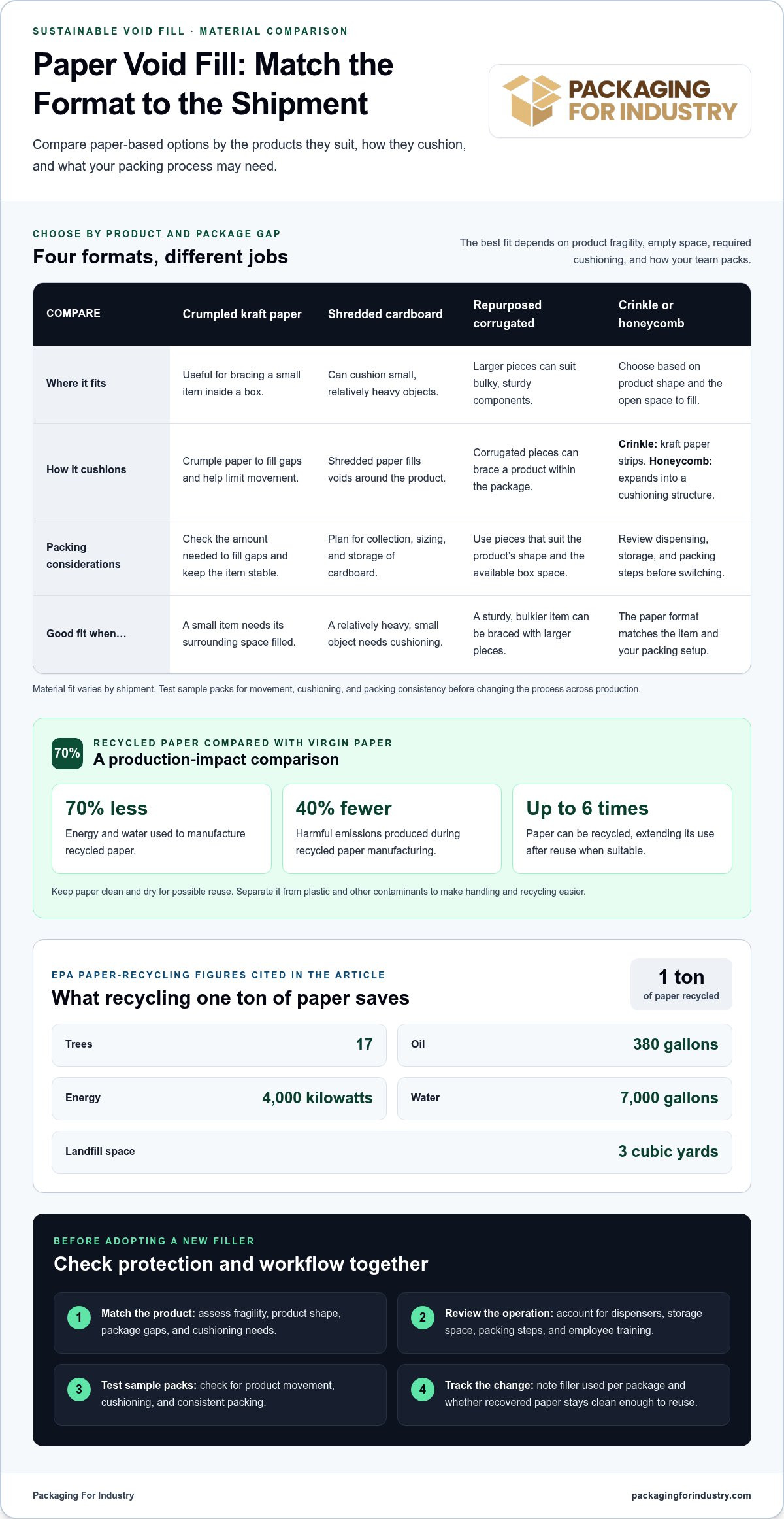
Recycled paper void fill uses recovered paper as cushioning to limit empty space and product movement inside a shipment. It matters because recycled inputs can reduce demand for virgin paper and give packaging teams a practical alternative to plastic. Manufacturing recycled paper uses 70% less energy and water than manufacturing virgin paper, and produces 40% fewer harmful emissions.
According to the U.S. Environmental Protection Agency, recycling one ton of paper saves 17 trees. That makes recycled paper relevant to purchasing teams tracking material choices across packaging for warehouses and distribution centers. The right paper format still depends on the product’s fragility, the gaps inside the box, and the cushioning required during transit.
Paper Reuse and Recyclability
Paper void fill can be reused when it remains clean, dry, and suitable for another shipment, then recycled when it reaches the end of its useful life. Paper can be recycled up to 6 times, so reuse followed by recycling can extend the value of each batch. For example, a warehouse may collect usable kraft paper after unpacking inbound goods and use it to cushion outbound orders.
According to the U.S. Environmental Protection Agency, recycling one ton of paper also saves 380 gallons of oil, 4,000 kilowatts of energy, 7,000 gallons of water, and three cubic yards of landfill space. Keep recovered paper separate from plastic and other contaminants so it remains easier to handle and recycle.
Corrugated and Other Paper Fill
Corrugated cardboard, shredded cardboard, kraft paper, crinkle paper, and honeycomb paper offer different ways to fill package voids. Shredded cardboard can cushion small, relatively heavy objects, while larger pieces suit sturdier items. Crinkle filler is usually made from kraft paper strips, while honeycomb paper expands into a cushioning structure around a product.
These formats help teams match filler to the shape of the product and the empty space in the box. A small item can be braced with crumpled kraft paper; a bulky, sturdy component may fit better with repurposed corrugated pieces. Review related cushioning materials when comparing paper-based protection options.
Vela paper bags are another paper-based alternative to plastic poly bags when a bag format suits the application. Before switching, consider the item’s shape, handling needs, and presentation. Paper bags may work for grouping components, while loose paper void fill fills gaps around boxed products. Choose the format for the task rather than treating bags and void fill as interchangeable.
Equipment changes depend on how your team dispenses and applies filler. Switching from plastic pillows to kraft paper may require a paper-feed setup; shredded cardboard may instead need collection, sizing, and storage space. Train employees to handle and store the selected material and use it consistently. Test sample packs for movement, cushioning, and packing consistency before adopting the change across production.
Paper-based options can support sustainability goals, but material selection should also account for shipping protection and workflow. Track whether paper stays clean enough for reuse, how much filler each package needs, and whether the material fits existing packing stations. These checks help manufacturers adopt recycled paper without adding unnecessary handling or compromising cushioning.
Choosing filler based on protection, budget, and presentation
Void fill occupies empty package space, cushions products, and limits movement during transit. For manufacturers, the choice also affects packing speed, material use, shipment weight, and customer presentation.
How Void Fill Protects Products
Void fill protects products by cushioning them and bracing gaps that could allow shifting. This matters for glassware, tabletop goods, and other breakable products, where contact can cause damage. For example, position cushioning around a glass vase and fill open spaces to keep it stable. Test the packed shipment for movement before using a new material across production.
Comparing Void Fill Materials
Paper and corrugated inserts provide paper-based cushioning, while mushroom packaging uses mycelium and is described as biodegradable and home compostable. Recycled plastic is another option to assess based on cushioning performance, recycled content, and recovery route. Each material suits different products and packing processes. Compare packaging costs alongside fit, handling, and disposal requirements rather than choosing by material label alone.
For glassware, test whether the filler prevents pieces from touching. A sturdy component may need less flexible bracing, while a fragile item may need cushioning around vulnerable edges. A considered packaging choice should protect the product and suit the operation’s actual disposal options.
Material Weight and Shipping Costs
Filler weight contributes to total shipment weight, so the amount used can affect shipping costs. These figures compare material weight for that volume, not the shipment’s total cost.
When reviewing bulk packaging costs, include material use per package, packing time, damage risk, and disposal handling. Lighter filler may reduce added shipment weight, but poor fit can allow movement and increase damage risk. Compare the same product, carton, and protection target to understand the trade-offs. This gives purchasing teams a consistent basis for evaluating repeat orders.
Presentation also matters. Kraft paper can create a tidy, paper-based unboxing, while formed inserts can hold glassware or tabletop pieces in specific positions. A switch should preserve protection and support the brand’s commitment to environmentally friendly packaging. Test cushioning and stability before updating a packing standard, especially for fragile shipments.
For a practical comparison, pack the same product with each candidate material. Check movement, contact between items, packing effort, and appearance after a representative transit test. Record the results alongside material weight and disposal requirements. This lets teams compare options based on actual performance and identify where a consistent material could streamline packing.
Biodegradable air pillows and bubble wrap
Biodegradable air pillows and bubble wrap provide protective cushioning and are designed to break down in composting environments. Their suitability depends on the product, packing process, and disposal pathway. When comparing these options, distinguish biodegradable versions from conventional plastic products, which may have different end-of-life outcomes.
Air pillows fill gaps around products and help limit movement during transit. One pound of air pillows can fill 20 cubic feet of boxes, making the format useful when shipments have substantial empty space. Biodegradable versions are designed to decompose rapidly in composting environments. For an electronics shipment, pillows can brace the item inside its carton while reducing movement around it.
Bubble wrap cushions fragile goods with air-filled pockets. Biodegradable bubble wrap is designed to decompose in composting environments, while traditional bubble wrap is often petroleum-based and non-biodegradable. For glassware, wrap each piece to cushion its surface, then fill remaining gaps to limit shifting. Confirm that the packing method protects the item through the shipment’s handling conditions.
Plant-based packing peanuts offer another cushioning format. Cornstarch-based peanuts can decompose in commercial composting environments, and biodegradable packing peanuts dissolve in water without leaving microplastics behind. Mushroom packaging, made from mycelium, is described as biodegradable and home compostable. These materials suit different needs, so compare their shape, handling, and disposal route before choosing one.
“Biodegradable” does not mean every material belongs in every disposal stream. Some biodegradable air pillows and bubble wraps are designed for composting environments, while plant-based peanuts may require commercial composting. Mushroom packaging has a different stated disposal pathway. Identify the material and its intended disposal route clearly so warehouse teams and recipients can handle it appropriately.
On a production line, handling matters as much as cushioning. Air pillows take up little space before inflation, while loose peanuts require storage and controlled filling. Bubble wrap needs room for rolls and a consistent wrapping process. Train employees on storage, dispensing, and packing steps when changing materials. A short trial can reveal whether the new format fits existing stations and shipping routines.
Test candidate materials with representative products, including fragile items such as ceramics or electronics. Check whether the contents remain stable, cushioning protects exposed surfaces, and the package looks clean when opened. Compare material use and packing effort using the same carton configuration. These checks help teams choose biodegradable alternatives based on actual protection needs, not appearance alone.
Environmental drawbacks of traditional packing peanuts and bubble wrap
Traditional plastic peanuts and bubble wrap can protect products, but their material sources, transport, and disposal affect their environmental impact. Comparing those stages helps brands assess alternatives without overlooking shipment protection.
Lifecycle and End-of-Life Impacts
Lifecycle impact considers material production, transportation, use, and disposal, not just what happens after unpacking. Many conventional void fills use petroleum-based plastics, and recycling can be difficult because lightweight materials are bulky to collect and handle. Almost 70% of plastic packaging waste generated in the United States ends up in landfills, while only 9% of plastic waste is recycled.
Production also contributes to the footprint: producing one pound of polystyrene creates 7.6 pounds of CO2, and producing one pound of polyethylene creates 6.1 pounds of CO2. Those figures make material choice relevant, but shipment performance matters too. A filler that fails to protect a product can lead to damage and replacement shipments, adding further material and transport demands.
Paper-based fillers offer a different end-of-life pathway when suitable recycling streams accept them. Shredded cardboard, kraft paper, and honeycomb paper may use recycled inputs, while reusable systems can reduce single-use material when returned and used again. Compare the whole process, including inbound material volume, storage, packing, reuse, and disposal, rather than judging a filler by one environmental attribute.
Storage, Moisture, and Disposal Risks
Storage, moisture exposure, and disposal conditions can affect how sustainable void fill performs and where it can go afterward. Keep paper fillers dry and protected from contamination; damp kraft paper, for example, may be harder to handle and recycle. Store compostable peanuts and other materials according to their handling needs, and separate them from conventional plastic to prevent sorting errors.
For U.S. packaging, distinguish recyclable claims from compostable claims and state relevant conditions, such as a need for industrial composting. Use labels that accurately describe the material and its disposal pathway; local recycling and composting acceptance can differ. This helps clarify applicable certifications or labeling without treating all compostable or recyclable materials as interchangeable.
Preparing for environmental regulations starts with tracking materials and their end-of-life routes. Maintain packaging specifications, supplier documentation, and clear sorting instructions so teams can identify each filler. If a warehouse uses both conventional bubble wrap and compostable cushioning, separate storage and disposal bins can reduce confusion.
Before switching, test the filler under the warehouse’s actual storage and packing conditions. Check whether it stays dry, retains cushioning, and remains easy to separate after use. Sustainable alternatives can perform differently across environmental conditions, so a documented trial helps identify handling risks before wider adoption. Avoid mixing loose peanuts or film with paper recycling, where the wrong material can complicate sorting.
Corrugated cardboard void fill
Corrugated cardboard can serve twice in a shipping operation: first as a box, then as cushioning or gap filler. That makes it practical for businesses with clean, usable offcuts or incoming cartons. Match the cardboard’s size and shape to the empty space rather than adding scraps without a packing plan.
Repurposed pieces can brace sturdy products, separate items, or fill open areas inside a carton. For example, a warehouse receiving components in large cartons can set aside intact cardboard and cut it into pads for later shipments. Smaller pieces can be folded or layered to fit gaps. This gives existing material another use before disposal.
Corrugated is not impact-free to produce. Producing one pound of corrugated material creates 1.04 pounds of CO2, so reuse can make better use of material already in circulation. It doesn’t remove the manufacturing footprint, but it can reduce demand for newly purchased filler when recovered cardboard performs the required job.
Consistency matters on a packing line. A mix of random scraps can take longer to position and leave gaps around the product. Set aside cardboard by usable size, then define where each format works. A flat pad can separate stacked items; folded pieces can brace a sturdy part; smaller pieces can fill irregular spaces.
Corrugated filler works best when the product and shipment can tolerate its structure. It suits larger, sturdier goods better than delicate products that need close-fitting cushioning. For a fragile assembly, loose pieces may shift or leave exposed surfaces unprotected. A sample packout can show whether the cardboard keeps the item stable through representative handling.
Keep recovered material clean, dry, and free of tape or other packaging components that interfere with reuse. A collection point near unpacking stations helps employees separate useful cardboard from waste. Track which sizes work for common cartons, then update packing instructions with clear examples. This can make reused filler easier to apply consistently across commerce and distribution operations.
Customers notice packaging choices, but protection remains essential. Corrugated cardboard can contribute to more resource-conscious packaging when teams reuse suitable material and avoid excessive filler. Compare handling effort, fit, and protection with the shipment’s requirements. A clear reuse process connects sustainability commitments with reliable packing performance.
Packaging For Industry (PFI): Foam Packaging
Packaging For Industry (PFI) provides foam packaging for shipments that need controlled cushioning beyond loose paper or corrugated filler. Manufacturers in Orange County, Los Angeles, and San Diego can use foam packaging for products that need fitted support in transit. The right approach depends on product geometry, handling conditions, and protection requirements.
For recurring shipments, PFI also offers Vendor Managed Inventory (VMI) and Just-In-Time (JIT) inventory management for packaging. These programs help coordinate replenishment when packaging availability is an operational priority.
Contact Packaging For Industry to discuss foam packaging for your application.
Make your next packaging change count
Turn sustainability goals into an operating decision by documenting how each filler performs in real shipments. Track material use, packing consistency, product condition, and disposal handling together. This gives purchasing and warehouse teams a clear basis for refining specifications over time, rather than changing materials without measuring their effect on the process.
If you’re evaluating sustainable void fill packaging materials for recurring shipments, Packaging For Industry (PFI) can help align protection needs with packaging supply planning. Its offerings include foam packaging for products needing cushioning, stretch film, and Vendor Managed Inventory for packaging replenishment. These options can support a broader packaging plan when both protection and supply continuity matter.
A well-planned packaging change can support greener shipments while keeping your operation focused on reliable product protection.
Frequently Asked Questions
Going Sustainable: Is the Cost Worth It?
A change can be worthwhile when it benefits the full packaging process, not just the material choice. For recurring shipments, compare purchase price, packing labor, storage needs, disposal handling, and product damage. For example, a team that reuses suitable incoming cardboard may reduce its need to buy separate filler. Track these factors across representative shipments before deciding whether the change makes operational sense.
When Should You Use Packaging Filler?
Use packaging filler when empty space could let a product shift, collide with another item, or press against the box walls during transit. A carton carrying several machine parts, for example, may need filler between components as well as around the group. Filler isn’t always necessary: a well-fitted carton or an insert that holds the product securely may control movement without loose material.
Which void fill materials are recyclable, compostable, or biodegradable in the United States?
Paper options such as kraft paper and corrugated cardboard are recyclable where local programs accept them, and some are biodegradable. Compostable materials may have specific conditions, such as requiring a commercial composting facility rather than a home compost bin. Plant-based peanuts and mycelium packaging have distinct disposal pathways. Check material instructions and local facility acceptance; “compostable” and “biodegradable” don’t mean every item belongs in curbside recycling.
What is the cost per shipment of sustainable void fill materials?
There’s no single cost per shipment because material use and packing requirements vary. Estimate the filler used per carton, then include packing labor, storage, disposal handling, and any changes to shipping weight. Product size and fragility also affect the protection needed. Compare the same products and carton configurations across options to understand operational cost, not just the unit price of filler.
How well do sustainable void fill materials protect fragile products during shipping?
Sustainable materials can protect fragile products when the chosen format cushions impact and prevents shifting. A ceramic component may need support around vulnerable edges, while a boxed electronic assembly may need bracing to prevent movement. Evaluate each product in its actual carton and handling workflow. Look for contact points, exposed surfaces, and gaps that could let the item move or strike the package during transit.
How can businesses choose the right sustainable void fill material for their products and shipping needs?
To choose sustainable void fill packaging materials, start with product shape, fragility, and shipping route, then consider packing speed, storage, and disposal options. A warehouse shipping a consistent product mix may favor one format; varied orders may need several. Compare candidate packouts using representative products and carton sizes. Record protection results, material use, and employee feedback, then update packing instructions so teams use the selected option consistently.