
The most insulated box isn’t automatically the safest specimen shipper. Protection depends on how the container, packout, cushioning, insulation, and outer box work together. For labs sourcing custom foam packaging for laboratory equipment, a poor fit can leave specimen containers shifting in transit, while an unnecessarily complex layout can slow packing.
Start with the actual containers, how they’re arranged, the handling they’ll face, and the shipment’s temperature objectives. This article compares design decisions for specimen shippers and offers a practical framework for specifying the complete package. You’ll learn what to evaluate in foam and corrugated box configurations, how prototypes and samples can help you review fit before production, and what to include when requesting a packaging quote. Packaging For Industry (PFI) provides custom CAD-engineered packaging design, foam options, and corrugated boxes, so you can assess an integrated solution around your packout and shipping process.
Key Takeaways
- Evaluate the specimen container, secondary packaging, cushioning, and outer box as one complete shipper, not as separate choices.
- Match foam selection to container fit, cushioning needs, and the documented thermal objective rather than choosing by material name alone.
- Compare single-container and multi-container layouts against your actual packout and handling needs to identify a practical configuration.
- Prepare a stronger quote request with container dimensions and weights, shipment quantity, current packaging, and representative samples where available.
- Custom foam packaging for laboratory equipment can be designed around the actual packout, with prototypes and samples helping you review fit before production.
What Should an Insulated Shipping Box for Lab Specimen Transport Protect?
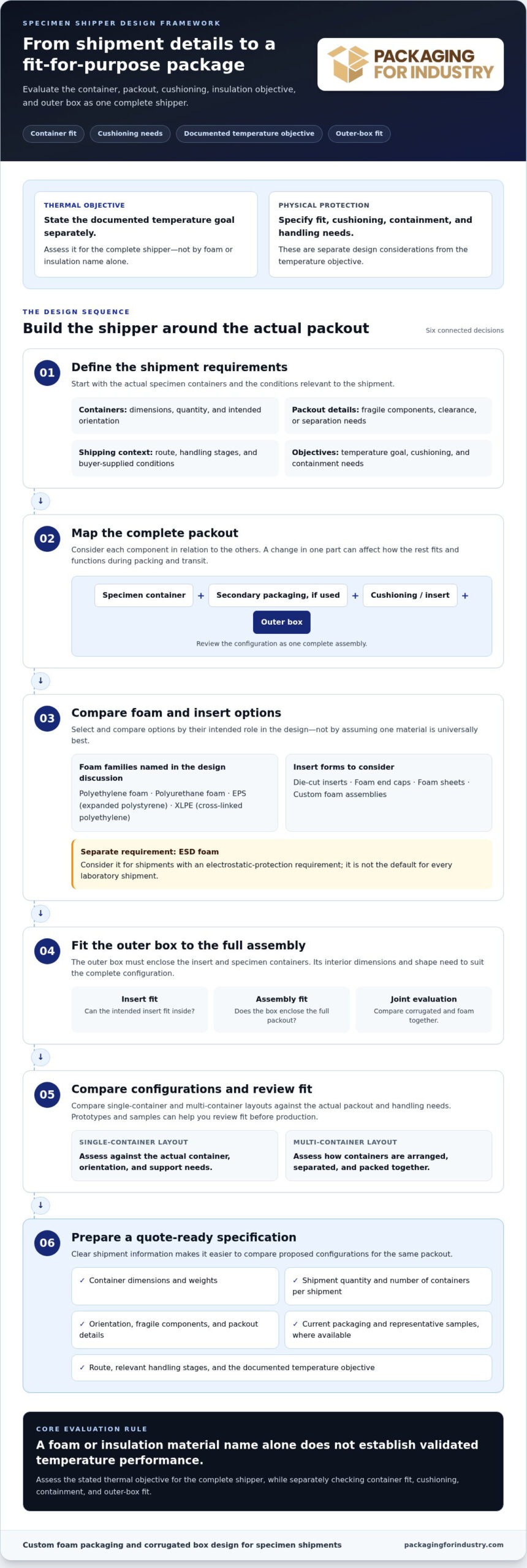
Evaluate an insulated specimen shipper as a complete package against the shipment’s stated thermal and physical protection goals. The shipper includes more than foam or an insulated wall. It must accommodate the specimen container, any secondary packaging, cushioning, and outer box. A change to one part can affect how the rest of the package fits and functions during packing and transit.
Thermal goals describe the temperature objective; impact protection addresses movement, contact, and handling. These are separate design considerations. Foam or insulation alone doesn’t demonstrate that a shipment will meet a required temperature range. Define the objective and assess the complete configuration against it. For a general overview of insulated shipper construction and cold-chain use, see Insulated Shipping Container.
Which shipment details shape the packaging requirement?
Start with the actual packout. Record container dimensions, how many containers travel together, their intended orientation, and any fragile components that need clearance or support. Then describe the route and handling stages, along with the shipping conditions relevant to the package design. These details make comparisons meaningful and keep the design discussion focused on your shipment rather than a foam material name.
- Container and quantity: Include dimensions and the number of specimens in each shipment.
- Orientation and fragile parts: Note how containers are packed and any features that need added space or separation.
- Shipping context: Describe the route, handling stages, and buyer-supplied shipping conditions.
- Separate objectives: State the documented temperature objective separately from cushioning and containment needs.
Why does the whole packout matter?
Container fit, insert geometry, and outer packaging work as a system. An insert shaped around the actual containers can help organize the packout, while the outer box encloses the complete assembly. If a quote request omits container sizes, quantities, or existing packaging, proposed configurations may look comparable even when they’re designed for different packouts. That makes it harder to assess fit, handling, and overall suitability.
Keep packaging design distinct from laboratory handling procedures and shipping instructions. Packaging decisions address the physical arrangement and materials; laboratory and shipping requirements come from the buyer’s applicable procedures. A custom design should use the information provided, not stand in for those instructions. Custom foam packaging can be designed alongside the outer box as part of the complete configuration.
For buyers sourcing custom foam packaging for laboratory equipment, this full-system view creates a clearer basis for comparing designs and preparing a useful packaging quote. Specify what travels, how it’s packed, and what the shipment must protect against before evaluating the foam or box on its own.
How Do Foam, Insulation Goals, and the Outer Box Work Together?
Choose foam based on the specimen packout, cushioning needs, and the buyer’s stated thermal objective. Start with container shape and placement, then consider how the insert will hold or separate each item and how the complete assembly fits inside its outer box. This ties material selection to the actual design rather than treating a foam name as a complete specification.
Material names alone do not establish a shipper’s validated temperature performance. Document the thermal objective separately and assess it for the complete shipper; cushioning and container fit remain distinct design considerations. A packaging quote should describe both without implying that a material or box construction guarantees a particular result.
How should buyers compare foam materials?
Compare materials by their intended role in the proposed design, not by assuming one category is universally best. Polyethylene foam and polyurethane foam are distinct foam families; EPS means expanded polystyrene, while XLPE means cross-linked polyethylene. ESD foam is a separate consideration for shipments with an electrostatic-protection requirement. For a specimen shipper, focus on how the selected material and insert geometry address the containers and stated objectives.
- Die-cut inserts can create shaped positions for containers or separate items within a packout.
- Foam end caps can be considered when support at the ends of an item is part of the design.
- Foam sheets can be incorporated as layers or dividers in a configuration.
- Custom foam assemblies can combine multiple components to organize a more involved packout.
Compare each option by container fit, arrangement, cushioning needs, and the buyer’s documented thermal objective. Don’t treat ESD foam as the default for every laboratory shipment; it addresses a different requirement from general cushioning or insulation planning.
What does the outer package contribute?
The outer box encloses the insert and specimen containers, so its interior dimensions and shape must suit the complete assembly. A box that leaves unnecessary space or cannot accommodate the intended insert changes the packout being evaluated. Consider custom corrugated boxes alongside custom foam rather than selecting a box independently of the internal layout.
For example, a design with separated container positions needs an insert layout and box dimensions that work together. A different arrangement may call for another insert geometry or box size. These are configuration decisions, not guarantees of thermal performance or transit outcomes.
PFI designs custom foam packaging for laboratory equipment around the actual containers and outer package. Share the stated objective and packout details in a custom packaging quote request to compare an integrated foam-and-box configuration.
How to Compare Insulated Specimen Shipper Configurations
Make a useful comparison by holding shipment requirements constant while changing one design choice at a time. A single-container shipper and a multi-container layout may both be worth considering, but neither is automatically the better fit. Compare how each configuration holds the actual containers, accommodates intended handling, and relates to the buyer’s documented thermal objective.
Compare complete packouts against the same shipment requirements, not foam names alone. This keeps the review focused on what will be packed and how the package will be used. A material label by itself won’t show whether an insert fits a particular container arrangement or whether the outer package suits the shipment.
- Container fit: Check whether the layout reflects container dimensions, quantity, orientation, and any differences between container sizes.
- Insert style: Compare shaped positions, dividers, end support, or general cushioning against the required organization and access.
- Outer package: Review whether the box encloses the insert and full packout without changing the arrangement being evaluated.
- Handling needs: Consider the buyer-supplied route and handling conditions, including how staff load and remove the containers.
- Thermal objective: Record the documented temperature goal separately from visual fit and cushioning observations.
Keep the criteria consistent between options. If a comparison changes the container count, box size, insert geometry, and stated objective at once, it becomes difficult to identify which design difference matters.
When might a custom insert fit the shipment better?
A custom insert may be more relevant than generic cushioning when containers need distinct positions, differ in size, or must be arranged in a particular orientation. Shaped support can locate containers and separate components within the package, while the layout can account for removal access. Custom foam packaging formats include die-cut inserts, end caps, sheets, and assemblies. Evaluate a prototype or sample against the actual loading and unloading steps.
When should the outer package or configuration change?
Revisit the layout if the number of specimens, shipment dimensions, or handling conditions differ. A single-container setup may prioritize a dedicated position; a multi-container setup may need separated spaces and a different overall arrangement. These are design scenarios, not universal recommendations. Don’t assume a crate or particular box style is appropriate without shipment-specific evidence.
Finally, distinguish a visual review from a thermal assessment. A sample can help reveal fit, access, and cushioning arrangement, but those observations alone don’t establish thermal performance. When evaluating custom foam packaging for laboratory equipment, keep the documented temperature objective with the complete configuration under review so options can be compared on the same basis.
What Information Helps You Request a Specimen Packaging Quote?
A useful quote brief makes the project clear to packaging and purchasing teams. Organize it so the packaging supplier can understand what the package must contain, how it will be used, and which requirements should guide the proposed configuration. If you’re comparing options, use the same brief for each so differences in scope don’t distort the comparison.
What should the buyer prepare before requesting a quote?
Begin with the specimen containers and shipment quantities. Record dimensions and weights for each container type, how many travel together, and the intended orientation. Identify sensitive components or handling steps that affect how the packout is assembled. If you use different shipment configurations, describe each one rather than combining them into a single estimate.
Next, document what’s currently used. Include packaging dimensions and materials, photographs where available, and a short note about what needs to change. For example, explain whether the concern is a difficult packing process, a container that moves within the package, or a box that doesn’t suit the shipping workflow. This gives the quote a clear purpose instead of relying on a general request for insulated boxes.
Then add the route, handling context, and the buyer’s documented thermal objective. Keep the temperature objective distinct from cushioning and containment needs. If your organization has internal requirements or procedures that shape the packaging decision, summarize the relevant information without substituting assumptions for those requirements.
For a more complete custom packaging design project, include the expected order quantity and whether the same packout will be used for recurring shipments. This helps frame the request around both the physical configuration and the purchasing need.
How should a prototype be reviewed?
Set review criteria before evaluating a sample. Use the actual container types and normal packing sequence, then note whether each item sits in the intended position and whether staff can load and remove it as planned. Check the assembled package as a whole, including how the insert fits with the box, rather than judging a loose foam component on its own.
Record observations in concrete terms. Note a container that is difficult to remove, a position that doesn’t match the packing sequence, or a component that needs clearer separation. Keep any thermal validation separate from this hands-on fit review and follow your organization’s applicable procedures. A written list of requested changes gives the next design discussion a defined scope.
Before submitting the request, confirm that the container details, quantities, current packaging, route, handling context, and objectives are represented. A well-organized brief helps your team compare proposals consistently and gives the supplier useful information for preparing a project-specific quote.
How PFI Supports Custom Foam Packaging for Specimen Shipments
PFI develops foam and corrugated packaging around the buyer’s defined specimen-shipping requirements. Pharma and medical companies are among the industries PFI serves. A project brief reflecting the actual containers, packout, and shipping process helps keep the proposed package focused on operational needs rather than a generic configuration.
What can PFI include in a custom packaging project?
PFI can combine foam components and a corrugated outer package in one packaging design. The layout can be shaped around how the containers are arranged and handled, with the box sized for the full packout. PFI provides custom CAD-engineered designs, prototypes, and samples to support review before production. A well-considered configuration can support efforts to reduce shipping damage and avoid unnecessary packaging material while helping teams work toward consistent repeat packing. Actual results depend on the shipment and design.
How can buyers move the project forward?
Include container dimensions and weights, quantity per shipment, orientation, current packaging details, route, handling context, and documented shipping objectives. Note variations between packouts and share photos or representative samples where available. Clear project inputs help PFI develop a practical configuration and prepare a useful quote. Review a sample against the actual loading and removal process before making a production decision. PFI serves businesses in Orange County, Los Angeles, and San Diego, as well as customers nationwide.
Turn Your Specimen Packout Into a Clear Design Brief
Make the packaging decision actionable for your team by aligning the proposed design with how specimens are packed, handled, and prepared for shipment. A concise brief can help purchasing, laboratory, and shipping staff review the same priorities and identify what needs attention before a packaging choice moves forward.
Use the quote process to clarify the trade-offs that matter in your operation: container access, packout consistency, and the documented shipping objective. That shared understanding gives your team a practical basis for evaluating custom foam packaging for laboratory equipment as part of a complete package, rather than as an isolated material choice.
A well-defined project brief is a practical starting point for packaging that fits your shipment and workflow.
Frequently Asked Questions
Can custom foam packaging maintain a required temperature during specimen transport?
Foam can be part of a package designed around a stated temperature objective, but foam alone can’t establish that a shipment will maintain a required temperature. Share the objective and relevant shipping conditions so the complete configuration can be considered. Any assessment of temperature performance should follow your organization’s applicable procedures. Treat a fit review and a temperature evaluation as separate checks, even when they relate to the same package.
Is one foam material suitable for every laboratory specimen shipment?
No single material should be assumed to suit every packout. Container geometry, cushioning needs, and any specific electrostatic-protection requirement can lead to different design considerations. PFI’s foam options include polyethylene, polyurethane, EPS, XLPE, and ESD foam. For custom foam packaging for laboratory equipment, compare these options as part of the proposed insert and box configuration rather than selecting a material based on its name alone.
Can custom foam inserts accommodate several specimen container sizes?
Yes. A custom insert can be designed around multiple container sizes, with positions and access planned for the intended packout. For a useful design reference, provide dimensions for each container type and explain how many of each are packed together. If the mix changes between shipments, describe those variations. A representative sample can also help the team assess how containers sit in the insert and whether the layout suits the packing sequence.
Are foam packaging materials recyclable or biodegradable?
Some foam materials are recyclable, but not all foam is biodegradable. Don’t assume a material has either attribute based only on its general category or appearance. If recyclability or biodegradability matters to your purchasing criteria, include that priority in the project brief so material options can be considered against the packaging function. The selected material still needs to suit the insert design and overall shipment requirements.
What should I provide to get a quote for insulated specimen shipping boxes?
Provide the specimen container dimensions and weights, quantity per shipment, and intended orientation. Include the existing box or packout details, plus photos or representative samples if available. Describe the route and handling context, and state your documented thermal objective separately from cushioning needs. If shipments use different container combinations, list each configuration. These details give PFI a clear basis for preparing a project-specific quote.
Can I review a sample before ordering custom specimen packaging?
Yes. PFI provides prototypes and samples for custom packaging design. Use representative containers and follow the normal packing sequence to assess the physical layout before making a production decision. Check that each item sits in its intended position, staff can load and remove it as planned, and the insert fits the outer package. Record specific adjustments, such as a position that needs more access. A hands-on fit review doesn’t establish thermal performance.
Does PFI deliver insulated shipping boxes nationwide the next day?
Next-day delivery is available in Southern California counties including Orange, Los Angeles, San Diego, Riverside, and Ventura. PFI also ships nationwide, but nationwide shipping isn’t next-day delivery. Include the destination and project requirements in your quote request so the packaging and supply plan reflects the shipment location.