
A single missing hyphen on your shipping crate’s stamp can now result in your entire international shipment being rejected or destroyed at the border. With the USDA APHIS strictly enforcing updated ISPM 15 marking standards as of January 2026, the margin for error in global logistics has effectively vanished. If you are sourcing ISPM 15 certified crates Huntington Beach, you need a partner who understands that technical compliance is just the baseline for successful export operations. Non-compliance doesn’t just cause delays; it can lead to massive financial penalties exceeding $100,000 and the total loss of your cargo’s value.
We recognize the pressure of navigating these rigid export regulations while managing tight production schedules and the constant risk of transit damage. You shouldn’t have to worry about whether your packaging will survive a customs inspection or a rough ocean voyage. This article outlines how to secure your international shipments with ISPM 15 compliant crates that meet strict global regulations while providing maximum industrial protection. We will examine the latest 2026 enforcement rules, the advantages of custom-engineered heat treatment, and how reliable lead times help you maintain a predictable and cost-effective supply chain.
Key Takeaways
- Understand the impact of the 2026 ISPM 15 hyphen enforcement to prevent shipment rejections and avoid costly border penalties.
- Discover how custom engineering ensures structural integrity for heavy industrial machinery and oversized aerospace components.
- Sourcing ISPM 15 certified crates Huntington Beach from a local supplier provides the speed and regulatory expertise needed for time-sensitive global exports.
- Protect sensitive medical and electronic cargo by integrating custom foam packaging to mitigate damage from vibration and impact.
- Optimize your supply chain by utilizing just-in-time inventory services that reduce on-site storage needs for large export containers.
Understanding ISPM 15 Standards for International Wooden Crates
International Standards for Phytosanitary Measures No. 15, commonly known as ISPM 15, is a global regulatory framework developed by the International Plant Protection Convention (IPPC). Its primary objective is to prevent the international spread of pests and diseases that can negatively impact ecosystems and agriculture. For manufacturers in Southern California, securing ISPM 15 certified crates Huntington Beach is a critical operational requirement rather than an optional safeguard. Understanding ISPM 15 Standards is essential for any business shipping cargo across international borders using wood packaging material thicker than 6mm.
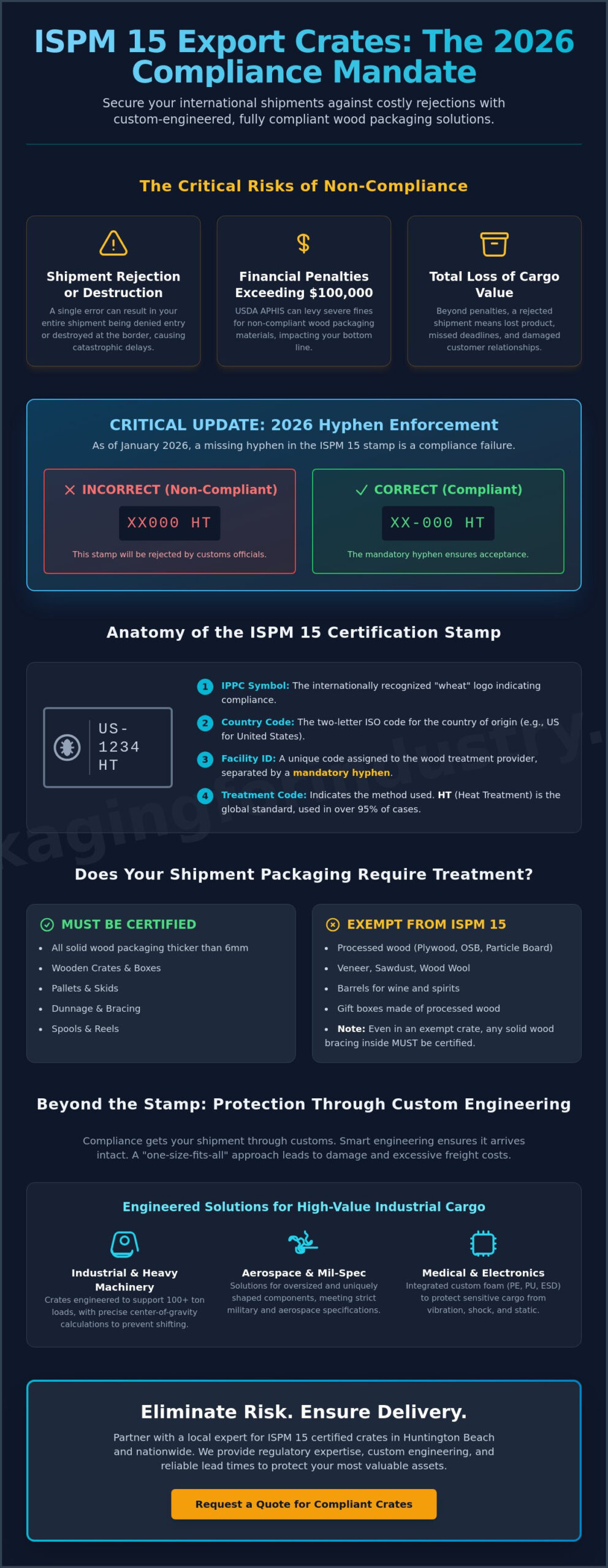
Raw wood provides a natural habitat for invasive species like the Asian Longhorned Beetle or the Emerald Ash Borer. To mitigate this risk, the standard requires all solid wood packaging to undergo specific sterilization processes. As of January 1, 2026, the USDA’s Animal and Plant Health Inspection Service (APHIS) has resumed full enforcement of the hyphen requirement within the ISPM 15 mark. This means a missing hyphen between the country code and facility code is enough to deem your packaging non-compliant. The consequences of oversight are severe; non-compliance can lead to shipment rejections, total cargo destruction, and financial penalties that may exceed $100,000.
The Anatomy of the ISPM 15 Certification Stamp
The certification stamp acts as a passport for your wooden crates. It must include the IPPC “wheat” symbol, the two-letter ISO country code, a unique facility identification number, and the treatment abbreviation. Most modern manufacturers utilize “HT” for Heat Treatment, which accounts for over 95% of treated wood packaging globally. “MB” refers to Methyl Bromide fumigation, a method being phased out due to environmental concerns. For customs officials to verify compliance quickly, the mark must be permanent, legible, and placed on at least two opposing sides of the finished crate.
Regulatory Scope: Which Countries Require Certified Packaging?
Custom Engineering for Industrial and Aerospace Export Cargo
Standardized shipping containers often fall short when tasked with protecting high-value, oversized industrial assets. Relying on a “one-size-fits-all” approach leads to excessive dimensional weight or, worse, structural failure during transit. Effective custom design packaging starts with an engineering-first mindset that accounts for every variable of the shipping environment. For manufacturers requiring ISPM 15 certified crates Huntington Beach, the priority is creating a container that balances regulatory compliance with the physical demands of 100+ ton loads. By precisely matching the crate dimensions to the cargo, we eliminate wasted space. This precision directly lowers total freight costs by reducing the “air” you pay to ship, while simultaneously improving the structural integrity of the unit.
Adhering to U.S. Import and Export Compliance standards is mandatory, but the internal engineering determines if your product arrives intact. Professional crating involves calculating the center of gravity and identifying critical pressure points before the first piece of lumber is cut. This technical oversight is what separates a standard wooden box from an industrial-grade export container. It’s about proactive risk management. If you are preparing a complex shipment and want to ensure both compliance and protection, you can compare packaging pricing for a custom-engineered solution that fits your specific operational needs.
Crating Solutions for the Aerospace and Aviation Sector
High-value avionics and engine components require more than just a wooden box; they need a specialized environment. Our approach to aerospace packaging focuses on total isolation from external stressors. We utilize free prototyping to ensure a perfect fit for sensitive components before moving to a full production run. This iterative process prevents costly re-designs and ensures that your aviation assets meet every safety and security threshold required for global air freight. When shipping sensitive flight hardware, the crate serves as the first line of defense against the rigors of multi-modal transport.
Heavy Machinery and Automotive Export Crating
Industrial machinery often presents unique challenges due to irregular shapes and extreme weight. For heavy-duty automotive packaging, we employ advanced internal bracing and blocking techniques. This includes the use of lag bolts and reinforced heavy-duty skids to ensure base stability during ocean transit. Every crate is designed with specific forklift pockets and crane lift points, facilitating safe handling at international ports where equipment and expertise may vary. This level of detail ensures that even the heaviest cargo remains secure throughout its entire journey, regardless of the handling conditions.
The Technical Process: Heat Treatment vs. Fumigation
Heat treatment (HT) and Methyl Bromide (MB) fumigation represent the two approved sterilization methods for wood packaging. For modern manufacturing operations, Heat Treatment has become the de facto standard due to its efficiency and environmental safety. The process requires wood to be heated in a certified kiln until its core temperature reaches at least 56°C (132.8°F) for a minimum of 30 continuous minutes. This thermal intervention effectively eliminates pests without introducing hazardous chemicals into the supply chain. When sourcing ISPM 15 certified crates Huntington Beach, working with a supplier that prioritizes kiln-dried (KD) lumber is essential. KD lumber not only meets sterilization requirements but also reduces moisture content to below 19%, which prevents mold growth and significantly reduces the weight of the finished crate.
The ISPM 15 Explanatory Document provides the specific technical thresholds that every certified kiln must maintain. Heat treatment currently accounts for over 95% of treated wood packaging globally because it integrates seamlessly into industrial workflows. It’s a clean, dry process that doesn’t require the lengthy aeration periods associated with chemical treatments. For businesses looking to compare packaging pricing, it’s vital to ensure your provider uses HT-certified materials to maintain compliance with international biosecurity trends.
The Dangers of Chemical Fumigation for Sensitive Goods
Methyl Bromide is an ozone-depleting substance, and its use is being phased out globally under the Montreal Protocol. Beyond environmental concerns, MB fumigation poses specific risks to sensitive cargo. Chemical residues can linger on the wood surfaces, potentially contaminating medical devices, pharmaceutical products, or high-precision electronics. For these specialized sectors, HT is the only viable option to ensure product purity. We ensure all solid wood components come from certified sources to maintain total integrity and prevent cross-contamination during the export process.
Managing Dunnage and Internal Blocking Compliance
A common point of failure during customs inspections is the internal dunnage used to secure the load. Every piece of wood used for bracing, blocking, or cushioning inside the container must bear its own certification stamp. A finished product stamp on the exterior crate shell does not “cover” the uncertified lumber used for internal support. This oversight is a frequent cause of shipment rejection at foreign ports. To maintain a reliable supply chain, we follow strict internal compliance protocols:
- Every piece of solid wood bracing is pre-certified and stamped.
- Stamps are positioned to remain visible even after the load is secured.
- We utilize exempt materials like plywood for complex internal structures when possible to reduce compliance complexity.
These methodical steps ensure that your custom containers pass through international checkpoints without the delay of secondary inspections.
Optimizing Protection: Integrating Foam and Shock Absorption
A wooden shell provides the necessary structural frame and legal compliance, but it offers zero dampening for sensitive internals. For high-value electronics or medical devices, the crate is merely the first layer of a multi-stage protection system. When you procure ISPM 15 certified crates Huntington Beach, the internal engineering is what actually determines if your product arrives in working condition. Custom foam packaging acts as the primary defense, absorbing the energy from drops, shifts, and the constant vibration inherent in ocean and air freight. Without this internal protection, even a perfectly compliant crate is just an expensive box for broken equipment.
Selecting foam densities requires a pragmatic look at your cargo’s weight and fragility. Polyethylene (PE) foam is a durable, closed-cell material designed for heavy-duty applications; its high load-bearing capacity makes it the standard choice for industrial machinery. In contrast, Polyurethane (PU) is an open-cell, softer foam that provides superior cushioning for lightweight, fragile items. Beyond impact, we must also account for the corrosive effects of salt air during long ocean voyages. Integrating vapor barrier bags and industrial-grade desiccants within your ISPM 15 certified crates Huntington Beach creates a hermetically sealed environment, protecting metal surfaces from oxidation and moisture damage throughout the journey.
Anti-Static and ESD Protection for Electronics
Sensitive circuit boards and avionics components are highly susceptible to electrostatic discharge. During the pressure and temperature fluctuations of air freight, static buildup is a constant threat. We utilize pink anti-static foam to dissipate these charges safely. By combining specialized ESD foam with a certified wooden shell, we create a total protection system that meets both regulatory and technical safety requirements. If you’re shipping high-value tech, you can request a packaging quote to see how integrated ESD solutions fit your operational budget and protection needs.
Shock Mounting and Vibration Dampening
Delicate laboratory equipment often requires more than just foam lining. For these shipments, we install shock-absorbing skids or dampening mounts directly onto the crate base. This engineering approach isolates the product from the crate walls, ensuring that the vibrations from a ship’s engine or a forklift’s movement don’t reach the sensitive internals. While many suppliers focus only on the wood, we follow advanced techniques for engineering custom crates to ensure every component remains calibrated and intact upon arrival. This proactive approach to vibration management reduces the risk of post-delivery failures and costly insurance claims.
Partnering with PFI for Reliable Export-Ready Solutions
Packaging For Industry (PFI) provides more than just wooden containers; we deliver a comprehensive system of protection and logistical optimization. For manufacturers searching for ISPM 15 certified crates Huntington Beach, we offer the technical expertise of a seasoned industrial consultant and the reliability of a local partner. Our operation is built to support the high-stakes demands of Southern California’s aerospace, medical, and defense sectors. By combining advanced custom engineering with just-in-time inventory management, we help our clients maintain a lean supply chain without risking shipment delays. We focus on the intersection of engineering and economics to ensure your packaging adds value rather than just cost.
Logistics managers often face the challenge of balancing storage space with the need for immediate crate availability. We solve this by offering local next-day delivery across Orange County, Los Angeles, and San Diego, alongside robust nationwide shipping capabilities. This ensures that whether you are shipping from a local facility or a satellite warehouse across the country, your export containers are ready when your product is. It’s a pragmatic approach to industrial logistics that prioritizes your shipping schedule. When you are ready to streamline your operations, you can request a packaging quote to compare our commercial-intent pricing and delivery timelines.
Vendor Managed Inventory (VMI) for High-Volume Shippers
High-volume shippers can significantly lower their total cost of ownership through our VMI services. Instead of tying up capital and floor space with a massive stockpile of crates, you let PFI manage your stock levels for you. This proactive oversight ensures you never run out of export-ready containers, even during peak production cycles. It’s about eliminating professional stress and allowing your logistics department to focus on moving cargo rather than managing packaging inventory. We act as a steady partner that values long-term reliability over one-size-fits-all options.
The PFI Difference: From Prototyping to Nationwide Delivery
The PFI difference is rooted in our commitment to precision and fiscal responsibility. We provide free prototyping to verify the fit and protection of your cargo before you commit to a full production run. This prevents costly errors and ensures that your custom crates are engineered for the specific dimensions and fragility of your assets. We also offer competitive bulk packaging pricing for both stock sizes and custom-built solutions. This ensures that your export project remains cost-effective from the initial design phase to the final delivery, providing a voice of comprehensive oversight and total accountability for your cargo’s safety.
Secure Your Global Supply Chain with Certified Protection
Navigating international shipping requires a balance of strict regulatory adherence and high-level engineering. You’ve seen how the 2026 ISPM 15 marking updates leave no room for error and why custom foam integration is vital for sensitive cargo. Securing ISPM 15 certified crates Huntington Beach ensures your shipments bypass customs hurdles while remaining protected from the physical rigors of ocean and air transit. Relying on a standardized box isn’t enough when your professional reputation and bottom line are at stake.
PFI provides the specialized expertise needed for complex aerospace and military-spec packaging. We eliminate the guesswork with free industrial prototyping and support your production schedule through local next-day delivery across Southern California. Our team focuses on reducing your operational stress by delivering export-ready containers that meet every technical and legal standard. Request a custom export crate quote from PFI today and ensure your next international shipment is fully compliant and professionally secured. We’re ready to help you optimize your logistics and protect your most valuable assets.
Frequently Asked Questions
Do I need ISPM 15 certified crates for air freight?
Yes, ISPM 15 regulations apply to all international shipments regardless of the transport method. While air freight is faster, the wood packaging materials used still pose a biosecurity risk to the destination country. Most international signatories require certified wood for all air cargo to prevent the spread of invasive pests. Sourcing ISPM 15 certified crates Huntington Beach ensures your air freight clears customs without the risk of being grounded or rejected at the destination airport.
Can I build my own export crates using heat-treated lumber from a local store?
Building your own crates using heat-treated (HT) lumber is technically possible but carries significant compliance risks. While the individual boards may have HT stamps, the finished crate often requires a certification mark from a registered facility to verify the entire unit’s compliance. Most customs officials look for the official IPPC stamp that identifies the specific facility responsible for the finished product. To avoid rejection, it’s safer to source professionally manufactured containers from a certified supplier.
What happens if my crate is missing the IPPC stamp at customs?
A missing or illegible IPPC stamp typically results in the immediate rejection of the entire shipment. Customs officials may order the cargo to be returned to the origin, destroyed, or professionally quarantined at your expense. These incidents often lead to severe financial penalties, which can exceed $100,000 in some jurisdictions. Beyond the fines, the delay in delivery can damage your professional reputation and disrupt critical supply chain schedules for your international customers.
Are plywood or OSB crates exempt from ISPM 15 requirements?
Processed wood materials like plywood, OSB, and particle board are exempt from ISPM 15 requirements because they are manufactured using high heat and pressure. However, any solid wood components used for the crate’s frame, skids, or internal bracing must still be heat-treated and stamped. Many manufacturers prefer a hybrid approach, using plywood panels with certified solid wood frames. This strategy reduces the amount of regulated material while maintaining the structural integrity needed for heavy industrial loads.
How long is an ISPM 15 certification valid for a reusable crate?
The certification remains valid as long as the crate is not repaired or altered with uncertified wood. If you replace a board or modify the structure, the entire unit must be re-certified by a registered facility to remain compliant. For reusable crates, it’s essential to keep the IPPC stamps visible and legible. If the stamps fade or become unreadable over time, the crate will be treated as non-compliant during customs inspections regardless of its actual treatment history.
Does PFI provide custom foam inserts for ISPM 15 crates?
Yes, we specialize in integrating custom foam packaging solutions directly into our certified export containers. We offer various material densities, including Polyethylene for heavy machinery and Polyurethane for sensitive electronics. Our team also provides specialized ESD foam for components susceptible to static discharge. Combining custom foam inserts with ISPM 15 certified crates Huntington Beach provides a comprehensive protection system that addresses both regulatory compliance and physical transit risks for your high-value assets.
What is the difference between dunnage and finished product stamps?
Dunnage stamps are applied to individual pieces of loose wood used to secure cargo, while finished product stamps represent the compliance of the entire crate. It’s a common mistake to assume that a stamp on the exterior shell covers uncertified wood used for internal blocking. Every piece of solid wood inside the container must be certified. We ensure that both the crate and all internal bracing bear the correct markings to guarantee a hassle-free customs clearance process.
How do I request a quote for custom-sized export crates?
You can request a packaging quote directly through our website or by contacting our sales team. We provide competitive bulk packaging pricing and can accommodate custom sizes for any industrial application. To ensure an accurate quote, please provide the dimensions, weight, and fragility of your cargo. We also offer free prototyping for complex projects, allowing you to verify the fit and protection levels before moving into full-scale production for your international shipments.