
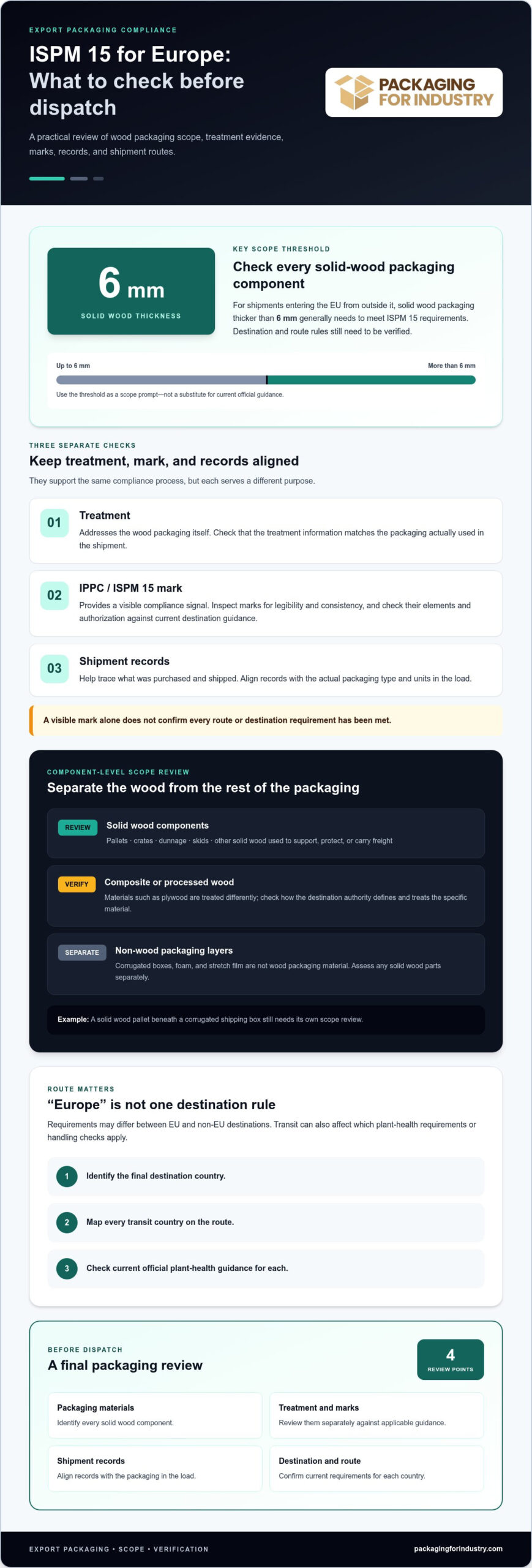
What if the pallet protecting your shipment is the part that holds it at the border? ISPM 15 compliance for shipping to Europe starts with identifying which wood packaging components are in scope, not just checking the main pallet. For shipments entering the EU from outside it, solid wood packaging thicker than 6 mm, including pallets, crates, and dunnage, generally needs to meet the standard. Processed wood materials such as plywood are treated differently.
It’s easy to focus on the packaging mark and treatment record, especially when an error could mean delays or corrective action. This guide explains how treatment and the IPPC mark fit together, which components to review, and why destination requirements matter. ISPM 15 provides an international framework, but shipping routes and destination rules affect what to verify before dispatch.
You’ll find a practical way to prepare export packaging specifications, from wood type and shipment handling needs to the compliance details your team should review. Clear requirements also help align pallet or custom crate design with protection, dimensions, and export needs. Packaging For Industry supports manufacturers and industrial shipping operations with pallets, custom wood crates, export crates, and packaging design. For buyers in Orange County, Los Angeles, San Diego, and Riverside, PFI can help define packaging requirements clearly when you request a quote.
Key Takeaways
- ISPM 15 compliance for shipping to Europe depends on the wood packaging components used and the destination’s current requirements.
- Review treatment, the authorized mark, and shipment records as separate parts of your export packaging plan.
- Compare pallets and crates with corrugated or other non-wood options based on load, protection, and handling needs. Verify whether an alternative changes compliance scope.
- Before dispatch, check the destination, packaging materials, marks, and records against current official guidance.
- Clear shipment specifications help align pallet or custom crate design with export, protection, and handling needs.
When Does ISPM 15 Apply to Wood Packaging Shipped to Europe?
ISPM 15 is an international standard for regulating wood packaging material in trade. It aims to reduce the risk of pests traveling with solid wood used to support, protect, or carry cargo. For exporters, the practical questions are which packaging components are made from regulated wood and what requirements apply along the shipment route. ISPM 15 compliance for shipping to Europe is a packaging-scope issue, not a requirement that automatically applies to every material around a product.
Start with a component-level review. A shipment may combine solid wood supports with corrugated panels, foam cushioning, and stretch film. These materials don’t all fall into the same category. The ISPM 15 Wikipedia article gives a general overview of the standard, but use current official plant-health guidance to confirm rules for a specific destination and route.
Which shipping materials may fall within ISPM 15 scope?
Common wood packaging materials include pallets, crates, dunnage, skids, and other solid wood components used to secure or protect freight. A crate may contain several material types, so assess its wood frame and bracing separately from its non-wood panels or cushioning. For example, a solid wood pallet beneath a corrugated shipping box still needs its own scope review.
Corrugated boxes, foam, and stretch film are not wood packaging material. Composite or processed wood cases require closer review. Don’t assume a material is exempt based on its appearance or trade name. Verify how the destination authority defines and treats it. This distinction helps packaging for manufacturers stay practical: review the wood parts without treating every protective layer as regulated wood. PFI’s custom wooden crates can be designed around the shipment’s load, dimensions, and handling needs.
Does “Europe” mean one set of import requirements?
No. Europe includes multiple destinations, and requirements may differ between the European Union and other countries. Transit can matter too. A route that passes through another country may involve additional plant-health requirements or handling checks, so don’t rely on the final destination alone when planning export packaging.
Before specifying pallets or crates, identify the destination country and every transit country on the route. Then consult the relevant official plant-health guidance for each. This prevents a general interpretation of European requirements from being mistaken for a rule that applies everywhere.
Use this concise scope summary to coordinate purchasing and shipping reviews:
- Review: pallets, crates, dunnage, and other solid wood packaging components.
- Separate: corrugated boxes, foam, and stretch film from the wood-component assessment.
- Verify: composite or processed wood cases against current destination guidance.
- Map: the final destination and transit countries before approving the packaging specification.
This route-and-material check gives your team a clear starting point for export planning. It also helps you specify packaging accurately, while leaving treatment, marks, and shipment records for a separate compliance review.
What Treatment, ISPM 15 Marks, and Records Should Exporters Understand?
Once you’ve identified wood packaging in a shipment, review three separate elements: the treatment applied, the mark on the packaging, and the records associated with the shipment. They support the same compliance process but serve different purposes. Treatment addresses the wood packaging itself. The mark is a visible compliance signal. Records help your team trace what was purchased and shipped.
Keep these elements aligned with the actual load. A record that describes one pallet type won’t resolve a mismatch if the shipment uses different packaging. A visible mark alone also doesn’t establish that every destination or route requirement has been met. For ISPM 15 compliance for shipping to Europe, verify current requirements for the destination and route rather than relying on a general checklist.
How should buyers read an ISPM 15 mark?
The mark identifies wood packaging that has undergone treatment within the ISPM 15 system. It gives inspectors and logistics teams a visible signal to review, but buyers should not assume that any stamp or label is valid. Check mark elements and authorization rules against current official guidance for the destination. The UK Government guidance on ISPM 15 is a useful reference for shipments involving the United Kingdom.
Legibility matters operationally. A mark that is obscured, difficult to read, or inconsistent across units can make shipment checks harder. Before loading, inspect the wood packaging in the shipment and compare its visible marks with the applicable guidance. If units have been mixed from different sources, review them individually rather than assuming one marked pallet establishes the status of the entire load.
Treatment evidence records what was done to the packaging; the ISPM 15 mark is the visible signal used to identify it. Neither should replace a check of route-specific requirements.
What records should be aligned with the shipment?
There isn’t one document list that applies to every shipment. Requirements can vary by destination and shipment circumstances, so consult official plant-health guidance for the route. As part of your internal process, keep relevant purchasing and treatment records with shipment information, and make sure packaging descriptions match the wood components actually used.
For example, if the shipping file describes a wood crate and pallet but the load also includes solid wood bracing, the packaging description may be incomplete. Clear records help purchasing, warehouse, and shipping teams trace packaging back to its source and resolve discrepancies before dispatch. Retain records according to your company’s compliance process and any applicable destination requirements.
- Treatment: Review the treatment evidence associated with the wood packaging.
- Mark: Check that the visible mark is readable and consistent with current official guidance.
- Shipment file: Match packaging descriptions and supplier records to the units being shipped.
Clear packaging specifications help keep export planning coordinated. If you’re defining pallet or crate requirements for a shipment, request a packaging quote with the packaging type, dimensions, and destination details.
How Do Wood Pallets, Crates, and Alternative Materials Compare?
Packaging selection balances the load’s physical needs with the shipment route. Wood pallets and crates can support demanding industrial shipments, while corrugated packaging and cushioning may suit products that need an enclosure or impact protection without a wood structure. The right choice depends on weight, dimensions, fragility, stacking, handling equipment, reuse plans, and destination requirements.
Packaging material choice and compliance scope are related, but they are not the same decision. A material change may alter which components need an ISPM 15 review, but it doesn’t automatically remove compliance obligations. Confirm material classifications and any exemptions through official guidance for the destination.
When might wood pallets or crates suit an export load?
Wood pallets can provide a practical base for loads that need stable support during forklift handling, stacking, or transfer between shipping stages. Crates may suit heavy, oversized, or high-value industrial goods that need a protective structure designed around their dimensions and handling requirements. The packaging plan should account for product weight distribution, lifting points, and how the load will be secured.
Custom dimensions can reduce unnecessary movement inside a crate and align the packaging with warehouse and transport equipment. Protective design matters too: a crate may need internal blocking or cushioning, depending on the product and expected handling. PFI supplies custom wooden crates and export crates, with packaging design support to align structure, dimensions, and protection needs. These design choices support the shipping plan; they do not, by themselves, establish regulatory approval.
When should exporters assess non-wood packaging alternatives?
Corrugated boxes may suit products that can be contained and protected within a box structure, particularly when the shipment’s load and handling conditions fit that format. Protective foam or other cushioning can help limit product movement and absorb handling impacts when selected for the item. For heavier or more demanding shipments, corrugated packaging may be part of a combined system rather than a direct replacement for a pallet or crate.
Assess substitutions against the full logistics task. A lighter packaging option may change handling or stacking needs, while a reusable wood structure may fit an established return or reuse process. Consider:
- Load: product weight, dimensions, and load distribution.
- Protection: exposure to movement, impact, and handling conditions.
- Operations: stacking, lifting, storage, and reuse requirements.
- Route: destination and transit-country packaging rules.
Don’t switch materials based on compliance assumptions alone. Processed or composite materials can have specific classifications, and exemptions depend on the applicable rules. Verify those details through official plant-health guidance before approving a new specification. For ISPM 15 compliance for shipping to Europe, evaluate the protective performance of the complete packaging system alongside the requirements for each material in it.
How Can You Check an ISPM 15 Shipment Before Dispatch?
A structured pre-dispatch review helps catch packaging gaps before they become shipment problems. Keep two checks separate: packaging design confirms the load is protected and practical to handle; regulatory review confirms the wood packaging and shipment align with current destination requirements. A well-designed pallet or crate isn’t, by itself, proof of compliance.
Use this sequence for each export load:
- Map the route. Record the final destination and transit countries. Check current official plant-health guidance for each relevant destination instead of applying one general “Europe” rule to every route. Requirements can differ, so save the guidance your team used with the shipment file.
- Capture the load requirements. Document cargo weight and dimensions, how the product will be lifted and handled, and any stacking or protection needs. These details guide packaging design, but they don’t establish which regulatory requirements apply.
- List every wood component. Include the pallet or crate as well as blocking, bracing, dunnage, and other solid wood parts added during packing. Compare the list with the finished load. A last-minute brace or support can change what needs review.
- Review the packaging configuration. Check that pallet or crate dimensions suit the cargo and planned handling process. Confirm that the load is stable and protected as designed. PFI’s pallet options can be specified around shipment configuration and operational needs, while compliance review remains a separate step.
- Verify applicable requirements. Use current official destination guidance to determine what treatment, marking, or other requirements apply to the wood packaging on this route. Don’t infer approval from a supplier description, a past shipment, or the packaging design alone.
- Inspect marks and records. Before loading, check that applicable marks are present and legible, then compare them with current official requirements. Match the packaging description and relevant purchasing or treatment records to the actual units being dispatched. Resolve mismatches before release.
- Close open questions before dispatch. Note unclear material classifications, missing records, or marks that are hard to read. Assign responsibility for resolving each item and hold the packaging from loading or shipment release until the review is complete.
This process makes ISPM 15 compliance for shipping to Europe part of the shipping workflow, not a last-minute check at the dock. Keep the route, packaging specification, inspection notes, and relevant records together so purchasing, warehouse, and shipping teams work from the same information. Revisit the review when the destination, transit route, packaging design, or wood components change.
How Can PFI Help Specify Wood Packaging for European Shipments?
Export packaging has to protect the product and work within the shipment’s handling plan. Packaging For Industry supports manufacturers and industrial shipping operations with pallets, custom wood crates, export crates, and packaging design. This helps align packaging dimensions and construction with the cargo, warehouse workflow, and intended route before a shipment is prepared.
PFI also offers heat-treated pallets. That product description alone doesn’t establish that a particular pallet meets the requirements for a specific destination or shipment. Treat packaging design and regulatory verification as separate workstreams: define the packaging application, then review applicable destination requirements through current official guidance. This distinction helps your team plan ISPM 15 compliance for shipping to Europe without confusing a packaging specification with a compliance determination.
What information helps scope an export packaging quote?
Share the details that affect protection and handling. Cargo dimensions and weight help establish the packaging footprint and support needs. Fragility, lifting points, stacking plans, and handling conditions help shape the protective design. The shipment route helps your team identify which destination requirements to review separately.
Include purchasing and production details as well. Packaging quantity and expected repeat-order needs can help align the specification with ongoing operations. Existing drawings, product layouts, or packaging specifications give the design team a useful starting point. For a crate or pallet request, organize the information into a clear brief:
- Cargo: dimensions, weight, fragility, and any sensitive surfaces or components.
- Handling: lifting method, stacking needs, storage conditions, and expected shipment handling.
- Route: final destination and known transit countries.
- Order plan: required quantity, repeat-order expectations, and target shipment schedule.
- Reference material: drawings, existing specifications, or photos that help show the current configuration.
How does custom packaging support shipping reliability?
A crate or pallet designed around the product can help limit unnecessary movement, support stable loading, and make handling clearer for warehouse and transport teams. The right design depends on the item and its journey, not on a standard dimension alone. PFI’s wooden crate solutions can be specified around cargo protection, dimensions, and handling requirements.
PFI provides packaging design support, including prototypes and samples, to help evaluate a packaging concept against the shipping application. These steps support fit and operational planning; they don’t replace destination-specific checks of treatment, marks, or records. Keep the packaging specification and compliance review coordinated, but distinct.
For a useful quote, provide the cargo details, route, packaging quantity, and any drawings or existing specifications. Clear inputs help connect crate or pallet design to actual shipping conditions and make it easier to compare suitable options. PFI supports industrial packaging needs for businesses in Orange County, Los Angeles, San Diego, and Riverside.
Build Export Packaging Requirements Into Your Next Shipment Plan
Make export packaging part of shipment planning, not a detail left until loading. Align purchasing, engineering, and shipping teams around one current specification, then review it whenever the cargo configuration or route changes. That discipline keeps packaging decisions connected to real handling needs and gives your team a clearer basis for planning ISPM 15 compliance for shipping to Europe.
Keep two decisions visible in your process: what packaging best protects and moves the product, and what the destination requires of the packaging materials. PFI can help translate cargo and handling needs into a practical packaging specification for industrial shipments. Share dimensions, weight, fragility, order quantity, route, and any existing drawings so the quote reflects the application.
A well-defined specification gives your team a stronger starting point for consistent purchasing and shipment preparation. Take the next step with the details of your export load.
With a clear plan in place, your next export shipment can move forward with greater confidence. Request a packaging quote from PFI for export pallets or custom crates.
Frequently Asked Questions
Is ISPM 15 required for every shipment to Europe?
No. Requirements depend on the packaging and the specific destination, so assess the shipment’s route rather than applying one rule to every European delivery. For repeat exports, keep a route-specific packaging review with the shipping instructions and update it if the destination or transit plan changes. This gives purchasing and warehouse teams a consistent reference when preparing similar orders.
Does ISPM 15 apply to corrugated boxes or foam packaging?
No, corrugated boxes and foam packaging aren’t the focus of ISPM 15. For a mixed packaging system, keep the bill of materials clear about which components are wood and which are corrugated or foam. For example, record a wood pallet separately from the box and cushioning it carries. That makes purchasing records easier to reconcile with the physical load during dispatch checks.
Can plywood or engineered wood packaging be exempt from ISPM 15?
Some processed wood products may be exempt, but verify the exact material and construction against official guidance before relying on that status. For a crate built with engineered panels and wood supports, retain the product specifications or drawings that identify each component. This gives your compliance review concrete information to compare with destination guidance, instead of relying on a supplier’s general description of the crate.
What happens if a wood pallet does not meet destination requirements?
Authorities may take action that disrupts the shipment, including requiring destruction or re-dispatch of the affected packaging or consignment, depending on the case and applicable rules. The operational impact can include missed receiving plans and additional coordination between the shipper and consignee. If a pallet raises a concern before dispatch, hold it out of the load while the team resolves the issue.
Who is responsible for ensuring wood packaging is ISPM 15 compliant?
For practical shipment control, the exporter should assign someone to coordinate the packaging review, route requirements, and dispatch records. Packaging purchasing and warehouse teams can help by keeping supplier paperwork and pallet or crate descriptions connected to the order. Agree on who checks the load before release, so a responsibility gap doesn’t leave the shipping team trying to resolve documentation questions at the last moment.
Can used pallets be reused for shipments to Europe?
Used pallets can be considered for reuse, but a previous export or an old compliance record isn’t enough to establish their status for a new load. Keep reused pallets in a traceable inventory pool and review their condition, marks, and repair history before assignment. If a pallet’s history or status is unclear, separate it from export-ready stock until the team can resolve the uncertainty using current official guidance.