
What if a new package protects the product but slows the line? Integrating a new packaging design into the production line means matching its dimensions, materials, and handling requirements to existing equipment and product flow, then testing the setup before full production. A design change affects more than the package itself: it can influence line layout, changeovers, quality checks, and material use.
A new design should work smoothly with equipment already in place, but that depends on how well its format matches machine capabilities, available space, and production goals. Assessing these factors early helps reveal bottlenecks and avoid costly adjustments after rollout.
This article explains how to assess line layout and equipment fit, plan for customization and quality control, and identify opportunities to reduce packaging waste. It also covers how testing and performance checks help manufacturers introduce a design while keeping production flow and costs in view.
Key Takeaways
- Review equipment capacity, product flow, and accumulation needs to spot layout constraints that can disrupt production.
- Plan installation and team training as part of an integration so equipment changes create fewer avoidable interruptions.
- Use compatible controls, trial runs, and performance monitoring to identify issues before they affect routine production.
- Match packaging materials and formats to product protection and line requirements to help limit waste and control costs.
- PFI’s custom packaging design services, foam packaging, stretch film, and packaging inventory programs can support packaging changes from design through supply.
What Is Packaging Line Integration?
Packaging line integration connects a new design with equipment, controls, materials, and operating practices. The goal is to make the package work with the production process while managing interruptions and workplace risks.
Installation and Training Downtime
Installation and training downtime is the production interruption needed to connect equipment and prepare operators for a changed process. Machine adjustments, setup checks, and operator practice can all affect schedules. Plan the work sequence and training around the equipment being changed, and consider phasing the rollout to limit disruption compared with changing the entire line at once.
Productivity Loss and Efficiency
Productivity loss occurs when production runs below its intended pace or repeatedly slows and restarts. A design change can expose mismatches between package dimensions and the existing line, disrupting flow between stations. Review where products accumulate and where work pauses to see how interruptions affect the whole process. This ties improvement goals to actual line constraints rather than focusing on one machine alone.
Safety, Maintenance, and Downtime
Safety and maintenance planning address risks and interruptions around packaging equipment. Consider operator access during setup, material replenishment, and routine service. Limiting unnecessary interaction with moving equipment supports a safer work environment, while clear maintenance access helps technicians address equipment issues without avoidable delays. Include these needs in the design review, not just after installation.
Packaging Risks and Requirements
A new package can introduce risks such as poor product fit, material handling problems, damaged goods, or artwork that differs from the approved version. Reduce these risks by reviewing the package specification, checking samples against the product, and documenting approved artwork before production. For FDA, FTC, and labeling requirements, identify the obligations that apply to the specific product and package wording before approving artwork. The responsible compliance lead can address product-specific questions.
Packaging Line Integration
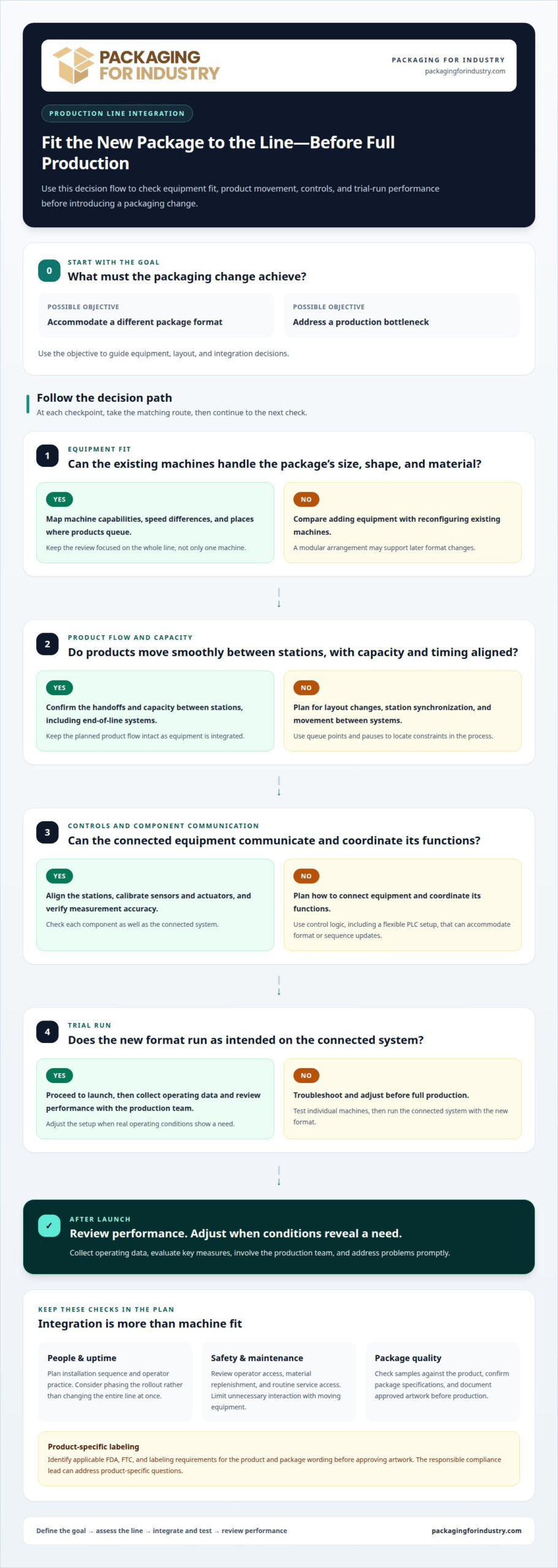
Integrating a new packaging design into the production line means coordinating equipment, controls, materials, and product flow across the operation. Start with clear goals, then assess equipment, plan the transition, test the setup, and review performance.
- Define the objective. Specify what the change must deliver, such as accommodating a different format or addressing a production bottleneck. These goals guide equipment and layout decisions.
- Assess the current line. Review each machine’s capabilities and limitations. Map where products queue, where speeds vary, and whether existing equipment can handle the package’s size, shape, and material.
- Plan equipment and product flow. Determine whether to add equipment, reconfigure machines, or use a modular arrangement. For end-of-line systems, account for synchronization, capacity, and movement between stations.
- Integrate and test components. Check alignment, calibrate sensors and actuators, and verify measurement accuracy. Test each machine, then run the connected system with the new format. Troubleshoot issues before full production.
- Review performance after launch. Collect operating data, evaluate key measures, and involve the production team. Address problems promptly and adjust the setup as actual conditions reveal what needs improvement.
Integrating a new packaging design into the production line doesn’t always require a full equipment overhaul. A cost-benefit analysis can help compare configuration options, while flexible systems can support later format changes. If equipment compatibility, capacity, or material choices affect the packaging plan, request a packaging quote to discuss the project requirements.
Before choosing an integration approach, manufacturers should define its goals and assess existing equipment, capabilities, limitations, bottlenecks, and inefficiencies. Complete this review before planning the integration or automation upgrades. Understanding bottlenecks and equipment readiness first helps a cost-benefit analysis guide decisions aimed at improving packaging-line efficiency.
For operations handling multiple formats, manufacturers can add equipment or reconfigure existing equipment to accommodate changes in product size, shape, and material. When integrating multiple end-of-line systems, plan for product flow, equipment synchronization, and the systems’ capacity to handle increased volumes.
Quality Control and Customization
An integrated packaging system must deliver consistent package quality across connected machines. Customization addresses differences in product dimensions, package materials, and handling needs. A carton that shifts during sealing or labeling can cause rejects, even when upstream filling remains stable.
Older packaging equipment may not communicate with newer automated components. Integration may then require custom solutions to connect machines and coordinate their functions. Quick format change systems, automated quality control devices, and material handling equipment can help manufacturers manage product or package variations without treating each change as a separate line.
Control logic must coordinate each station and respond to production changes. A programmable logic controller (PLC) should allow flexible updates rather than lock the line into one format or sequence. Components also need to communicate effectively. For example, if a sensor detects package misalignment, the related equipment must respond in a way that supports consistent operation.
Run a trial with the intended product and package, recording line speed, material used or discarded, and quality defects. Compare the results with production goals, then adjust settings or equipment before routine production.
- Quality: Inspect completed packages for sealing, placement, and other requirements specific to the design.
- Speed: Record output while the integrated system runs, noting interruptions and uneven flow.
- Waste: Track damaged or unusable packaging material during the trial.
Simulations and trial runs can reveal compatibility issues before launch. After making adjustments, test the connected system again and monitor production. This feedback helps refine controls and package handling as operating conditions show where the line needs improvement.
Benefits: Cost Savings and Reduced Material Waste
Packaging line integration can lower operating costs by helping machines use labor, energy, and materials more efficiently. Automation can perform packaging tasks faster and more consistently than manual processes, potentially reducing production time and errors. Because it also requires upfront investment, manufacturers should weigh equipment capabilities against expected operating needs before choosing an upgrade.
Material waste often begins with a poor fit between package design and equipment. A carton that feeds unevenly, for example, can cause jams, damaged packaging, and product rework. Adjusting machine settings and package specifications together can improve handling and reduce rejects. Coordinated conveyors also help maintain flow between stations, limiting product buildup and unnecessary stops.
How much does a changeover or retooling cost? It depends on equipment modifications, controls, tooling, training, materials, and installation downtime. The cost is determined for the specific project based on the work and packaging requirements involved.
- Track material use: Record packaging consumed and discarded during production to identify recurring waste.
- Review line performance: Compare output, stoppages, and rejects before and after adjustments.
- Match format to capabilities: Align package dimensions and materials with machine settings to reduce feeding and sealing problems.
A successful integration can also support higher production demand without adding labor in step with every increase. Reviewing actual line data helps determine whether an upgrade is delivering the intended efficiency or needs further adjustment. Manufacturers assessing material use alongside equipment changes can identify packaging cost-saving opportunities and make decisions based on their operation.
Packaging Line Layout and Design
Layout determines how products move from filling through packing and palletizing. A useful design aligns equipment, people, and material flow with production needs.
Package and Equipment Compatibility
Compatibility means the package can move through existing machines and process stages without disrupting operations. Assess its dimensions, shape, and material, along with how it is filled, sealed, labeled, and conveyed. Compare those requirements with equipment capabilities and settings. A wider package, for example, may not fit an existing guide rail or filling station. A trial with the intended format can reveal jams, alignment issues, or handling problems before full production.
Line Modifications and Tooling
Line modifications adapt equipment and controls to handle the new package reliably. Depending on the design, changes may involve adjustable guides, change parts, sensors, or updated machine settings. A format change system can help operators switch between package types, while handling devices support movement between stations. Identify affected machines and required adjustments before installation to coordinate tooling, equipment access, and production planning.
Layout also affects space, staffing, and downstream capacity. Map the route from filling to case packing, accumulation, and palletizing. If a conveyor feeds a palletizing area, allow room for forklifts or automated guided vehicles to move safely. Check whether accumulation tables can hold product when downstream equipment pauses. Poorly matched speeds or limited buffer space can interrupt flow and reduce usable line capacity.
Future demand matters, too. Assess available floor space, staffing needs, and whether equipment can handle planned production volumes. Modular systems allow equipment to be added or existing machines reconfigured as formats change. For multiple package sizes, flexible guides and settings may simplify changeovers. The principle is straightforward: design the line around package flow, equipment limits, and material movement to support a smoother process.
Packaging Products and Solutions
A packaging design must suit the product and how it moves through production, storage, and shipping. Custom packaging design connects dimensions, materials, and protection needs to the operating process. This can address fit problems that standard packaging may create, such as excess void space around a product or a package that handles poorly at a packing station.
For fragile or precision items, foam packaging can help secure products and limit movement during handling. The right foam configuration depends on the product’s shape and packing method. Consider protective foam packaging alongside the outer package so the components work together through packing and shipment rather than being selected in isolation.
Stretch film helps unitize loads for movement and storage. Choose it to suit the wrapping process and the loads handled by the operation. A packaging change may also affect the supplies needed at each station, so include material selection and replenishment planning in the same discussion.
- Custom packaging design: Align package dimensions and material choices with product protection, handling, and line requirements.
- Foam packaging: Use cushioning suited to product geometry and the way items are placed into packages.
- Stretch film: Match pallet wrapping supplies to the packing workflow and shipment handling needs.
- Vendor Managed Inventory: Coordinate packaging inventory with actual usage to support supply availability and reduce purchasing and storage friction.
These solutions address different stages of packaging, from protecting an item at the packing station to securing a finished load. Combining suitable materials with Vendor Managed Inventory or just-in-time packaging can help align supply with production demand. Start by defining the package format, protection needs, consumption pattern, and where each material enters the workflow.
Industries Served
Packaging needs vary across manufacturing, warehousing, and distribution. Production teams may need packaging that fits a specific line and protects products during handling. Warehouses need dependable supplies for packing and storage, while distribution centers manage varied shipments and ongoing material use. Packaging for manufacturers can account for both production requirements and the movement of finished goods.
Aerospace and electronics businesses often handle components that need careful protection during packing and transit. Food and medical companies also have product-specific packaging and labeling needs, so designs must suit both the item and its handling process. Construction suppliers and other industrial businesses may package bulky or heavy products, making package fit and efficient movement through the facility important.
Distributors and fulfillment centers may handle products with different dimensions and shipment patterns. A setup that works for one item may create extra handling or unused material for another. Custom packaging design can align the package with the product and packing process. Foam packaging may suit products needing cushioning, while stretch film helps secure palletized loads for storage or shipment.
Across industries, packaging integration connects material selection with line operations and supply planning. Packaging kitting can group components needed at a packing station, while Vendor Managed Inventory and just-in-time inventory management can align supply with usage. The right combination depends on products, workflow, storage capacity, and replenishment needs. These considerations apply to packaging for warehouses and distribution centers as well as production facilities.
Why Choose Packaging For Industry (PFI)
Packaging For Industry (PFI) helps manufacturers connect packaging design with production and supply needs. Its Custom Packaging Design Services suit projects where a package must fit a particular product, packing workflow, or shipping method. For businesses in Orange County, Los Angeles, and San Diego, this helps tailor packaging decisions to local operations and recurring supply needs.
PFI’s design work considers product dimensions, protection needs, and how teams handle packaging during production. For example, a component that shifts inside a package may need a design that holds it securely through handling. Custom packaging design connects those requirements with a suitable packaging format.
Material selection can support the same operational goals. Foam Packaging can cushion products, while Stretch Film secures pallet loads for storage or shipment. Matching materials to the product and packing process keeps design decisions connected to how goods move through a facility.
For businesses with recurring packaging use, Vendor Managed Inventory (VMI) for Packaging coordinates replenishment with consumption. It can help purchasing and warehouse teams manage ongoing packaging needs in Orange County, Los Angeles, and San Diego, where supply planning supports organized operations.
PFI is a practical next step when packaging needs to fit a product or workflow more closely, or when recurring supply requires coordination. Share the product, packaging requirements, and operating context to focus the discussion on a solution suited to the application.
Move the Packaging Change Forward
Before a packaging change becomes a production decision, define what success means for the operation. Document package requirements, the products it must protect, and the conditions teams need to meet during packing and shipping. This gives engineering, operations, and purchasing a shared basis for evaluating the change.
A practical next step for integrating a new packaging design into the production line is to connect requirements with materials and the supply plan. Packaging For Industry (PFI) offers Custom Packaging Design Services, Foam Packaging, Stretch Film, and Vendor Managed Inventory for Packaging. These services support needs from design through material replenishment.
Discuss the package, workflow, and supply requirements together to make the next decision with a clear view of operational fit. A focused conversation can help identify what information is needed to scope the project and develop a workable plan.
With a clear project brief, your team can take the next step toward a packaging setup that supports production and supply needs.
Frequently Asked Questions
What information should I provide to request a packaging quote?
Start by gathering the package details that purchasing, operations, and design teams will need to make decisions. Include the product’s dimensions, shipping method, current packaging materials, order frequency, and any recurring damage or fit concerns. A current package sample, product drawing, or photograph can make the requirements clearer. Then request a packaging quote to discuss the project with Packaging For Industry (PFI).
How long does packaging design validation and production line implementation take?
The schedule depends on the design’s scope, approval process, material procurement, and available production windows. A milestone schedule can separate design approval, sample review, material readiness, line access, and release to regular production. Flag dependencies early, such as artwork approval or a machine change requiring a planned shutdown. This gives purchasing and operations a shared view of factors that could affect rollout.
What tests are needed to validate new packaging materials, dimensions, seals, and product protection?
Build a validation plan around the package’s intended job. Confirm that samples match approved dimensions and materials, examine closures for consistent contact, and check that the packed product stays in position during normal handling. Use actual shipping and storage conditions to guide protection evaluation. Record the sample version, observations, and acceptance decision together so future production lots can be compared with the approved design.
How should operators and suppliers be trained and coordinated during a packaging redesign rollout?
Assign clear owners for package specifications, material ordering, line setup, and production approval. Give operators a concise work instruction identifying the approved package, setup changes, and who receives defect reports. Share the specification and transition date with suppliers, including how remaining stock of the previous design will be handled. A brief handoff between purchasing, operations, and the supplier helps prevent mixed materials or outdated instructions from reaching the line.