
What if the packaging protecting an autonomous vehicle sensor is also adding avoidable freight and handling costs? Sensor geometry, handling requirements, and the shipping route all affect how a package performs. Choosing packaging solutions for autonomous vehicle sensors SoCal teams can rely on means balancing product protection with practical use of materials, space, and labor.
If you’re moving from prototypes to repeat orders, you need packaging that fits the sensor and a supply plan that keeps pace with production. This guide explains how to assess sensor-specific protection needs, handling and shipping conditions, package size, and repeat-order requirements. It also shows how custom foam, corrugated boxes, and crates can work together as one system. For Southern California operations, PFI’s Anaheim-based team provides packaging design support, prototypes, samples, and recurring industrial orders, with local next-day delivery throughout the region.
Key Takeaways
- Assess packaging solutions for autonomous vehicle sensors SoCal around each sensor’s documented handling needs, rather than assuming one design suits every component.
- Compare foam, corrugated boxes, and crates based on product fit, handling, shipment conditions, and plans for reuse.
- Evaluate fit, packing steps, material use, storage footprint, damage exposure, and freight dimensions to make informed cost decisions.
- Prepare a useful quote request with product drawings or dimensions, handling instructions, shipping method, order quantity, and repeat-order expectations.
- PFI supports packaging development with design assistance, prototypes, and samples, helping teams move from initial evaluation to repeat-order planning.
Why Autonomous Vehicle Sensors Need Packaging Designed for the Shipment
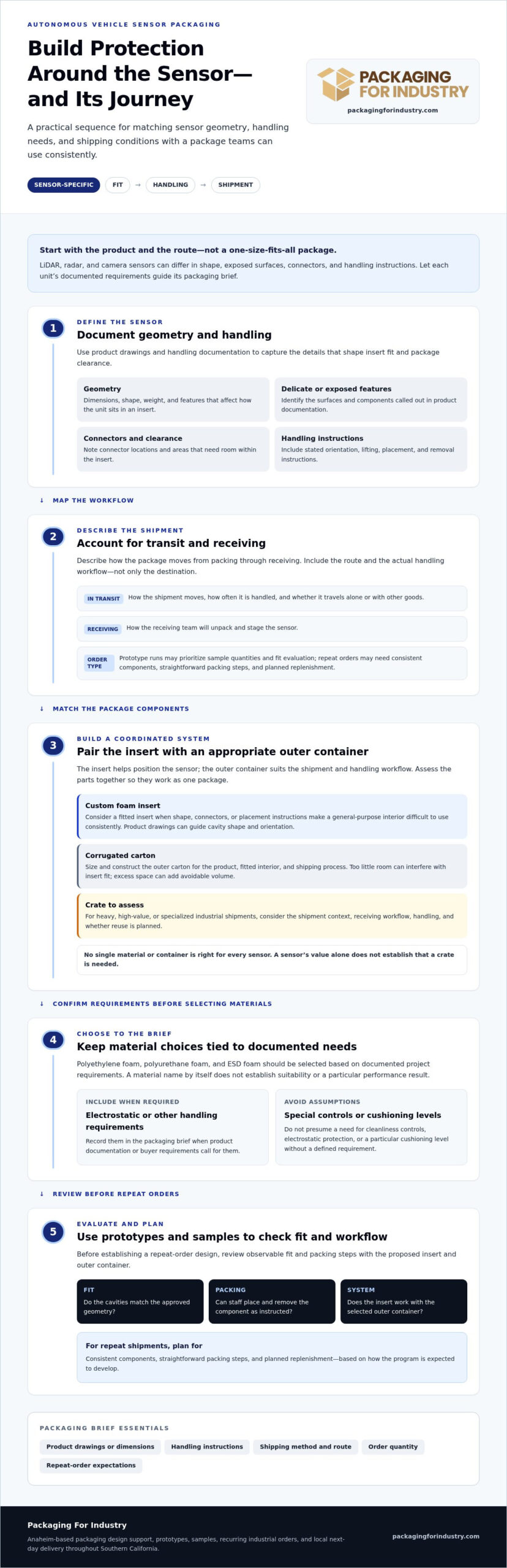
Protecting a sensor starts with its design and handling requirements, not the assumption that every autonomous vehicle component needs the same package. LiDAR, radar, and camera sensors differ in shape and may have different exposed surfaces, connectors, and handling instructions. A package that fits one unit may leave another unsupported or make it harder for staff to pack and unpack it consistently.
Sensor-specific industrial packaging pairs protection for the component with packaging suited to its journey. That may mean a custom foam insert to position and cushion the sensor, combined with a corrugated box or crate selected for the shipment. The insert helps manage movement around the product; the outer container handles the demands placed on the package as a whole. Both parts need to work together.
An overview of the Autonomous Car helps explain why vehicle systems use different sensor types. For a packaging brief, the distinction matters: packaging solutions for autonomous vehicle sensors SoCal manufacturers need should follow each product’s documented requirements, not assumptions based on its sensor category.
Which sensor details should shape the packaging brief?
Start with product drawings and handling documentation. Include the unit’s dimensions and weight, identify delicate or exposed features, and note connector locations and instructions for placing, lifting, or removing the sensor. These details help a packaging designer plan where an insert should support the product and where the package needs clearance.
- Geometry: Share dimensions, shape, and features that affect how the sensor sits in an insert.
- Fragile features: Identify exposed surfaces or components described in product documentation.
- Handling: Include stated orientation, lifting, and unpacking instructions.
Separate confirmed requirements from assumptions. Don’t presume a unit needs special cleanliness controls, electrostatic protection, or a particular cushioning level unless product documentation or the buyer’s requirements call for it. PFI’s packaging design process uses these inputs to develop a practical package.
How can transit and handling change the packaging need?
Describe the route and workflow, not just the destination. Consider how the shipment will move, how often it will be handled, whether it travels alone or with other goods, and how the receiving team will unpack and stage it. These details help determine the balance between a fitted interior, an outer carton, and a crate.
Prototype shipments and recurring production orders may also need different packaging workflows. A small prototype run may prioritize sample quantities and fit evaluation. Repeat shipments may call for consistent components, straightforward packing steps, and planned replenishment. Across Southern California’s manufacturing and logistics network, sharing the intended route and receiving process helps tailor packaging solutions for autonomous vehicle sensors SoCal teams can use as programs develop, without adding materials or complexity that do not serve a defined need.
How to Match Sensor Protection with Foam, Corrugated Boxes, and Crates
Choose packaging as a coordinated system. A fitted insert positions the sensor, while the outer container suits the shipment and handling workflow. The right combination depends on documented product requirements, how staff will pack and unpack the sensor, and whether the packaging is intended for one trip or repeated use. No single material or container is right for every sensor.
Custom foam inserts can be shaped around a component’s documented dimensions and placement requirements, helping define how it sits during packing and unpacking. PFI’s protective foam packaging can be part of a tailored design. The insert’s openings and contact areas should follow the product drawing and handling instructions, not a guess about which surfaces are sensitive.
When do custom foam inserts make sense for sensor components?
Consider a custom insert when a sensor’s shape, connectors, or placement instructions make a general-purpose interior difficult to use consistently. Product drawings can guide the cavity shape and orientation. Polyethylene foam, polyurethane foam, and ESD foam should be selected based on documented project requirements. The material name alone does not establish suitability or a particular performance result. Include any electrostatic or other handling requirements in the packaging brief.
Prototypes and samples let teams review fit and packing steps before establishing a repeat-order design. Check whether staff can place and remove the component as instructed, whether the cavities match the approved geometry, and whether the insert works with the selected outer container. Focus the review on observable fit and workflow.
When should buyers consider corrugated boxes or custom crates?
A corrugated carton provides an outer package sized and constructed for the product, fitted interior, and shipping process. A box that is too tight can interfere with insert fit; excess space can add avoidable volume. PFI’s corrugated boxes can be designed alongside the insert so the components work together as one package.
For heavy, high-value, or specialized industrial shipments, assess a crate as another outer-container option. Consider the shipment context and receiving workflow, including how the package will be handled and whether reuse is part of the plan. A sensor’s value alone does not mean a crate is necessary. Match the container to documented needs and weigh practical trade-offs in storage, handling, and return logistics.
Standards and performance metrics help frame questions about reliable automated-vehicle operation, as discussed in the NIST Standards for Automated Vehicles. Packaging selection is a separate decision: use the buyer’s stated requirements to define what the package must accommodate, then assess the insert and outer container as one configuration.
To get a quote for packaging solutions for autonomous vehicle sensors SoCal programs can evaluate, share drawings, handling instructions, and the intended shipping workflow in a custom packaging quote request.
How to Compare Packaging Designs for Fit, Protection, and Total Cost
A packaging comparison should cover more than the unit price of each box or insert. Evaluate each design against product fit, documented handling instructions, assembly steps, shipping method, and the work required to store and replenish it. The lowest unit-cost option may not be the lowest-cost choice across operations if it takes longer to pack, occupies more warehouse space, or leaves the product more exposed to damage.
Package dimensions and configuration affect freight planning and handling. Compare the packed dimensions, not just the sensor’s size. An insert that changes the outer carton’s footprint may affect storage, shipment planning, and how the package moves through your operation. Include these factors alongside material use and packing labor to assess the full workflow. If shipments incur UPS or FedEx surcharges, compare package dimensions against the applicable shipping requirements as part of the review.
What should a packaging comparison include?
Put standard and custom options side by side, using the same product and shipment information for each. Record confirmed requirements and known shipment conditions with every proposed design. Mark unknown details for assessment rather than assuming savings or performance.
- Fit and materials: Note how the product sits in the package, which materials are used, and whether the design follows documented handling instructions.
- Packing steps and labor: Record how staff assemble the package, position the product, close the container, and prepare it for shipment.
- Shipment and order pattern: Include the shipping method, typical order quantities, and whether the package is for prototypes or recurring orders.
- Space and freight dimensions: Compare packaging storage footprint and packed dimensions, including any effect on freight costs.
- Operational exposure: Identify documented handling or damage concerns without assigning an unsupported probability or performance result.
This format makes trade-offs easier to discuss across procurement and operations. It helps distinguish an apparent material saving from a change that could add packing steps or complicate storage. Keep the comparison grounded in information teams can observe or verify.
How can prototypes help validate a packaging design?
A prototype or sample lets teams review the package before ordering broader production quantities. Check whether the product fits as intended, whether the packing sequence is clear, and whether staff can follow handling instructions using the proposed materials. The review can identify adjustments to an insert, carton, or assembly process before those choices become part of a repeat-order workflow.
Gather feedback from engineering on product fit, procurement on materials and order patterns, and operations on packing and storage. PFI’s custom packaging design support includes prototypes and samples for reviewing a tailored approach. For teams comparing packaging solutions for autonomous vehicle sensors SoCal programs, a shared evaluation record keeps design decisions tied to requirements, workflow, and total operating considerations.
What to Include in a SoCal Autonomous Sensor Packaging Quote Request
A focused quote request gives a packaging team the information needed to scope a design, compare options, and plan for repeat supply. For packaging solutions for autonomous vehicle sensors SoCal programs can use, share verified product and shipment details rather than relying on assumptions about the sensor or its handling needs.
What information helps PFI scope a custom packaging solution?
Gather the available product documentation and summarize how the sensor moves through your operation. Include details that affect fit, protection, packing, and replenishment:
- Product details: Provide drawings or dimensions, weight, configuration, and documented protection or handling requirements.
- Shipment information: Describe the shipping method, destinations, and known freight constraints. Note current damage issues or concerns without presuming their cause.
- Packing workflow: Explain who packs the sensor, how the package is prepared, and what the receiving process requires.
- Order pattern: State the quantity needed for prototypes or samples, expected production order quantities, and anticipated repeat-order demand.
- Supporting material: Include product images or drawings when available, along with relevant instructions. Share sensitive files through an appropriate business channel, not in public examples.
If a requirement is still under review, label it as unknown. This keeps the quote discussion grounded in confirmed information and helps identify what needs evaluation before finalizing a design. Clear order expectations also connect the initial design with a practical plan for recurring packaging supply.
How should buyers evaluate a Southern California packaging supplier?
Compare the supplier’s ability to address both design and ongoing operational needs. Relevant factors include custom design support, prototypes and samples, options for foam, corrugated boxes, and crates, and planning for repeat orders. PFI’s custom packaging design support helps teams develop a solution around documented product and workflow requirements.
Local access matters when it supports how your team receives and replenishes packaging. PFI is based in Anaheim and serves Southern California, including businesses across Orange County, Los Angeles County, the Inland Empire, and San Diego County. Local next-day delivery throughout Southern California can support packaging replenishment alongside broader supply needs.
A complete request helps procurement compare packaging options and gives operations a chance to flag packing or receiving constraints early. It also creates a useful starting point for moving from samples to a repeat-order plan.
How PFI Supports Autonomous Vehicle Sensor Packaging in Southern California
PFI is an Anaheim-based industrial packaging provider serving Southern California businesses. Its custom foam, corrugated boxes, and crates can be combined into a coordinated package shaped around a sensor program’s product and shipping process. PFI supports manufacturers across industries including automotive, aerospace and defense, electronics and semiconductor, and industrial equipment.
How can custom design support a sensor packaging program?
PFI’s custom packaging design support includes CAD/CAM, prototypes, and samples. Teams can review a proposed design with the product in hand and provide feedback before broader rollout. Engineering, procurement, and operations can assess the details relevant to their work, from design requirements to purchasing and packing workflow.
This review gives teams a practical way to refine packaging decisions with input from the people who specify, purchase, and use the solution. Adjustments can be based on project requirements, product fit, and the actual packing process.
How can repeat supply support production and shipping operations?
Recurring packaging needs can inform purchasing and replenishment planning. Expected usage, order patterns, and storage considerations give teams a basis for coordinating custom and stock packaging with production needs. PFI’s vendor managed inventory and just-in-time packaging programs help businesses manage recurring packaging supply, including custom items such as boxes, foam, and crates.
PFI supports Southern California businesses and nationwide needs through distribution and manufacturing partners. Buyers can coordinate packaging requirements across their operating locations and broader supply plans as programs develop.
For packaging solutions for autonomous vehicle sensors SoCal teams can carry from design review into ongoing operations, share product documentation, the shipping method, expected quantities, and repeat-order needs. PFI can use that information to tailor a packaging approach around the program.
Build a Packaging Plan That Can Grow With Your Program
A packaging decision should remain useful as sensor designs, order patterns, and shipping workflows evolve. Keep the approved configuration easy for engineering, procurement, and operations to reference, and establish how teams will communicate product or process changes that could affect packaging. A shared record gives each group a clear basis for reviewing future adjustments.
For packaging solutions for autonomous vehicle sensors SoCal programs can carry forward, use your quote request to define current project requirements and purchasing needs. Clear inputs create a practical starting point for a tailored packaging discussion, whether you’re evaluating a prototype or preparing for ongoing orders.
Request a packaging quote from PFI to discuss custom sensor packaging, compare options, and plan for reliable repeat supply.
Frequently Asked Questions
What packaging is best for autonomous vehicle sensors?
The right option depends on the sensor’s documented geometry, handling requirements, shipment route, and order workflow. Fitted foam can position a component within its package, while a corrugated carton provides an outer container suited to the shipment. A crate may suit specialized industrial shipments or reuse needs. Compare options against the product and process rather than treating any material as universally best.
Do autonomous vehicle sensors need ESD packaging?
Use ESD packaging when the product team’s documentation specifies electrostatic protection. Sensors may have different requirements, so distinguish confirmed handling criteria from general concern about electronics. If ESD materials are required, include that information in the packaging brief so the proposed materials can be evaluated for the application. Follow the product team’s stated criteria.
Can custom foam inserts be made for LiDAR, radar, or camera sensors?
Yes. PFI can design custom foam inserts using supplied dimensions, drawings, and documented requirements. LiDAR, radar, and camera sensors are distinct examples, not interchangeable packaging specifications. Differences in shape, connector locations, or handling instructions may affect an insert’s layout. Share relevant product details so the design can be tailored to the component and reviewed with samples or prototypes.
How can packaging reduce shipping damage to vehicle sensors?
Packaging can help manage damage exposure through suitable fit, cushioning selected for documented needs, an appropriate outer container, and clear handling instructions. Evaluate these elements together across packing, transit, receiving, and unpacking. For example, a package that fits the sensor but complicates removal may not suit the receiving workflow. Review the design against actual handling conditions rather than treating any configuration as a damage-free guarantee.
What information should I provide for a custom sensor packaging quote?
Provide the sensor’s dimensions, weight, configuration, and available drawings or images, along with documented protection requirements. Include the shipping method, destination, order quantity, and expected repeat-order pattern. If your team has encountered damage or freight constraints, describe what was observed without assigning an unverified cause. These details give PFI useful context for a quote tailored to the product and operating requirements.
Can a Southern California packaging supplier support repeat sensor shipments?
Yes. PFI supports recurring packaging needs by planning around expected usage, order patterns, and replenishment requirements. Custom and stock packaging can be part of a supply plan, while vendor managed inventory can help coordinate replenishment for ongoing use. Share anticipated demand and program changes in a quote request so the packaging approach accounts for current production needs and future orders.
How do I compare custom and stock packaging for sensor components?
Compare both options against the sensor’s fit and documented protection requirements, then consider packing workflow, storage needs, order patterns, and packed freight dimensions. Stock packaging may suit a component and process without special sizing, while a custom design can address requirements a standard configuration does not meet. Assess confirmed needs rather than assuming one option will always cost less or work better.