
How much is that massive stack of “safety stock” actually costing your Los Angeles facility in lost floor space and tied-up capital?
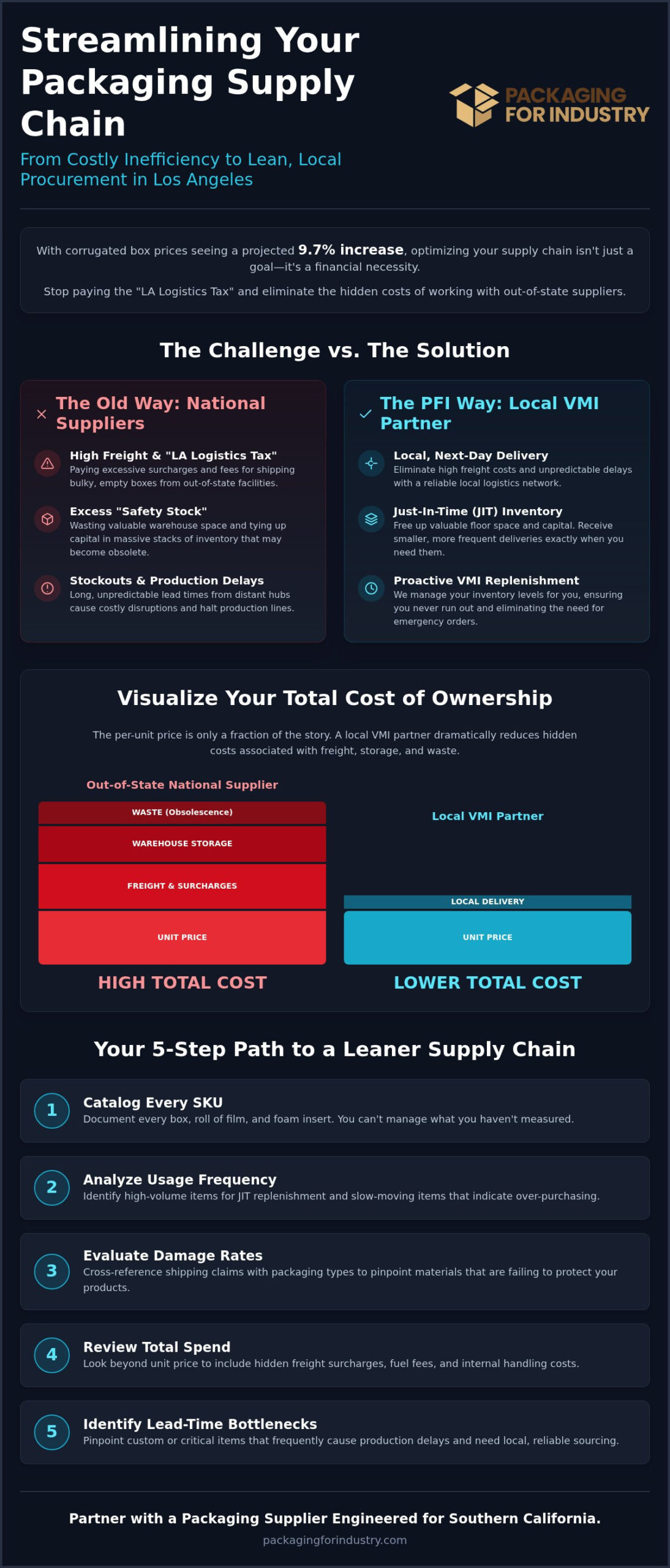
Most operations managers accept frequent stockouts and high freight fees as an unavoidable part of working with out-of-state suppliers. It’s a common frustration to see bulky inventory taking up valuable square footage while you still worry whether the next shipment will arrive before the production line stops. With corrugated box prices seeing a 9.7% increase in early 2026, streamlining packaging supply procurement in Los Angeles has become a financial necessity rather than just an operational goal.
This guide demonstrates how to shift from transactional catalog buying to a localized, managed partnership that prioritizes your bottom line. You’ll learn how to eliminate stockouts and reduce warehouse clutter by leveraging just-in-time delivery and vendor-managed inventory. We’ll outline a clear path to lowering your logistics costs and consolidating your billing so you can focus on production instead of chasing down missing shipments.
Key Takeaways
- Audit your shipping department’s SKUs to differentiate between high-volume necessities and slow-moving items that clutter your warehouse.
- Learn how streamlining packaging supply procurement in Los Angeles with a local partner eliminates the “LA Logistics Tax” and reduces lead times.
- Transition from reactive emergency ordering to proactive replenishment through a comprehensive Vendor Managed Inventory (VMI) program.
- Calculate the total cost of ownership by considering how local next-day delivery reduces your freight expenses and storage requirements.
- Improve operational reliability by moving away from impersonal national catalogs toward a customized, engineering-minded supply chain.
The Challenges of Packaging Supply Procurement in Los Angeles
Procurement streamlining is the systematic reduction of touchpoints and logistical friction between a supplier and a manufacturing floor. For many Southern California operations, the goal of streamlining packaging supply procurement in Los Angeles involves overcoming unique regional hurdles that national distributors often ignore. This isn’t just about finding a cheaper box; it’s about optimizing the entire supply chain management process to ensure materials are available exactly when needed without inflating overhead.
National catalog suppliers typically operate on a one-size-fits-all model. While they are convenient for small-scale office needs, they often fail local manufacturers who require specialized engineering or custom protective foam. These large entities lack the agility to provide free prototyping or site-specific consultations. When a manufacturer in aerospace or medical device production needs a precision-fit solution, waiting weeks for a sample from a Midwest hub isn’t a viable option. In an environment where corrugated box prices saw a 9.7% increase in early 2026, every delay and every wasted inch of material directly impacts your bottom line.
Freight Costs and Traffic Delays
Shipping industrial materials into Southern California from out-of-state entails more than just standard mileage rates. Procurement managers often face the “LA Logistics Tax,” which includes regional fuel surcharges and unpredictable delays caused by port congestion or heavy traffic on the I-10 and I-405 corridors. When you order corrugated boxes from a distant supplier, you are essentially paying to ship air. These bulky items rack up high freight costs that can quickly negate any perceived per-unit savings. Local proximity doesn’t just lower these costs; it significantly reduces the risk of production-stopping shortages when a truck is delayed at a distant state line or a regional distribution center.
The Hidden Costs of Inventory Management
In the Los Angeles industrial market, warehouse space is a premium asset. Storing months of bulky packaging inventory is an inefficient use of expensive real estate. This practice ties up working capital that could be better spent on raw materials or equipment upgrades. Excessive stock levels also increase the risk of inventory obsolescence. If a product design changes or a customer updates their shipping requirements, thousands of dollars in custom boxes can become useless waste overnight. A cluttered warehouse creates operational friction, making it harder for staff to move finished goods efficiently. Relying on a local partner allows for a leaner inventory model where supplies arrive in smaller, more frequent batches, ensuring your floor space remains dedicated to revenue-generating activities.
How to Audit Your Current Packaging Supply Chain
Effective streamlining packaging supply procurement in Los Angeles begins with a granular look at your current operations. Many facilities operate on historical momentum, ordering the same materials they’ve used for years without questioning their efficiency or cost-effectiveness. A comprehensive audit reveals where your capital is leaking through redundant SKUs, excessive freight charges, or inadequate protection. By following a structured evaluation process, you can transition from reactive ordering to a lean, optimized system.
- Step 1: Catalog every SKU: Document every corrugated box, roll of stretch film, and foam insert currently in your shipping department. You can’t manage what you haven’t measured.
- Step 2: Analyze usage frequency: Identify which items move daily and which sit on pallets for months. High-volume items are candidates for just-in-time replenishment, while slow-moving items often indicate over-purchasing.
- Step 3: Evaluate damage rates: Cross-reference your shipping insurance claims and RMAs with specific packaging types. If certain products consistently arrive damaged, your current materials are failing.
- Step 4: Review total spend: Look beyond the unit price. Include hidden freight surcharges, fuel fees, and the labor cost of handling bulky deliveries from out-of-state suppliers.
- Step 5: Identify lead-time bottlenecks: Pinpoint custom items that frequently cause production delays. These are often the most critical components of streamlining packaging supply procurement in Los Angeles.
Identifying Redundant SKUs and Material Waste
Inventory complexity is a silent profit killer. Many warehouses use twenty different box sizes when ten would suffice with the right internal cushioning. Consolidating your box sizes reduces SKU counts, simplifies purchasing, and increases your bulk buying power. You should also evaluate if you are over-packaging. Using a triple-wall corrugated box when a double-wall version provides sufficient protection is an unnecessary expense. For those looking to dive deeper into these metrics, reviewing established packaging cost savings frameworks can help identify specific areas where material waste is highest.
Assessing Product Damage and Protection Gaps
A “standard” protection approach often fails high-value industrial components, especially in sectors like aerospace or medical manufacturing. If your returns are high, it’s time to test your current foam packaging against actual transit stressors. Polyethylene or ESD foam inserts should be engineered for the specific weight and fragility of your product, not just “good enough” for a generic shipment. Protecting your reputation is just as important as protecting the product itself. If your audit reveals consistent failures, it may be time to request a packaging quote for a custom-engineered solution that reduces your total cost of ownership.
Transitioning to Vendor Managed Inventory (VMI) for Efficiency
Vendor Managed Inventory (VMI) represents a fundamental shift in how industrial facilities handle their supplies. Instead of your team manually counting pallets and placing reactive orders, the supplier assumes full responsibility for maintaining your stock levels. This system is the most effective strategy for streamlining packaging supply procurement in Los Angeles, as it replaces the stress of “emergency orders” with a predictable cycle of planned replenishment. By allowing a partner to manage the logistics of a VMI program, you shift the administrative burden away from your operations manager and toward a specialist who understands lead times and material availability.
The process works through a series of scheduled reviews, which can occur weekly, biweekly, or monthly depending on your production volume. During these visits, the supplier audits your on-hand stock and triggers replenishment orders automatically. This proactive approach ensures that your facility never runs out of critical materials, even during seasonal spikes or unexpected production increases. It creates a level of supply stability that transactional, catalog-based purchasing simply cannot match.
Eliminating Stockouts with Scheduled Replenishment
Stockouts on the production line are more than an inconvenience; they are a direct hit to your profitability. VMI eliminates this risk by establishing clear minimum and maximum stock levels for every critical SKU in your facility. This is particularly vital when managing lead times for custom corrugated boxes or specialized protective inserts. Because the supplier monitors usage trends in real-time, they can adjust order frequencies to account for longer manufacturing cycles. This foresight prevents production line shutdowns and ensures your shipping department always has the materials needed to keep finished goods moving out the door.
Freeing Up Valuable Warehouse Floor Space
Adopting a “Just-in-Time” philosophy through VMI allows you to store only what you need for immediate production. Bulky items like Gaylord boxes, pallets, and large rolls of stretch film consume significant square footage that could be utilized for revenue-generating manufacturing. By reducing the footprint of your packaging inventory, you effectively expand your usable warehouse space without increasing your rent. This leaner inventory model also improves your company’s cash flow. You no longer have thousands of dollars in capital tied up in stacks of boxes that won’t be used for months; instead, you pay for inventory as it is replenished and used. This financial flexibility is a cornerstone of streamlining packaging supply procurement in Los Angeles.
Optimizing for Local Logistics and Next-Day Delivery
The “last mile” of your supply chain is often the most volatile and expensive segment. For manufacturers in Southern California, the strategic advantage of partnering with a Los Angeles packaging supplier lies in the ability to bypass the complexities of interstate freight. While national distributors struggle with regional port congestion and long-haul driver shortages, a local partner provides a buffer against these disruptions. By leveraging next-day local delivery, facilities can maintain leaner inventory levels without the fear of a production-stopping stockout. This proximity is a critical tool for streamlining packaging supply procurement in Los Angeles, as it converts traditional lead times from weeks into hours.
Local sourcing also addresses the growing need for fiscal and environmental responsibility. Reducing the distance your packaging materials travel significantly lowers freight costs and eliminates the heavy fuel surcharges associated with out-of-state shipments. It also minimizes your operation’s carbon footprint, a factor increasingly scrutinized in California’s regulatory environment. When your supplier is in the same region, logistics become a competitive advantage rather than a recurring headache. You gain the flexibility to react to market changes without waiting for a truck to cross multiple state lines.
Leveraging Local Proximity for Custom Solutions
Speed-to-market is critical in high-stakes industries like aerospace and medical device manufacturing. Working with a local expert allows for immediate, on-site packaging reviews where engineers can assess your product’s specific vulnerabilities in person. This collaboration speeds up the custom design packaging process, allowing for fast-tracking prototypes that would otherwise take weeks to ship back and forth. Instead of guessing based on a digital file, you get a physical sample that has been engineered to your exact specifications. This ensures your high-value components are protected from the very first shipment, reducing the risk of costly transit damage.
Kitting and Assembly as a Streamlining Tool
Modern fulfillment centers and e-commerce hubs often struggle with the labor-intensive nature of packing stations. Utilizing packaging kitting services is a powerful way to reduce these internal labor costs. By receiving pre-assembled kits that include the box, protective foam, and necessary labels, your team can pack products faster and with fewer errors. This approach simplifies streamlining packaging supply procurement in Los Angeles by reducing the number of individual components you need to track and order. It transforms a complex bill of materials into a single, ready-to-use SKU, optimizing your throughput and simplifying your purchasing department’s workload.
Partnering with a Los Angeles Packaging Supplier for Long-Term ROI
Achieving a sustainable return on investment requires a shift in perspective from unit price to the total cost of ownership (TCO). While a national catalog might offer a slightly lower price on a single SKU, those savings often vanish when you factor in freight surcharges, warehouse labor, and the high cost of shipping damage. A true partner acts as a “fixer” for your operation; they don’t just take orders, but proactively identify engineering flaws or logistical gaps that drain your budget. This consultative approach is the final, most impactful stage of streamlining packaging supply procurement in Los Angeles, ensuring your supply chain remains resilient against market fluctuations.
Integrated solutions also simplify your back-office operations. Consolidated billing and simplified purchasing reduce the administrative burden on your accounting team, replacing dozens of fragmented invoices with a single, clear statement. When your supplier understands your entire packaging system, they can ensure that every component works in harmony. This holistic oversight minimizes the professional stress of managing multiple vendors and provides the peace of mind that comes from total accountability.
Consolidating Suppliers with Integrated Solutions
Sourcing your corrugated boxes, custom foam, and stretch film from a single point of contact creates massive operational efficiencies. Vendor consolidation eliminates “PO fatigue” and ensures that your materials are compatible. For example, using the wrong gauge of stretch film on a specific pallet type can lead to load failure during transit. A local expert ensures that your primary, secondary, and tertiary packaging materials are engineered to work together. This integration reduces material waste and guarantees that your products are protected by a unified system rather than a collection of mismatched supplies.
Requesting a Custom Procurement Analysis
A professional packaging review is the best way to uncover hidden inefficiencies in your current workflow. During this analysis, experts examine your usage data to identify patterns that can be leveraged for better bulk pricing. This data-driven approach allows you to move away from guesswork and toward a strategy based on actual consumption. If you’re ready to stop overpaying for logistics and start optimizing your floor space, the next step is to request a packaging quote for your facility. A customized analysis will provide a clear roadmap for streamlining packaging supply procurement in Los Angeles while lowering your total cost of ownership.
Selection Checklist for Southern California Partners:
- Proximity: Can they provide local next-day delivery to avoid port and traffic delays?
- Engineering Capability: Do they offer free prototyping and custom design services?
- Inventory Programs: Do they provide VMI to eliminate stockouts and free up your warehouse space?
- Industry Expertise: Do they have a proven track record in specialized sectors like aerospace or medical manufacturing?
- Accountability: Do they offer a single point of contact for all your packaging needs?
Optimize Your Southern California Supply Chain Today
Success in Southern California manufacturing requires more than just high-quality products; it demands a logistics system that functions with precision. By moving away from impersonal national catalogs and adopting a localized approach, you eliminate the hidden costs of freight delays and excessive safety stock. Prioritizing a partnership that offers vendor managed inventory and just-in-time delivery ensures your facility remains lean and responsive to market shifts.
Streamlining packaging supply procurement in Los Angeles is the most direct path to lowering your total cost of ownership. Whether you require specialist aerospace and medical solutions or need free prototyping and design reviews, local proximity provides a level of reliability that distant suppliers can’t match. With local next-day delivery across Southern California, you can finally reclaim your warehouse floor space and focus your capital on production rather than inventory.
Our team is ready to help you eliminate stockouts and reduce shipping damage through a comprehensive procurement analysis. Let’s build a more resilient and efficient operation together.
Frequently Asked Questions
How can I reduce my packaging freight costs in Los Angeles?
You can reduce freight costs by sourcing materials from a local supplier to eliminate out-of-state surcharges and long-haul fuel fees. Partnering with a regional distributor allows you to bypass the logistical friction of national shipping hubs. This proximity effectively lowers your total cost of ownership while providing faster access to bulky materials like corrugated boxes and pallets.
What is the benefit of a Vendor Managed Inventory (VMI) program for packaging?
A VMI program shifts the responsibility of stock tracking and replenishment from your team to the supplier. This ensures you never face production-stopping stockouts while freeing up valuable warehouse floor space. By delegating inventory management, you can focus your labor resources on manufacturing and distribution rather than counting boxes or placing emergency orders.
Do you offer custom corrugated box design for LA manufacturers?
Yes, we provide full custom design services, including free prototyping and engineering reviews, for manufacturers across Southern California. Our team creates specialized corrugated solutions, such as double or triple-wall RSCs, tailored to your product’s weight and fragility. This local design capability is a core component of streamlining packaging supply procurement in Los Angeles.
Can I get next-day delivery on industrial packaging supplies in Orange County?
We offer local next-day delivery for industrial supplies to facilities throughout Orange County and the greater Southern California area. This service covers high-volume items like stretch film, tapes, and protective cushioning. Reliable, rapid delivery allows you to maintain leaner inventory levels and improve your facility’s cash flow by reducing on-hand stock requirements.
How does custom foam packaging help reduce shipping damage?
Custom foam is engineered to the exact dimensions and fragility of your product to absorb shock and vibration during transit. We utilize materials like polyethylene and ESD foam to provide precision-fit protection for high-value components. This engineering-led approach significantly lowers your product damage rates compared to using generic, one-size-fits-all cushioning materials.
What industries in Los Angeles do you specialize in?
We specialize in providing industrial packaging solutions for the aerospace, medical, automotive, and electronics sectors. Our team understands the rigorous requirements of military-spec packaging and specialized manufacturing environments. We also support high-volume e-commerce and distribution centers with streamlined kitting and assembly services to improve packing station throughput.
How do I start a packaging supply audit for my warehouse?
Start by cataloging every active SKU in your shipping department and cross-referencing them with your usage frequency data. Analyze your current damage rates and return logs to identify specific material failures or protection gaps. This baseline data is essential for streamlining packaging supply procurement in Los Angeles and determining where to consolidate redundant box sizes.
Is it cheaper to buy wholesale industrial shipping supplies locally?
Buying locally is often more cost-effective when you calculate the total cost of ownership rather than just the unit price. Local sourcing eliminates the “LA Logistics Tax” of expensive out-of-state freight and unpredictable traffic delays. You also save on warehouse overhead by utilizing just-in-time delivery instead of storing months of bulky inventory that ties up your capital.