
Film applied poorly can create the handling problem it was meant to prevent. Surface protection film is easier to apply to a clean, dry surface: align it before contact, then unroll steadily and smooth as you go to limit wrinkles and trapped debris.
Temporary protection needs to stay in place through transport, storage, construction, or renovation, then come off without disrupting the work. The right method depends on the surface and film, so follow the product’s application and removal directions.
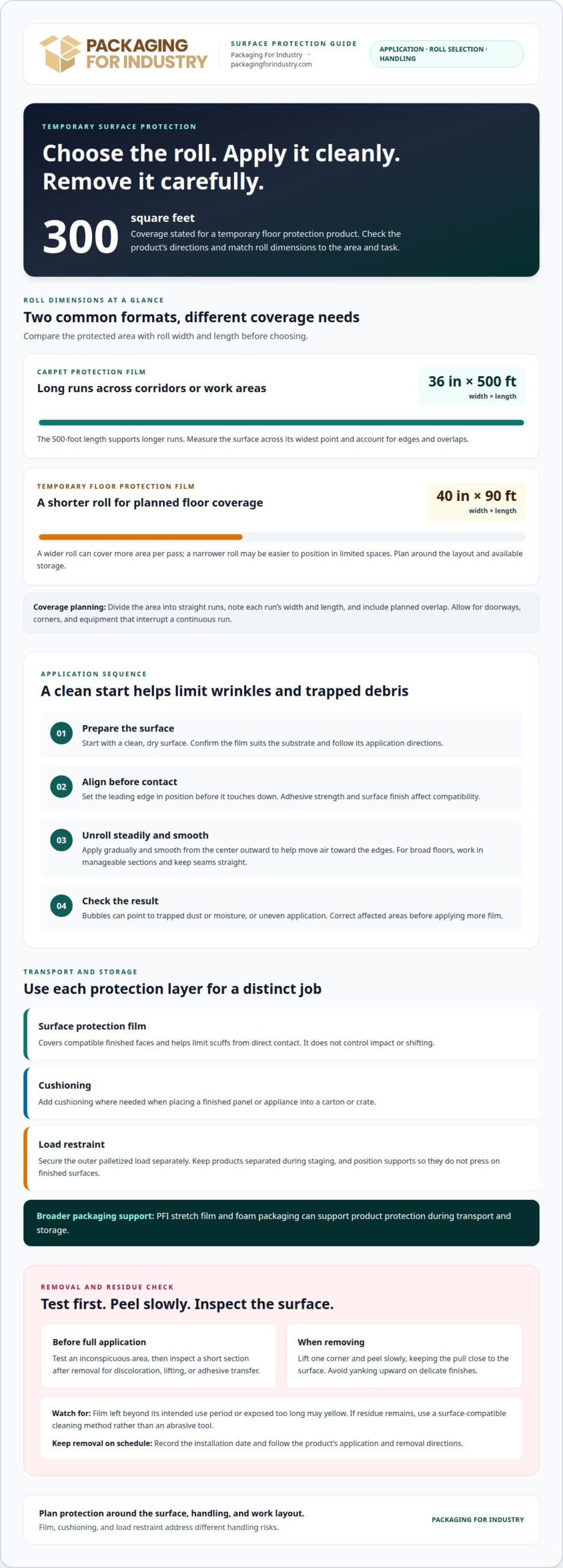
Roll dimensions also affect coverage and handling for industrial work across Orange County, Los Angeles, and San Diego. Common formats include carpet protection film measuring 36 inches by 500 feet and temporary floor protection film measuring 40 inches by 90 feet. This guide covers application, removal, roll selection, and protection planning for project and shipping needs.
Key Takeaways
- Prepare the surface before applying film, then unroll it steadily to help limit wrinkles and trapped debris.
- Match roll dimensions to the area and task: common formats include 36 inches by 500 feet for carpet protection and 40 inches by 90 feet for temporary floor protection.
- Plan surface protection around handling, storage conditions, and project work so materials stay protected through each stage.
- PFI’s stretch film and foam packaging can support broader industrial packaging needs, including protecting products during transport and storage.
- Custom packaging design, VMI, and just-in-time inventory management can help manufacturers and warehouses improve supply reliability.
Film application and residue-free removal
A temporary floor protection product covers 300 square feet. Surface protection film can help shield compatible finishes, but clean application and timely removal matter.
Applying the Film
Begin with a clean, dry surface so dust and moisture don’t interfere with contact. Confirm that the product suits the substrate and follow its application directions. Adhesive strength and surface finish affect compatibility. Align the leading edge before it touches down, then unroll the film gradually and smooth from the center outward. This helps push air toward the edges. For a broad floor, apply manageable sections and keep seams straight. Surface protection film covers exposed faces, while separate corner and edge protection can help protect vulnerable edges during handling.
Removal Risks and Residue
Test an inconspicuous area first, then inspect a short section after removal. Look for discoloration, lifting, or adhesive transfer. Bubbles can indicate trapped dust or moisture, or uneven application. Correct the affected area before applying more film. Yellowing may occur if film remains in place beyond its intended use period or is exposed for too long. To remove it, lift one corner and peel slowly, keeping the pull close to the surface. Avoid yanking upward, which can stress delicate finishes. If residue remains, use a cleaning method compatible with the surface rather than an abrasive tool. Record the installation date so staff can remove Surface protection film promptly.
Film roll widths and lengths
Roll dimensions affect coverage, handling, and the number of seams across a protected surface. Compare the area to be covered with the film’s width and length before choosing a roll.
Roll Width Options
A carpet protection film roll measures 36 inches wide by 500 feet long. Temporary floor protection film measures 40 inches wide by 90 feet long. These examples show why width should match the surface: a wider roll can cover more area per pass, while a narrower roll may be easier to position around limited spaces. Measure the surface across its widest point, then account for edges and overlaps.
Roll Length Options
Length determines how far a roll can extend before workers need another roll or a new section. The 500-foot carpet roll supports long runs across corridors or work areas, while the 90-foot floor roll may suit shorter coverage tasks. Compare roll length with the planned route and available storage space. A roll that is difficult to stage can slow application, even when its dimensions fit the coverage plan.
For a practical estimate, divide the area into straight runs and note each run’s width and length. Add planned overlap between adjacent strips, then compare the resulting coverage need with the roll dimensions. For example, a 40-inch-wide roll may require several parallel passes across a broad floor; the required number depends on the floor’s width and overlap. Also consider doorways, corners, and equipment that interrupt a continuous run. Choosing dimensions around the work layout helps crews reduce offcuts and avoid unnecessary seams. Keep roll measurements visible in purchasing records so replacement orders match the same coverage requirements.
Protecting surfaces during transportation and storage
During transit and storage, Surface protection film separates compatible finished faces from nearby materials. Pair it with cushioning and load restraint to address different handling risks.
Choose thickness, material, and finish based on the substrate, expected contact, exposure, and storage conditions. In the U.S., purchase and professional installation costs depend on the area to be protected, film choice, roll dimensions, and labor.
Protection During Transport
Before packing, apply Surface protection film to exposed faces of a finished panel or appliance. Then place the item in its carton or crate, adding cushioning where needed. The film helps limit scuffs from direct contact, but it doesn’t control impact or shifting. Keep products separated during staging, and position supports so they don’t press on finished surfaces. For palletized goods, secure the outer load separately.
Thickness, Material, and Finish
Match film thickness to expected abrasion and handling. Thicker film is not a substitute for impact protection. Select the material and finish to suit the surface texture, coating, exposure, and visibility requirements. Follow product guidance to confirm compatibility with the substrate. Surface protection film suited to a smooth metal panel may not suit a textured component or delicate coating.
Storage practices also affect results. Keep wrapped products clean and dry, and protect them from sharp edges that could puncture the film. Stack units on packaging or designated supports, not on exposed faces. Mark inventory with product identification and handling instructions so warehouse staff can move it carefully. Before dispatch, inspect corners and seams, and replace damaged coverage before loading. This layered method gives film, cushioning, and load restraint distinct roles.
Temporary protection during construction and renovation
Renovation schedules expose finished floors, counters, and glass to trades, materials, and cleanup activity. Surface protection film can cover compatible surfaces during selected project phases, but it cannot replace impact protection or safe work practices.
How long the film lasts depends on its product directions, surface compatibility, exposure, and site conditions. Warranty coverage follows the manufacturer’s written terms, including stated limits and application requirements.
Plan the protection sequence around the work. For example, cover a completed floor after dusty preparation ends and before equipment or supplies move through the space. Keep Surface protection film away from wet paint, uncured coatings, and areas where workers need reliable footing. Use rigid or cushioned protection where tools, carts, or building materials could strike the surface. Film alone is not designed to withstand those impacts.
Assign a crew member to inspect protected areas at each shift change. Look for tears, lifted edges, or moisture trapped beneath the covering. Replace damaged sections before work continues in that area. Remove Surface protection film according to its product directions and the project schedule, rather than leaving it in place after the protection phase ends. Record the installation date and covered area in the job log. That record helps the renovation lead coordinate removal with final cleaning and inspection, while avoiding accidental coverage of access points, floor drains, or equipment labels.
What types of surface protection film are available for cars, windows, floors, and countertops?
Film selection depends on the material, exposure, and protection period. A product suited to a vehicle’s painted panel may not suit glass, carpet, or a finished countertop. Match the film to the surface and the work planned around it.
For cars, distinguish temporary transport film from automotive paint protection film designed for longer-term vehicle use. Temporary film can shield exposed painted areas during handling or storage, while vehicle-specific film is selected for its intended application and finish. For windows, choose film intended for glass and renovation conditions, such as protection from dust or paint splashes. Keep window film separate from products intended for floors or vehicle paint.
Floor films vary by substrate and jobsite activity. Carpet protection film is intended for carpet, while temporary floor film may be selected for hard flooring. Check product directions for compatibility with the actual floor finish, especially on polished or recently treated surfaces. For countertops, use film compatible with the counter material, such as laminate, stone, or stainless steel. Testing an inconspicuous area can reveal adhesion or finish concerns before you cover the full surface.
Before applying any type, identify the surface, likely contaminants, and expected removal point. Construction near a glass partition may call for glass-compatible film; warehouse staging of a painted metal panel may require temporary covering plus separate cushioning. Don’t assume one film works across all four applications. Let product labeling and application guidance determine suitability, and remove the covering according to its directions once the task ends.
Products
Packaging For Industry (PFI) supports industrial protection plans with stretch film and foam packaging. These materials serve different roles in a shipment and can complement, rather than replace, film applied directly to a finished surface.
For palletized shipments, stretch film helps secure grouped packages for handling and transit. Teams can use it around the outside of a prepared load, while the item’s own surface covering guards against direct contact. Foam packaging provides cushioning or separation within a package. A shipment containing finished components, for example, may need foam to keep parts apart and film to stabilize the palletized load.
Material choice is only one part of a reliable packaging process. Vendor Managed Inventory (VMI) for Packaging can help coordinate packaging stock with operational demand. Just-In-Time (JIT) Inventory Management for Packaging supports replenishment aligned with planned usage. These programs suit businesses with recurring material needs and established packing workflows.
For manufacturers and warehouses in Orange County, Los Angeles, and San Diego, define each material’s role across packing, staging, and dispatch. Direct surface coverings protect compatible faces; foam supports cushioning and separation; stretch film secures grouped packages. This division helps teams plan packaging tasks consistently and avoid relying on one material for different protection needs. PFI’s stretch film, foam packaging, and inventory management offerings address connected industrial packaging requirements.
Industries served
Manufacturers, warehouses, distributors, and fulfillment centers manage products through different handling stages. Packaging needs depend on product sensitivity, shipment format, storage flow, and replenishment requirements.
Aerospace operations handle components that may need cushioning and controlled movement between workstations or during shipment. Aerospace packaging needs can include foam packaging for separating or cushioning parts and stretch film for securing prepared loads. Electronics manufacturers also need packaging plans that account for delicate products and repeated handling. Food and medical businesses coordinate packaging availability with production and distribution schedules, making reliable replenishment important to daily operations.
Construction suppliers ship materials through warehouses, distribution centers, and jobsites. Stretch film can secure grouped packages for handling, while foam packaging can cushion products that need separation inside a shipment. For example, a distributor moving finished components between a warehouse and a jobsite may use these materials at different packaging stages. The packaging method should reflect the product and its route, rather than treating every load alike.
For manufacturers with recurring packaging needs, Vendor Managed Inventory (VMI) for Packaging can support inventory coordination. Just-In-Time (JIT) Inventory Management for Packaging aligns replenishment with planned operational demand. These options are relevant when multiple departments rely on consistent supplies and shortages could interrupt packing or dispatch. Pairing the right inventory approach with stretch film or foam packaging helps align material availability with production, storage, and shipping needs.
Benefits of working with PFI
PFI helps businesses connect protective materials with the packaging and inventory processes around them. For a manufacturer shipping finished panels, stretch film can secure the packed load, while foam packaging can cushion products inside their packaging.
Cost control starts with matching material use to the job. A warehouse that uses stretch film to stabilize palletized shipments can review how loads are prepared, how much film each process consumes, and whether handling practices cause avoidable damage. Foam packaging can help separate products that might otherwise rub together in transit. These practical decisions can support lower packaging costs by reducing waste and damage-related rework.
Reliable supply matters just as much as the material itself. With Vendor Managed Inventory for Packaging, PFI helps coordinate packaging inventory with customer demand. Just-In-Time Inventory Management aligns replenishment with planned use. For example, a distribution operation that consumes stretch film steadily can plan replenishment around its workflow instead of reacting only after stock runs low.
Packaging requirements also change across production, storage, and dispatch. Reviewing the whole flow helps identify where foam or stretch film fits, when teams use it, and how demand shifts. That view supports more consistent purchasing decisions across locations or departments, rather than separate, last-minute orders.
For operations teams, the benefit is a clearer link between material selection, packaging use, and supply planning. Coordinated inventory practices can help reduce shortages and avoid excess stock, while suitable protective materials help limit handling damage. PFI focuses on practical packaging decisions that support efficiency and dependable supply.
Why choose PFI
Packaging For Industry (PFI) works with industrial operations that need packaging materials and supply planning aligned with day-to-day use. This helps connect purchasing decisions with production, warehouse, and shipping requirements instead of treating each order as a separate task.
For example, a manufacturer can assess whether foam packaging suits product cushioning and whether stretch film fits its load-securing process. Matching each material to its role helps teams plan its use and identify opportunities to lower packaging costs. For recurring demand, Vendor Managed Inventory (VMI) for Packaging and Just-In-Time (JIT) Inventory Management for Packaging offer ways to coordinate replenishment with operational needs.
Purchasing teams can compare packaging pricing using clear specifications, including material type, required dimensions, quantity, and expected usage. Note whether custom sizes are needed and how often supplies are used. These details help frame a relevant packaging quote and bulk packaging pricing. For operations in Orange County, Los Angeles, and San Diego, local packaging delivery can also be part of the supply discussion.
PFI is a practical fit for businesses seeking to improve supply reliability while aligning packaging choices with their workflow. The next step is to outline the materials, dimensions, quantities, and replenishment needs that matter to your operation.
Frequently Asked Questions
How do I install Multi Surface Film?
Use Multi Surface Film only on substrates named in its product directions. “Multi-surface” doesn’t mean every coating or finish is compatible. Before covering a production area, test a small, discreet section and inspect it after removal. For equipment with controls, vents, or moving parts, keep film clear of openings and operating components. On a complex shape, cut separate pieces instead of stretching one sheet across contours.
What is surface protection film and what is it used for?
Surface protection film is a temporary covering applied directly to a compatible surface to help limit contact with dust, scuffs, or light splashes. In industrial settings, it can protect finished components as they await packing, inspection, or transfer between work areas. For example, a production team may cover a painted panel during short-term staging. It doesn’t replace cushioning or packaging designed to control impact during shipment.
How is surface protection film installed, and can it be applied as a DIY project?
Yes, a small, accessible area can often be covered as a straightforward DIY task if the product instructions permit use on that surface. Work in a clear space, align the film with the edges, and avoid covering labels or access points workers need. A large vertical panel, irregular component, or active production area may require coordinated handling. In those cases, plan the work around equipment and crew movement.
How do I clean, maintain, and remove surface protection film without damaging the surface?
Clean the exposed surface with a method approved for its material before application, and avoid abrasive pads or unapproved solvents. During use, inspect film edges for dirt or lifting that could expose the finish. When removing it, peel slowly and don’t scrape beneath the film with a metal blade. If adhesive remains, use only a residue-removal method compatible with the surface coating.