
Tamper-evident water-activated tape for high-value logistics in Los Angeles bonds to the carton rather than sitting on its surface. A single strip of reinforced tape across the center seam is typically sufficient to seal a box, and attempted removal damages the tape or carton, making access more apparent. Plastic packing tape can be easier to peel away without leaving the same visible evidence.
When carton integrity matters, the seal is part of the packaging plan, not just the final packing step. The tape must suit the carton surface and packing pace, and it needs even water coverage and firm pressure to bond properly.
This article explains how water-activated tape seals corrugated cartons, what signs of tampering it can reveal, and how it compares with plastic tape. It also covers factors to consider when selecting tape and a dispenser for high-value shipments moving through Los Angeles logistics operations.
Key Takeaways
- Choose tape based on carton weight, surface, storage conditions, transit route, and packing speed.
- Water-activated tape bonds best to uncoated corrugated; coated or glossy carton surfaces can affect adhesion.
- Match the dispenser and application process to packing volume, with adequate water coverage and firm pressure.
- Pair carton sealing with suitable protective packaging to help reduce shipping damage and support reliable handling.
- PFI can help assess related needs such as custom packaging design, foam packaging, stretch film, and inventory management.
Tamper-Evident Carton Sealing
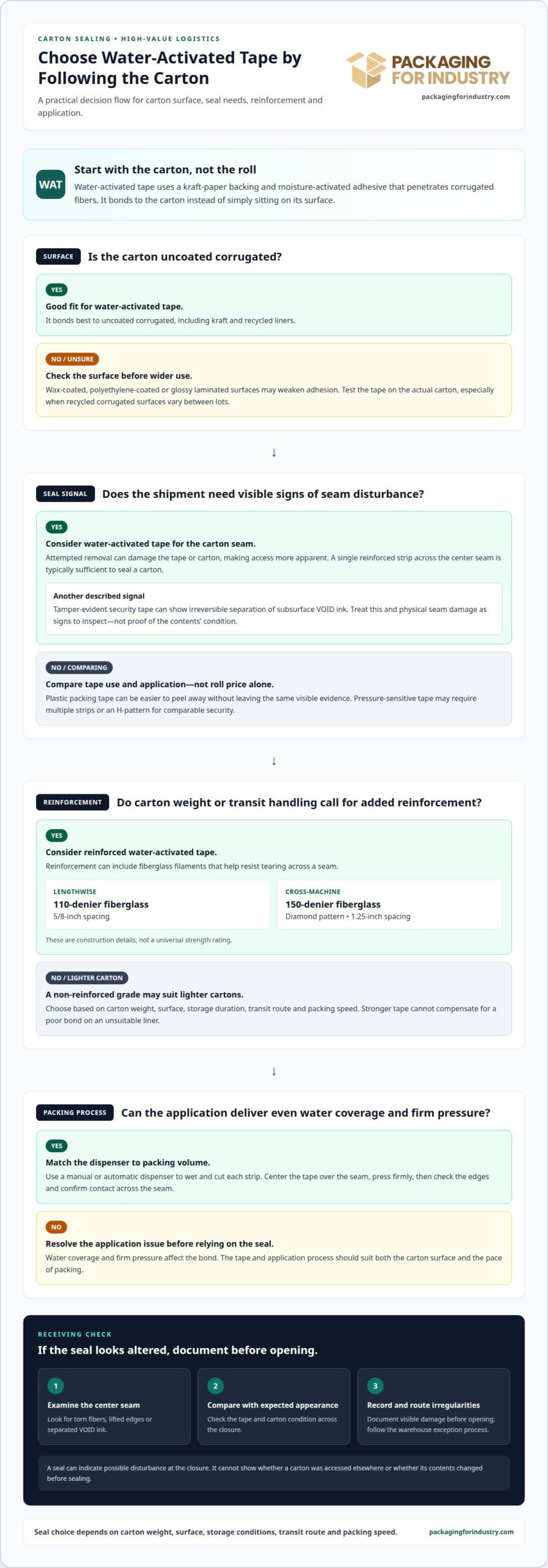
For Los Angeles operations handling high-value logistics, tamper-evident water-activated tape bonds to the carton rather than simply covering it. A single strip of reinforced tape across the center seam is typically sufficient to seal a carton securely. Removal damages the tape or carton surface, making attempted access more apparent.
High-Value Carton Sealing
For high-value shipments, tamper-evident water-activated tape can make interference visible during handling. This carton-sealing tape may tear the carton surface when someone attempts to remove it. For screened air cargo, the U.S. Government Accountability Office reports TSA officials’ view that tamper-evident or tamper-resistant seals are essential during transport from a certified screening facility to an air carrier. A seal supports inspection but does not replace shipment procedures.
Tape Costs and Sealing Efficiency
Compare tape use per carton, application time, and dispenser requirements rather than roll price alone. Pressure-sensitive tape may require multiple strips or an H-pattern to provide comparable security. A dispenser wets and cuts each water-activated strip. Even water coverage and firm pressure help create a reliable bond and keep packing steps consistent.
Packaging and carrier requirements depend on the shipment and how it is handled. For screened air cargo, the seal helps protect cargo in transit, according to the U.S. Government Accountability Office’s account of TSA officials’ position.
Some tape grades offer custom printing. Security tape may also feature sequential barcode printing or laser etching, giving Los Angeles shippers additional identification options for high-value cartons.
Apply the tape with a manual or automatic dispenser, center it over the seam, and press firmly. Check the edges and confirm the tape contacts the carton across the seam.
Same-day pickup or delivery depends on the supplier’s arrangements. Plan replenishment around the delivery schedule so a fulfillment station can maintain its sealing process.
Tamper Evidence and Seal Strength
Seal strength depends on the tape, carton surface, and application. Reinforced water-activated tape can contain fiberglass filaments that help resist tearing across a seam. One construction uses 110-denier lengthwise fiberglass with 5/8-inch spacing, plus 150-denier cross-machine fiberglass in a diamond pattern with 1.25-inch spacing. These details describe reinforcement, not a universal strength rating.
Visible damage is the key tamper signal. If someone lifts tape from the carton seam, the paper or carton surface may tear, leaving a visible change for warehouse staff. During receiving, compare the seal and carton condition with the expected appearance. Record irregularities before opening sensitive products or placing them into commerce.
Water-activated tape has limits. It bonds best to uncoated corrugated; wax-coated, polyethylene-coated, or glossy laminated surfaces may weaken adhesion. Water coverage and firm pressure also affect application. The tape can reveal disturbance at the sealed seam, but cannot show whether the carton was accessed elsewhere or its contents changed before sealing.
Use a consistent inspection sequence: examine the center seam, look for torn fibers or lifted edges, and compare the tape’s condition across the carton. Document visible damage before opening, then route affected shipments through the warehouse’s exception process. This helps operations distinguish handling damage from an intact seal without treating tape as proof of product condition.
Choose reinforcement based on carton weight, surface, route, and packing speed. Stronger tape cannot compensate for a poor bond on an unsuitable liner. Testing on the actual carton can reveal adhesion problems before wider use, especially when recycled corrugated surfaces vary between lots. This connects tape strength to the packaging system instead of relying on tape alone.
Tamper-evident security tape offers a different signal: tampering causes irreversible separation of subsurface VOID ink. Staff can consider this indication alongside torn paper, lifted edges, or other visible seam changes during receiving. The carton may show physical disturbance, while this tape’s described signal is the subsurface separation. Record visible signs and follow the exception process when a seal appears altered. Neither observation alone establishes the condition of the contents.
Keep inspection focused on the closure and its expected appearance. Note whether VOID ink separation is present, and do not assume that a carton without visible disturbance proves its contents remained unchanged. If staff see an indication of tampering, document the condition before opening, as with any irregularity. A consistent routine helps staff compare observations across shipments and distinguish a seal signal from a conclusion about product condition. It also keeps the security feature in its proper role: showing possible disturbance at the seal, while inspection and documentation guide the next handling step.
Water-Activated Tape for High-Value Shipments
Water-activated packaging tape uses a kraft-paper backing and an adhesive activated by moisture. The adhesive penetrates corrugated fibers, bonding with the carton rather than resting on its surface. For high-value shipments, choose reinforced water-activated tape when carton weight or transit handling calls for added reinforcement. Non-reinforced grades may suit lighter cartons, depending on packaging requirements.
Choose a grade based on carton weight, surface, storage duration, transit route, and packing speed. Water-activated tape is available with kraft or white paper backing, in reinforced and non-reinforced versions. It bonds best to uncoated corrugated, including kraft and recycled liners. Because recycled carton surfaces vary, test a sample carton before setting a specification for shipments.
Match the dispenser to packing volume. Manual dispensers suit lower-volume packing, while automatic dispensers suit high-volume stations handling large numbers of boxes. Both wet the adhesive side and cut tape to the selected length. Consistent water coverage and firm pressure help establish the bond, so operators should follow the same application process across shifts.
Storage and transit conditions also matter. Water-activated tape can maintain its bond in cold storage, high humidity, and dusty warehouse environments, making it practical for shipments moving through changing conditions. Its paper backing can support plastic-reduction packaging, but sustainability depends on the tape specification and recycling conditions. Choose the tape grade, corrugated carton, dispenser, and packing process together rather than treating tape as a stand-alone security measure.
Water-Activated Tape Versus Plastic Packing Tape
The main difference is how each tape meets the carton. Water-activated tape has kraft paper backing and starch-based adhesive; moisture activates the adhesive, which bonds with corrugated fibers. Standard packing tape uses 1.5 mil BOPP plastic film with hot-melt rubber adhesive. It sits on the carton surface, so the seal’s performance depends on the tape and its application.
For shipments requiring visible tamper evidence, paper tape provides an observable signal if removal damages the tape or carton. Plastic tape may peel away cleanly under applied heat, making removal less apparent. That distinction matters for electronics and other sensitive goods, but neither tape proves the contents remained untouched before sealing. Receiving inspection should include both the carton and its closure.
Consider the packing workflow alongside material cost. Plastic tape works with a conventional tape dispenser, while water-activated tape requires moisture activation and a compatible dispenser. Compare the full sealing process, including tape used per carton, operator handling, and equipment at the packing station. Water-activated tape typically adds only a few grams to carton tare weight.
End-of-life handling differs, too. Kraft paper water-activated tape with starch adhesive is compatible with the corrugated recycling stream and does not need to be removed before the carton enters the baler. Plastic tape adds plastic to the carton’s disposal stream. Paper tape can support plastic-reduction packaging, but sustainability depends on product specifications and recycling conditions.
Choose based on shipment priorities: visible tamper evidence, packing-line setup, carton surface, and disposal process. For example, a facility shipping high-value goods in uncoated corrugated may favor paper tape’s bonded seal. A team with existing plastic-tape equipment can weigh workflow changes against the security benefit before changing its carton-sealing standard.
Water-activated paper tape bonds to the carton, while plastic tape generally sits on its surface and may provide less visible evidence of removal. Standard packing tape typically uses hot-melt rubber adhesive and has a blank, transparent or brown surface.
Industries Served
High-value shipments pass through different handling environments, so the carton seal should suit the product and workflow. Aerospace suppliers may ship precision components between facilities, while electronics distributors handle devices that need secure cartons and suitable cushioning. Water-activated tape can make interference at a carton seam more visible, but the packaging system must also protect contents from movement and impact.
Medical and pharmaceutical operations often need dependable packing processes for sensitive products. A tamper-evident seal can support visual inspection during handoffs, but it does not replace required product packaging or handling procedures. Food manufacturers also benefit from consistent carton closure for packaged goods moving between production, warehouse, and distribution points.
Manufacturers and fulfillment centers face another operational pressure: repeatable sealing across different carton sizes and shipping volumes. A defined tape grade and application process can help standardize packing stations. For a heavy component, teams may need reinforced tape alongside a carton and internal protection selected for the shipment’s weight and route.
Construction suppliers and industrial distributors may ship tools, replacement parts, or equipment to job sites and customers. These shipments can pass through several warehouse and carrier handoffs, making visible carton disturbance useful during receiving. Where the product needs added cushioning, protective foam packaging can help limit movement inside the carton while the tape secures its closure.
Across Los Angeles logistics operations, the practical choice depends on product sensitivity, carton surface, shipment route, and packing volume. An electronics fulfillment line may prioritize consistent application, while an aerospace shipment may need a broader protective packaging plan. In each case, match the seal to the carton and pair it with suitable product protection, rather than relying on tape to prevent every type of shipping damage.
Benefits of the Right Packaging
A packaging system works best when each component addresses a specific shipping risk. For a high-value shipment, the carton protects against handling, internal cushioning limits product movement, and the closure helps reveal disturbance. Reviewing these elements together can identify excess material as well as weak points that contribute to rework, claims, or damaged goods.
To control packaging costs, assess material use per packed unit alongside labor and damage-related rework. For example, a team can compare carton sizes, cushioning, and sealing steps across a product family. Removing unnecessary layers or standardizing suitable materials can simplify packing. Cost control should preserve the protection each shipment needs, not cut material without considering the product and route.
Damage prevention starts with matching interior protection to the item. A component that shifts inside its carton may need a fitted cushion or more stable positioning, while a fragile assembly may require protective separation between parts. Packaging design can address these risks as a system. Packaging cost planning can also help purchasing and operations evaluate material choices against handling needs.
Supply reliability improves when the right materials are available at the packing station. A warehouse using different cartons and protective materials for distinct product groups can plan replenishment by packaging type and usage pattern. This makes shortages easier to spot before they interrupt fulfillment. Review the process from carton selection through final closure, then align material specifications and inventory planning with actual shipment requirements.
Which Suppliers Sell Tamper-Evident Water-Activated Tape in Los Angeles?
Los Angeles buyers can look to industrial packaging distributors and packaging-tape suppliers for water-activated grades. For high-value shipments moving through Los Angeles, specify the carton type, reinforcement needs, dispenser setup, and expected volume. This gives suppliers a practical basis for identifying suitable options and helps purchasing compare packaging pricing for equivalent products instead of relying on broad catalog descriptions.
Available choices may include reinforced or non-reinforced tape, kraft or white paper backing, and custom printing on selected grades. Some security tape options feature sequential barcode printing or laser etching. Buyers evaluating tamper-evident tape for Los Angeles logistics should distinguish identification features from the seal’s bonding and tamper-evidence characteristics.
Build a sourcing specification around the operation. Include carton weight, liner surface, storage conditions, transit route, and packing speed. For example, a facility shipping heavier cartons can specify reinforcement, while a lower-volume packing station may need a manual dispenser. High-volume stations may require automatic dispensing equipment.
Assess how a product fits the current workflow. A water-activated dispenser wets the adhesive and cuts tape to length, so operator training and consistent application matter. A sample run on the actual carton can help assess fit before adoption, particularly when the operation uses recycled liners with varying surfaces.
For Los Angeles warehouses and fulfillment teams, compare tape grades, printing features, dispenser compatibility, and bulk packaging pricing. A clear specification lets procurement compare like-for-like options, while operations can assess the equipment and handling changes each requires. This keeps sourcing tied to shipment needs, packing workflow, and dependable replenishment.
Packaging For Industry (PFI)
Packaging For Industry (PFI) helps businesses in Los Angeles, Orange County, and San Diego assess packaging needs for high-value shipments, product protection, and supply continuity. A security seal is one part of a shipping system. Carton selection, cushioning, pallet preparation, and material availability also affect how goods move from the packing station to their destination.
For fragile or sensitive products, foam packaging can help limit movement inside the package. Stretch film supports palletized loads, while Vendor Managed Inventory (VMI) and Just-In-Time (JIT) inventory management help organize packaging supply around operational needs. These offerings address related protection and replenishment requirements without treating tape as the only control.
Turn to PFI when damage patterns point to inadequate cushioning, packaging materials are difficult to keep on hand, or packing teams need a more consistent supply process. Useful planning details include product type, shipment profile, packaging usage, and current inventory challenges. These details help connect packaging choices to warehouse routines and purchasing priorities.
For manufacturers, distributors, and fulfillment operations in Los Angeles, Orange County, and San Diego, coordinating protective materials with inventory planning can help prevent avoidable process disruption. PFI can help assess where foam, stretch film, VMI, or JIT inventory management fits the broader packaging workflow. The right combination depends on the product’s protection needs and how materials are consumed across operations.
Request a packaging quote from Packaging For Industry (PFI) for your requirements.
Frequently Asked Questions
What Is Water-Activated Tape?
Water-activated tape is a paper-backed carton-closing material used with a dispenser that activates its adhesive during packing. Assess the tape and station setup together. Consider dispenser placement, operator access, and the carton range moving through the line. This practical review helps ensure the packaging material fits the fulfillment workflow, rather than treating tape selection as a stand-alone purchasing decision.
What is tamper-evident water-activated tape and how does it work?
Water-activated tape can make possible interference easier to assess during shipment handoffs. At dispatch, record the sealed carton’s appearance and shipment identifier. At receipt, compare the seal with that record before opening. This consistent process gives warehouse staff a reference point and supports exception reporting. Treat an unusual seal as a reason to inspect and document the carton, not as proof that its contents changed.
Which water-activated tape types and reinforcements are best for high-value shipments?
Available options include kraft or white paper backing, with reinforced and non-reinforced construction. A practical selection method is to test representative cartons at the actual packing station. Record whether operators apply the tape consistently and whether the carton suits the selected grade. Include the range of carton surfaces and shipment weights in the assessment. This gives purchasing a documented basis for choosing a specification rather than relying on product description alone.
How does water-activated tape compare with pressure-sensitive security tape for tamper evidence?
The evidence each tape presents differs, so compare the inspection cue and packing workflow. Pressure-sensitive security tape may use a printed or subsurface visual signal. Receiving staff should know what an intact seal looks like and how to report an exception. Before standardizing either option, assess dispenser requirements, operator training, and fit with existing carton procedures. A written inspection standard helps teams interpret seal condition consistently.
How can businesses document chain of custody and detect carton tampering in transit?
Use a shipment record that connects dispatch, handoff, and receipt. Capture the carton identifier, seal condition, and visible damage at each transfer. At receiving, photograph irregularities before opening and note who handled the exception. For example, a warehouse can attach dispatch and receipt images to the same shipment record. This creates a traceable comparison and helps operations investigate when the carton’s condition changed.