
When shipments take too long to open or products are difficult to remove, packaging can slow receiving and create extra work at customer sites. PFI helps manufacturers and distributors find custom packaging solutions that balance product protection with easier unpacking. Request a packaging quote to discuss your product, order volume, and packaging needs.
Protection still matters, but so do clear opening points, manageable components, and inserts that hold products securely without making them difficult to remove. A package that requires extra handling or makes parts hard to identify can slow receiving and frustrate the people who need to use the shipment.
This guide explains how to choose packaging structures, inserts, materials, and containers around the customer’s unpacking process. It also covers how product size, weight, handling needs, and shipping conditions shape the design, and why a complete packaging sample helps assess both protection and ease of opening before rollout. The result is a practical starting point for packaging decisions that support reliable delivery and smoother work at the customer’s site.
Key Takeaways
- Choose opening structures that give customers a clear way to access the product while keeping it protected in transit.
- Match inserts, materials, and containers to the product, shipping conditions, and unpacking environment.
- Packaging for manufacturing, distribution, and other industrial settings can be designed around how teams receive and handle shipments.
- Thoughtful packaging can make unpacking more efficient and support safer handling by reducing unnecessary effort and awkward product removal.
- PFI’s custom packaging design services, foam packaging, stretch film, and VMI for packaging can support a more coordinated packaging approach.
Packaging Products for Easier Unpacking
Easy-to-open packaging balances product protection with clear access at the receiving site. Packaging design for warehouse and manufacturing operations starts with the recipient’s workflow, then matches the structure, materials, and closure to that use.
Unpacking Time and Labor
Packaging that opens directly and presents products in sequence can reduce unnecessary unpacking work. For a box of components, a clear opening point and an organized insert help receiving staff locate each item without removing layers at random. The result is less handling and a smoother receiving process.
Packaging design for easier unpacking at a receiving site can use tear strips, accessible tabs, or closures that release without cutting near the contents. The right choice depends on protection needs. Reusable containers may suit repeated shipments, recyclable corrugated packaging may fit one-way deliveries, and disposable packaging may suit other shipping requirements.
A packaging professional weighs product size, weight, shipping conditions, and the recipient’s unpacking process. Protective foam can hold a component in place, while a shaped insert can provide a visible grip point. Foam packaging can support the product without forcing staff to pull on delicate surfaces. The design should make the next action obvious. Contact PFI to request a packaging quote for custom packaging solutions that support product protection and efficient handling.
Safe Handling and Ergonomic Unpacking
Ergonomic unpacking means opening, lifting, and removing contents with controlled movements and accessible handholds. A well-positioned opening can reduce awkward reaches into a deep container. Separating heavier items from smaller components helps teams handle each part deliberately instead of shifting the packed load all at once.
U.S. packaging requirements depend on the product category and its use, so a design review should account for applicable requirements and accessibility needs. A packaging professional can consider the intended user, handling steps, and closure design. An easy-open feature must still protect the contents during shipment.
Common risks include accidental opening in transit, tampering, and product damage from cutting too close. A tear strip should guide opening away from vulnerable surfaces, while the outer closure holds during normal handling. Testing the opening sequence with the actual product can reveal whether a quick-access feature compromises protection.
Labels and Instructions for Unpacking
Labels and instructions make the opening sequence easier to understand, especially when a shipment contains several parts. A prominent “open here” message can direct staff to a tear strip instead of a knife. An arrow can show the correct orientation, while a contents list helps receiving teams identify items before removing them.
Place instructions beside the related action. For example, position a lift instruction near a handhold or identify the first removable layer on the outer package. Clear wording and consistent symbols reduce guesswork across shifts. Keep labels visible after delivery without covering the opening feature or handling information.
Packaging also communicates a message before the product is removed. A clean, functional layout can create a positive first impression, while a confusing arrangement can slow warehouse or production teams. For industrial packaging buyers, practical access comes first. Marketing elements should support unpacking, not obscure it.
How Packaging Professionals Test Unpacking Performance
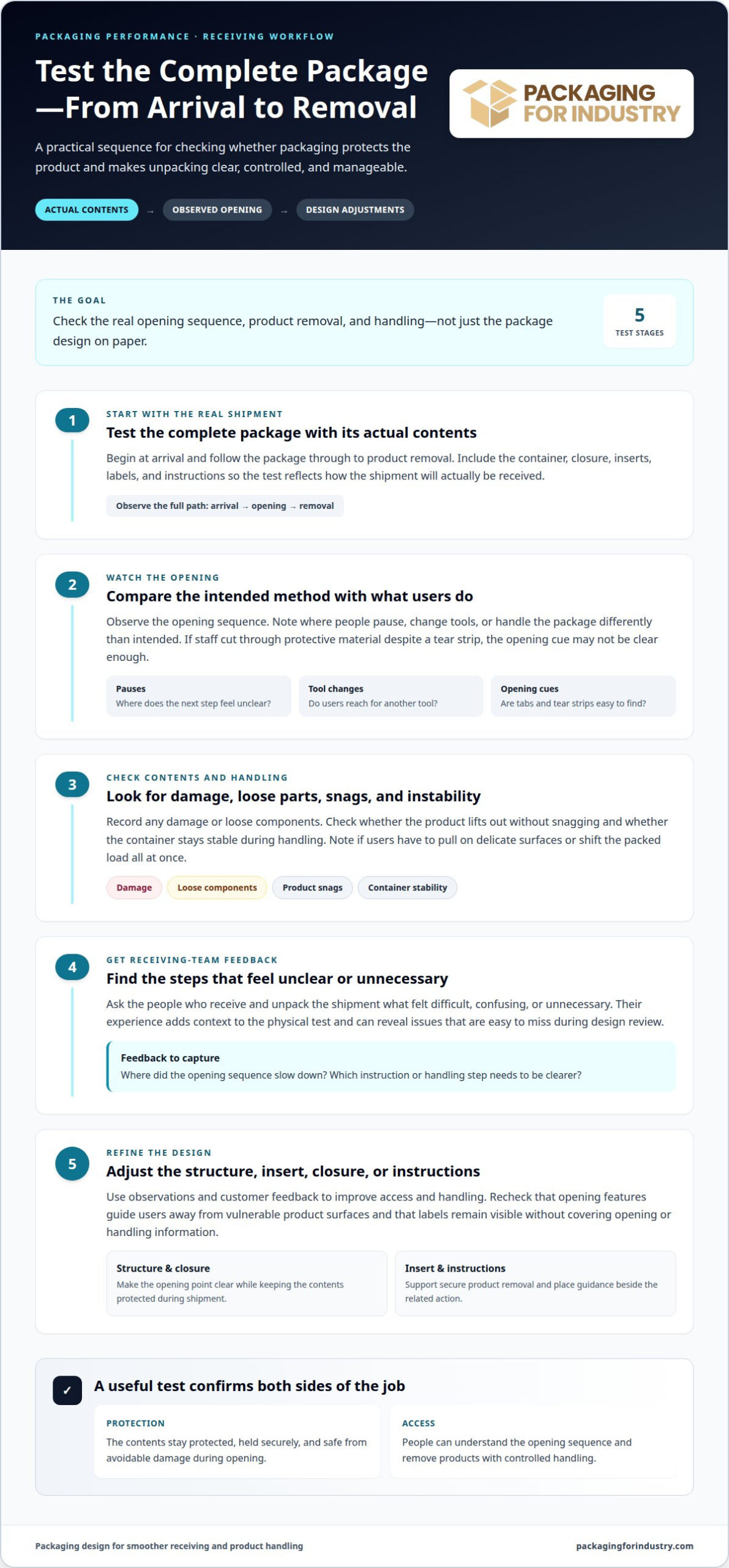
Packaging professionals test the complete package with its actual contents, from arrival through removal. They observe the opening sequence, note where users pause or change tools, and record damage or loose components. This shows whether a closure, insert, or instruction creates unnecessary work.
Teams can compare the intended opening method with the recipient’s actual actions. If staff cut through protective material despite a tear strip, for example, the opening cue may be unclear. Testing should assess whether a product lifts out without snagging and whether the container remains stable during handling.
Customer feedback adds context to the physical test. Receiving teams can identify steps that felt unclear, difficult, or unnecessary, guiding adjustments to the structure or labels. Reviewing the complete order helps ensure each element serves a functional purpose and supports both product protection and easier unpacking. Contact PFI to discuss packaging supplies for your operation and request a quote.
Industries Served
Packaging for easier unpacking serves businesses where someone must receive, identify, and use products after delivery. The right design depends on the product, shipping route, receiving environment, and work that follows opening.
Manufacturing, Warehousing, and Distribution
Manufacturers need packaging that works at both ends of the shipment: it must protect parts during transport and let production staff access them efficiently. For example, an insert that groups components by assembly stage can help receiving teams move items from the container to a work area in sequence. The package should suit the product and the manufacturer’s handling process.
Warehouses and distribution centers often receive varied shipments and transfer products between storage, picking, and outbound orders. A clearly marked outer container and orderly interior help staff identify contents without unpacking everything. Packaging should also fit how teams stage and move inventory, and account for repeated handling between receiving and fulfillment.
For companies managing recurring packaging needs, manufacturing packaging requirements can be considered alongside the receiving workflow. A packaging design that suits the product but slows line-side access may create extra work after delivery. The goal is to align protection and access with the way each operation actually uses its shipments.
Aerospace and Electronics
Aerospace shipments can include components with specific shapes, surfaces, or handling needs. A fitted cavity can keep a part in position, while a planned removal path gives the recipient a clear way to lift it out. The opening sequence should provide access without requiring the recipient to pull on sensitive areas or disturb other contents.
Electronics operations may receive equipment, assemblies, or parts that need organized placement and careful handling. An insert can separate pieces, keep accessories together, and make contents easier to identify at receiving. Design decisions should reflect the actual product and delivery process, rather than assuming every electronic item needs the same container or opening method.
Food, Medical, and Construction Supply
Food businesses receive ingredients, equipment, and production supplies in settings where teams need to identify shipments and move them to the next stage of work. A package arranged for clear access can help staff remove the intended contents without shifting unrelated items. Container choice and interior layout should reflect the shipment’s purpose, route, and handling needs.
Medical companies may receive devices, components, or supplies for operational use. Clear identification and an intuitive opening sequence help receiving staff distinguish the contents and locate the intended item. The packaging design must suit the specific product and its handling context; one structure does not fit every medical shipment.
Construction suppliers deliver materials and equipment to warehouses, distribution points, or active work sites. Packaging that supports controlled access helps crews locate a needed component without emptying the entire container. The design should account for the item’s size, weight, and destination, as well as the space available for opening and staging.
Fulfillment and Direct Shipments
Fulfillment operations handle orders moving from storage to outbound delivery, so packaging must support accurate picking and a useful receiving experience. An interior layout that keeps multiple items organized makes the shipment easier to check and unpack at its destination. For an order with several components, defined placement reduces confusion about what belongs together.
Across these settings, a packaging professional considers who receives the shipment and what happens after the outer container opens. A production operator, warehouse associate, aerospace technician, and construction crew may need different access and handling arrangements. Matching the package to its end use helps businesses protect products and make unpacking at the customer’s site more practical. PFI can help source custom packaging solutions for these needs; request a packaging quote to discuss product fit and bulk packaging pricing.
Benefits of Packaging Designed for Easier Unpacking
A well-planned unpacking experience can help customers move from delivery to inspection, inventory, or production with fewer interruptions. Packaging design for ease of unpacking at a customer site considers those downstream tasks, not only the moment the package arrives.
A More Useful Unboxing Experience
For business customers, a positive unboxing experience often means knowing what arrived and what should happen next. A shipment containing a replacement machine part, for example, can include a packing list that matches the part’s identifier. This link between package contents and receiving records helps staff reconcile the order without treating presentation as decoration.
Clear identification also supports teams receiving repeat orders. When the same item arrives regularly, consistent labeling and packaging layout help staff recognize it and follow established procedures. A considered presentation can make the supplier seem organized and reliable, while reducing uncertainty when shipment contents are difficult to identify.
Reducing Unpacking Time and Labor
Unpacking efficiency affects more than the person opening a shipment. Delays can hold up inspection, inventory entry, or the next operation. Consider a maintenance team waiting for a replacement component: packaging that makes the correct item easy to match against the purchase order helps the team move promptly to its receiving checks.
Packaging design for ease of unpacking at a customer site can also support order accuracy when shipments include several related items. A contents layout that corresponds with the packing list gives receiving staff a straightforward way to reconcile what arrived. Fewer identification questions can reduce avoidable handoffs between receiving, purchasing, and the department that requested the shipment.
Supporting Safe, Ergonomic Handling
Easy-to-manage packaging can help a business keep its receiving area orderly. For example, separating packaging waste from reusable components gives staff a clearer area for inspection and staging. That organization matters when a delivery arrives alongside other work, since loose packaging materials can obstruct the space needed to review or transfer products.
Unpacking design can also support consistent handling across shifts. A predictably arranged package is easier for different team members to process using the same receiving routine. This is useful when a shipment moves from the receiving dock to inspection or inventory, where separating the product, documentation, and discarded materials supports an orderly handoff.
Budget-Friendly Improvements and Sustainability
Cost-conscious improvements begin by examining which packaging elements support protection, identification, or reuse. Removing a component that serves no practical purpose can reduce material handling and simplify disposal. Right-sizing the package can also limit excess material while keeping the shipment suited to its contents and route.
Reuse and recycling depend on the shipment’s purpose and the recipient’s process. A returnable container may make sense when packaging travels repeatedly between business locations. For a one-way shipment, recyclable materials and fewer separate components can make disposal more straightforward. The right choice balances the material’s role in transit with what happens after delivery.
Receiving Documentation and Internal Communication
Receiving teams can use clear packaging layouts and documentation to record equipment condition, verify order contents, and share relevant details with colleagues. For example, organized contents and easy-to-identify packing lists help staff document a delivery and communicate any discrepancies internally. The same clarity supports inspection and inventory workflows, whether or not the shipment is discussed outside the business.
Reliable receiving matters more than presentation. Industrial customers need accurate orders, straightforward inspection, and dependable packaging supply. PFI offers custom and stock packaging, including corrugated boxes and protective foam, to support shipping and receiving needs. To compare packaging pricing or discuss custom sizes, request a packaging quote from PFI.
Why Choose PFI for Custom Packaging Design Services
Packaging For Industry (PFI) helps businesses align packaging design with product protection, shipment requirements, and the work customers perform after delivery. Its Custom Packaging Design Services are a practical next step when current packaging creates unnecessary handling, complicates receiving, or does not suit a product’s shipping conditions. The design process focuses on a solution that fits the operation, rather than adding features without a clear purpose.
Design Around the Product and Its Destination
A packaging project starts with the details that shape performance: product dimensions, weight, vulnerable areas, shipping method, and receiving location. A part delivered to a production line may need a different arrangement from equipment going to a warehouse. The design also considers how recipients will identify, handle, and store the product once it arrives.
PFI’s Custom Packaging Design Services address those connected requirements. PFI can consider product fit, protection, and access together, then tailor the design to the shipment and customer’s workflow. This approach is useful when standard packaging does not fit the item or when recurring shipments need a consistent design. The aim is a functional package that supports the product and the work that follows delivery.
Coordinate Protective Materials
Foam packaging can be part of a design when a product needs cushioning or a defined position inside its package. The material and arrangement should match the product’s shape and handling needs. For example, a component with a vulnerable surface may need support that keeps pressure away from that area. PFI can address this requirement as part of the broader design, rather than treating cushioning as a separate decision.
Stretch film can help hold a shipment together during handling. Its use should fit the overall packaging plan, including how recipients will access the load at its destination. Considering stretch film alongside the package structure can balance shipment stability with practical removal. This coordination is relevant for businesses reviewing packaging that includes both individual products and unitized shipments.
Support Consistent Packaging Supply
When packaging is used repeatedly, maintaining a dependable supply is part of putting a design into practice. Packaging For Industry’s Vendor Managed Inventory (VMI) program supports businesses with recurring packaging needs by managing inventory around usage. This can align the materials needed for a packaging program with the operation’s ongoing requirements.
Consistent materials can support repeatable packing practices. If a business changes its packaging design without planning for the materials it requires, day-to-day packing may become inconsistent. VMI connects recurring supply needs with the packaging plan, helping purchasing and operations teams manage availability and avoid last-minute substitutions.
When to Involve PFI
Request a packaging quote from PFI when packaging repeatedly causes access problems, creates extra handling, or does not fit the product or shipping process. Share details about the product, its route, the recipient’s setting, and the specific difficulty with the current package. For example, details about recurring receiving delays can help focus the design on a practical operational issue.
Cost decisions also depend on design requirements, material choices, and order quantities. A tailored design helps businesses compare packaging costs consistently and identify ways to lower them without losing sight of protection. For Southern California operations, local delivery can also be part of supply planning. Contact PFI to discuss your design and supply requirements and request a packaging quote.
Request a packaging quote from Packaging For Industry (PFI) to discuss your custom design requirements.
Frequently Asked Questions
How Can I Get a Custom Packaging Quote for Easier Unpacking?
Share your product, shipment, and unpacking requirements with a packaging supplier. A packaging professional considers where shipments arrive, who opens them, and what happens to the contents next. For a manufacturer in Orange County, Los Angeles, or San Diego, unpacking needs may differ between a production floor and a warehouse receiving area. Mapping those steps helps shape a design around real handling conditions. Contact Packaging For Industry (PFI) to request a custom packaging quote based on your design and production requirements.
What Packaging Design Features Make Products Easier to Unpack at a Customer Site?
Features that clarify the opening sequence and make contents easy to access can simplify unpacking. Tear strips, accessible tabs, clear orientation cues, and inserts with defined product positions are useful examples. For a shipment containing several related parts, labeled compartments help the recipient locate the right item without rearranging the entire package. The design still needs to suit the product’s protection needs and delivery conditions.
What Are Best Practices for Tool-Free Packaging Opening and Removal?
Use closures that release by hand and give recipients a clear starting point, such as a pull tab or tear strip. Arrange contents so they can be lifted without reaching beneath heavy items or pulling on sensitive surfaces. For example, a removable insert with a grip area can make a part easier to handle. The closure and opening method should remain secure during shipment and protect the product from damage.
How Much Does Easy-Open Packaging Cost?
There isn’t one typical cost; the price depends on the project and is provided after a quote request. Relevant factors include the design changes, material selection, prototype requirements, and production volume. A minor adjustment to an existing structure differs from a new design with custom foam or multiple components. Request a packaging quote from Packaging For Industry (PFI) to review your project’s specific design and production requirements.