
Comparing packaging suppliers for fragile industrial shipments? The right paper cushioning can protect delicate components, high-value goods, and surface-sensitive parts while supporting your packing workflow. Request a packaging quote to compare custom paper cushioning options and pricing with other protective packaging supplies.
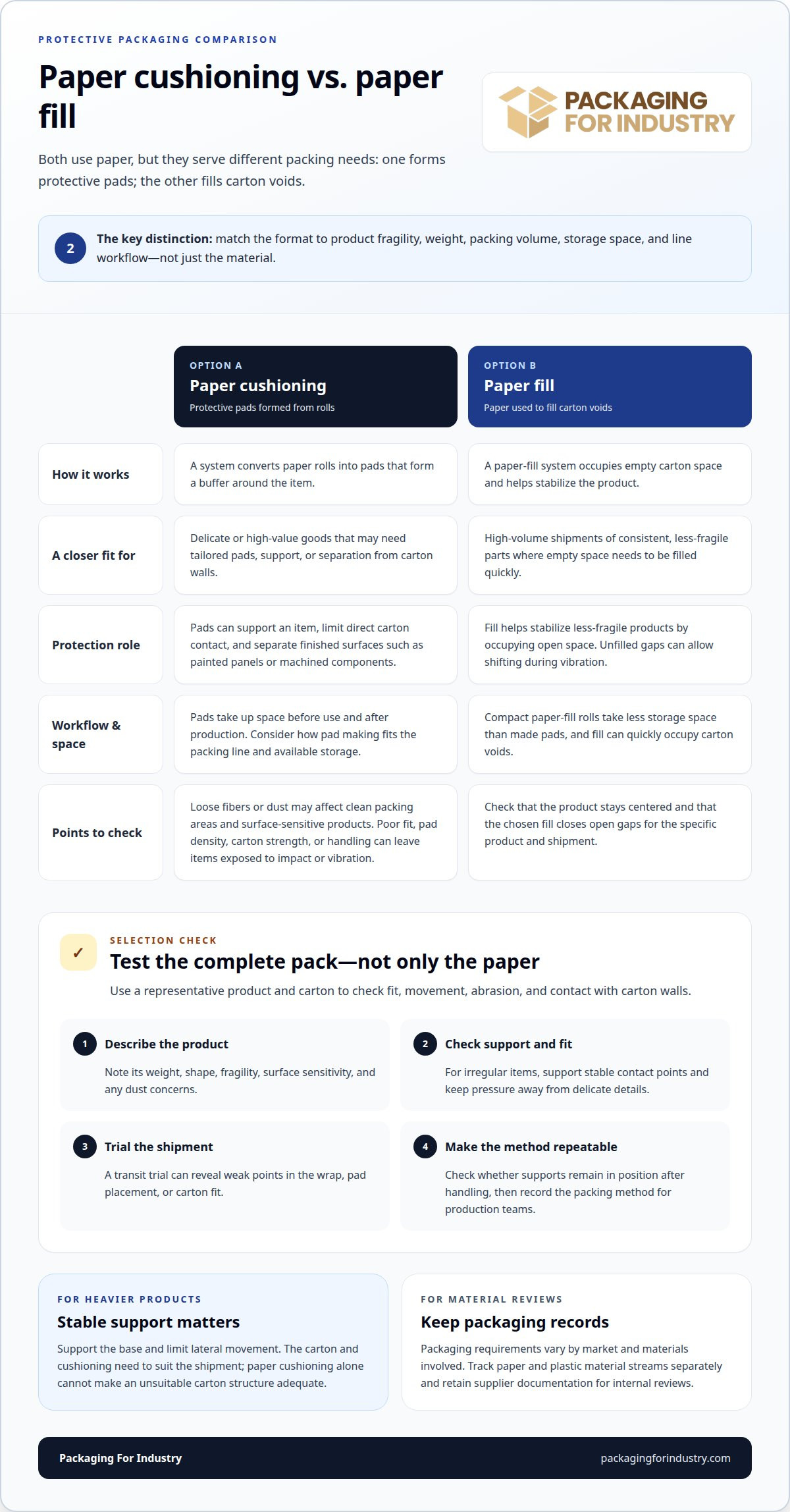
Paper cushioning forms protective pads around items, while paper fill occupies empty space and stabilizes less-fragile products. Compare paper cushioning with foam and bubble wrap based on product protection needs and packing processes. Paper cushioning can provide tailored protection and reduce reliance on bubble wrap, but making and storing pads may take more space than using a compact paper-fill system.
For packaging operations in Orange County, Los Angeles, and San Diego, consider product variety, protection requirements, and packing-line workflow when comparing paper cushioning suppliers. These factors help determine whether custom cushioning or a simpler void-fill approach is the better fit.
Key Takeaways
- When comparing packaging suppliers, match cushioning to product fragility, weight, packing volume, and line workflow, not material alone.
- Ask suppliers how wrapping and surface protection can protect delicate finishes, and whether performance testing can show if the pack design handles shipping stresses.
- For a packaging quote, specify the support needs of fragile, heavy, and irregular industrial items to plan cushioning and shipment stability.
- Compare pricing and supply options for paper, plastic, and other void-fill materials used to fill empty space, block, brace, and protect sensitive products.
- For related packaging needs, request a quote from PFI for foam packaging, stretch film, VMI, and JIT packaging inventory management.
Paper Cushioning Products and Applications
Paper cushioning systems convert rolls into protective pads, while paper-fill systems fill carton voids and stabilize less-fragile goods. When requesting a packaging quote, share details about dust concerns, storage space, product weight, and shipping conditions so a supplier can assess whether the pad design fits your needs.
Evaluate Paper Cushioning for Your Products
Evaluate the complete package when comparing paper cushioning options, not just the paper pad. Pack a representative item, such as a finished metal component, and check for movement, abrasion, or contact with carton walls. A transit trial can help identify weak points in the wrap, pad placement, or carton fit before you select a system. Record the packing method so production teams can repeat it consistently.
Match Cushioning to Shipping Requirements
Paper pads form a buffer between the product and its outer carton. For a fragile glass assembly, pads can support the item and limit direct contact during transit. Vibration can cause shifting if the package has open gaps, so check that the product stays centered and the pads remain in position after handling when evaluating a proposed pack.
Choose a system based on packing volume and product weight. For high-volume shipments of consistent, less-fragile parts, paper fill can quickly occupy empty space. Delicate or high-value items may need tailored pads, while heavier products need stable support that won’t compress or shift under load. If your product line varies, ask suppliers whether adjustable pad production can meet your requirements instead of one fixed packing pattern.
Wrapping can add another layer of protection. Paper sheets or formed pads can separate finished surfaces, such as painted panels or machined components, from neighboring parts. Wrap corners and edges before placing an item in a carton, then cushion exposed surfaces. When comparing packaging options, consider whether this sequence can help prevent scuffs when several components share a box.
For irregular shapes, assess support at contact points. A curved casting, protruding fitting, or unusual instrument may rock inside a standard carton unless the pack supports its base and limits movement. Paper pads can be shaped around contours, but tight folds or uneven pressure may mark sensitive finishes. Share product details with your packaging supplier to help position supports where the product can bear pressure, away from delicate details.
Paper cushioning has practical drawbacks to consider when evaluating a quote. Loose fibers or dust can affect clean packing areas and surface-sensitive products, so inspect the work zone and finished item. Pads take up space before use and after production, unlike compact paper-fill rolls. Shipping performance depends on fit, pad density, carton strength, and handling. A poorly matched pack may leave products vulnerable to impact or vibration damage.
Extended producer responsibility (EPR) and packaging compliance can also affect material selection. Requirements depend on the markets where goods are sold and the packaging involved. Ask suppliers for documentation and keep records of material types and packaging components for internal reviews. For example, a manufacturer shipping products in paper and plastic packaging can track each material stream separately and review applicable obligations for each destination.
Industries Served
Manufacturers buying packaging need supplies matched to product fragility, weight, shape, and shipping route. A control board needs different protection from a dense machine part, even if both ship from the same facility. Buyers can compare cushioning materials, custom foam inserts, and corrugated box options to find a fit for each product family and shipment. These requirements help identify where cushioning, separation, or restraint matters most and support a useful packaging quote.
Electronics manufacturers shipping control boards, sensors, and finished devices can use protective foam packaging or paper cushioning to reduce impact and contact between parts. Packaging should avoid pressure on connectors, screens, or projecting controls. For mixed electronics orders, group items by shape and sensitivity, then select a consistent layout and packaging materials for each group. This helps buyers standardize packaging supplies and compare pricing across recurring orders.
Glassware and ceramics need support around breakable surfaces. A glass vessel, ceramic insulator, or laboratory container can break if it shifts against a carton wall or another item. Buyers can specify custom corrugated boxes, pads, or other cushioning materials to separate pieces, support bases, and protect vulnerable edges. Product shape and shipment configuration help determine which packaging solution fits the job.
Aerospace suppliers shipping precision components with machined surfaces, flanges, and protruding fittings can source custom foam inserts and corrugated boxes sized for their parts. A bracket with an exposed edge needs separation from other parts and protection from carton contact. Supports should sit against stable sections while keeping delicate faces clear. These requirements make fit and handling central to aerospace packaging requirements, particularly for mixed shipments containing components with different shapes.
Heavy industrial products need stable support beneath load-bearing areas. A metal valve, pump housing, or dense replacement part may compress poorly placed cushioning during handling. Buyers should match the carton and cushioning to the shipment, supporting the base and limiting lateral movement. Paper cushioning alone cannot compensate for an unsuitable carton structure. Industrial suppliers shipping replacement parts to customers or distribution centers can request a corrugated box quote for packaging that fits their products and handling needs.
Irregular products create specific sourcing needs. A curved pipe fitting can roll, while a gear assembly may have exposed teeth, shafts, or corners. Buyers can specify custom foam inserts or other supports that sit against stable surfaces and away from features that could snag or bend. For a long component, supports at separated points can reduce rocking. A repeatable packing pattern helps warehouse teams handle recurring orders consistently and plan bulk packaging supplies.
Medical equipment, optical instruments, and industrial controls may combine delicate finishes with sensitive protrusions. An optical unit, for example, needs support around its body without pressure on lenses or adjustment knobs. Packaging should separate accessories to prevent rubbing against the main product in transit. Warehouses handling different product lines can use clear packing instructions to help staff select the right materials and keep purchasing requirements consistent.
For operations in Orange County, Los Angeles, and San Diego, product mix and shipment frequency can shape purchasing needs. A warehouse shipping ceramic components may need a different packing pattern from one shipping heavy fittings. Group items by fragility, weight, and shape to help buyers compare cushioning materials and request a packaging quote for a tailored solution. PFI can supply packaging for manufacturers and warehouses, with local packaging delivery across Southern California.
Benefits of Paper Cushioning
Paper cushioning and paper fill address different shipping needs, from protecting delicate products to stabilizing cartons. When comparing packaging suppliers and pricing, consider product protection, material use, storage needs, and the cost of damage.
Paper cushioning systems turn paper rolls into formed pads for protecting products inside shipping cartons. Paper fill is a separate option for filling carton voids and limiting product movement. When requesting a packaging quote, share your carton sizes, products, and shipping volume so suppliers can recommend suitable paper cushioning or fill and provide pricing.
Filling Voids and Stabilizing Shipments
Paper fill can suit shipments that need stabilization rather than close-fitting pads. Compare paper-fill options based on the product and carton, and check whether items may shift during handling. For recurring shipments of similarly sized goods, ask suppliers about bulk paper pricing. Fragile or heavy products may need additional support, which can affect material requirements and cost.
Void filling, blocking, bracing, and cushioning address different shipping risks. Void fill occupies open space; blocking limits movement in a direction; bracing supports an item against shifting; cushioning absorbs impact around the product. Describe these needs when requesting pricing: a ceramic part may need a cushioned base and side supports, while a box of stable components may need only paper fill around its contents.
Blocking, Bracing, and Cushioning
Folded or formed paper pads can create contact points that hold a shipment in position. Blocking can prevent a boxed assembly from sliding toward one wall, while bracing supports it from opposing sides. Cushioning adds a buffer around vulnerable areas. When comparing suppliers, specify product requirements; for electronics, keep pads clear of connectors, and for glassware, protect edges and separate pieces.
Paper Cushioning Compared with Paper Void Fill
Paper cushioning creates shaped pads for product protection. Paper void fill occupies empty space and may suit less-fragile shipments. Compare costs based on product weight, fragility, and packing pattern. A high-value instrument may need pads, while a durable part may need only fill.
Paper can reduce reliance on plastic cushioning and support packaging plans centered on recyclable materials. Paper cushioning and paper fill use recyclable paper, although accepted disposal methods vary by local program. Foam also cushions products, but performs differently and may suit items that need closer-fitting support. Ask a packaging supplier to quote options that fit your protection needs.
Electronics, glassware, and ceramics need protection tailored to vulnerable areas. Separate glass items to prevent rubbing. For an electronic device, keep cushioning from pressing on screens or ports. For ceramics, support the base and protect projecting handles. Include these requirements when requesting a quote for paper pads or fill; generic fill may leave more room for movement.
Packing speed and material costs depend on the packing pattern, product variety, and workflow. Paper-fill systems are compact; pad-making equipment needs room for production and pad storage. When comparing pricing, consider equipment needs and how material use may vary by carton and shipment.
Machine and paper costs depend on equipment configuration, throughput, paper type, and purchasing terms; suppliers provide pricing through a quote. Operating expenses and paper use also vary with carton dimensions, protection needs, and material per pack. Share representative order details with suppliers to support a useful quote and compare expected material demand.
When sourcing, ask packaging-equipment suppliers about equipment options and packaging-material distributors about paper pricing. Whether purchasing or renting equipment suits an operation depends on expected use and operating needs.
Why Choose Packaging For Industry (PFI)
Packaging For Industry (PFI) helps manufacturers match packaging choices to the materials and inventory processes used in daily operations. If you’re evaluating paper cushioning, define what the product needs during shipping and how packing fits your workflow. PFI offers custom and stock packaging, along with related packaging supplies, to help businesses plan around their shipment requirements.
For shipments that need a different cushioning approach, PFI offers protective foam packaging, including custom foam inserts and end caps. These options can suit products that need support around specific contact areas or components. A part with a finished surface, for example, may need separation from nearby items. Choose materials based on the product and packing requirements.
PFI also offers stretch film for businesses securing packaged goods on pallets. Film helps hold a palletized load together during warehouse movement, while cushioning inside cartons serves a separate purpose. Distinguishing these functions helps teams plan each packing step and choose materials based on how shipments move through their operation.
Inventory management can be part of the packaging decision, especially for businesses with recurring supply needs. Through Vendor Managed Inventory (VMI) for Packaging, PFI supports packaging inventory management. This can help operations where replenishment and stock oversight take time away from purchasing or warehouse work. The program connects packaging supply planning with actual business usage.
Just-In-Time (JIT) Inventory Management for Packaging can help companies coordinate supplies with production and fulfillment schedules. It can suit operations where storage capacity, purchasing routines, or changing order demand affect how materials are managed. Reviewing packaging use alongside replenishment needs helps teams plan a workable supply process.
For manufacturers in Orange County, Los Angeles, and San Diego, packaging decisions often involve both product protection and reliable access to supplies. PFI offers local packaging delivery across Southern California, as well as broader supply options. Start by identifying the products shipped, the materials currently used, and where packing or replenishment creates difficulty. These details help define a practical next step without assuming every shipment needs the same material.
PFI’s protective foam packaging and stretch film address different packaging needs, while VMI and JIT support inventory management. Businesses can consider these options when evaluating related protection or supply challenges alongside paper cushioning. A clear view of product needs, packing routines, and recurring material use provides a practical starting point.
To discuss packaging requirements and request a packaging quote, contact Packaging For Industry (PFI).
Frequently Asked Questions
How do paper cushioning systems compare with plastic air pillows, foam, and other packaging materials?
Paper cushioning systems, air pillows, and foam differ in how they fit packing operations and waste-handling routines. Compare materials against the shipping environment, product contact surfaces, and the way your facility stores and disposes of used packaging. For example, a site already sorting paper packaging may find paper easier to handle within its existing workflow than a mix of materials.
What paper cushioning system is best for fragile items, shipping boxes, or e-commerce packaging?
The right option fits your product range and packing process. An e-commerce operation shipping one standard item can use a consistent method, while orders with varied SKUs may require packers to adjust materials and placement. Review common order combinations and carton choices, then document a repeatable method for each product group. Clear instructions help maintain consistency across shifts.
How to choose the right paper cushioning system for package volume and product size?
Use order history and carton mix to decide where a system belongs in the operation. Repeated, predictable shipments may justify a dedicated packing station; variable or occasional orders may need a flexible setup shared across products. Include machine footprint, paper replenishment, and pad staging in the decision. This helps show whether the arrangement fits the available workspace and shipping demand.
Are paper cushioning materials recyclable, compostable, or compliant with U.S. packaging regulations?
Recyclability, compostability, and regulatory compliance are separate considerations. Paper-based material isn’t automatically compostable, and environmental claims should reflect the actual material, including any coatings or adhesives. Requirements depend on the packaging and the markets where products are sold. Keep product documentation and material descriptions with purchasing records so compliance reviews can assess the packaging used for each shipment.