
What if the holes in your stretch film were actually the secret to a more secure pallet and a longer shelf life? For many operations in Los Angeles and Orange County, the instinct is to wrap loads as tightly as possible with standard film to prevent shifting. But if you’re shipping fresh produce, dairy, or hot-filled containers, that airtight seal often leads to trapped heat and moisture. This creates a breeding ground for spoilage and weakens corrugated boxes from the inside out.
We understand that you can’t sacrifice stability for ventilation. This article explains how an engineered breathable load containment wrap provides the necessary airflow to eliminate condensation while maintaining the structural tension required for long-distance transport. You’ll discover how to select the right perforation style for your specific application and how switching from oversized catalog suppliers to a specialized partner can reduce your total cost of ownership. We’ll break down the mechanics of vented film, its critical role in cold chain logistics, and why precision engineering is the only way to ensure your sensitive cargo arrives in peak condition.
Key Takeaways
- Learn how a breathable load containment wrap balances high-tension pallet stabilization with constant airflow to eliminate condensation and product spoilage.
- Understand the engineering behind reinforced netting and film memory that prevents load shifting while maintaining maximum ventilation for sensitive cargo.
- Identify critical industrial applications where vented wrap is essential, from managing agricultural respiration to preventing moisture buildup on hot-fill food products.
- Discover how to calculate the true ROI of your film by accounting for reduced product damage and lower energy costs in climate-controlled shipping environments.
- Explore how PFI’s custom-engineered perforation patterns and local next-day delivery in Southern California improve your supply chain reliability and lower total packaging costs.
What is Breathable Load Containment Wrap and Why is it Essential?
A breathable load containment wrap is a high-performance polyethylene film engineered with specific perforation patterns to facilitate continuous airflow. While standard stretch wrap or stretch film is designed to create a total seal around a pallet, breathable versions prioritize ventilation without compromising the structural integrity of the load. Its primary function is to balance the high tension required for load stabilization with the air exchange necessary to prevent moisture buildup. For logistics managers in Los Angeles and Orange County, this material is a critical component in reducing product loss during transit.
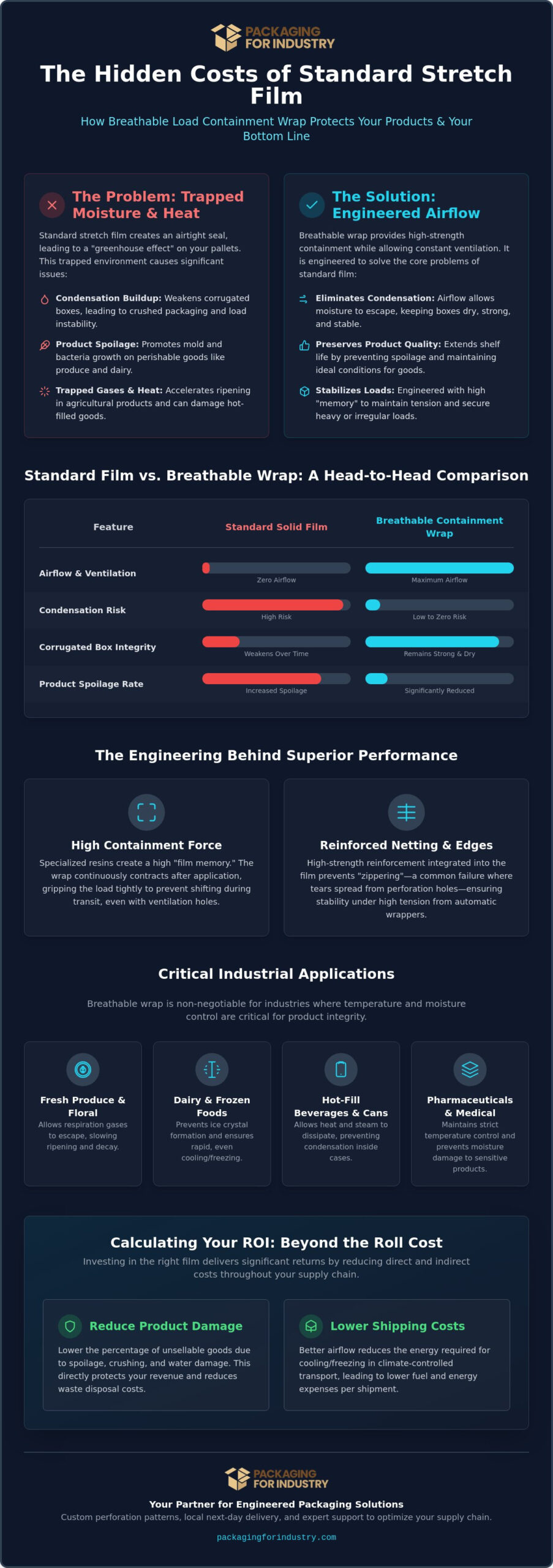
Standard stretch film often fails when applied to “living” loads, such as fresh produce, or industrial “hot-fill” products like canned beverages and chemicals. When these items are wrapped in solid film, they create a greenhouse effect. Heat and gases become trapped, leading to condensation that weakens corrugated boxes and promotes mold growth. Transitioning to a breathable load containment wrap is a strategic move. It shifts your packaging process from simple covering to a sophisticated containment strategy that manages the internal environment of every pallet you ship.
The Difference Between Standard and Breathable Films
Standard solid films act as a total barrier. While this protects against dust and rain, it’s disastrous for products that respire. Breathable wrap allows ethylene gas to escape, which is vital for preventing premature ripening in agricultural shipments. It also allows moisture to evaporate rather than pooling on the product surface. From an engineering perspective, these specialized films are designed to maintain high elastic recovery. This means they don’t just hang on the pallet; they actively pull back to secure the load, much like a solid stretch film, but with the added benefit of ventilation.
Key Terminology: Vented, Perforated, and Macro-perforated
Understanding the specific terminology helps you select the right material for your application. Vented or perforated films typically feature small, consistent holes that allow for moderate airflow. Macro-perforated films utilize larger die-cut openings, which are necessary for products that require rapid cooling or freezing, such as dairy or frozen foods. High-quality breathable wraps often feature reinforced edges. These reinforcements are essential because they allow the film to be applied under high tension. Without them, the perforations would likely “zipper” or tear during the wrapping process. Whether you use manual rolls or machine-grade specifications, choosing the correct hole pattern ensures your specific cargo stays cool, dry, and stable.
The Engineering Behind Ventilated Film: Airflow vs. Containment Force
Achieving proper load stability requires more than just wrapping a pallet tightly. When using a breathable load containment wrap, the engineering must account for the loss of surface area caused by ventilation holes. High-quality films utilize specialized resins that maintain “memory,” ensuring the film continues to contract after application. This elastic recovery is what provides the necessary containment force to keep heavy or irregular loads from shifting during transit. Without this memory, a vented wrap would simply sag, leading to pallet failure and potential shipping damage.
To calculate containment force, we measure the pounds of pressure applied to the load at various points, with a specific focus on the corners. The challenge with standard perforated films is that the holes can become weak points. This is where reinforced netting or filament technology becomes essential. By integrating high-strength reinforcement into the film structure, we prevent “zippering.” This is a common failure where a small tear at a perforation site runs across the entire web of the film, causing the wrap to snap. The rise of breathable packaging for food and beverages has pushed manufacturers to develop films that handle high-speed automatic wrappers. These machines often operate at high tension settings that would snap generic vented wraps.
Reinforcement Technology in Breathable Wrap
Many suppliers offer simple die-cut films where holes are punched out of a standard sheet. This method creates inherent weak spots. PFI’s engineered wraps use a reinforcing method where the film is structured to support the vents. This design ensures that the reinforced edges carry the load’s weight, allowing the wrap to perform under the same tension as a solid 80-gauge film. Because these films are engineered for durability, they outperform generic alternatives in high-vibration shipping environments. If you are unsure which strength is right for your equipment, you can request a packaging quote to get a technical assessment of your current load requirements.
Optimizing Machine Settings for Vented Film
Machine settings are critical for performance. If your pre-stretch ratio is set too high, you risk distorting the ventilation holes into narrow slits. This significantly reduces airflow and defeats the purpose of the wrap. Conversely, too little tension results in poor containment. Follow these guidelines for optimization:
- Maintain pre-stretch ratios between 150% and 250% depending on the specific film grade.
- Monitor wrap patterns to ensure overlap doesn’t block more than 20% of the total vent area.
- Check for “snap-backs” at the corners. These usually indicate the tension is exceeding the film’s reinforced limit.
Properly calibrated equipment ensures that the breathable load containment wrap provides maximum security without sacrificing the ventilation your product needs to stay fresh.
Critical Industrial Applications: Where Breathable Wrap is Non-Negotiable
Certain industries cannot use standard film without risking total product loss. Vented stretch film is the industry standard for products that “breathe” or are highly sensitive to humidity. In agriculture, produce continues to respire long after harvest. Without a breathable load containment wrap, ethylene gas builds up within the pallet, which accelerates decay and causes premature ripening. This isn’t just a matter of freshness; it’s about protecting your bottom line from avoidable spoilage and keeping your supply chain moving efficiently.
The medical and pharmaceutical sectors also rely on this specialized technology. Temperature-sensitive vaccines or sterilized medical devices often require specific airflow to maintain efficacy and prevent contamination from moisture trapped within the pallet. Similarly, the aerospace and electronics industries use these wraps to prevent moisture-induced corrosion on high-value components. Trapped humidity is a primary enemy of sensitive circuitry and precision-machined alloys, making ventilation a functional requirement for long-term storage and transit.
The Cold Chain and Condensation Prevention
Southern California warehouses in cities like Anaheim or Ontario experience significant temperature fluctuations throughout the day. When a pallet moves from a refrigerated truck to a humid loading dock, it creates “pallet sweat.” This condensation is a leading cause of mold growth and label peeling. Using a breathable load containment wrap ensures that moisture evaporates immediately, maintaining cold chain integrity from local distribution centers to nationwide destinations. This prevents the costly rework associated with damaged corrugated boxes and illegible shipping labels that can lead to rejected shipments at the receiver’s dock.
Hot-Fill and Outgassing Challenges
In manufacturing, many products are palletized while they are still warm from the production line. Canned beverages, plastic components, and even certain construction materials need to “outgas” or dissipate heat before they are fully sealed for shipping. Standard film acts as an insulator, keeping the heat in and significantly extending cooling times. Some industry professionals report that switching to ventilated film can reduce cooling times by as much as 40% in high-volume production lines. This allows for faster throughput and prevents the internal “sweating” that occurs when warm products meet cooler ambient air during the warehouse storage phase.
Calculating ROI: Beyond the Per-Roll Cost of Breathable Wrap
Procurement teams often evaluate packaging materials based on the unit price per roll. However, this narrow focus ignores the total cost of ownership. While a breathable load containment wrap may carry a higher initial price point than standard film, its ability to mitigate risk provides a much higher return on investment. Standard films lead to hidden expenses like product spoilage, rework labor, and the replacement of moisture-damaged corrugated boxes. When you factor in these operational failures, the “cheaper” film often becomes the most expensive line item in your shipping budget.
Material efficiency also plays a major role in ROI. High-performance vented films are engineered with advanced resins that provide superior strength at thinner gauges. This means your warehouse team can secure a pallet using fewer revolutions, reducing the total amount of plastic used per load. By optimizing your wrap pattern, you lower your material consumption and disposal fees. In some cases, the ventilation provided by these wraps even allows for shipping in standard trailers rather than expensive climate-controlled reefers, directly slashing your freight costs.
Reducing Product Damage and Returns
Moisture damage is a silent profit killer. In a typical stacked pallet, condensation often migrates toward the bottom, where it saturates the base layers of your packaging. This leads to box fatigue and eventual pallet collapse during transit. A collapsed pallet is frequently a “rejected load” at major distribution centers, forcing you to pay for return freight and labor-intensive restacking. Using a breathable load containment wrap ensures that internal moisture evaporates, maintaining the structural integrity of your boxes. Consider these three financial impacts of improper containment:
- Freight Liability: Costs associated with damaged goods and insurance deductibles.
- Labor Rework: The hourly cost of warehouse staff manually restacking collapsed pallets.
- Brand Reputation: The long-term cost of delivering damaged or moldy products to your customers.
Procurement Efficiency with Vendor Managed Inventory (VMI)
Specialty films require careful inventory management to avoid stockouts during peak agricultural or manufacturing seasons. Integrating your film supply into a VMI program ensures you always have the right material on hand without tying up capital in excess stock. For businesses in high-rent areas like Los Angeles or Orange County, local stocking through PFI allows you to reclaim valuable warehouse space. We manage the lead times and replenishment, so your operations never slow down due to a missing roll of specialty wrap. To see how much you can save through better material management, request a packaging quote today.
Optimizing Your Supply Chain with PFI’s Breathable Wrap Solutions
PFI serves as a specialized partner for businesses across Southern California that require high-performance materials. Choosing a local stretch film supplier provides advantages that national catalog companies cannot match. We focus on the intersection of engineering and logistics; we ensure your breathable load containment wrap is optimized for your specific machinery and pallet profiles. Our team understands that a one-size-fits-all approach leads to wasted material and compromised loads. We provide custom-engineered solutions that prioritize stability while maintaining the ventilation necessary for your products.
Reliability is the cornerstone of our operations. We provide local next-day delivery for businesses in Anaheim, Orange County, and San Diego. This proximity allows our clients to maintain leaner inventories and reduce their warehouse footprint. Unlike oversized catalog suppliers that treat packaging as a commodity, we treat it as a critical component of your profit margin. We offer industrial-grade reliability and technical support without the excessive markups found in general industrial catalogs. Our goal is to stabilize your supply chain while lowering your total cost of ownership through better material management.
Custom Design and Prototyping
Every pallet configuration has unique requirements for tension and airflow. We don’t just sell you a roll of film; we test the load containment for your specific application. Our engineers offer free prototyping to verify film performance before you commit to a bulk rollout. This consultative approach helps solve operational headaches, such as avoiding carrier surcharges through better pallet sizing and weight distribution. We ensure your breathable load containment wrap provides the maximum containment force without crushing the corners of your boxes, ensuring your cargo arrives in peak condition every time.
Next Steps: Request a Custom Packaging Quote
If you’re ready to lower your shipping costs and eliminate condensation damage, our Southern California team is available for a site review. We can perform a comprehensive packaging cost savings analysis to identify inefficiencies in your current wrapping process. This evaluation looks at material usage, damage rates, and logistics flow to find tangible ways to improve your bottom line. We move with the purposeful speed of a well-oiled supply chain to get you the answers you need.
Don’t settle for generic film that puts your sensitive cargo at risk. Contact us today to discuss your specific ventilation needs and receive a competitive proposal for your operations. Request a Quote now to secure bulk breathable wrap pricing and experience the PFI difference in service and reliability.
Secure Your Sensitive Loads with Precision Engineering
Choosing the right breathable load containment wrap is a strategic decision that impacts your entire logistical operation. By balancing the technical requirements of airflow with the physical necessity of load stability, you protect your inventory from moisture damage while ensuring safe transit. This transition from standard film to a ventilated solution directly reduces total shipping costs by eliminating product spoilage and rejected loads at distribution centers.
PFI provides the expertise required to optimize this process. We offer specialized solutions for aerospace and medical logistics, ensuring that even the most sensitive components remain free from corrosion or contamination. With local next-day delivery in Los Angeles, Orange County, and San Diego, we provide the supply reliability your facility needs to avoid stockouts. Our expert VMI management further streamlines your procurement, allowing your team to focus on core operations while we handle the inventory flow.
Take the first step toward a more efficient and damage-free supply chain. Request a Custom Quote for Breathable Wrap today to see how our engineering-minded approach can improve your bottom line. We look forward to helping you stabilize your loads and protect your profits.
Frequently Asked Questions
Is breathable load containment wrap as strong as standard stretch film?
Yes, high-quality breathable load containment wrap is engineered to match the containment force of standard film. These specialized wraps utilize reinforced netting and advanced resins to maintain high elastic recovery. This ensures your pallet stays stable during long-distance transit. While standard film relies on a solid sheet, vented versions use structural reinforcements to prevent the perforations from tearing or snapping under high machine tension.
Which products benefit most from ventilated pallet wrap?
Perishable goods like fresh produce, dairy, and frozen foods benefit most from this material. It’s also essential for “hot-fill” industrial products, such as canned beverages or chemicals palletized while warm. By allowing heat and gases to escape, the film prevents the condensation that often leads to mold growth or weakened corrugated boxes. It is a critical tool for any operation shipping items sensitive to temperature and humidity.
Can I use breathable wrap with my existing automatic pallet wrapper?
You can typically use vented film with your existing automatic pallet wrappers. However, we recommend adjusting your machine’s pre-stretch and tension settings. If the tension is too high, the ventilation holes can distort into narrow slits, which reduces airflow. Our team often assists clients with these calibrations to ensure the film performs as intended without snapping or losing its structural integrity during the wrapping cycle.
How does breathable wrap help prevent condensation in cold storage?
Breathable wrap prevents condensation by facilitating constant air exchange between the palletized product and the ambient environment. When pallets move from a cold storage unit to a warmer loading dock, standard film traps humid air, creating “pallet sweat.” This moisture saturates boxes and causes label peeling. A vented wrap allows this moisture to evaporate immediately, maintaining the structural integrity of your packaging and protecting the contents from mold.
Is there a hand-grade version of breathable stretch film for smaller operations?
Yes, hand-grade versions of vented film are available for smaller operations or manual wrapping stations. These rolls are lightweight and designed for easy application by warehouse personnel. While machine rolls are optimized for high-volume throughput, hand rolls provide the same ventilation benefits for lower-volume shipments. This allows smaller distributors to protect their sensitive loads without investing in expensive automatic wrapping equipment.
How do I calculate the cost savings of switching to vented film?
To calculate your ROI, you must look beyond the per-roll price. Compare the cost of the film against your current rates of product spoilage, damaged corrugated boxes, and labor spent restacking collapsed pallets. Many businesses find that reducing rejected loads at distribution centers quickly offsets the cost of specialty film. We provide a detailed cost savings analysis to help you identify these hidden expenses in your current supply chain.
Does PFI offer local delivery for stretch film in Southern California?
PFI provides local next-day delivery for stretch film throughout Southern California. Our fleet covers Los Angeles, Orange County, San Diego, and the Inland Empire. This proximity allows us to support your operation with just-in-time inventory and Vendor Managed Inventory (VMI) programs. By stocking your specialty wraps locally, we help you reduce warehouse space requirements and prevent stockouts during peak production seasons or agricultural harvest windows.
What is the difference between vented film and pallet netting?
Vented film is a solid polyethylene sheet with engineered perforations, while pallet netting is a woven mesh. Vented film generally provides better protection against dust and debris than netting. Additionally, high-quality vented films often feature reinforced edges that allow for higher tension levels. Netting is often used for products that require maximum possible airflow, but vented film is the preferred choice for balancing ventilation with superior load containment.