
Will anti sweat stretch film address a condensation problem, or could it affect the load stability your operation needs? The label alone won’t answer that. Buyers use “anti-sweat” to describe films intended to manage moisture, but the right choice depends on the product, shipping conditions, and wrapping process. Confirm what the specific film is designed to do before comparing it with other options.
Moisture during storage or transit can affect products and corrugated packaging. It’s also reasonable to ask whether a film marketed for moisture management will contain a load as effectively as standard stretch film, and whether the packaging change is justified. Assess those questions against your actual application, not a broad product claim.
This guide explains what to verify when evaluating anti-sweat stretch film, how it compares with standard and other load-wrapping options, and what to confirm before specifying a film. You’ll learn how to weigh moisture concerns against load stability, wrapping equipment, and recurring supply needs. PFI supplies several industrial stretch film types, including vented film, and can discuss options for your operation. If you need a specific anti-sweat specification, confirm its availability and suitability before planning a bulk order.
Key Takeaways
- Don’t rely on the “anti-sweat” label alone. Confirm the film’s construction, intended use, and supporting product information.
- Assess whether anti sweat stretch film fits your product, pallet configuration, storage environment, transit conditions, and load-containment needs.
- Compare standard, vented, and specifically marketed anti-sweat film against your wrapping equipment and the documentation available from the supplier.
- Use a controlled trial with comparable loads. Record wrapping and storage conditions so you can review performance consistently.
- PFI supplies several stretch film types, including vented film. Confirm anti-sweat-specific availability and specifications when requesting a quote or planning a recurring order.
Anti-Sweat Stretch Film: Definition and Moisture Control
Concise definition: Anti-sweat stretch film is a supplier term for stretch film presented as helping manage moisture around wrapped loads. The name alone doesn’t confirm the film’s construction, intended use, or performance. Ask the supplier to explain the specific product and provide manufacturer documentation before adding it to your packaging specification.
Stretch wrap is generally used to secure pallet loads. Its load-containment role is separate from any moisture-management claim. For background on stretch wrap’s common functions, see Stretch wrap. Don’t assume that a film addressing one packaging need will automatically address the other. Pallet stability still depends on choosing and applying film suited to the load and wrapping process.
How Can Condensation Affect Wrapped Industrial Loads?
Temperature changes and storage conditions may contribute to condensation on or around a load, but moisture can have other causes. A wet surface or damaged carton signals a problem, but it doesn’t establish the source. Before changing film, document what you observe and review the wider packaging and storage process.
Record where moisture appears, when it’s first noticed, and which products or loads are affected. Note relevant storage and transit conditions, as well as the condition of cartons and other packaging. This gives your team and supplier a clearer basis for investigating the issue rather than relying on a product label to diagnose it.
What Does the Term Anti-Sweat Stretch Film Mean?
The term doesn’t identify a film structure or a defined performance level. Suppliers may use related descriptions, but anti-fog, breathable, perforated, and vented shouldn’t be treated as interchangeable without confirmation. Ask the manufacturer what the specific film is designed to do, how it’s constructed, and what limitations apply to your intended use.
Request documentation for the exact film being quoted. Confirm the moisture-related claim, the intended application, and whether the film is suitable for your load and wrapping setup. If a supplier can’t clarify these points, treat the claim as unverified rather than building it into purchasing assumptions.
PFI supplies several industrial stretch film categories, including vented film, but availability of film specifically marketed as anti-sweat or anti-condensation must be confirmed. Review PFI’s stretch film options and discuss your application before specifying a product. Keep moisture management and load containment as separate requirements in that conversation.
How Anti-Sweat Stretch Film Claims and Film Types Differ
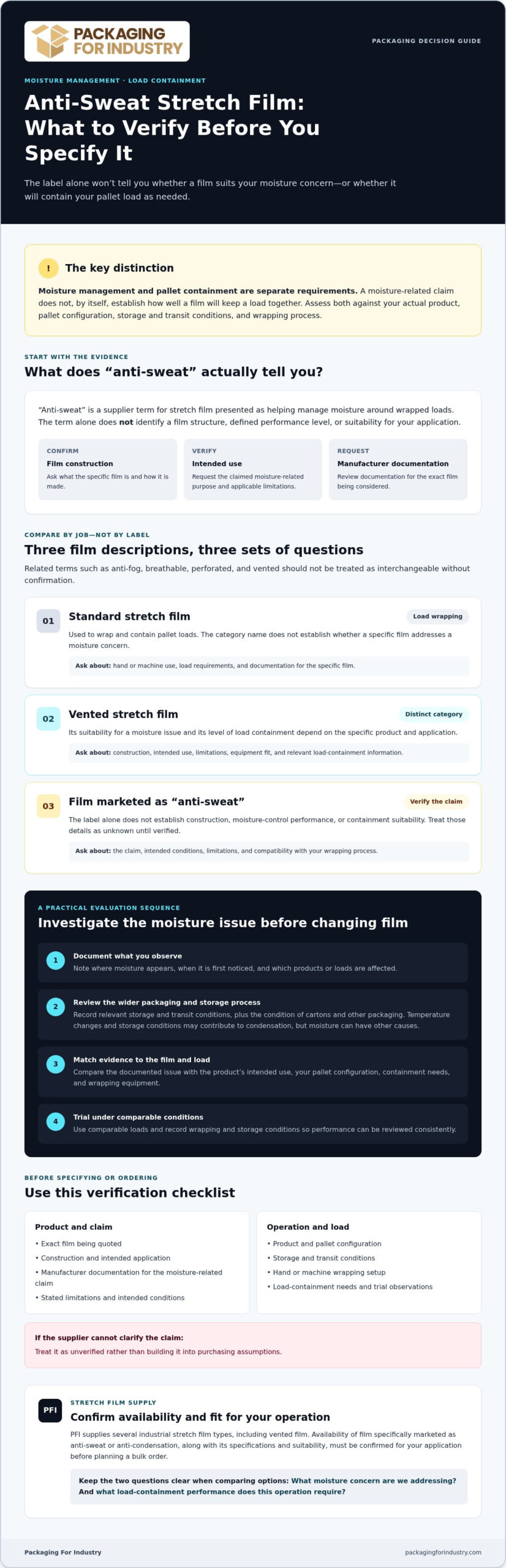
Compare products by the job they need to perform, not by similar-sounding labels. Moisture management and pallet containment are separate requirements. A claim about moisture doesn’t, by itself, establish how well a wrapped load will stay together.
| Film description | Intended application and containment | Equipment and evidence to request |
|---|---|---|
| Standard stretch film | Used to wrap and contain pallet loads. The general category name does not establish whether a particular film addresses a specific moisture concern. | Confirm hand or machine use, load requirements, and manufacturer documentation for the specific film. |
| Vented stretch film | A distinct film category. Its suitability for a moisture issue and its level of load containment depend on the specific product and application. | Ask the supplier to document its construction, intended use, limitations, equipment fit, and relevant load-containment information. |
| Film marketed as “anti-sweat” | The label alone doesn’t establish construction, moisture-control performance, or containment suitability. Treat these details as unknown until verified. | Request manufacturer documentation defining the claim, intended conditions, limitations, and compatibility with your wrapping process. |
Anti-Sweat Film Versus Vented Stretch Film
Don’t assume “anti-sweat” and “vented” describe equivalent products. PFI lists vented stretch film, but that category listing doesn’t confirm that a specific product meets a particular anti-sweat claim or suits your application. Ask whether the film addresses the moisture issue you’ve documented under your storage and transit conditions. For context on environmental contributors to condensation in food manufacturing, review this discussion of condensation control. You can also review PFI’s stretch film options for category-level information.
Quotable distinction: Choose film for moisture concerns based on verified product claims and operating conditions. Choose film for load stability based on the load, wrapping process, and confirmed containment performance. Evaluate both needs, but don’t treat evidence for one as proof of the other.
Cast, Blown, and Pre-Stretched Film in the Evaluation
Cast, blown, and pre-stretched describe stretch film categories, not proof of anti-sweat performance. Match the format to your operation by confirming whether you wrap by hand or machine, what equipment you use, and what handling requirements apply. Don’t assume a category guarantees moisture control, strength, or savings. If you’re comparing a specific anti sweat stretch film claim with other formats, request the documentation and a stretch film quote based on your load and process.
How to Compare Anti-Sweat Stretch Film for Your Loads
Compare film against the conditions it will face, not just the product description. A film that suits one pallet pattern, product, or wrapping line may not suit another. Evaluate moisture-related claims separately from load containment, and include application fit and recurring supply needs in the decision.
Which Load and Operating Details Should Buyers Share?
Give the supplier a clear picture of the load and process. Include pallet dimensions, product weight, pallet pattern, and existing protection materials, such as cartons or corner protection. Describe storage locations and shipment routes, then note where moisture appears, when it occurs, and which loads are affected.
Identify whether your team uses hand stretch film or machine stretch film. Share equipment details, current film information, and any wrapping constraints you know. These details help focus the comparison on your operation rather than an assumed use case.
What Evidence Should a Supplier Provide?
Ask for written specifications for the exact film under consideration, its stated intended application, and any limitations relevant to your use. If a moisture-related claim is central to the purchase, request documentation explaining what the claim means for your operating conditions. Don’t rely on a category name or verbal assurance alone.
Ask how the supplier recommends evaluating the film on representative loads. Confirm product availability, order format, and options for repeat supply, then verify each detail before building it into a purchasing plan.
Build a Practical Comparison
Use comparable loads and document handling conditions so you can review results consistently. Keep the pallet pattern, wrapping method, storage location, and transit conditions as consistent as practical between the current film and the candidate film. Record load movement, visible moisture, packaging condition, and any changes to the wrapping process. A trial can inform your decision, but its results apply to the conditions tested, not automatically to every load or route.
- Application fit: Does the film suit the product, pallet configuration, and hand or machine process?
- Evidence: Are the intended use and relevant product claims documented for the specific film?
- Supply: Can the supplier confirm availability and a workable plan for recurring orders?
- Total packaging impact: Consider film use, wrapping steps, load condition, and replenishment needs together when comparing options.
PFI supplies several stretch film categories and can discuss options for industrial applications. Availability of a specific anti sweat stretch film specification must be confirmed. Share your load details when you request a stretch film quote so the comparison can account for operating requirements and supply needs.
How to Trial and Specify Anti-Sweat Stretch Film
A controlled trial helps warehouse and shipping teams determine whether a film suits their loads and process. Treat moisture claims as one part of the evaluation, alongside load stability, film use, handling, and replenishment. Change one packaging variable at a time so the results remain useful.
A Practical Film Trial for Warehouse and Shipping Teams
Use current packaging as the baseline, then compare it with the candidate film on representative shipments. Before the trial, agree on the loads, wrapping method, storage conditions, evaluation criteria, and who will record observations. Keep conditions as consistent as practical.
- 1. Document the problem. Record where and when moisture or damage appears, which products and shipments are affected, and the conditions around storage and transit.
- 2. Define requirements. Note product sensitivity, pallet configuration, containment needs, wrapping equipment, and operating constraints.
- 3. Confirm the film claims. Get written product information for the exact film, including its stated application and limitations. Don’t treat a marketing label as proof of performance.
- 4. Run a controlled trial. Use comparable loads and record wrapping and storage conditions. Track moisture observations, load stability, film use, handling issues, and product or packaging damage.
- 5. Review before changing the specification. Compare trial results with the baseline and review them with operations and procurement. If moisture remains unexplained, investigate the wider storage and packaging process rather than assuming film is the only cause.
A trial shows how the candidate performed under the conditions you recorded. It doesn’t guarantee the same result across different loads, routes, or environments. Avoid changing film, pallet pattern, and other protection materials together, since that makes it harder to identify what affected the outcome.
What Belongs in a Stretch Film Specification?
Keep the approved specification practical and traceable. Record the confirmed film type, intended application, hand or machine wrapping method, equipment requirements, and operating conditions. Include the supplier’s written claims and any limits or conditions attached to them. For recurring orders, document the confirmed order format, availability, and replenishment needs. Verify these details with the supplier before relying on them.
Use the trial findings to assess whether the proposed anti sweat stretch film fits your operation, rather than relying on the name alone. For a broader look at evaluating packaging expenses, see PFI’s packaging cost reduction guidance.
Source Stretch Film and Recurring Packaging Supply from PFI
PFI supplies industrial stretch film for manufacturers, warehouses, and distribution operations, including hand, machine, pre-stretch, blown, cast, colored, opaque, and vented film. Comparing suitable categories can help buyers assess packaging costs and identify opportunities to reduce them without sacrificing quality. PFI also supports bulk and recurring packaging supply. Local next-day delivery is available throughout Southern California. Availability of film specifically marketed as anti-sweat must be confirmed before it’s specified or ordered.
What Information Helps PFI Evaluate a Stretch Film Request?
Share your load dimensions and weight, pallet configuration, wrapping method, equipment constraints, and the moisture concern you’ve observed. Include any current film specification or supplier documentation to clarify terminology. Note your order frequency, expected quantities, and replenishment needs. Ask whether custom sizes are available for the specific film under consideration, and confirm suitability and availability before planning an order.
With these details, PFI can discuss relevant stretch film options and provide a quote for comparison, including bulk packaging pricing where applicable. Clear specifications help purchasing teams compare like with like and plan supply around actual operating needs.
When Should Buyers Request a Quote?
Request a quote if your current film is creating recurring operational issues or no longer matches a documented application. PFI’s range of film categories gives buyers options to discuss with a packaging supplier, while recurring-order support and vendor-managed inventory may help simplify replenishment. Explore the vendor-managed inventory program to learn about PFI’s packaging inventory support.
Share your requirements and ask PFI to confirm product suitability, anti-sweat-specific availability, and supply options before updating your specification. A clear quote can help your team evaluate packaging choices and maintain a more dependable supply plan.
Make Your Stretch Film Specification Work for Your Operation
Choose anti sweat stretch film based on documented moisture concerns, verified product information, and the containment needs of your loads, not the label alone. A controlled trial under recorded wrapping and storage conditions can help your team compare options and make a more reliable specification.
PFI supplies multiple stretch film categories, including hand, machine, pre-stretch, blown, cast, and vented film. Availability of film specifically marketed as anti-sweat must be confirmed. For manufacturers, warehouses, and distribution operations, PFI can also discuss bulk sourcing and recurring packaging supply. Local next-day delivery is available throughout Southern California.
Share your load details, wrapping method, and supply requirements to help clarify which options fit your process. To evaluate anti-sweat-specific availability and discuss a stretch film quote for your operation, contact PFI.
Frequently Asked Questions
What is anti-sweat stretch film?
Anti-sweat stretch film is a supplier term for stretch film marketed to address moisture concerns around wrapped loads. The label alone doesn’t confirm how the film is constructed, what conditions it suits, or how it performs. Ask for manufacturer documentation describing its intended application and limitations. PFI supplies several stretch film categories, including vented film, but availability of a specifically marketed anti-sweat film must be confirmed.
Does anti-sweat stretch film prevent condensation on palletized goods?
Don’t assume it will prevent condensation in every situation. Moisture concerns can have different causes, including temperature changes and storage conditions, so first document where moisture appears, when it occurs, and which loads are affected. Then ask the supplier whether the specific film’s documented purpose applies to those conditions. Review the wider packaging, storage, and transit process rather than relying on film alone to resolve the issue.
Is vented stretch film the same as anti-sweat stretch film?
Not necessarily. Vented stretch film is a product category, while “anti-sweat” is a marketing description that doesn’t establish a specific structure or performance level. Some suppliers may use these terms in related ways, but verify the exact product rather than treating the labels as interchangeable. Request documentation for the film under consideration, including its intended use, limitations, and relevant application information.
How do I choose stretch film for warehouse loads?
Match the film to your product, pallet configuration, storage environment, shipping conditions, and wrapping process. Share load dimensions and weight, existing protection materials, and any moisture or load-stability concerns with the supplier. Identify whether you use hand stretch film or machine stretch film, and note equipment constraints. Compare candidate films on representative loads under consistent, recorded handling conditions before changing a recurring packaging specification.
Can anti-sweat stretch film be used with machine wrapping equipment?
Compatibility depends on the specific film and machine, so confirm it before ordering. Ask the supplier or manufacturer whether the exact product is intended for your equipment and wrapping process. Provide the machine details and current film information, then verify any operating requirements or limitations in writing. PFI supplies machine stretch film and vented film, but anti-sweat-specific availability and equipment compatibility must be confirmed.
How can I request a quote for anti-sweat stretch film?
Contact a packaging supplier with your load details, wrapping method, equipment information, observed moisture concern, current film specification, and recurring order needs. Ask the supplier to confirm whether a specifically marketed anti-sweat film is available and suitable for your application. PFI supports bulk and recurring packaging supply for operations in Southern California and beyond. Confirm product specifications and availability directly when requesting a quote.