
More layers don’t automatically make a metal pallet secure. There’s no single layer count that suits every load; the right amount of puncture-resistant stretch film for metal fabrication in San Diego depends on the load’s shape, sharp edges, weight distribution, and handling needs. The goal is stable containment without relying on extra wraps to compensate for an unstable load.
Metal parts can challenge stretch film with corners, edges, and uneven profiles, so choosing film is about more than adding wraps. This guide explains how to assess layer coverage and compare gauge, width, roll length, and stretch performance for your pallets. You’ll also learn how film type and load arrangement affect containment, so you can make a practical packaging decision for your operation.
Key Takeaways
- Match film gauge to the load’s weight and edge profile instead of relying on extra layers to solve every containment problem.
- Choose roll width and length based on pallet dimensions and the wrapping method to support consistent coverage and efficient use.
- Compare blown and cast film when puncture and tear resistance matter for sharp or irregular metal parts.
- Assess stretch and pre-stretch performance as part of the application, since film behavior affects load containment and material use.
- If a wrapped pallet shifts or feels loose, review the load arrangement and pallet condition before changing the wrapping pattern.
Film dimensions and gauge
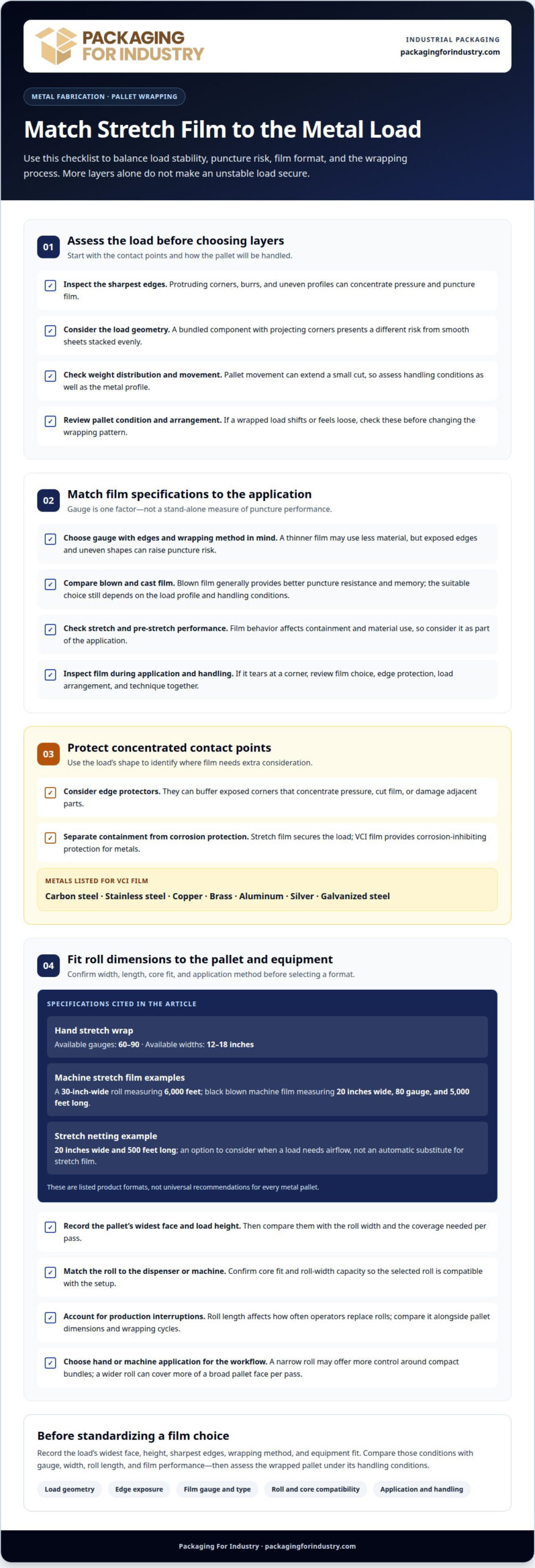
Gauge describes film thickness, but it does not by itself determine puncture performance. A thinner film may use less material, while exposed edges and uneven shapes can increase puncture risk. Assess the sharpest contact point, not just the pallet’s weight. A bundled steel bracket with protruding corners presents a different risk from smooth sheets stacked evenly. Consider gauge alongside load geometry and wrapping method, then inspect the film during application and handling.
Available specifications show why gauge should be considered with roll dimensions. Hand stretch wrap is available in gauges from 60 to 90. A black blown machine stretch film listing measures 20 inches wide and 80 gauge. These examples describe distinct products, not universal recommendations for every fabrication pallet.
For metal fabrication, match the film to the load’s contact points and wrapping process. A narrow component may press against film in one small area, while a broad, smooth surface distributes contact differently. Check that the roll fits the dispenser or machine and that operators can apply consistent tension. If film tears at a corner, review the film choice, edge protection, load arrangement, and application technique together.
Blown stretch film generally provides better puncture resistance and memory than cast film. That can make blown film a practical comparison point for sharp-edged metal loads, while cast film may suit other wrapping priorities. The right choice depends on load profile and handling conditions, not film type alone. Compare stretch film options against the pallet’s edges, wrapping equipment, and containment needs.
Use edge protectors when exposed corners could concentrate pressure, cut the film, or damage adjacent parts. They buffer sharp edges, especially on bundles with projecting profiles. When metal needs corrosion protection, VCI film is used for metals such as carbon steel, stainless steel, copper, brass, aluminum, silver, and galvanized steel. Stretch film secures the load; VCI film provides corrosion-inhibiting protection.
San Diego packaging suppliers may offer local delivery, will-call pickup, or both. The available option depends on each supplier’s service area and ordering arrangements. For a fabrication operation, delivery can support replenishment at the warehouse, while pickup can suit orders coordinated with an existing route.
Before selecting a roll, record the widest pallet face, load height, sharpest edges, and wrapping method. Then compare gauge, width, and roll length against those conditions. For example, a machine using 20-inch film needs a compatible roll and application setup. Treat the listed 80-gauge blown film as a product example, not an automatic specification for every metal pallet.
Treat that figure as a product-capacity reference, then assess the selected film against the pallet’s geometry, wrapping method, and handling conditions before standardizing it for production.
Film width and roll length
Choose roll width and length around the pallet dimensions and wrapping method. Hand stretch wrap is available in widths from 12” to 18”. Listed machine film examples include a 30-inch-wide roll measuring 6,000 feet long and black blown machine film measuring 5,000 feet long. Those formats show how substantially roll dimensions can vary across applications.
Width affects how much film covers each pass. A narrower roll can offer more control around compact metal bundles, while a wider roll can cover more of a broad pallet face per pass. The right fit depends on load width, profile, and equipment. For example, a pallet of narrow steel components may need controlled coverage around exposed sides, not just quick coverage across the front.
Roll length affects how often operators replace rolls during production. A 6,000-foot machine roll can support a different changeover pattern than a 5,000-foot roll, depending on the wrapping cycle and load dimensions. Track roll changes alongside pallet volume and wrapping interruptions. That gives purchasing and warehouse teams a more useful basis for comparing formats than roll length alone.
Core size also matters because the roll must fit its dispenser or wrapping machine. There isn’t one core size that applies to every roll; match the core to the equipment already used on the line. Confirm the dispenser’s core fit and roll-width capacity before ordering. A compatible roll helps avoid setup delays and keeps the wrapping process consistent.
Stretch netting offers another format for loads that need airflow. One listed roll measures 20 inches wide and 500 feet long. Netting is not interchangeable with stretch film for every metal shipment, so choose according to the load’s containment and protection requirements. For a mixed pallet, consider whether open coverage meets the need or whether continuous film coverage better suits the load.
A practical selection process starts with the pallet’s widest face, load height, and wrapping equipment. Then consider whether hand or machine application suits the workflow, and compare roll width and length against production needs. For example, a machine line using a 30-inch roll requires a compatible setup; hand wrap operations can consider the available 12” to 18” widths.
For fabrication teams comparing stretch film formats, record the roll dimensions and core fit alongside the load profile and application method. This makes a stretch film quote more useful and helps avoid selecting a roll that slows the wrapping station. Request a packaging quote with those operating details to discuss a suitable format.
Puncture resistance and tear resistance
A sharp steel edge can puncture film at one point, while pallet movement can extend a small cut. Burrs, projecting corners, and uneven bundles create different risks during wrapping and transit. A flat stack of sheets has fewer concentrated contact points than a bundle with exposed brackets. Assess the metal profile and the load’s movement, not just its overall shape.
Blown stretch film offers better puncture resistance and memory than cast film. That difference makes blown film a useful option to evaluate for loads with sharp edges. VCI2000 stretch film is described as having high puncture and tear resistance, with hand or machine wrapping listed as suitable applications. These characteristics help compare films, but the wrapping method still needs to match the pallet and equipment.
San Diego County manufacturers can source puncture-resistant stretch film through industrial packaging suppliers and packaging distributors serving the region. The suitable format depends on the metal load, wrapping process, and required protection. A fabrication pallet of cut sections, for instance, may need different edge control than a tightly grouped stack of smooth plates.
Recyclable film and recycled-content film describe different material attributes. Recyclability concerns whether film can be recovered, while recycled content refers to material used in its manufacture. Puncture resistance alone establishes neither. For a metal shipment, consider these specifications alongside containment performance and handling conditions after use.
Evaluate representative loads consistently. First, identify contact points such as corners, cut edges, and protruding fasteners. Apply the film using the intended hand or machine process, then inspect the pallet for holes, tears, loose areas, or damage near metal edges. Record where failures occur so adjustments address the cause rather than simply adding more wraps.
If film breaks during application, pause and inspect the load, film, and equipment according to site procedures. Check whether an edge is catching the film, the pallet has shifted, or the dispenser is applying film unevenly. Escalate recurring breaks rather than repeatedly restarting. A tear at the same exposed corner points to a different issue than breaks across unrelated pallets.
Edge protection can separate sharp metal corners from the film and reduce direct contact. Use it where an exposed edge repeatedly damages the wrap or the load geometry concentrates pressure. Film contains the pallet; protectors shield vulnerable contact points. Matching both to the metal profile supports a more reliable wrapping process.
Stretch and pre-stretch performance
Stretch capacity describes how far film can extend during application. One product description states film stretches up to 275%. Pre-stretch describes film extended before it reaches the load, such as through a dispenser or machine. A quiet-unwind film lists up to 250% pre-stretch. These figures describe different performance measures, so compare each against the wrapping equipment and metal pallet requirements.
Applied stretch affects how film conforms to a load and maintains containment. Too little tension can leave loose areas, while uneven application can create inconsistent coverage. Excessive force can stress film at sharp corners. On a pallet of metal brackets, check that the wrap holds the bundle together without tearing at protruding edges. Use a consistent wrapping pattern when assessing performance.
Pre-stretched film enters the wrapping process already extended, while conventional stretch film is stretched as it is applied. A listed quiet-unwind product supports up to 250% pre-stretch. That specification can help operations compare films intended for particular dispensing systems. The useful comparison is not the percentage alone: it is how smoothly the film unwinds, applies, and stays secure on the actual load.
Different formats can list similar stretch performance but serve different load conditions. Color-tinted hand stretch film is listed with a 250% stretch capability, and vented pallet wrap is also listed with 250% stretch. Those examples show why buyers should consider film format alongside its stretch figure. A metal pallet needing airflow may present different priorities than a tightly bundled set of machined components.
For a controlled trial, use the same metal pallet, application method, and wrapping sequence for each film. Record whether operators can apply consistent tension, the film stays intact around edges, and the load remains contained after handling. For machine wrapping, include settings and unwind behavior. For hand wrapping, note whether the operator can maintain even coverage around corners and the pallet base.
Stretch performance also affects purchasing decisions because it changes how much film is applied per wrap. Compare film usage and load stability together, rather than judging a roll by stretch percentage alone. A film that reaches 275% under its stated conditions may not perform identically across every dispenser, operator, or metal profile. Match the film’s listed performance to the application process and review the wrapped pallet before adopting it for routine production.
Document trial results by load type, such as steel plate, tubing, or fabricated frames. Include the film format, equipment, observed breaks, and containment issues. This gives warehouse and purchasing teams a practical basis for comparing options. For puncture-resistant stretch film on San Diego metal fabrication pallets, evaluate stretch, application consistency, and secure containment together.
Troubleshooting loose or shifting loads
Review a loose pallet before adding more film. Hold it for inspection, then check the load arrangement and pallet condition. A damaged pallet, uneven metal bundle, or unstable stacking pattern can undermine containment. Additional wraps may hide the symptom without correcting its cause. Keep the load on hold until the review identifies a safe next step.
Start with the metal pieces. Check whether tubing, brackets, or fabricated frames have shifted. Look for uneven weight distribution, unsupported gaps, and parts extending beyond the pallet footprint. A steel plate stack may shift if its base is uneven; narrow sections may move if they are misaligned. Record the specific issue before changing the wrapping process.
For uneven or uncovered areas, compare the pallet with its approved wrapping sequence. Check whether each step was applied and whether the load shape matches the expected pattern. If an unusual fabrication load does not fit the sequence, ask a supervisor to assess it. Do not improvise a pattern around a sharp projection without reviewing the effect on containment.
If cartons shift or appear damaged, stop release and review the full packaging system, not only the film. Inspect the carton condition, pallet support, load arrangement, and wrap together. A crushed carton at the base may point to a support or stacking issue; a tear beside exposed metal may indicate product contact. Keep the affected pallet out of shipment until it has been reviewed.
A film break during application also calls for a pause. Under site procedures, inspect the load, film, and equipment. Look for an edge catching the wrap, a roll that is not feeding correctly, or a shifted load. Escalate recurring breaks instead of restarting each time. Note where each break occurs: repeated damage at one corner suggests a different problem from breaks across several pallet faces.
After review, make one controlled adjustment at a time. Correct the load arrangement or replace a damaged pallet before changing the wrapping process. If the approved sequence was missed, restore it and inspect the result. If film repeatedly tears at one contact point, assess whether edge protection or another film choice addresses the cause. Document the issue and adjustment so teams can apply the process to similar metal loads.
Before release, confirm the pallet is stable, the wrapping sequence is complete, and no cartons or components show new damage. Repeated shifting deserves a broader packaging review, especially when the same metal product causes ongoing problems. Clear records help operations distinguish a load issue from film or equipment trouble and support consistent handling across production shifts.
Packaging For Industry (PFI): Stretch Film
Packaging For Industry (PFI) supplies stretch film for manufacturers, warehouses, and industrial operations. For metal fabrication teams, matching film supply to recurring pallet use can support production and help manage packaging costs. PFI’s Vendor Managed Inventory for Packaging helps manage repeat supply needs, and local next-day delivery serves San Diego-area operations.
PFI focuses on practical industrial packaging, helping teams select supplies that fit their workflows and protect products in transit. If your operation needs a stretch film source or a more organized replenishment process, contact Packaging For Industry to discuss your packaging needs.
Build a More Reliable Wrapping Process
Connect film selection with your production and replenishment needs. For puncture-resistant stretch film for metal fabrication in San Diego, details about pallet profiles, wrapping equipment, and recurring damage patterns help shape a practical packaging approach. Packaging For Industry (PFI) supplies stretch film and foam packaging, and offers Vendor Managed Inventory for packaging to support product protection and supply planning.
Share the metal products you ship and the wrapping challenges your team encounters. This context helps focus the packaging discussion on the loads and operating conditions that matter to your business.
A consistent packaging process, matched to the load, can help your team move metal products through the warehouse with greater confidence.
Frequently Asked Questions
What puncture-resistant stretch films are best for sharp metal parts?
Choose film with product data that addresses puncture and tear performance for your wrapping method. For repeat shipments, define a film specification for each product family rather than choosing by a broad label such as “heavy-duty.” Keep the load type, equipment, and intended shipping route consistent during evaluation. This gives purchasing teams a clear basis for comparing options across recurring orders.
What gauge and puncture-resistance ratings are available for stretch film?
Gauge options and puncture-resistance ratings vary by product, and gauge alone does not establish puncture performance. Compare product documentation for gauge, puncture resistance, tear resistance, and stated application conditions as separate details. Apply the same criteria to candidate films for each metal product family. This creates a more complete procurement specification and avoids treating thickness as a substitute for performance data.
How should stretch film be applied to protect sharp metal edges and prevent load shifting?
Set a repeatable wrapping standard for each metal product family, including the approved film, equipment, and acceptance criteria. Train operators to follow it, then record exceptions by product and shift. For example, a production team can log whether a wrapped assembly meets its documented release criteria before staging. Consistent records help supervisors spot process variation without relying solely on individual judgment.
What are the risks of using ordinary stretch film on fabricated metal products?
Standard film may not suit a particular fabricated product or shipping process. If performance falls short, teams may face extra inspection, repacking, handling, or shipment delays. These disruptions can affect production schedules even when the metal itself remains usable. A defined film specification for each product family helps purchasing and operations avoid relying on one generic material for every shipment.