
More layers aren’t automatically the answer to an unstable pallet. For irregular pallet loads in San Diego, blown stretch film can help protect against punctures from sharp edges and protruding parts. The right amount of film still depends on the containment the load needs.
Film type and wrapping technique both matter: punctures or shifting cartons can put products and shipping schedules at risk. Weight alone doesn’t determine the wrap plan. Load shape, pallet pattern, product fragility, wrapping method, and transit conditions all affect stability.
This guide explains how to assess those factors, compare blown and cast stretch film, and choose a practical starting point for film and application. You’ll also learn when a different wrap pattern or a broader packaging review may matter more than adding film, so you can protect load stability while managing material use.
Key Takeaways
- Set a wrapping approach around the containment the pallet needs, rather than adding layers by default.
- Compare blown and cast film by how they perform on your load and wrapping equipment, including puncture resistance, clarity, and unwind.
- If cartons shift or film breaks, assess the pallet arrangement and wrapping process as well as the film itself.
- Match stretch film with other protective packaging, such as foam, when the load needs more than pallet containment.
- PFI’s stretch film, foam packaging, VMI, and JIT services can support packaging supply planning and day-to-day operations.
How many layers of stretch film should be used on a pallet?
There’s no fixed layer count for every pallet. Sharp corners, load weight, pallet pattern, and transit conditions determine the containment the wrap needs.
Puncture Resistance at Sharp Points
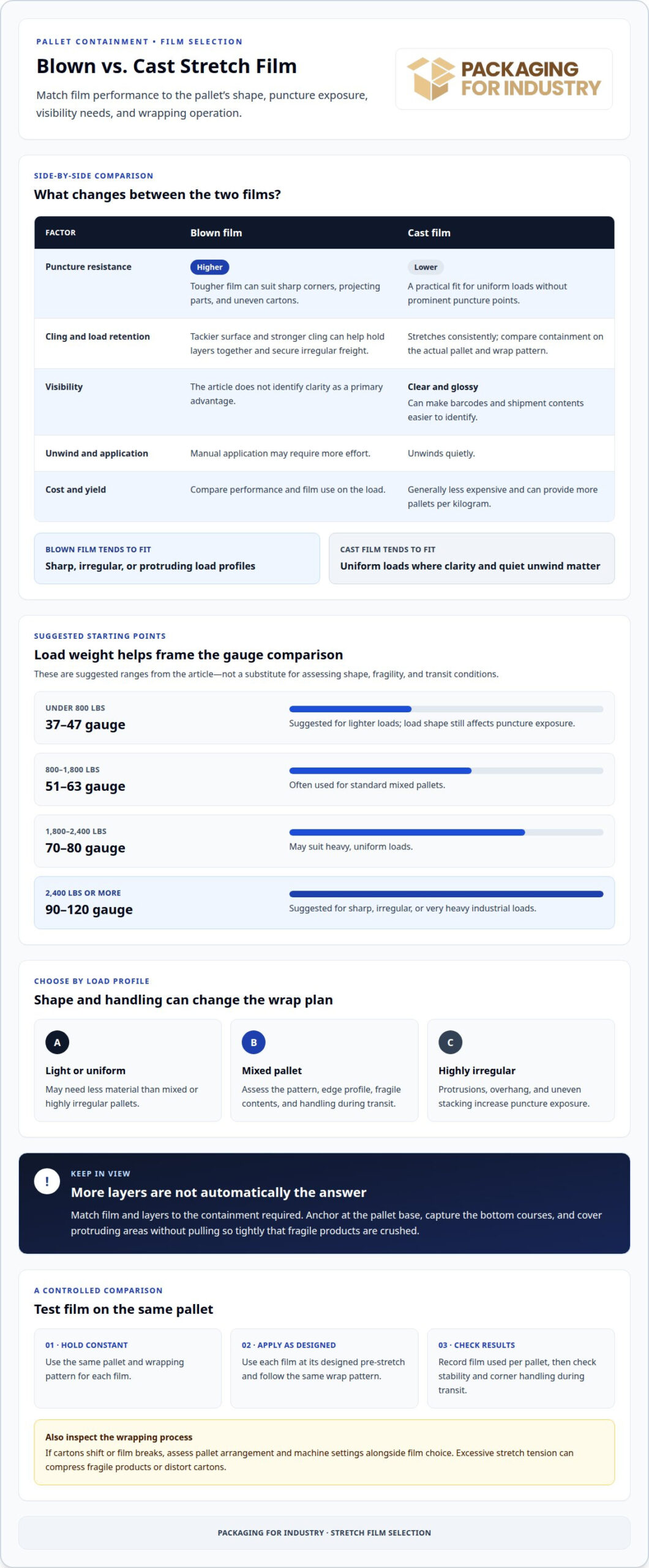
Blown stretch film offers greater puncture resistance than cast film, making it a practical option when metal edges, projecting parts, or uneven cartons contact the wrap. Its tackier surface can help the layers cling together, while cast film offers clearer visibility and quieter unwinding. A smooth, uniform stack presents fewer puncture points than a mixed load with exposed corners.
Load Containment and Wrapping Patterns
Layers alone won’t secure an irregular load; the wrapping pattern and machine application matter too. Anchor film at the pallet base, wrap upward to capture the bottom courses, and cover protruding areas without pulling so tightly that fragile products are crushed. Set machine tension and pre-stretch for the film and load, then check whether cartons shift during handling.
To choose, compare the load’s containment needs and puncture exposure:
| Option | Puncture resistance | Best fit |
|---|---|---|
| Blown film | Higher | Sharp or irregular loads |
| Cast film | Lower | Uniform loads |
| Additional layers | More coverage | Gaps in containment |
Choose film and layers together, then evaluate stability across the pallet rather than adding wraps by default. Stretch film selection should account for load shape and wrapping method.
San Diego businesses can source blown film through commercial packaging suppliers serving the area; compare film suitability for the pallet and wrapping equipment. Delivery, pickup, and custom film specifications vary by supplier and order.
Choosing film based on load weight, shape, and transit conditions
Choose film based on pallet weight, geometry, packaging, and transit exposure, not weight alone.
Film for Different Load Profiles
For loads under 800 lbs, 37-47 gauge is suggested; standard mixed pallets weighing 800-1,800 lbs often use 51-63 gauge. Heavy, uniform loads weighing 1,800-2,400 lbs may call for 70-80 gauge. Shape changes the comparison: protrusions, overhang, or uneven stacking increase puncture exposure beyond weight alone.
Film Use and Load Stability
Light or uniform Type A pallets may need less material than mixed Type B or highly irregular Type C loads. Pre-stretch film can reduce total film use while maintaining or improving stability, provided containment remains adequate. Before changing film thickness or wrap count, assess the pallet pattern, edge profile, fragile contents, and handling during transit.
Performance on the Same Load
Compare films on the same pallet, using each at its designed pre-stretch and following the same wrapping pattern. Record the film used per pallet, then check stability and corner handling during transit. This isolates the difference between film options; changing the load arrangement or machine settings at the same time makes the results harder to interpret.
Risks of Gauge and Tension Choices
Wrong gauge can leave a load under-contained or use more material than needed; excessive stretch tension can compress fragile products or distort cartons. For a mixed pallet, match tension to product fragility and film rating, then inspect for shifting or damage. To align specifications with recurring loads, request a stretch film quote.
Blown versus cast stretch film
Blown and cast stretch film differ in puncture resistance, clarity, unwind noise, and typical cost. The better fit depends on the load profile and wrapping operation.
Blown film is tougher and tackier, with higher puncture resistance and load retention. Its stronger cling can help secure pallets with sharp corners or protruding parts, though manual application may require more effort. For irregular freight, these performance traits can matter more than appearance.
Cast film is clear and glossy, unwinds quietly, and stretches consistently. Clear stretch wrap makes barcodes and shipment contents easier to identify. Cast film is generally less expensive and can provide more pallets per kilogram, making it a practical option for uniform loads without prominent puncture points.
The films are made differently: blown film forms a tube from molten resin, which is inflated into a bubble; cast film cools molten resin on chilled rollers. These processes contribute to different handling and performance characteristics. Before switching, compare both on the same pallet, including film use, corner handling, and stability under the intended wrapping pattern.
Opaque or tinted film can reduce visibility or color-code shipments, while clear film supports scanning and visual identification. Choose according to warehouse identification needs and load protection requirements.
San Diego buyers comparing recyclable and recycled-content blown stretch film should distinguish the terms: recyclable describes end-of-use processing, while recycled-content describes the material makeup. Neither specification demonstrates puncture resistance or containment performance. Compare the manufacturer’s specifications and evaluate the film on the actual pallet and wrapping process.
Film choice for heavy, sharp-edged, or bulky loads
For sharp, irregular, or very heavy industrial loads weighing 2,400 lbs or more, 90-120 gauge stretch film is suggested. Blown film’s puncture resistance and stronger elastic recovery can help secure protruding edges and awkward shapes during handling.
Weight is only one selection factor. A bulky pallet with product extending beyond its edges can expose film to abrasion, while a dense, uniform load may need a different containment approach. Identify sharp corners, overhang, fragile contents, and pallet condition before choosing film thickness or application tension.
Blown film can suit loads with multiple puncture points because it stretches and then pulls back firmly around the load. That memory can help hold heavy or irregular items together. Cast film may be sufficient for a lightweight, uniform pallet with few exposed edges and consistent carton dimensions.
Transit conditions also influence film choice. Transit conditions can affect how stretch film performs, so consider the storage and shipping environment when choosing film. For long-distance shipments, prioritize the containment the load needs, then consider how handling impacts and pallet stacking affect stability.
Match the film to the equipment: manual wrapping can accommodate unusual loads, while automatic application favors consistent settings and repeatable patterns. Film that works by hand may need different tension on an automatic wrapper. Before changing film or application method, consider the load’s corners, weight distribution, and travel conditions.
For a sharp-edged industrial pallet, start with puncture resistance, then assess containment and product fragility. Use the lightest film and application tension that keeps the load stable without crushing its contents.
For sharp or irregular pallet loads, 90-120 gauge blown film is suggested for its puncture resistance and strong elastic recovery.
Blown film for irregular loads
For San Diego operations choosing blown stretch film for irregular pallet loads, gauge and width should suit the product and packaging process. Record the specifications so purchasing and warehouse teams can maintain a consistent supply.
Film Gauge Options
Gauge describes film thickness, but the printed rating alone doesn’t show how a roll will perform on a specific load. For blown film, consider puncture exposure and how the film behaves during application. Include the selected gauge alongside the film type in the packaging specification. This gives buyers a clear reference when replenishing rolls and helps prevent unplanned substitutions on the warehouse floor.
Film Width Options
Width affects how operators handle a roll and position film across a load’s changing profile. For a pallet with stepped tiers, plan coverage so each section can be wrapped without gaps or awkward hand movements. Confirm that the width suits the wrapping process and roll format used in daily operations; don’t assume one width will suit every pallet configuration.
For recurring shipments, document the film specification alongside the pallet or product profile it serves. This helps purchasing teams distinguish film for irregular loads from film used on standard pallets. San Diego buyers sourcing blown stretch film for irregular pallet loads can use this information to align replenishment with warehouse use and the wrapping workflow.
Stretch Film and Other Packaging Products
Stretch film stabilizes palletized shipments by holding products together during storage and handling. For irregular loads, account for sharp edges, load shape, application method, and transit conditions. A uniform carton pallet and a mixed load with protruding components may need different protection approaches.
Film is only one part of a packaging system. If a product needs impact protection inside its carton or container, foam packaging can provide cushioning alongside pallet containment. PFI’s foam packaging options can support product-specific protection, while stretch film secures the assembled pallet for movement.
- Stretch film: Match film performance and wrapping method to the pallet’s shape and handling needs.
- Foam packaging: Use cushioning to protect vulnerable products that pallet wrap cannot shield from internal movement or impact.
- Custom packaging design: Align protective materials with product dimensions and the way items move through storage and shipping.
For manufacturers and warehouses, coordinating these materials can help address damage at different points in the shipping process. Foam protects the product itself; stretch film helps keep the pallet load together. A packaging review can identify whether the main issue is inadequate cushioning, unstable pallet containment, or both.
San Diego businesses evaluating packaging supplies can compare solutions based on load geometry, product sensitivity, and shipping workflow. The goal is practical protection that fits the operation, rather than adding material without addressing the source of damage.
Industries Served
Packaging needs change with product shape, handling, and shipping workflow. Packaging For Industry supports manufacturers, warehouses, distributors, fulfillment centers, and industrial businesses that need dependable supplies to keep goods moving.
Manufacturers may ship uniform cartons alongside components with unusual shapes. Stretch film can stabilize palletized loads, while foam packaging can cushion products that need protection inside a package. Aerospace operations may require careful handling of specialized parts and dependable protection through storage and transit. Aerospace packaging support addresses these distinct shipping needs.
- Warehouses and distribution centers: Keep packaging workflows supplied for pallet preparation, storage, and outgoing shipments.
- Distributors and fulfillment centers: Manage varied products and order profiles with packaging suited to shipping operations.
- Food, medical, and electronics companies: Plan packaging around product characteristics, handling, and shipment requirements.
- Construction suppliers and industrial businesses: Package bulky, heavy, or irregular goods for movement through the supply chain.
For any operation, start with the product, how it is handled, and where packaging must protect it. A business shipping mixed pallet configurations may have different stretch film needs from one shipping consistent cartons. Products vulnerable to impact may also need cushioning in addition to pallet containment.
These industry needs shape purchasing decisions, from selecting suitable packaging supplies to planning recurring inventory. Matching materials to actual workflows can help businesses reduce product damage, control unnecessary packaging use, and maintain reliable supply for daily operations.
Benefits of Working With a Packaging Supplier
A packaging supplier can help align material choices with daily shipping requirements. For example, a distributor sending mixed pallet loads may need stretch film for containment and foam for products vulnerable to impact. Matching protection to the actual load helps avoid using extra material to solve the wrong problem.
Packaging For Industry helps buyers assess packaging needs across products and operations. For irregular pallets, film selection can account for load shape and handling. Foam packaging can provide cushioning for items that need protection inside a package. Addressing both load stability and product protection helps reduce shipping damage.
Cost control starts with choosing suitable materials and purchasing consistently. Film that provides appropriate containment can limit avoidable overwrapping, while packaging selected for the product can prevent unnecessary material use elsewhere. PFI helps customers review packaging requirements and pursue solutions that support lower packaging costs without sacrificing protection.
Supply reliability matters too. Warehouses and manufacturers need packaging available to support production and shipping workflows. PFI’s vendor managed inventory program and just-in-time packaging management help coordinate supply with operational needs and reduce the burden of managing recurring replenishment.
- Lower costs: Match packaging materials to product and shipment requirements.
- Reduce damage: Address pallet containment and product cushioning as separate needs.
- Support supply continuity: Plan packaging inventory around ongoing operations.
For San Diego businesses comparing packaging suppliers, start with the load, protection requirements, and purchasing workflow. A focused review connects packaging decisions with shipping performance and supply planning.
Packaging For Industry (PFI): Stretch Film
Packaging For Industry (PFI) supplies stretch film for businesses securing palletized products for storage and shipment. For an irregular load with exposed edges, film selection should account for load shape, handling, and wrapping equipment. These details help define a practical packaging approach for San Diego operations.
PFI’s stretch film options support pallet containment across varied shipping workflows. A warehouse wrapping mixed loads should consider film performance and how employees or machines apply it. The goal is stable loads with material use suited to the job, not extra wraps by default.
Film secures the pallet, while foam packaging cushions products that need protection inside a package. If a shipment contains vulnerable components, addressing internal movement and pallet stability separately can help reduce damage. PFI offers stretch film and foam packaging as parts of an industrial packaging solution.
Recurring packaging demand also affects purchasing and warehouse planning. PFI’s Vendor Managed Inventory (VMI) for Packaging and Just-In-Time (JIT) Inventory Management for Packaging help businesses coordinate replenishment with operational requirements. These services support supply continuity for manufacturers, warehouses, and distributors that rely on packaging for daily shipments.
Share the load profile, wrapping process, and purchasing needs to focus the discussion on relevant options. PFI can help assess stretch film and related packaging requirements, with the goal of reducing product damage, improving supply reliability, and managing packaging costs responsibly.
Put Your Pallet Protection Plan Into Action
For San Diego operations evaluating blown stretch film for irregular pallet loads, connect the film choice to the products, equipment, and shipping workflow. A clear packaging plan can help your team make consistent decisions as load profiles or order demands change.
Packaging For Industry (PFI) can help businesses assess stretch film requirements alongside foam packaging for product cushioning. For recurring supply needs, Vendor Managed Inventory (VMI) for Packaging can support inventory planning. The right combination depends on the operation’s protection priorities and replenishment needs, helping support dependable shipping without unnecessary packaging complexity.
Bring your load types, wrapping process, and purchasing needs into the discussion. That gives PFI a practical starting point for a packaging quote tailored to your operation.
A well-matched packaging plan can help your team move each shipment forward with greater confidence.
Frequently Asked Questions
Cast vs Blown Stretch Wrap: What’s the Difference?
Cast and blown stretch wrap differ in how they’re made and how they perform during wrapping. Cast film cools on chilled rollers, typically unwinds more quietly, and offers clear visibility. Blown film forms from an inflated tube and is generally tougher and more puncture-resistant. For a warehouse wrapping uniform cartons, cast film’s clarity and quiet unwind may suit the workflow; protruding edges make blown film worth considering.
How can warehouse staff tell if a pallet is wrapped correctly?
A wrapped pallet should remain stable, with intact film and the load anchored to its base. Staff can inspect corners for punctures, check for uncovered areas, and see whether cartons move during careful handling. For a tall or uneven pallet, assess containment at multiple points rather than judging only the outer layer. Hold a loose or damaged load for review before release.
What should employees check before wrapping a pallet?
Before applying film, inspect the pallet for damage and confirm that the load is arranged securely. Look for overhanging cartons, uneven weight distribution, exposed edges, and products that could be crushed by tension. Check the film for damage and confirm that the wrapping equipment is operating properly. If the stack shifts or the pallet is unstable, pause and have the load reviewed rather than trying to correct it with extra film.
What is blown stretch film and how does it compare with cast stretch film?
Blown stretch film is made by inflating a tube of molten resin into a bubble; cast film is cooled on chilled rollers. This manufacturing difference contributes to distinct handling properties. Blown film tends to offer higher puncture resistance and stronger cling, while cast film is clearer and quieter to unwind. A barcode-heavy shipment may benefit from clear film, while challenging edges make blown film worth evaluating.
How does blown stretch film perform on sharp edges, protruding items, and uneven loads?
Blown stretch film’s puncture resistance and elastic memory make it a useful option for loads with exposed corners or protruding parts. As the film stretches and recovers, it can help hold an awkward load together. Still, sharp points can challenge any wrap. A pallet with metal corners, for example, needs a stable arrangement and a wrapping method that covers vulnerable contact areas without compressing fragile contents.
How much blown stretch film is needed per pallet, and how can usage be estimated?
Film use depends on pallet dimensions, load shape, wrapping pattern, and the containment needed for handling and transit. Track film consumed on a representative pallet, then assess whether the load remains stable. To estimate roll weight, multiply film thickness in mils by width and length in inches, then divide by 30,000. This estimates the roll’s film weight, not the required amount for every pallet.