
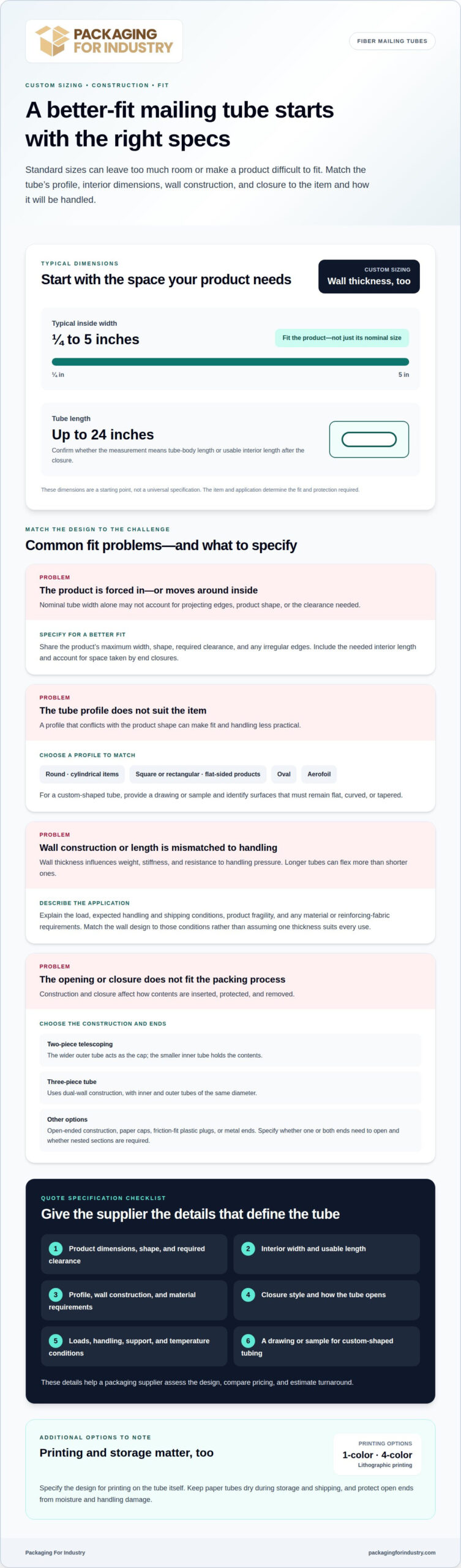
Need custom mailing tubes that fit your products and suit your shipping requirements? A standard tube size can create a poor fit or leave a product with too much room to move. Custom-sized fiber tubes can be tailored by profile and dimensions, with common mailing-tube inside widths ranging from ¼ to 5 inches and lengths reaching up to 24 inches. Wall thickness can also be customized to suit the application.
When sourcing cardboard tubes, dimensions are only one part of getting the right packaging at the right price. Profile, wall construction, materials, and handling all affect fit and strength. Share your product dimensions, intended use, and packaging requirements with a packaging supplier to request a mailing tube quote, compare pricing, and plan supply for your operation.
Key Takeaways
- Match the tube profile and construction to the item, how it will be used, and how it needs to be protected.
- Wall design, reinforcement, and tube length all influence stiffness and strength, so specifications should reflect the actual application.
- Include dimensions, material requirements, and precision needs in a quote request to help define a suitable design and turnaround estimate.
- Assess demanding industrial uses carefully, since a tube’s construction must suit the loads and conditions it will face.
- Custom Packaging Design Services from Packaging For Industry can help connect packaging requirements with a practical design approach.
Round, oval, square, rectangular, aerofoil, and telescopic profiles
Paper tubes are available in round, oval, square, rectangular, or aerofoil profiles. A round profile suits cylindrical items, while square or rectangular tubes can fit products with flat sides. Aerofoil profiles follow a particular outer shape. When requesting a mailing tube quote, specify the product, profile, required fit, and handling conditions to help identify a suitable option.
Telescoping designs use nested sections for adjustable or capped construction. In a two-piece design, the wider outer tube acts as the cap, while the smaller inner tube holds the contents. Three-piece tubes use dual-wall construction, with inner and outer tubes of the same diameter. Open-ended construction is another option. Closures can include paper caps, friction-fit plastic plugs, or metal ends.
When comparing packaging tube options, specify the tube construction and closure type. Include whether the tube needs to open at one or both ends, and whether nested sections are required. These details help a packaging supplier identify a tube that fits the product and handling needs.
Safety requirements depend on the tube’s material and intended use. Include the application and any applicable requirements in the specification. For a custom mailing tube quote, provide the required profile, construction, and closure details so the supplier can review the packaging needs.
Tube finishes can include paper caps, friction-fit plastic plugs, or metal closures. Printing options include 1-color and 4-color lithographic printing; specify the design for printing on the tube itself. During storage and shipping, keep paper tubes dry and protect open ends from moisture and handling damage. For packaging operations, tubes and cores are related packaging formats with distinct uses.
Typical interior widths, wall thicknesses, and lengths
Fiber tube dimensions depend on the space a product needs inside the tube. Typical inside widths range from ¼ to 5 inches, while lengths can reach up to 24 inches. These dimensions provide a starting point for a quote, not a universal specification. A tube for rolled drawings needs a different fit from one for a compact component. The application determines the usable interior and the protection needed during handling.
Interior width matters because the product must fit without being forced in or left with excessive room to move. A part with a projecting edge, for example, may need more clearance than a smooth, uniform item. End closures also affect usable space, so account for how the tube is capped when specifying interior length. Share the item’s shape and required clearance with your packaging supplier instead of relying only on its nominal width.
Wall thickness affects tube weight, stiffness, and resistance to handling pressure. The listed wall-thickness range is 0.40 to 0.120. Fiber composition, including the reinforcing fabric, and the tube’s application influence the appropriate structure. A tube for a delicate item may need a different balance from one for a heavier product. Thicker walls can add stiffness, but the specification should match the load and shipping conditions.
Length also affects performance. A longer tube can flex more during handling than a shorter one, so consider product dimensions and support needs together. Confirm whether the measurement refers to the tube body or the usable interior after closure.
For a custom mailing tube quote, provide the product’s maximum width, required interior length, closure style, and handling conditions. Include material or fabric requirements and describe the application. These details help a packaging supplier recommend dimensions, thickness, and length for the required fit and protection.
Custom fiber mailing tubes are available in multiple wall thicknesses. Compare options using the product’s actual dimensions and expected handling conditions, rather than assuming one thickness suits every shipment. Consider the required clearance and whether the item’s shape could concentrate pressure against the tube. Describe these requirements when requesting a quote.
A useful specification separates the desired fit from the protection needed during handling. If the item is delicate or has an uneven profile, describe that along with its dimensions and how the tube will be handled. This helps the supplier match wall thickness to the application while keeping the interior suitable for the product and its closures.
Custom dimensions and shapes
For a custom fiber tube, specify the interior width or diameter, usable length, profile, wall construction, and closure. Match the dimensions to the product and its packaging application: a rectangular component may need a rectangular tube, while a rolled item may fit a round design. Include protrusions and how the product sits inside to help confirm clearance and fit.
For custom-shaped tubing, provide a drawing or sample and note which surfaces must remain flat, curved, or tapered. Round, oval, square, rectangular, and aerofoil profiles suit different product shapes and operating needs. For telescoping construction, describe how sections overlap and which part must slide or cap the contents. This information helps a packaging supplier assess the design and prepare a custom tube quote.
If reducing weight matters, explain the priority and the loads the tube must handle. A lightweight carbon-fiber tube may use a sandwich structure, with core material between strong outer skins, or solid laminate construction. The suitable material and structure depend on the application, so include handling, support, and temperature conditions.
- Fit: State interior clearance needs and any irregular product edges.
- Shape: Name the profile and provide a drawing for non-round forms.
- Construction: Identify weight priorities, reinforcement, and telescoping requirements.
- Use: Explain how the tube will be handled, supported, and exposed to changing conditions.
To request a custom tube quote, provide the product dimensions, desired profile, usable interior length, closure arrangement, and application. Include any weight-reduction priority, required stiffness, and handling conditions. A drawing or sample can clarify geometry that words alone may not convey and help the supplier assess the custom packaging solution.
Quote requests and turnaround
A useful quote request defines the tube’s dimensions, materials, construction, and intended use. Include the required inside width, usable length, wall thickness, profile, and end finish. A drawing or sample can clarify a non-round shape or close-fitting component. State whether the tube needs to telescope, remain open-ended, or use a specific closure.
Application details help match the specification to actual handling conditions. Describe the item’s weight, how it will be supported, and whether the tube will face temperature changes or repeated movement. For carbon fiber tubing, identify the required reinforcement and whether the design prioritizes low weight, stiffness, or both. These requirements inform material selection and construction.
- Dimensions: Provide inside and outside measurements, usable length, and wall thickness.
- Precision: State which dimensions need close control and provide acceptable tolerances, if defined.
- Material: Identify carbon, fiberglass, aramid, or paper fiber requirements.
- Use: Explain the product, load, support, closure, and operating conditions.
- Quantity: Include the requested production quantity and any expected repeat orders.
Precision requirements can affect manufacturing. A tube that must fit a mating part or slide smoothly into another section needs tighter dimensional control than a protective sleeve with more clearance. Mark critical fit points on the drawing instead of treating every dimension as equally important. This helps focus production checks on dimensions that affect function.
Turnaround depends on design complexity, material, precision requirements, production quantity, and whether prototypes or design revisions are needed. A standard round paper tube generally involves fewer design decisions than a custom carbon structure with telescoping sections. Clear specifications reduce avoidable clarification and revision cycles, helping the supplier assess the work and provide a realistic schedule with the quote.
Keep the drawing, material requirements, application notes, and quantity together in one request. If the design is still developing, identify open decisions, such as closure style or surface printing. Separating fixed requirements from flexible details gives the manufacturer a clear basis for evaluating the proposed tube.
Strength and industrial-use limitations
Tube strength depends on material, wall construction, and the forces involved. A paper mailing tube can protect rolled documents or lightweight components during shipping. Neither the material label nor the tube’s appearance alone establishes its load capacity. Match the tube to how it will be supported, handled, and used.
Custom-sized fiber tubes can package documents, product components, and promotional materials. Heavy-walled telescoping fiber tubes can also serve as trade-show tent poles. These uses involve different loads and handling demands, so the same wall design will not suit every application.
Fiber tubes are available in different materials and constructions. Comparisons of strength or weight with other paper tubes, plastic, or metal depend on the specific materials and construction. Reinforcement also changes a tube’s properties. Relative cost depends on material, wall structure, and manufacturing requirements.
Tube construction can be selected to suit packaging and shipping needs. The required wall strength depends on the product, handling conditions, and support during transit. Pressure-vessel engineering is outside the scope of ordinary packaging tubes and requires different design considerations.
Industrial suitability depends on the load and risk of damage or failure. Do not treat a paper shipping tube as a pressure vessel or as a substitute for a structure designed to carry heavy materials. Tube length, support points, wall construction, and applied forces all affect performance. These requirements guide tube selection and manufacturing, helping align the packaging with its intended use. Project-specific pricing depends on these factors and is provided after a quote request.
Industries Served
Manufacturers may need fiber tubes to package rolled materials, drawings, or long components that do not fit standard cartons. The tube’s interior dimensions and closure can be specified around the item, helping production teams handle and store packaging consistently. For packaging used in manufacturing, match the tube design to the product’s shape, weight, and shipping route.
Warehouses and distribution centers may use mailing tubes for documents, plans, or products that need protection from bending during storage and transit. Telescoping construction can make access and length adjustment practical for certain items. Consider how staff will pick, pack, stack, and move the tubes, since these tasks affect the most useful profile and closure.
Aerospace and electronics businesses may handle precision components or technical drawings that need close-fitting protection. Choose a tube to suit the item’s dimensions and handling conditions rather than assuming every part can travel safely in fiber. For heavier components or demanding industrial loads, assess whether the tube’s construction provides suitable support before selecting it.
Construction suppliers and engineering firms may package rolled plans, drawings, or lightweight elongated items. Promotional and product-packaging operations may also use fiber canisters for kits or presentation materials. These uses differ from bulk industrial transport: fiber tubes are generally better suited to appropriate lightweight contents than to heavy materials or large-scale industrial loads.
Food companies need particular care when selecting packaging. Fiber tubes are not usually used for food packaging because of the materials involved in their production. Medical, aerospace, and electronics applications also require attention to product handling and packaging requirements. Industry alone does not determine suitability; contents, load, exposure, and supply-chain process all matter.
For manufacturers, warehouses, and distributors in Orange County, Los Angeles, and San Diego, defining the item and its route helps determine whether a custom tube fits the application. A rolled drawing and a rigid component may both be tube-shaped, but their protection needs differ. Matching dimensions and construction to actual use supports practical packaging decisions without treating fiber as a universal solution.
Benefits of Custom-Sized Fiber Tubes
A tube matched to its contents can improve fit during packing, storage, and shipping. A rolled drawing, for example, needs a different interior profile from a long, rigid component. Adequate clearance makes loading practical, while limiting excess space can reduce movement inside the package. When comparing custom sizes with stock mailing tubes, consider whether a closer fit could simplify packing, protect the product, or lower packaging costs for your application.
Fit is one part of reducing shipping damage. A properly sized tube can help keep contents from shifting, bending, or contacting the package ends during routine handling. The appropriate wall and closure still depend on the product’s weight, fragility, and shipping conditions. Custom dimensions support the design, but they do not replace suitable material and construction for the load.
- Better fit: Specify the interior to suit the item’s shape and handling needs.
- Practical protection: Match wall construction and closures to the product and route.
- Efficient packing: Choose dimensions that support consistent loading and storage.
- Clearer purchasing: Keep tube specifications aligned across repeat orders.
Consistent specifications also help procurement teams compare packaging pricing and make clearer supply decisions. Recording the profile, interior dimensions, closure, and application gives staff a shared reference for purchasing and receiving. For recurring shipments, that record can help reduce substitutions that change product fit or packing steps. It also gives a packaging supplier a useful basis for discussing manufacturing requirements, bulk quantities, and turnaround.
Custom sizing does not automatically lower packaging costs or prevent shipping damage. Its value comes from matching the tube to the job: avoiding poor fit, supporting repeatable packing, and selecting construction based on actual use. Assess fit, damage risk, and total packaging costs by comparing the tube’s dimensions and requirements with the product’s handling needs and shipping conditions before standardizing the specification. This keeps purchasing decisions tied to operational priorities, not just a nominal size.
Packaging For Industry (PFI): Custom Packaging Design Services
Packaging For Industry (PFI) is a practical next step when a tube specification must fit a larger packaging process. Its Custom Packaging Design Services help manufacturers consider product dimensions, handling conditions, and protection priorities together. This is useful when a standard package leaves excess movement, complicates packing, or doesn’t align with the way products move through a warehouse.
For a custom fiber tube project, clear product measurements and use requirements provide a basis for design discussions. Share the item’s shape, required fit, and handling conditions. PFI can assess the packaging requirements and consider how protective foam packaging may support a broader solution. The goal is a practical packaging plan, not a tube specification separated from the rest of the operation.
Packaging needs may extend beyond the tube itself. Stretch film can help secure packaged goods for handling, while foam packaging can cushion products that need additional protection. These materials may be useful when the tube is one part of a shipment or packaging workflow. PFI also provides Vendor Managed Inventory for Packaging to support customers seeking a more organized approach to packaging supply.
Bring together product dimensions, handling needs, packaging processes, and supply priorities. This gives the design discussion an operational focus and helps identify where packaging changes may improve fit or supply reliability. For Southern California businesses managing packaging across production and distribution, a coordinated design approach keeps product protection and workflow needs in view.
Frequently Asked Questions
What tube diameters, lengths, wall thicknesses, and tolerances can be customized?
Diameters, lengths, wall construction, and dimensional tolerances can be specified for the application. If a tube must fit a mating part, identify the interface and dimensions that affect assembly. For a protective sleeve, focus on loading clearance and end closure. Separate critical measurements from less-sensitive dimensions in the drawing, so the specification supports the tube’s function without unnecessary precision requirements.
What are the minimum order quantities and lead times for custom fiber tubes?
Minimum quantities and lead times depend on the design, materials, production quantity, and manufacturing steps. A straightforward paper tube and a reinforced composite design involve different production requirements. Prototypes, specialized closures, or revisions can also affect scheduling. For planning, include the desired order quantity and delivery window with the specifications. This gives the supplier context to assess production and schedule the order around your operation.
How much do custom-sized fiber tubes cost?
The price depends on the tube’s dimensions, material, wall construction, closures, printing, order quantity, and production complexity. A paper tube and a reinforced carbon fiber design have different material and manufacturing requirements. Precision requirements and design revisions can also affect the final cost. Pricing is provided after a quote request, using the project specifications to prepare an applicable price rather than relying on a general estimate.