
The right telescoping shipping tube can protect rolled documents while accommodating different lengths. These adjustable packages suit industrial shipments that need a long, cylindrical format. Choose the specification based on the item and shipping requirements.
Choosing a tube is also a purchasing decision. Dimensions and material determine how well it fits the item, while case quantities and order requirements shape the quote. This guide explains how adjustable length works and what to consider when comparing tube dimensions, construction, quantities, and pricing.
For businesses in Orange County, Los Angeles, and San Diego, practical packaging choices support reliable shipping and efficient operations. The sections ahead cover key considerations when sourcing tube packaging for industrial use.
Key Takeaways
- Telescoping designs adjust to accommodate documents of different lengths, helping match the package to the shipment.
- A listed kraft-colored option measures 30 inches long and 3 inches in diameter; dimensions and material are key considerations when comparing options.
- For overlapping tube sections, the National Bureau of Standards says adhesive should cover 50-75% of the overlap area.
- Material and wall thickness influence how a tube suits its intended use, so include the item’s dimensions and shipping needs when defining specifications.
- Review how packaging choices affect product protection and supply operations, and explore PFI’s foam packaging, stretch film, VMI, and JIT inventory management solutions where they fit your needs.
Adjustable tube length
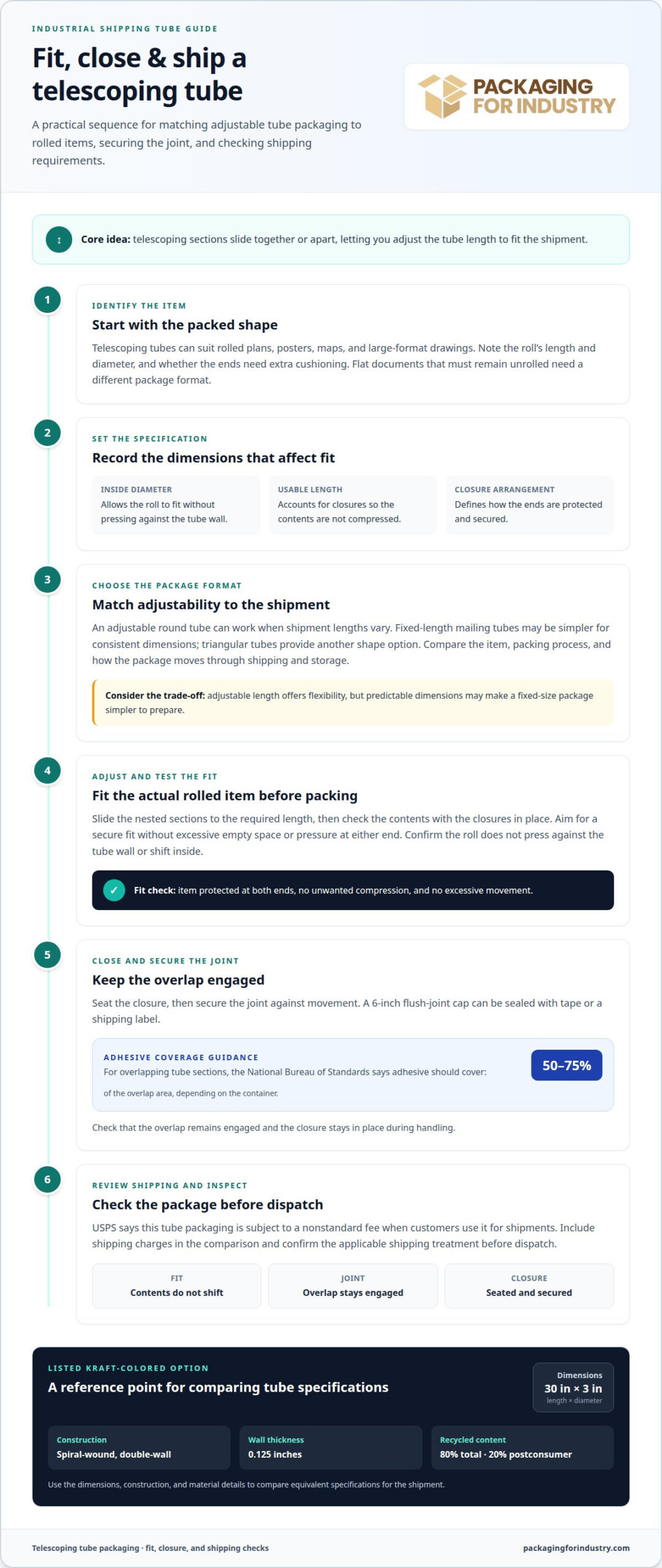
A telescoping tube has nested sections that slide together or apart to fit the item. This adjustable format can accommodate documents of different lengths without requiring a separate fixed-length tube for every order. Position the sections around the contents, then check that the item fits without excessive empty space or pressure at either end. For example, a rolled drawing should fit inside with its ends protected by the closures.
Are telescoping shipping tubes better than mailing tubes or triangular tubes? They suit shipments where adjustable length and a round format fit the product. Fixed-length mailing tubes may work better for items with consistent dimensions, while triangular tubes offer a different shape for documents. Choose based on the item, packing process, and how it moves through shipping and storage.
Rolled plans, posters, maps, and large-format drawings are common candidates because they fit a long, cylindrical interior. Flat documents that must remain unrolled need a different package format. Consider the rolled item’s diameter and length, and whether its ends need additional cushioning. The fit should secure the contents without pressing the roll against the tube wall.
To pack and seal a telescoping tube securely, the packer adjusts the sections, seats the closure, and seals the joint against movement. A 6-inch flush-joint cap can be sealed with tape or a shipping label. Depending on the container, adhesive should cover 50-75% of the overlapping area, according to the National Bureau of Standards. The packer also checks that the overlap remains engaged and the closure stays in place during handling. A consistent inspection of the fit, joint, and end closure helps prevent shifting before the package enters the shipping stream.
Treat length adjustment as a packing choice, not an automatic advantage. Compare the space around the contents with the effort needed to position and close the sections. If shipment dimensions are predictable, a fixed-size package may be simpler to prepare. If they vary, adjustable length may be useful. In either case, test the fit with the actual rolled item and closures. Make sure the package remains easy to handle and the contents do not shift. A repeatable packing procedure helps staff make consistent choices across orders.
Include shipping charges in the comparison before choosing the package. USPS says this tube packaging is subject to a nonstandard fee when customers use it for shipments. The fee should therefore be considered alongside the tube’s fit and the packing work it requires, rather than after the package is prepared. Confirm the applicable shipping treatment before dispatch, and do not assume that an adjustable format avoids the fee. A simple review of package type, dimensions, closure, and shipping cost can help identify a suitable option for each item. This is especially useful when evaluating whether the flexibility of a telescoping design is worth choosing for a particular shipment.
Available colors and dimensions
For industrial tube orders, specify dimensions based on the packed item, not appearance alone. A purchasing specification can record the required inside diameter, usable length, and closure arrangement. These details distinguish a tube for rolled plans from one for a thicker roll or several documents packed together.
Inside diameter affects how easily a rolled item fits and whether its edges press against the tube wall. A tightly rolled drawing, for example, may need a different opening than a broad roll of textile material. Usable length must account for the closures so the contents remain protected without being compressed at either end.
Color can help identify packaging in a warehouse. A consistent kraft appearance, for example, can help staff recognize paper tubes alongside cartons and other shipping materials. For distinct product groups, purchasing teams can establish consistent labeling or identification without relying on color alone.
Custom paper tubes can be specified with different inside diameters, wall thicknesses, and lengths. Choose dimensions based on the product’s packed form and handling process. Rolled plans, for example, may need a different combination of dimensions than industrial material, even when both use tube packaging.
For consistent repeat orders, document the item type, packed dimensions, closure needs, and identification requirements. A packaging supplier can use these details to match tube dimensions to the shipping task. This helps purchasing compare equivalent specifications rather than relying only on outside measurements or color descriptions. Clear records give warehouse staff a practical reference when different departments pack different items and help prevent confusion across orders.
Tube material and thickness
The listed tube has a spiral-wound, double-wall construction. This specifies a paper-based wall build rather than a general material description. For purchasing teams, wall construction and thickness are useful specification points. A tube for rolled plans, for example, can be assessed alongside the packed item’s dimensions.
This tube contains 80% total recycled content, including 20% postconsumer content. Those figures describe different parts of its material composition. The total recycled-content figure indicates the overall recycled share, while the postconsumer figure identifies content recovered after consumer use. Buyers can use both values when reviewing material requirements for paper packaging.
The stated wall thickness is 0.125 inches. Thickness gives the packaging specification a measurable construction detail, but it should be considered alongside the tube’s double-wall structure and the way the package will be handled. A long tube moving through warehouse packing, transport, and delivery may encounter different handling conditions than one stored and shipped as part of a larger protective package.
How can a packaging supplier specify telescoping tubes to prevent them from coming apart or getting crushed? The supplier considers the double-wall construction, 0.125-inch thickness, fit between sections, closure, and expected handling. These factors inform a specification designed to keep the telescoping sections engaged and limit exposure to crushing forces during packing and shipment.
Material details also help distinguish a tube specification from a general paper packaging description. For example, “spiral-wound, double-wall” identifies the construction, while “0.125 inches” states the wall thickness. The recycled-content figures add composition information. Taken together, these details support clearer purchasing comparisons and more consistent specifications across repeat shipments. They also give warehouse and distribution teams concrete attributes to match against packing procedures, product requirements, and shipping conditions.
What sizes and materials are available for telescoping shipping tubes?
Custom paper tubes can be specified with different inside diameters, wall thicknesses, and lengths. These dimensions let purchasing teams match the tube to the product and packing process instead of treating one configuration as suitable for every shipment. The right combination depends on the item and how it will be handled.
Diameter, length, and wall construction serve different purposes in a specification. Inside diameter defines the space available for the contents, length determines how the package fits the item, and wall thickness describes the tube’s construction. A supplier can use these attributes to distinguish requirements across product families.
The mailing tubes and custom paper tubes described in the product information are made of paper. Compare paper-tube specifications rather than unrelated tube materials. For recurring shipments, define dimensions for each item and separate specifications for products with different packing needs.
Mailing tubes and industrial cores serve different packaging functions. A mailing tube packages an item for shipment, while a core supports wound materials in an industrial process. Distinguishing these uses helps buyers specify the right product and avoid treating every cylindrical paper product as interchangeable.
For a purchasing specification, document the contents, required inside diameter, length, wall-thickness requirements, and intended use. A packaging supplier can then match the paper-tube design to the job and distinguish shipping tubes from cores. This is useful for mixed product lines, where one department may ship finished goods while another uses cores in production. Clear specifications help teams compare like-for-like options and maintain consistent records for repeat orders.
How does a packaging supplier determine the right telescoping tube size for a shipment?
A packaging supplier starts with the item’s packed dimensions, not an estimate based on its flat form. For a rolled blueprint, consider both the roll’s length and outside diameter. The tube must accommodate the item while leaving room for closures. Also consider whether cushioning will surround the contents.
Next, consider how the package moves through the operation. A tube handled individually may need a different packing arrangement from one grouped inside a shipping carton. Storage space, packing speed, and destination can affect the recommended dimensions. These factors help prevent a package that fits the item but creates handling problems.
- Item fit: Measure the packed length and widest point, such as the rolled edge of a drawing.
- End protection: Allow space for closures and any protective material needed around the contents.
- Handling: Consider how warehouse staff will pack, sort, and move the tube.
- Shipping format: Account for whether the tube travels alone or inside an outer carton.
Then match the requirements to a tube configuration. If a shipment includes narrow plans and thicker rolled materials, consider whether one size can accommodate both without leaving contents loose or making loading difficult. A consistent fit can simplify repeat packing and inventory planning.
Clear specifications also support accurate purchasing. Record the item type, packed dimensions, closure needs, and shipping method, then use these details to define the tube size. For recurring shipments, this information helps align packaging orders with warehouse use. It also makes it easier to identify when a product change, such as a thicker drawing set, requires a revised configuration.
Industries Served
Packaging needs vary across manufacturers, warehouses, distributors, fulfillment centers, and other industrial businesses. A production line may package long documents alongside components, while a distribution center handles mixed orders and varied shipping workflows. Packaging For Industry (PFI) helps these businesses align packaging decisions with product protection, handling, and supply needs.
Manufacturers need packaging that fits production schedules and the items moving through their facilities. An aerospace operation may handle technical drawings and components, while an electronics manufacturer may prioritize organized, protective packaging for delicate parts. Food and medical businesses also rely on consistent handling and supply processes.
Warehouses and distributors focus on storage, picking, packing, and outbound shipping. Packaging must integrate with the way staff stage products, prepare orders, and move shipments. For example, a warehouse shipping rolled plans with other industrial supplies needs a clear packing process that keeps each item organized without slowing order preparation. Warehouse packaging operations can benefit from packaging decisions aligned with actual workflows.
Fulfillment centers manage orders with different contents and packing requirements. Clear specifications help staff select suitable materials and prepare shipments consistently. Construction suppliers may ship plans, drawings, and job-related materials alongside larger products. Each application calls for attention to the item, handling route, and protective packaging needed.
For industrial buyers, start with the packaging task: what moves through the operation, how staff handle it, and where protection matters most. Custom packaging design can address requirements that vary by product or workflow. Foam packaging can cushion products within a broader packaging setup. These considerations help manufacturers and distribution teams coordinate packaging with production, warehouse, and shipping priorities.
Benefits of the Right Packaging
Packaging matched to a product can support cost control, protection, and reliable shipping. A tube that fits rolled documents avoids unnecessary empty space, while an oversized package may require extra fill or take up more storage room. The right specification matches the package to the item and how staff handle it.
Protection starts with a suitable fit and secure closure. If a drawing shifts inside its tube, its edges may rub against the interior or become exposed when the package opens. A correctly sized package, with appropriate end protection, helps limit movement during handling. For products needing additional cushioning, foam packaging materials can be considered as part of a broader protective setup.
Packaging choices also affect warehouse work. Consistent specifications make it easier to identify the right format, prepare repeat orders, and follow aligned packing procedures. For facilities shipping different products, documenting dimensions and packing requirements helps prevent unsuitable substitutions. This supports more predictable purchasing and helps reduce packaging waste.
Supply reliability depends on more than the package itself. Operations teams need packaging that fits their workflow and can be planned around production and shipping demand. Clear specifications help purchasing coordinate replenishment, while vendor managed inventory or just-in-time management can help coordinate packaging supplies where appropriate.
For manufacturers, distributors, and fulfillment centers, packaging is an operational input. Matching protection to the product can help reduce shipping damage, while aligning package sizes with handling needs can help avoid excess material and packing delays. Reviewing damage patterns, storage constraints, and order consistency gives teams a practical basis for improving packaging without assuming one format suits every shipment.
Packaging For Industry (PFI)
Packaging For Industry (PFI) helps industrial buyers connect packaging choices with product protection and daily operations. For rolled documents, dimensions and packing requirements guide the tube specification. Other items in the same workflow may need cushioning, load wrapping, or planned packaging replenishment. Reviewing these needs together helps teams manage purchasing and avoid packaging mismatches.
When products need cushioning inside an outer package, PFI’s foam packaging can support a broader protection plan. A manufacturer shipping delicate components alongside documents, for example, may need different packaging for each item. Match protection to the product rather than applying one format to every shipment.
Stretch film can secure packaged goods during handling and transport. It suits operations that need to stabilize bundled materials or palletized shipments, while a tube remains a separate packaging choice for long items. Considering both needs helps warehouses coordinate materials across shipping tasks.
Inventory coordination matters when packaging demand changes with production or order volume. PFI provides Vendor Managed Inventory for Packaging and Just-In-Time inventory management for packaging. These approaches can support businesses seeking a more organized replenishment process. Vendor managed inventory packaging may be relevant when the operation needs packaging stock coordinated with ongoing use.
PFI’s custom packaging design services help businesses address requirements tied to their products and workflows. Discuss what the shipment contains, how staff handle it, and which related packaging needs affect the operation. This keeps the focus on practical fit, protection, and supply planning rather than treating one tube specification as right for every item.
For help with your packaging requirements, contact Packaging For Industry (PFI).
Frequently Asked Questions
What are telescoping shipping tubes and how do they work?
Telescoping shipping tubes have nested sections that slide to accommodate different item lengths. Position the sections around the contents and secure them for shipment. For example, a business sending rolled technical drawings can adjust the tube to fit varying document lengths. This format suits long, rollable items that need a rigid outer container during warehouse handling and delivery.
How much do telescoping shipping tubes cost in the United States?
Pricing is provided after a quote request and depends on the order. Key cost factors include tube dimensions, material construction, wall thickness, quantity, and custom requirements. Repeat shipments of the same rolled product may have different purchasing needs from a one-time order with varied sizes. Share the intended use and order volume so a packaging supplier can prepare pricing based on the specification.