
Threaded tubes need packaging that protects threads and tube surfaces during handling, storage, and shipping. When sourcing packaging in San Diego, share the tube dimensions, material, overall length, and thread details, including which end or ends need protection. For pipe, specify the inside diameter and wall schedule. Make clear whether the part is pipe or tubing.
It’s easy to focus on the product and overlook packaging details that affect fit and protection. A complete request helps a packaging supplier identify suitable packaging materials and custom packaging solutions for the tubes.
This article explains which product and shipping details to gather, how to organize a packaging request, and what can affect the packaging solution. It also covers tube bending, which shapes metal tubing into curves or angles without cutting it, and how to describe that requirement when requesting protective packaging. Preparing the details in advance makes it easier to request a packaging quote and helps keep the project moving.
Key Takeaways
- Document threaded tube dimensions, quantity, and protection requirements when requesting packaging.
- Choose packaging that protects threaded ends and keeps tubes secure during storage and shipping.
- Packaging needs vary across aerospace, food, medical, electronics, construction, and other industrial operations, so match protection and supply plans to the work.
- Review packaging choices for opportunities to lower costs, reduce product damage, and support a more reliable supply flow.
- PFI’s custom packaging design, foam packaging, stretch film, and vendor managed inventory can help address packaging and inventory needs.
Packaging Custom Threaded Tubes for Storage and Shipment
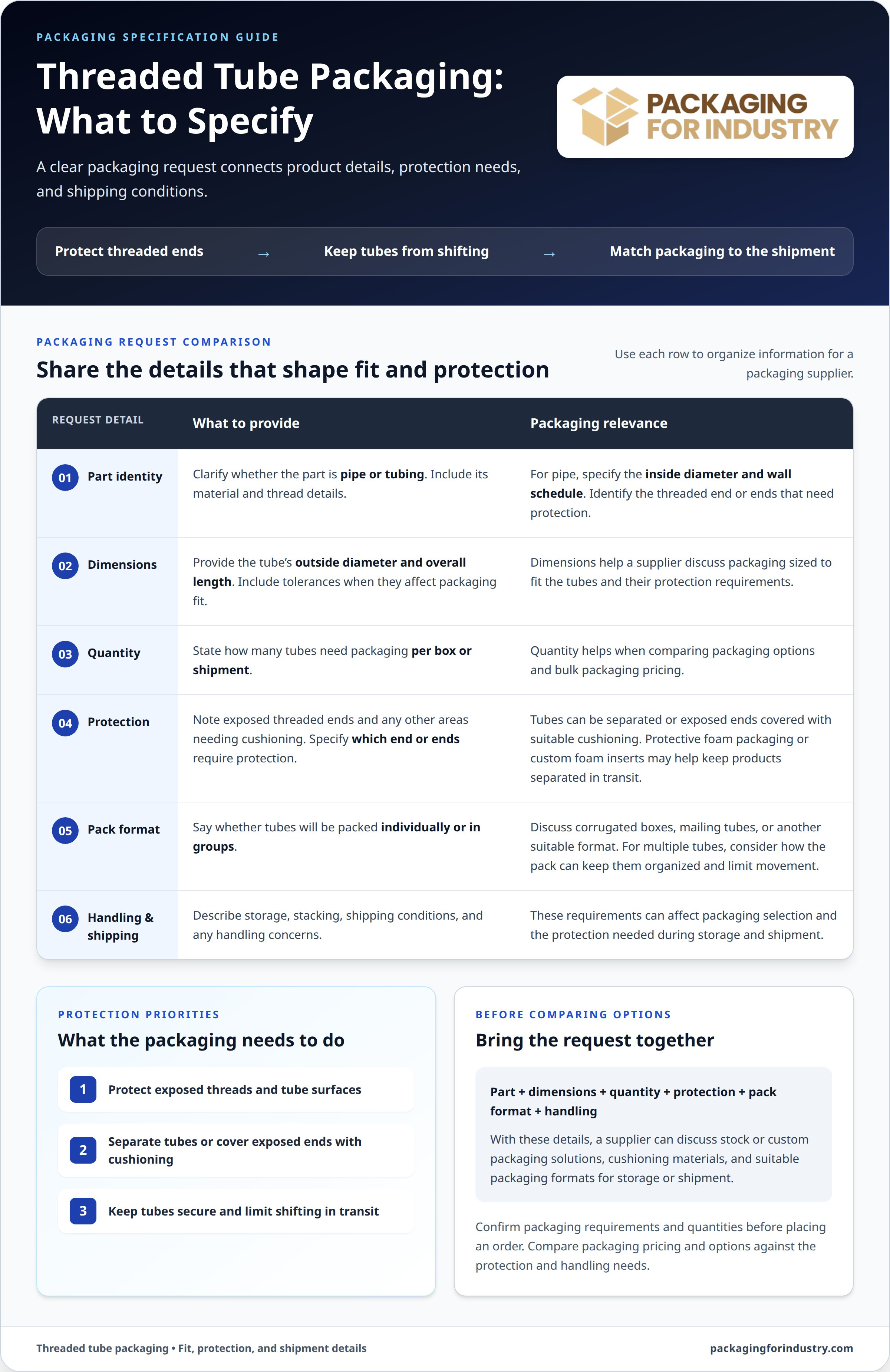
For packaging threaded tubes for storage and shipment, choose packaging that protects the threads and keeps the tubes from shifting. Separate tubes or cover exposed threaded ends with suitable cushioning materials to help prevent contact damage. Select packaging based on the tube dimensions, quantity, handling requirements, and shipping conditions.
When requesting a packaging quote, share how the tubes will be stored and shipped, along with any handling concerns. Note whether the packaging needs to keep individual tubes separated or hold multiple tubes together. Clear requirements help a packaging supplier recommend suitable stock or custom packaging solutions.
- Tube dimensions: Provide the outside diameter and overall length so packaging can be sized to fit. Include tolerances where they affect the packaging fit.
- Quantity: State how many tubes need packaging per box or shipment. This helps when comparing packaging options and bulk packaging pricing.
- Protection: Identify exposed threaded ends or other areas that need cushioning. Protective foam packaging or custom foam inserts may help keep products separated in transit.
- Packaging format: Specify whether tubes will be packed individually or in groups, and whether you need corrugated boxes, mailing tubes, or another suitable packaging format.
- Handling details: Share storage, stacking, and shipping requirements that may affect packaging selection and protection.
For shipments with multiple tubes, consider packaging that keeps them organized and limits movement during handling. The right packaging format depends on tube dimensions, order quantity, and how the shipment will be stored and transported.
When preparing a packaging request, provide tube dimensions, quantities, and any protection requirements. A packaging supplier can use these details to discuss custom sizes available, stock packaging, cushioning materials, and suitable corrugated boxes for storage or shipment.
Before placing an order, confirm the packaging requirements and quantities with your supplier. Comparing packaging pricing and options can help purchasing and warehouse teams choose packaging that protects threaded tubes and supports reliable shipping.
Industries Served in San Diego
San Diego businesses need packaging that suits their products, handling processes, and shipping routes. A manufacturer moving components between workstations has different needs from a fulfillment center preparing customer orders. Choose packaging based on product shape, handling frequency, storage conditions, and how shipments move through the supply chain.
Packaging For Industry serves industrial operations across sectors, including manufacturers, warehouses, distributors, fulfillment centers, aerospace, food, medical, electronics, and construction businesses. For manufacturing packaging needs, the right configuration can support handling from production through dispatch.
- Manufacturers: Match boxes, cushioning, and protective foam packaging to component shapes and production workflows. Packaging that fits the item can help control excess material and handling steps.
- Warehouses: Consider how packaging supplies are stored, accessed, and replenished. Consistent formats can make picking, packing, and inventory management more orderly.
- Distributors: Plan for goods moving between facilities and onward to customers. Corrugated packaging and stretch film can support unitizing and shipment handling.
- Fulfillment centers: Align packaging formats with order profiles, packing stations, and throughput needs. A clear mix of stock and custom packaging can support varied shipments.
- Aerospace businesses: Account for component geometry and the need to limit movement during handling. Custom packaging design and foam inserts can be shaped around specific parts.
- Food companies: Choose packaging with distribution, storage, and product presentation needs in mind. The format should fit the product and the company’s handling process.
- Medical and electronics companies: Assess product fragility, configuration, and handling requirements. Protective packaging can help reduce movement and shipping damage.
- Construction businesses: Plan for bulky or irregular items and the demands of warehouse staging and job-site distribution. Packaging should suit the item and its route.
These needs can overlap. A distributor may also operate a warehouse, while a manufacturer may ship directly to customers. Reviewing the full movement of goods helps identify where protective foam, corrugated boxes, stretch film, and other packaging materials are most useful.
For San Diego buyers, an effective packaging plan starts with the product, how teams handle it, and its destination. Matching these factors to packaging supplies can support efficient operations, help reduce product damage, and improve supply reliability without relying on a one-size-fits-all solution.
Benefits of Choosing the Right Packaging Supplier
The right packaging supplier helps purchasing and operations teams assess more than unit price. Material use, product protection, packing time, storage needs, and replenishment all affect the total cost of moving goods. A packaging review can reveal where a better fit may reduce waste without compromising protection.
Start with the product and its shipping process. A box that leaves excessive space may need more cushioning and take up more warehouse room. A package that fits the item and handling process can simplify packing and support more efficient storage. Packaging cost savings often come from assessing these connected factors rather than changing one supply in isolation.
- Lower packaging costs: Review material use, package dimensions, and packing steps. Custom sizing can reduce unnecessary void fill, while consistent formats can make purchasing and storage easier to manage.
- Reduce product damage: Match cushioning and protective foam to the item’s shape and movement risk. For example, foam inserts can help keep a delicate component positioned inside its shipping container.
- Improve packing efficiency: Choose supplies that fit the workstations and shipment mix. Packaging kitting can bring required components together, reducing the need to gather items separately for each order.
- Support supply reliability: Coordinate replenishment around actual usage and operating needs. Vendor Managed Inventory and Just-In-Time inventory management can help align packaging supply with demand.
For operations in San Diego, reliable supply also depends on visibility into regularly used materials and changing requirements. A supplier familiar with packaging for manufacturers, warehouses, and distribution centers can help organize product choices around how goods are packed, stored, and shipped.
Compare packaging costs alongside fit, protection, and replenishment needs. A low-cost material may not be economical if it increases damage, packing labor, or storage complexity. A tailored solution can help lower costs when it uses materials efficiently and suits the workflow.
Set practical measures for review, such as packaging used per shipment, damage patterns, packing steps, and stock availability. These indicators help teams identify useful changes and connect purchasing decisions to operating results. The goal is to protect products while supporting steady fulfillment.
Packaging For Industry (PFI): Custom Packaging Design Services
Packaging For Industry (PFI) helps San Diego businesses address industrial packaging needs, including protection for metal tubes during storage and shipment. Its custom packaging design services match packaging to the item, handling process, and workflow. This is a practical next step when packaging fit, product movement, or supply coordination presents a challenge.
For threaded tubes, the tube drawing defines dimensions and connection details. The packaging plan determines how finished parts are protected, grouped, and handled. Share relevant product dimensions, how the tubes move through your operation, and any known points where damage or inefficient packing occurs. This context helps shape packaging around the actual workflow.
- Custom Packaging Design Services: PFI can develop a packaging approach around product shape, handling, and shipment needs. This is relevant when a standard format does not suit the item or packing process.
- Foam Packaging: Protective foam can help cushion products and limit movement inside a package. For a tube assembly or related component, the design can account for the areas that need support during handling.
- Stretch Film: Stretch film can help unitize packaged goods for handling and storage. It may suit operations that need to keep grouped items together as they move through the warehouse or distribution process.
- Vendor Managed Inventory for Packaging: VMI can support packaging supply coordination around usage and operating needs. It is relevant when maintaining visibility and replenishment for recurring packaging materials is a priority.
These services address different operational needs: custom design focuses on packaging fit, foam provides cushioning, stretch film supports unitizing, and VMI coordinates packaging inventory. A manufacturer may need a designed protective package, while a warehouse may prioritize consistent materials and replenishment. The right combination depends on the products and how the team handles them.
When reviewing a packaging need, bring together product information, handling steps, and current supply challenges. This creates a practical starting point for design and inventory discussions, whether the priority is limiting product movement, organizing shipments, or maintaining packaging availability.
Contact Packaging For Industry (PFI) to request a packaging quote for your operation.
Frequently Asked Questions
What materials and tube sizes can San Diego custom tube fabricators thread?
Available materials and size ranges depend on each fabricator’s equipment and threading capabilities. For custom threaded tubes in San Diego, specify the supported material options and tube-size range needed for the connection. The application matters too: a tube in a static assembly may have different fabrication requirements from one exposed to repeated handling. Explain the part’s function so the fabricator can assess the relevant capabilities.
How much do custom threaded tubes cost in San Diego?
Pricing depends on material, order quantity, thread requirements, tolerances, and additional fabrication such as bending. For custom threaded tubes in San Diego, a clear drawing and order quantity help the fabricator calculate project-specific costs. More complex setups or extra operations can affect the price, while repeat orders may follow a different production plan. Compare quotes against the same scope to ensure they cover equivalent requirements.
What are typical minimum order quantities and lead times for custom threaded tubes?
Minimum quantities and lead times vary with the fabricator, material sourcing, production schedule, and order complexity. A repeat order may move through production differently from a first run requiring setup or design review. Include the required quantity and delivery timing in your sourcing request. This gives the fabricator useful planning information and helps clarify how the order fits current production capacity, without assuming a standard minimum or turnaround.