
A cardboard core and a mailing tube may look similar, but they serve different purposes. For manufacturers sourcing heavy-duty cardboard tubes in Los Angeles, the distinction is practical: a core supports material wound around it, while a tube protects items placed inside. Choose the format based on how the paper product will be used.
That difference matters when balancing product protection, storage, and purchasing needs. A tube that is too short will not protect the full length of a poster or document, while an unsuitable core may not fit the winding or handling process.
This guide explains how cores differ from tubes, what to consider when selecting kraft tube sizes, and how pack quantities can suit your operation. It also covers how mailing tubes protect posters, maps, and other documents in transit. Use the practical guidance on tube length and construction to make a more informed packaging decision.
Key Takeaways
- Choose a tube for items placed inside it and a core for material wound around it.
- Match kraft tube length, wall construction, and pack quantity to the item and your shipping requirements.
- Consider how tube fit and strength affect protection for posters, maps, and documents in transit.
- Custom-cut and made-to-order options can help align tube dimensions with specific operational needs.
- PFI’s foam packaging, stretch film, VMI, and just-in-time inventory services can support broader packaging and supply planning.
Heavy-duty cardboard tube products, sizes, and prices
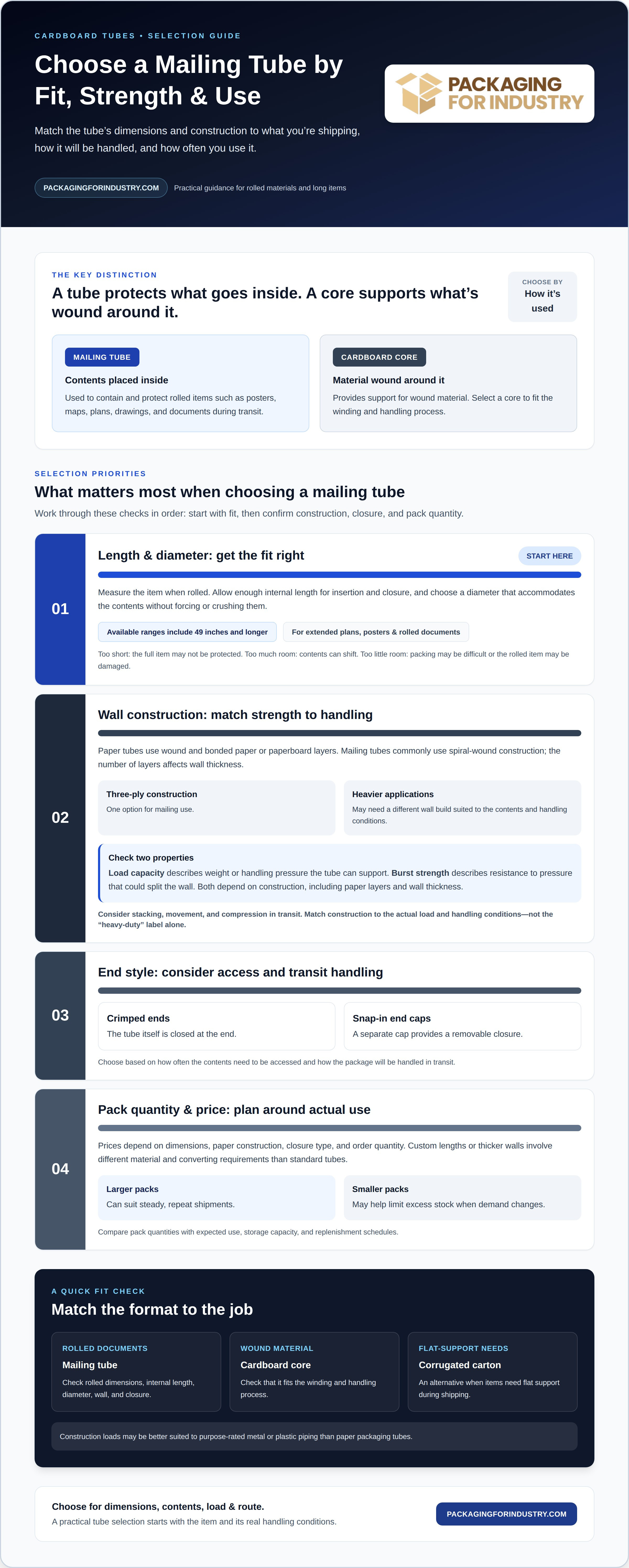
Kraft mailing tubes protect items placed inside, while cardboard cores support material wound around them. To select a size, match the tube’s length, diameter, wall construction, and closure to its intended use.
Paper tubes are made from wound and bonded paper or paperboard layers. Mailing tubes commonly use spiral-wound construction, and the number of layers affects wall thickness. Three-ply construction is one option for mailing use; heavier applications may need a different wall build suited to the contents and handling conditions.
Length is a practical starting point. Available mailing tube ranges include lengths of 49 inches and longer, useful for items such as extended plans, posters, or rolled documents. Measure the item when rolled, then allow enough internal length for insertion and closure. Diameter should accommodate the rolled contents without forcing or crushing them.
End style affects handling too. Mailing tubes may have crimped ends or snap-in end caps. A crimped end closes the tube itself, while a separate cap provides a removable closure. Choose based on how often the contents need to be accessed and how the package will be handled in transit.
Professional Tube Selection for Your Project
Select a tube by matching the contents’ dimensions and shipping conditions to its length, diameter, wall, and closure. A poster, rolled drawing, and long industrial component each place different demands on fit and handling. Too much space can let contents shift; too little can make packing difficult or damage the rolled item.
Tube Load Capacity and Burst Strength
Load capacity describes the weight or handling pressure a tube can support; burst strength describes its resistance to pressure that could split the wall. Both depend on construction, including paper layers and wall thickness. Consider these properties when tubes will be stacked, moved, or exposed to compression in transit. Match construction to the actual load and handling conditions, rather than relying on the “heavy-duty” label alone.
Mailing tube prices depend on dimensions, paper construction, closure type, and order quantity. Custom lengths or thicker walls involve different material and converting requirements than standard tubes. Compare pack quantities with expected use, storage capacity, and replenishment schedules. Larger packs can suit steady, repeat shipments; smaller packs may help limit excess stock when demand changes.
For items that need flat support during shipping, corrugated cartons are an alternative to tubes. Construction loads may be better suited to purpose-rated metal or plastic piping than paper packaging tubes. When selecting a heavy-duty cardboard tube, match its construction and pack quantity to the item’s dimensions, contents, load, and shipping route.
Industries served
Industrial packaging suppliers support businesses moving products, materials, and documents through production or distribution. Heavy-duty cardboard tubes can protect long, narrow, or rollable items for Los Angeles manufacturers, while other packaging materials suit products with different shapes and handling needs.
Manufacturers may use tubes to ship plans, drawings, posters, or other rolled documents between facilities. Production teams also need packaging that fits their workflow, from protecting components to preparing finished goods for shipment. Outside traditional manufacturing, multimedia companies spanning live events, media, and commerce, such as platinumcity.com, also require sturdy cylindrical packaging to protect promotional prints, merchandise, and event graphics during transport. Coordinating materials around product dimensions, handling requirements, and replenishment needs is more effective than treating every package as an isolated purchase.
Other industrial sectors have distinct packaging priorities. Aerospace businesses handle components and technical documents that need organized protection during storage and transport. Food companies, medical businesses, and electronics manufacturers each package products according to their own processes and handling requirements. Aerospace packaging needs may involve pairing protective materials with appropriate outer packaging to help manage movement through the supply chain.
- Warehouses and distribution centers: These operations need packaging supplies that support receiving, storage, order preparation, and outbound shipping. Consistent materials can simplify routine packing work and replenishment planning.
- Distributors and fulfillment centers: Their packaging needs shift with product mix and order profiles. Tubes can protect rolled documents or long items, while other formats suit goods that do not fit cylindrical packaging.
- Construction suppliers: Plans, drawings, and other rolled materials may need protection as they move between offices, job sites, and storage areas.
- Electronics and medical businesses: These companies need packaging selected around the product and its handling process. Protective foam packaging can cushion items that require a tailored fit.
- Food manufacturers and industrial businesses: Production, storage, and shipping create different packaging demands. A supplier can align materials with the operation’s product types and packing flow.
Packaging support matters beyond large factories. Small manufacturers, regional distributors, and growing fulfillment operations may need reliable access to bulk supplies without carrying more inventory than their space allows. Vendor Managed Inventory (VMI) or Just-In-Time (JIT) packaging management can help coordinate replenishment with actual operating needs.
For buyers in Los Angeles comparing heavy-duty cardboard tubes, packaging needs may extend beyond the tube itself. A manufacturer may prioritize line-side availability, while a warehouse may focus on storage space and packing speed. Matching packaging choices to each operation can reduce avoidable product damage and support a more reliable supply process.
Benefits of heavy-duty cardboard tubes
A mailing tube keeps rolled material contained instead of folded across a flat package. For example, an architectural drawing can stay rolled during storage and shipping, reducing the chance of creases across the working area. A tube also helps keep the document separate from other packed items.
This format can simplify handling for teams shipping repeated document sets. A warehouse preparing rolled plans for several job sites can group tubes by destination and label each package. The enclosed format keeps loose sheets together in transit and gives staff a consistent package to stage with outgoing orders.
Tube shape affects how packages move through packing and storage. A cylindrical package may roll if left unsecured, so packing teams can place it in a fitted outer carton or arrange it with other stable goods. Triangular or rectangular poster tubes offer different handling surfaces. Choose a form that suits the shipping workflow, not just the document inside.
Understanding load capacity
Assess load capacity using the shipment’s actual handling conditions. A tube sent individually through parcel service faces different demands from tubes grouped in a shipping carton or staged beneath other goods. For a batch of rolled site drawings, consider how packages will be sorted, carried, and stored before dispatch. This helps purchasing teams specify performance for the actual route.
Include the contents and the full package arrangement in the assessment. A tube holding a single rolled plan differs from one containing several documents and closure materials. Total packed weight and handling conditions inform the required capacity. A clear application prevents selecting a tube solely by its “heavy-duty” description.
Understanding burst strength
For burst strength, consider the forces that the contents and handling may place on the tube. A tightly bundled set of technical drawings may press outward more than a loosely rolled sheet. The packed item, how firmly it is rolled, and how the package is handled help determine the relevant requirement. Match any performance value to those conditions.
Review the complete package, not just the tube. End closures, labels, and any outer carton can affect how staff pack and move the shipment. A shipping team sending plan sets with other job materials may use an outer carton to keep tubes from shifting. This can support consistent handling during receiving, storage, and dispatch.
Before standardizing a tube for recurring shipments, compare its specification with the actual shipping process. Record the contents, packing arrangement, and handling conditions for a representative order. This gives procurement a practical basis for evaluating load capacity and burst strength without relying on a generic product label.
Can Los Angeles suppliers custom-cut or manufacture cardboard tubes to order?
Yes, Los Angeles buyers can source custom-cut and made-to-order cardboard tubes. The right approach depends on whether a standard tube only needs a shorter length or the project requires different dimensions. A rolled blueprint and a long industrial component, for example, may need different internal space and wall construction.
Custom cutting changes tube length to suit the packed item. A supplier can match the cut to a rolled poster, drawing set, or shipping document. For a document longer than standard options, mailing tubes listed at 49 inches and longer provide a reference point. The required inside length should account for the contents and closure.
Made-to-order production can address more than length. A project may require a specific inside diameter, paper wall thickness, or end style. These details affect fit, handling, and protection. A narrow tube may suit rolled plans, while wider contents need additional internal clearance. Base the design on the packed item, not just its outside measurements.
A clear specification helps avoid mismatches between the tube and its contents. Provide the item’s rolled dimensions, intended use, and shipping conditions. A tube carrying drawings between offices, for example, faces different demands from one holding a long component in transit. Use those details to evaluate dimensions and construction.
- Length: Match the tube’s interior to the item, including space needed for the end closure.
- Inside diameter: Allow rolled posters or documents to enter without forcing or crushing them.
- Wall construction: Consider the layers and thickness needed for handling and expected pressure.
- Closure: Choose between crimped ends and removable snap-in caps based on access needs.
Customizing every dimension may not suit every order. If a standard tube fits the product, a custom cut may be the simpler specification. If the contents need an unusual diameter or stronger wall, made-to-order design can better match the packaging to the job. Consider pack quantity and storage space when choosing a production option.
Packaging design support can help translate a product’s requirements into usable dimensions and materials. For example, a design review can assess how a rolled drawing fits, how the tube will be handled, and whether the closure suits packing operations. Custom packaging design connects those project requirements with a practical packaging specification.
For manufacturers sourcing heavy-duty cardboard tubes in Los Angeles, custom-cut and made-to-order options can address unusual lengths, diameters, and handling needs. A clear specification identifies the contents, interior dimensions, wall requirements, closure, and order quantity. These details provide a concrete basis for matching tube construction to the application and shipping process.
Heavy-duty applications can also involve production cores, not just shipping tubes. Carpet manufacturers wind carpet around paper cores during production, so buyers can specify the core’s required dimensions and intended use when discussing a made-to-order option. Paper tube wall thickness can vary with the number of layers wrapped during manufacturing, making wall construction another detail to consider alongside fit.
Explain how the core will be used and what it must accommodate to help determine suitable dimensions and construction. This can align the specification with the production task, whether the priority is fit, a particular wall thickness, or both.
Why Choose Packaging For Industry (PFI)
Packaging For Industry (PFI) helps Los Angeles manufacturers address packaging needs beyond cardboard tubes. If your operation also needs cushioning, load stabilization, or more organized replenishment, PFI offers foam packaging, stretch film, Vendor Managed Inventory (VMI), and Just-In-Time (JIT) inventory management. The right fit depends on your products, packing workflow, and supply needs.
Foam packaging can cushion products that need protection during handling, while stretch film can secure packaged loads. Packaging needs in warehouses and distribution centers vary with storage capacity, order flow, and how supplies are used. Considering these operational details helps purchasing teams choose packaging that serves the actual process.
Recurring demand can also make replenishment a purchasing concern. Vendor Managed Inventory for Packaging helps coordinate packaging stock with operational use. This can suit manufacturers that want a more organized approach to repeat supplies. Vendor managed inventory for packaging can be part of a broader plan for managing items used regularly.
Just-In-Time Inventory Management for Packaging is another option for aligning replenishment with workflow needs. The appropriate approach depends on consumption patterns, available storage, and production schedules. Reviewing those factors can help buyers plan supply without relying on emergency purchases or holding more stock than their operation can use.
When reviewing purchases, compare packaging prices alongside each item’s practical requirements. Bulk pricing may matter for recurring use, but order size and storage space should also guide the decision. For custom-size packaging, match dimensions to the product and packing process rather than choosing by price alone. Local delivery is another consideration for operations in Los Angeles, Orange County, and San Diego.
- Cushioning: Foam packaging can support products that need cushioning during handling.
- Load stabilization: Stretch film can secure packaged loads for storage and movement.
- Inventory coordination: VMI can help organize recurring packaging replenishment.
- Supply timing: JIT inventory management can align packaging supply with workflow needs.
These options address different packaging and supply requirements; not every operation needs the same combination. A manufacturer may focus on cushioning, while a warehouse may prioritize inventory planning. Clear information about product handling, supply use, and storage helps connect the right service to the operational need.
To discuss packaging needs for your operation, contact Packaging For Industry (PFI) or request a packaging quote.
Frequently Asked Questions
What sizes, wall thicknesses, and lengths of heavy-duty cardboard tubes are available?
Heavy-duty cardboard tubes are available in stock and custom configurations, with choices in inside diameter, wall thickness, and length. For a rolled document, measure the complete bundle, including any sleeve or band, rather than the sheet before rolling. That gives the supplier a more useful fit reference. Custom-made tubes can address requirements that standard stock dimensions do not meet.
How much do heavy-duty cardboard tubes cost in Los Angeles, including bulk pricing?
Pricing varies by order and is provided after a quote request; there is no single price for every Los Angeles application. For bulk pricing, compare the quoted unit cost at quantities your operation can use and store, rather than focusing only on the largest pack. Production requirements and delivery arrangements can also affect the quote. A purchase forecast helps align the requested quantity with actual demand.