
Manufacturers and shippers need packaging that protects freight in transit and helps reduce avoidable damage. When goods arrive damaged, lost, delayed, or short-shipped, a freight claim is a formal request to recover losses. Sourcing suitable boxes, cushioning, and pallet protection from a packaging supplier can help lower damage risks and clarify how goods were prepared. Request a packaging quote for protection matched to your products and shipping needs.
Strong boxes and suitable cushioning protect products inside the package, while pallet protection and secure packing help keep freight stable during handling and transport. Packaging cannot prevent every incident, but matching protection to the product and shipping conditions can reduce avoidable damage.
This article explains freight claims and how to strengthen shipments with appropriate boxes, cushioning, pallet protection, and secure packing. It also covers how careful preparation and clear shipment records can help clarify what happened if freight arrives damaged.
Key Takeaways
- Document shipment condition with inspections and photographs to clarify damage and support a claim when reviewing packaging costs.
- When sourcing boxes and cushioning, match strength to the product and route, and keep labels and shipment details accurate.
- Compare pallet protection options, including wrap, banding, crates, and corner protection, rather than relying on stretch film alone.
- Plan packaging supplies for repeated handling by securing loads to sound pallets and protecting products from shifting or impact.
- PFI’s foam packaging, stretch film, and packaging inventory management can help align protection and supply planning with operational needs.
What Is a Freight Claim?
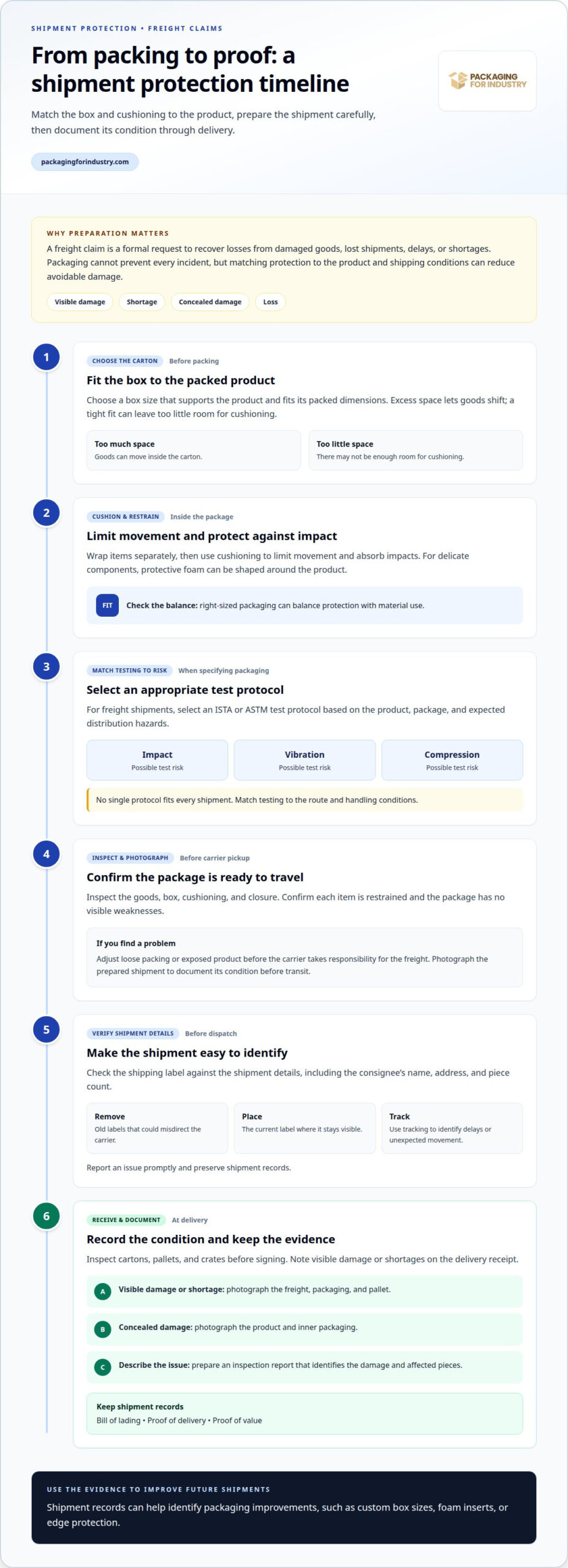
A freight claim is a formal request by a shipper or consignee to recover losses from damaged goods, lost shipments, delays, or shortages. The U.S. General Services Administration identifies four types: visible damage, shortage, concealed damage, and loss.
Packaging can contribute to damage when a carton is too weak, cushioning allows movement, or a pallet load shifts without restraint. For example, an unprotected component may strike the carton wall during handling and arrive damaged, even if the outer label is intact. Custom packaging solutions, including corrugated boxes, protective foam packaging, and pallet restraints, can help address these risks by matching protection to the product and shipping conditions. Request a packaging quote to review options for reducing shipping damage.
Packaging standards should reflect the goods, likely handling risks, and current industry guidance. For U.S. freight, NMFC packaging requirements involve following the current NMFC guidelines for the shipment. NMFC Item 245 specifies crate-building requirements, and updated rules require three straps on overlength items.
Carrier packaging rules can affect how responsibility is assessed, alongside shipment terms and evidence of damage. Inadequate packaging may complicate a claim if the goods were not secured for transit. A packaging supplier can help review box strength, cushioning, and load restraint for the shipment. The applicable requirements depend on the shipment and the parties’ roles.
At receiving, inspect cartons, pallets, and crates before signing. Note visible damage or shortages on the delivery receipt, then photograph the freight, packaging, and pallet. If you find concealed damage, photograph the product and inner packaging. An inspection report should describe the damage and affected pieces. Shipment records can include the bill of lading, proof of delivery, and proof of value. These documents can help identify packaging improvements, such as custom box sizes, foam inserts, or edge protection, for future shipments.
Choosing Boxes and Cushioning for Shipment Protection
When sourcing custom boxes, choose a size that supports the product and fits its packed dimensions. A carton with excess space lets goods shift; a tight fit can leave too little room for cushioning. Wrap items separately, then use cushioning to limit movement and absorb impacts. For delicate components, protective foam packaging can be shaped around the product. Right-sized packaging can balance protection with material use.
For freight shipments, select an ISTA or ASTM test protocol based on the product, package, and expected distribution hazards. These tests can assess risks such as impact, vibration, or compression. No single protocol fits every shipment, so match testing to the route and handling conditions when specifying custom boxes and cushioning.
Before pickup, inspect the goods, box, cushioning, and closure to confirm the packaging suits the shipment. Confirm that each item is restrained and the package has no visible weaknesses. Photograph the prepared shipment to document its condition before transit. If you find loose packing or exposed product, adjust the box or cushioning before the carrier takes responsibility for the freight.
Check the shipping label against the shipment details, including the consignee’s name, address, and piece count. Remove old labels that could misdirect the carrier, and place the current label where it stays visible. Tracking can help identify delays or unexpected movement. Use it to report an issue promptly and preserve shipment records.
Match the carrier and service to the freight’s size, handling needs, and route. A fragile machine part may need different handling than a durable, palletized load. Consistent packing practices, accurate records, and suitable packaging work together to reduce claim risks. For custom boxes, cushioning, or other packaging tailored to a product and shipment, request a packaging quote.
Protecting Palletized Freight with Wrap, Banding, Crating, and Crush Cones
Stretch film helps hold a pallet load together, but it should not be the only protection. Choose a suitable stretch film supplier to source film that secures your load, then secure the film to the pallet and wrap the load so cartons stay in place during handling. Stack cartons evenly, keep them within the pallet edges, and add banding when the load needs firmer restraint. PFI can help buyers compare stretch film options for packaging needs and bulk quantities.
Use a crate when the product needs a rigid barrier against impacts or contact with other freight. Add cushioning inside to limit movement, and install corner and edge protection where straps or adjacent loads could crush exposed edges. For example, a crated machine component can use internal cushioning and protected corners to address separate impact risks. PFI can help buyers source crates and corner protection suited to their freight and request a packaging quote.
For freight that cannot support another load, place “Do Not Stack” cones on the shipment. Physical cones make the restriction visible and tangible, unlike a label alone. Apply them before wrapping, then ensure they remain visible on the finished pallet. This helps communicate handling requirements as the shipment moves through warehouse operations.
Choose protection based on the likely failure mode, not just the lowest packaging specification. If cartons shift, compare stretch film options; if corners crush, source suitable corner protection; if impacts reach the product, add cushioning or a crate. PFI can help buyers assess the product, pallet configuration, and handling risks together and select suitable packaging supplies. Request a quote to compare packaging pricing for stretch film, crates, and corner protection that address your shipping needs.
Secure Packaging to Prevent Goods from Shifting During Transit
Choose a shipping pallet rated for the shipment’s weight and keep cartons within its edges. Damaged pallet boards can undermine load stability, so suitable pallets are an important part of packaging for warehouses and distribution centers.
Place heavy items below lighter cartons and distribute cargo weight evenly across the pallet. For example, stack dense machine parts low, with lighter cartons above. This arrangement helps minimize tipping and crushing during transit.
Secure the freight to the pallet with straps or bands in both directions. Tighten them enough to prevent movement without damaging cartons or products. Add corner protection where straps contact carton edges. PFI can help businesses source pallets, straps, and corner protection to support stable freight loads.
Before dispatch, check the load from every side. Confirm that cartons do not extend beyond the pallet and that bands hold the stack together. Test outer cartons for movement and correct loose packing before shipment. A consistent loading process, supported by suitable packaging supplies, helps warehouse teams reduce product damage in transit.
Packaging for Multiple LTL Handling and Trailer Transfers
A standard less-than-truckload shipment may be loaded and unloaded at carrier terminals multiple times during transit. Each transfer adds handling, so packaging must protect goods beyond the first truck. A carton prepared only for careful warehouse movement may fail after repeated loading, unloading, and trailer transfers.
Build protection around the product’s vulnerable points. For example, a machine component needs cushioning that limits movement inside its carton, while an exposed edge needs reinforcement against impacts. Secure the inner packaging, close the box firmly, and stabilize the palletized load. Stretch film can help hold cartons together, but it should not replace cushioning or structural protection.
Consider what can happen as freight moves between trailers. A pallet may be handled alongside other shipments, so cartons need to resist contact and remain within the pallet footprint. Add corner protection where straps could press into the load. Keep labels visible after wrapping so terminals can identify and route the shipment correctly.
Before dispatch, inspect the completed package from every side. Check for loose cartons, exposed product, weak closures, and movement within the load. A photograph of the shipment before transit gives operations a reference if damage is visible at delivery. Record the packaging method and shipment details with the bill of lading and packing list.
Review damage reports by packaging method and route. If the same product arrives damaged after terminal transfers, adjust its cushioning, carton, or pallet restraint. These targeted changes can help reduce repeat disruptions and the financial burden of preventable claims.
Packaging Products for Freight Protection
Start with the container. Stock corrugated boxes work for repeat shipments with standard dimensions, while custom boxes can fit products more closely. Heavy-duty corrugated options offer another choice for demanding freight applications. A well-fitted box limits excess movement and helps protect contents during handling. Choose a box based on the product’s size, weight, and packing method, not simply the stock available. Corrugated box options can support varied shipping needs.
Inside the carton, foam and other cushioning materials help restrain items and absorb impacts. For example, shaped foam or protective layers can separate a component with delicate surfaces from neighboring parts. Packaging tape closes cartons, while poly bags can contain small components or keep items grouped inside larger shipments.
For palletized freight, stretch film helps unitize cartons, and pallets provide a stable base for transport. Crates can enclose larger or more exposed goods. Corner and edge protection helps reduce crushing from straps or contact with other freight. These products work as a system: the pallet stabilizes the load, restraint holds it together, and internal protection limits product movement.
Long products may need mailing tubes or heavy-duty tubes, while cardboard cores support rolled materials during storage and shipment. Labels identify the destination and shipment contents, helping operations handle freight correctly. Military packaging addresses specialized shipping needs for equipment and supplies. Selecting materials around the cargo, route, and handling risks creates practical freight protection without relying on one material to do every job.
Industries Served
Packaging needs vary across manufacturing, warehousing, distribution, and fulfillment operations. Manufacturers ship parts, assemblies, and finished goods, while warehouses and distribution centers manage varied carton sizes and pallet loads. Packaging should fit each product and handling process, helping teams protect freight without complicating packing-line or dock workflows. Packaging for manufacturing operations can be tailored to the products moving through production and shipping.
Aerospace businesses may ship large assemblies, precision components, or equipment that needs controlled movement inside its package. Food companies move products through supply chains where secure, well-organized packing supports reliable handling. Medical and electronics businesses also ship sensitive goods, making suitable cushioning and stable outer packaging important. The right design depends on the cargo, route, and handling environment.
Construction suppliers often move components, tools, and materials in bulk. Packaging for these shipments must work with warehouse staging, pallet loading, and freight transfers. Fulfillment centers handle a broad range of outgoing orders, so consistent packing materials can support efficient packing and dispatch. Custom packaging design can address products that do not fit a standard container or need a specific protective arrangement.
Other industrial businesses can also benefit from packaging selected for their shipping patterns, product dimensions, and receiving requirements. A shipment of machined parts, for example, may need internal separation to prevent contact, while bulky equipment may need a crate and secure pallet preparation. Across these sectors, a practical packaging plan aligns product protection with daily operations, helping reduce damage, support dependable deliveries, and keep freight moving through the supply chain.
How the Right Packaging Helps Reduce Costs and Damage
Packaging affects more than the materials budget. A damaged shipment can trigger replacement, rework, return shipping, and unrecovered freight costs across different budgets. Trace a recent damage incident, return authorization, or warranty claim through those expenses. This gives operations a clearer view of the total impact and helps distinguish transit damage from product or manufacturing issues.
Use recurring damage reports to identify where protection needs adjustment. If the same item arrives with crushed corners, reinforce vulnerable edges or revise the package design. If products shift inside cartons, add suitable cushioning or improve internal restraint. These targeted changes address the failure mechanism instead of adding material that does not protect the product.
Right-sized packaging can also reduce waste and support efficient packing. Oversized cartons may require extra fill and take up more warehouse and trailer space; undersized packages can leave products exposed or poorly cushioned. Review the package, packing steps, and damage patterns together. A packaging cost review can identify practical opportunities to improve material use and protection.
Reliable packaging supply supports consistent packing practices. If a warehouse runs short of a needed box or cushioning material, staff may substitute an unsuitable option. Inventory planning and standard packaging specifications help keep materials available and packing consistent. Pair these controls with shipment records and periodic claim reviews. This practical approach can reduce damage, avoid preventable rework, and improve supply reliability without assuming a fixed savings outcome.
Packaging For Industry (PFI)
Packaging For Industry (PFI) helps businesses address recurring freight damage through packaging selection and supply planning. Packaging for warehouses needs to fit product protection, packing workflows, and available storage space. PFI can help assess these needs when current materials do not fit the product or packaging shortages disrupt operations.
Foam packaging cushions products inside a package, while stretch film helps unitize pallet loads. Custom sizes can better suit specific products and packing requirements. Businesses can compare packaging and bulk pricing as they assess material choices and ongoing supply needs.
Vendor Managed Inventory for packaging supports inventory planning, while Just-In-Time inventory management helps align packaging supply with operational demand. These programs help teams plan for recurring materials and maintain a consistent supply process. Local packaging delivery can also support businesses managing regional shipping and warehouse requirements.
For a recurring claim, useful starting points include the damaged product, current packaging, shipment route, and packing process. These details help connect the observed failure to a practical packaging or inventory adjustment. PFI works with manufacturers, warehouses, and distribution operations in Orange County, Los Angeles, and San Diego seeking to reduce shipping damage, manage packaging costs, and improve supply reliability.
Contact Packaging For Industry (PFI) to discuss your freight packaging needs.
Turn Freight Damage Patterns Into a Better Packaging Plan
Use recurring damage reports to guide your next packaging review. Identify the products, packing steps, or shipment conditions that appear in incidents, then focus improvements on those specific risks. A practical packaging plan should protect the product while fitting how your team packs, stores, and ships it. That is how packaging solutions to prevent freight claim disputes can strengthen operations without adding protection that does not address the actual problem.
Packaging For Industry (PFI) connects product protection with reliable material supply. Foam packaging and stretch film address different packaging needs, while Vendor Managed Inventory supports planning for regularly used materials. Share a recent damage example and the packaging involved to begin a focused discussion about potential improvements. Request a quote based on your products, packing process, and supply needs.
A clear review can turn shipment problems into useful direction for your packaging program.
Frequently Asked Questions
Where can I find an industrial packaging supplier?
Look for a packaging supplier that can source the products, sizes, and quantities your operation needs. PFI supplies custom and stock packaging, including corrugated boxes, foam, stretch film, pallets, and protective materials. Manufacturers and warehouses can request a packaging quote to compare options for their products and shipping requirements. For local packaging delivery across Southern California or fast nationwide shipping, contact PFI about availability for your order.
Can I get custom packaging for my products?
Yes. Custom packaging solutions can be specified to fit a product and its shipping needs. Options include custom corrugated boxes and foam inserts, as well as crates and other protective packaging. Sharing product dimensions, weight, fragility, and shipping conditions helps a packaging supplier assess suitable options. Request a custom packaging quote to discuss custom sizes available and compare packaging pricing with stock alternatives.
How can packaging help reduce product damage?
Packaging should limit product movement and protect against the handling and shipping conditions a shipment may encounter. For example, foam inserts can help secure components inside a box, while suitable corrugated packaging can protect products during transit. Reviewing damage, returns, and replacement records can help identify where a packaging change may help reduce shipping damage. A packaging supplier can help assess the products and materials needed for your application.
What packaging do I need for LTL freight shipping?
Choose packaging that holds each item securely and supports a stable pallet load. Separate metal parts with dividers or cushioning to prevent contact, and position heavier cartons below lighter ones. Keep freight inside the pallet footprint, then secure the load with straps or bands. A packaging supplier can help you compare packaging supplies for your products, quantities, and shipping requirements.
What packaging materials can I source for fragile, heavy, and palletized shipments?
PFI supplies cushioning materials and foam packaging for fragile items, along with corrugated cartons suited to different products and shipping needs. Heavy or oversized equipment may need a crate or reinforced skid, while corner and edge protectors can shield exposed areas from straps and contact. For pallet loads, stretch film helps hold cartons together. Request a packaging quote to discuss materials based on the item’s weight, shape, fragility, and expected handling.
Can I get stretch film and other supplies in bulk?
PFI can help businesses source bulk packaging supplies, including stretch film, corrugated boxes, and protective materials. The right options depend on your load, packaging process, and order quantities. Share your requirements to compare bulk packaging pricing and discuss supply needs for your warehouse or distribution center. PFI also offers custom packaging solutions for operations that need packaging matched to a specific product or application.
How do I request a packaging quote?
To request a packaging quote, provide the product dimensions, weight, packaging type, and quantities you need. Include details about shipping conditions and any damage or handling concerns that may affect the packaging choice. PFI can discuss custom and stock options, custom sizes available, and delivery needs. These details help you compare packaging pricing and identify suitable packaging supplies for your operation.
How can I lower packaging costs without increasing damage?
Review packaging performance alongside material use, product damage, and replacement needs. Weak cartons, insufficient cushioning, loose items, and shifting loads can contribute to damage and added costs. A packaging supplier can help compare custom and stock options and assess materials for your products. Request a packaging quote to discuss bulk packaging pricing and packaging changes that may help lower packaging costs while protecting shipments.