
Packaging waste constitutes over 50% of the volume in California landfills, a reality that has pushed state regulators to enact the aggressive mandates of SB 54. For industrial producers in Los Angeles and Orange County, these figures aren’t just environmental data points; they represent rising disposal fees and the immediate need for packaging optimization to reduce waste Southern California businesses face today. You likely feel the financial strain of balancing these compliance requirements with the need to control rising freight costs and maximize expensive warehouse floor space.
It’s possible to satisfy new regulations while actually lowering your operational overhead. This guide will show you how to navigate the shift toward a circular economy by using custom engineering and sustainable materials. We’ll examine how right-sizing your RSC boxes and foam protection can eliminate excessive DIM weight charges, ensure full compliance with 2026 regulations, and streamline your entire logistical flow from the warehouse floor to the final delivery. By focusing on precision and material efficiency, you can turn regulatory hurdles into a distinct competitive advantage for your facility.
Key Takeaways
- Understand the mandatory 2026 SB 54 milestones to ensure your facility remains compliant with California’s shifting producer responsibility regulations.
- Discover how packaging optimization to reduce waste Southern California distributors utilize can lower your freight costs by eliminating “air” and reducing expensive dimensional weight surcharges.
- Identify the best high-recycled corrugated and recyclable foam materials that balance industrial-grade protection with new environmental standards.
- Reclaim expensive warehouse space in areas like Anaheim and Irvine by integrating Vendor Managed Inventory (VMI) and just-in-time delivery schedules.
- Learn how free prototyping and custom CAD/CAM design ensure your packaging fits perfectly before you commit to a full production rollout.
Navigating SB 54 and the Economic Impact of Packaging Waste
The implementation of the Plastic Pollution Prevention and Packaging Producer Responsibility Act, commonly known as SB 54, has fundamentally shifted the operational requirements for manufacturers across the state. This law moves the financial and logistical burden of waste management from local municipalities directly onto the producers. For industrial leaders, Sustainable packaging is no longer an optional corporate social responsibility goal; it’s a legal and financial necessity. Achieving the packaging optimization to reduce waste Southern California companies must prioritize involves a precise audit of current material usage and disposal workflows.
Regulatory Milestones for 2026 and Beyond
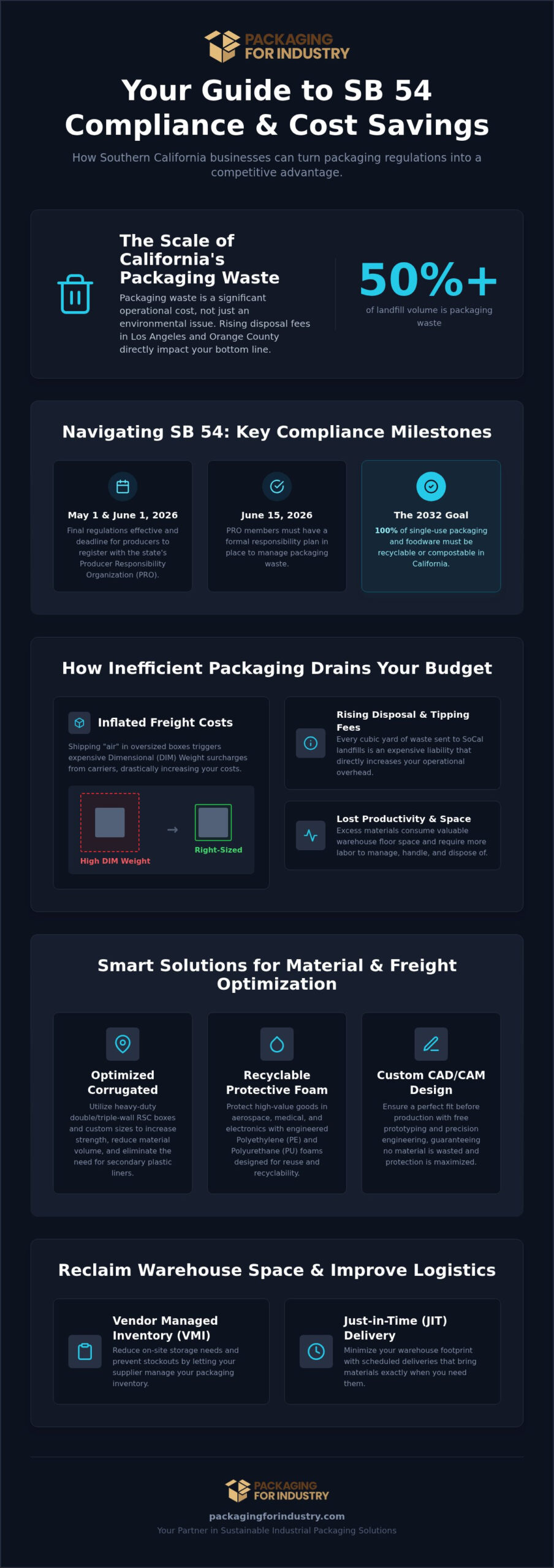
The 2026 calendar year marks a critical turning point for compliance. As of May 1, 2026, the final regulations for SB 54 are fully effective. Producers were required to register with the state-approved Producer Responsibility Organization (PRO), the Circular Action Alliance (CAA), by June 1, 2026. By June 15, 2026, those participating in the PRO needed a formal responsibility plan in place. Failing to meet these milestones or maintain accurate documentation can lead to significant penalties. CalRecycle is actively monitoring data year reports to ensure progress toward the 2032 goal of making 100% of single-use packaging recyclable or compostable. You don’t want to be caught without a clear path toward these mandates as enforcement scales up.
The Financial Burden of Inefficient Packaging
Inefficiency carries a steep price tag in the local market. Packaging waste accounts for over 50% of the volume in California landfills, and high tipping fees in Los Angeles and Orange County make every cubic yard of trash an expensive liability. Beyond disposal, oversized packaging is a primary driver of inflated freight costs. When you ship excess “air,” carriers apply dimensional weight (DIM) weight surcharges that can significantly increase your shipping expenses. Utilizing custom design packaging allows you to right-size your RSC boxes and foam inserts. This packaging optimization to reduce waste Southern California manufacturers use doesn’t just save on the purchase price; it optimizes your warehouse floor space and improves labor productivity. By reducing the time spent handling and disposing of excess materials, you reclaim the efficiency needed to lower packaging costs across your entire supply chain.
A Roundup of Sustainable Packaging Materials for Industrial Use
Selecting the right materials is the most direct way to align with SB 54 mandates while maintaining the protection your products require. Industrial packaging must survive the rigors of long-haul freight and warehouse stacking, which often makes thin, consumer-grade alternatives impractical. Achieving the packaging optimization to reduce waste Southern California facilities need involves moving toward high-recycled content materials that don’t compromise on durability. By choosing the correct grade of corrugated or foam, you can ensure your goods arrive intact while minimizing your environmental footprint.
Optimized Corrugated Solutions
Heavy-duty corrugated boxes, particularly double-wall and triple-wall varieties, allow for greater stacking strength with less overall material volume. You can often replace bulkier, less efficient outer containers with a high-strength RSC design that fits your product exactly. Weather-resistant corrugated is another specialized option that eliminates the need for secondary plastic liners, reducing material complexity. Engineering custom sizes prevents the “air” that leads to damage and inflated shipping costs. Using precision-cut flaps also ensures that no excess material is wasted during the manufacturing of the carton itself.
Protective Foam and Cushioning Alternatives
High-value sectors like aerospace, medical devices, and electronics in the Inland Empire and Orange County rely on foam packaging for precision protection. Polyethylene (PE) and polyurethane (PU) foams are now engineered for better recyclability and reuse in closed-loop logistical systems. For sensitive components, ESD foam provides necessary anti-static protection without the need for additional shielding bags. You can further reduce waste by using custom-engineered foam end caps. These caps protect critical impact points rather than wrapping the entire product in foam, which significantly lowers the total volume of cushioning material required for each shipment.
Beyond boxes and foam, reusable wood crates and pallets are essential for closed-loop SoCal logistics. These durable solutions can be used for dozens of cycles between local facilities, drastically lowering the cost per trip compared to single-use alternatives. If you’re looking to upgrade your current material mix, you can compare packaging pricing for these sustainable alternatives to see how they fit your operational budget. Integrating these materials through packaging optimization to reduce waste Southern California businesses already use helps you stay ahead of regulatory deadlines while protecting your bottom line.
Engineering Custom Solutions to Minimize Material and Freight Waste
Engineering is the foundation of fiscal responsibility in modern logistics. When you ship products in stock boxes, you are often paying for the volume of empty space. This “air” is a primary driver of material waste and inflated shipping costs. Through custom design packaging, you can eliminate this inefficiency at the source. CAD/CAM technology allows for the creation of precise structural designs that follow the exact contours of your product. This level of packaging optimization to reduce waste Southern California manufacturers require ensures that every square inch of corrugated and foam serves a specific protective purpose.
The Prototyping Advantage
Effective waste reduction begins with a physical sample rather than a guess. For aerospace and medical device manufacturers in Irvine or Carson, precision is non-negotiable. CAD/CAM support enables the production of exact-fit samples before a full production run begins. This phase allows you to test various material densities. You can find the “sweet spot” where the product is fully protected but the total packaging weight is minimized. Prototyping prevents the waste of a full production rollout that might otherwise be over-engineered or insufficiently protective. It is a proactive step that secures your bottom line and ensures your materials perform as intended.
Reducing Dimensional (DIM) Weight Charges
Carriers like UPS and FedEx calculate shipping costs based on box dimensions rather than just actual weight. This is known as DIM weight. If your box is larger than necessary, you face significant surcharges. Custom box sizing eliminates the need for excessive bubble wrap and void fill. The math of DIM weight is unforgiving; a small reduction in box size leads to massive freight savings. For example, reducing a shipping box by just 2 inches in one dimension can often drop it into a lower pricing tier for LTL shipping. This packaging optimization to reduce waste Southern California distributors use directly counters the trend of rising freight costs by ensuring you only pay for the space your product actually occupies.
Custom kitting further streamlines warehouse operations. By consolidating multiple components into a single engineered package, you reduce the number of unique SKUs in your system. This reduces individual shipments and the associated material waste. Precision-engineered protection prevents transit damage, which is perhaps the most expensive form of waste. A damaged product requires a return shipment, a replacement product, and a new set of packaging materials. Stopping this cycle through better engineering is a critical component of supply chain reliability and long-term cost control.
Operational Waste Reduction: The Role of VMI and Kitting in SoCal
Operational waste often hides in plain sight within your facility’s footprint. While material selection and engineering are vital, the way you manage your supply chain is equally critical for long-term fiscal health. In high-rent hubs like Anaheim and Irvine, every pallet position carries a significant monthly cost. Efficient packaging optimization to reduce waste Southern California manufacturers implement must address the physical space occupied by unused packaging supplies. Storing months of inventory doesn’t just tie up capital; it invites damage and obsolescence.
Eliminating Inventory Obsolescence
Bulk ordering might seem cost-effective on a per-unit basis, but it frequently leads to material waste. Corrugated boxes stored for six months can absorb moisture or sustain physical damage from forklift traffic. More importantly, as SB 54 requirements evolve, your packaging designs may need frequent adjustments. Storing massive quantities of old designs creates a high risk of inventory obsolescence. Implementing vendor managed inventory (VMI) allows for weekly or monthly review cycles. This ensures your stock levels align with actual production needs. You only have what you need, when you need it, which keeps your inventory fresh and relevant to current regulatory standards.
Reclaiming Warehouse Square Footage
The industrial real estate market in Southern California is among the most expensive in the nation. Devoting hundreds of square feet to “storing air” inside empty RSC boxes is a drain on your profitability. By utilizing Just-In-Time (JIT) delivery, you can significantly reduce your on-site footprint. This approach shifts the storage burden to your supplier and allows you to repurpose that space for revenue-generating production equipment. It’s a pragmatic way to scale your operations without increasing your lease costs.
Consolidating your supplies also streamlines operations. Instead of managing separate deliveries for stretch film, pallets, and custom foam, a local partner can bundle these into a single, synchronized delivery. This reduces the labor waste associated with multiple receiving events and keeps your loading docks clear. When you synchronize your packaging supply with your production cycles, you eliminate the risk of shortages while maintaining a lean operation. This holistic approach to packaging optimization to reduce waste Southern California operations rely on ensures that your warehouse remains a tool for growth rather than a storage locker for excess material. Kitting and assembly services further reduce labor waste by delivering pre-organized sets of materials directly to your packing lines, which minimizes errors and speeds up the fulfillment process.
Implementing Your Optimization Strategy with a Local SoCal Partner
Selecting a partner for packaging optimization to reduce waste Southern California manufacturers require is a strategic decision that goes beyond simple procurement. A local supplier understands the specific pressures of the California regulatory environment, including the immediate milestones of SB 54 and the logistical constraints of the region’s busy ports and crowded industrial hubs. By working with a specialist who provides an integrated approach, you can move from identifying inefficiencies to implementing a fully optimized, low-waste supply chain.
The implementation process begins with a comprehensive waste audit. This isn’t just a surface-level check; it’s a deep dive into your current material usage, damage rates, and warehouse workflows. We look for areas where over-packaging is driving up costs or where insufficient protection is leading to transit damage waste. By combining different materials like custom-cut foam, heavy-duty corrugated boxes, and reusable wood crates, we create a unified system. This integrated solution ensures every component works together to maximize protection while minimizing the total volume of material sent to the landfill.
The PFI Advantage: Local Service, Nationwide Reach
Speed is a critical component of waste reduction. When you’re running a lean operation, you can’t afford to wait weeks for custom supplies. We provide local next-day delivery throughout Orange County, Los Angeles, and the Inland Empire. This proximity allows you to maintain minimal on-site inventory without risking production delays. Our expertise in specialized sectors like aerospace, medical devices, and electronics means we understand the strict cleanliness and protection standards these industries demand. Whether you need mil-spec packaging or ESD foam, we have the local infrastructure to support your needs. You can request a packaging quote today to see how our local presence can streamline your fulfillment.
Your Road Map to Sustainable Packaging Compliance
Starting your journey toward packaging optimization to reduce waste Southern California facilities need doesn’t have to be overwhelming. The first step is a formal review of your high-volume shipping lines to identify the most significant sources of material and freight waste. From there, we leverage our stocking programs and VMI capabilities to stabilize your supply chain against market volatility. This proactive management prevents the panic-buying that often leads to over-ordering and eventual material obsolescence. Request a quote for custom corrugated or foam solutions to begin your transition toward a more sustainable, cost-effective industrial operation. Our team will guide you through the prototyping phase to ensure your new designs meet both your protection requirements and California’s evolving recyclability mandates.
Securing Your Operational Future in Southern California
Transitioning to a circular economy is no longer a choice but a business requirement. By integrating custom-engineered RSC boxes and precision foam inserts, you address both SB 54 compliance and the financial drain of dimensional weight surcharges. Shifting toward lean inventory management through VMI and JIT delivery allows you to reclaim expensive floor space in hubs like Anaheim and Santa Fe Springs. Implementing packaging optimization to reduce waste Southern California manufacturers prioritize creates a more resilient and profitable operation.
We provide the specialized expertise in SB 54 compliance needed to navigate these regulatory shifts without disrupting your production cycles. Our team offers free custom prototyping to ensure your designs are optimized for protection and material efficiency before full rollout. It’s a pragmatic approach that eliminates professional stress and secures your bottom line.
With local next-day delivery across the region, you can maintain a high-speed supply chain that is both environmentally responsible and fiscally sound. We look forward to helping you optimize your operations and achieve long-term reliability.
Frequently Asked Questions
How does SB 54 affect my packaging choices in 2026?
SB 54 requires producers to register with a Producer Responsibility Organization and maintain detailed material reports. By 2032, all single-use packaging sold in California must be 100% recyclable or compostable. In 2026, you must prioritize materials with high recycled content and designs that are easily processed by local recycling streams. This shift makes packaging optimization to reduce waste Southern California manufacturers implement a legal necessity to avoid non-compliance penalties and rising disposal fees.
What is the best way to reduce packaging waste in a manufacturing plant?
The most effective method is right-sizing your shipping containers through custom engineering. This eliminates the need for excessive void fill and reduces the total volume of material used per shipment. Additionally, implementing a VMI program prevents material obsolescence and damage during storage. By synchronizing your supply with production cycles, you ensure that every piece of packaging serves a specific, necessary purpose. This lean approach directly lowers your total cost of ownership.
How much can I save by switching to custom-sized corrugated boxes?
Savings are realized through reduced material consumption and the elimination of expensive DIM weight surcharges from carriers like UPS or FedEx. You also save on the labor costs associated with assembling complex dunnage and excessive void fill. Custom RSC boxes maximize pallet density, which allows you to ship more units per truckload. You should compare packaging pricing by requesting a quote that factors in these hidden operational efficiencies rather than just the per-unit box cost.
Can sustainable packaging materials provide the same protection as standard foam?
Yes, modern sustainable materials like recyclable polyethylene foam and high-density corrugated are engineered to meet the same rigorous protection standards as traditional options. Precision-cut foam end caps provide targeted impact resistance for high-value aerospace and medical components. These materials are tested for durability and vibration dampening to ensure your goods arrive intact. This level of packaging optimization to reduce waste Southern California facilities depend on balances environmental goals with industrial-grade product safety.
What is DIM weight, and how does it affect my shipping costs in Southern California?
Dimensional (DIM) weight is a pricing technique used by carriers that considers a package’s volume rather than just its actual weight. If you ship a lightweight item in an oversized box, you pay for the space it occupies. In the high-cost Southern California logistics market, these surcharges can significantly inflate your freight budget. Right-sizing your boxes through custom design ensures you only pay for the space your product actually needs, directly lowering your shipping expenses.
Does a VMI program really help reduce material waste?
A Vendor Managed Inventory (VMI) program reduces waste by preventing inventory obsolescence. Packaging materials like corrugated can degrade or become damaged if stored too long in a crowded warehouse. VMI ensures you only stock what you need for current production runs, which keeps your inventory fresh. This proactive management also frees up valuable warehouse square footage in high-rent areas like Anaheim and Irvine, turning wasted storage space back into productive floor space.
Where can I find an industrial packaging supplier in Orange County that offers custom design?
Packaging For Industry (PFI) provides comprehensive custom design and engineering services throughout Orange County and Los Angeles. We offer free prototyping to ensure your packaging fits perfectly before you commit to a full production run. Our team specializes in integrated solutions that combine boxes, foam, and crates, providing a single local source for your industrial shipping needs. Custom sizes are available for everything from small electronics to heavy aerospace components.
Are there recyclable alternatives for anti-static and ESD foam inserts?
Recyclable anti-static polyethylene foam is a standard industrial solution for protecting sensitive electronics. These inserts provide necessary ESD protection while remaining compliant with recyclability mandates. By engineering custom-fit ESD foam end caps, you can reduce the total volume of material required while maintaining full static dissipation. This approach balances the technical requirements of the electronics and medical device sectors with the broader goal of industrial waste reduction and fiscal responsibility.