
Custom packaging can be designed around your product’s dimensions, protection needs, and branding. Coordinated inventory management helps keep the right supplies available for production and shipping. Peace of mind from a reliable packaging partner in SoCal starts with a consistent process for packaging decisions, repeat orders, and supply planning.
Packaging changes can create extra work when specifications shift, materials run short, or repeat orders don’t match expectations. A regional packaging partner can help address these challenges with practical recommendations and clear coordination as requirements evolve. This article explains how custom packaging can fit your product, how inventory management supports smoother operations, and how consistent specifications help maintain brand quality across repeat orders. It also covers what to consider when selecting a packaging partner for operations in Orange County, Los Angeles, and San Diego.
Key Takeaways
- Match packaging dimensions and protection to the product to support efficient handling and help reduce shipping damage.
- Keep repeat orders consistent by documenting packaging specifications, materials, and quality expectations.
- Use packaging inventory management to align supply levels with changing production and shipping needs.
- Review artwork, dimensions, materials, and print details before production to support brand consistency.
- Explore Vendor Managed Inventory or Just-In-Time packaging management when supply planning is adding work to your operation.
Operational efficiency and customer experience
Packaging operations in California run more smoothly when specifications, order timing, and delivery plans work together. A reliable process connects product protection with practical purchasing and warehouse needs.
Service Scope for SoCal Businesses
Packaging suppliers serving Southern California can support custom design, material selection, production coordination, and delivery planning. Compare options by considering how they address your product dimensions, shipping method, storage conditions, and repeat-order needs.
For example, custom corrugated cartons can be sized around a product and its cushioning to avoid unnecessary space. Temperature-controlled packaging also needs to reflect the product’s handling requirements, route, and exposure conditions. Share these details during design discussions so the materials and carton construction suit the shipment.
Shipping and fulfillment coordination should connect order quantities with delivery locations and warehouse schedules. If a distribution center receives several packaging materials, clear item specifications and shipment plans help staff identify supplies and stage them for use.
Lead Times and Turnaround
Turnaround depends on whether an order uses an existing specification or requires custom design, artwork review, and production. Material availability, order volume, approval timing, and delivery destination also affect the schedule.
To plan a packaging order in SoCal, define the materials, quantities, approved specifications, and required delivery window. Aligning these details early helps the supplier plan production and logistics around your operation instead of treating every order as a separate request.
Logistics planning can account for destinations, receiving hours, and how packaging moves from the dock to the work area. Clear delivery instructions and consistent item labels help warehouse teams receive and locate supplies, then prepare them for fulfillment or production.
Common risks include mismatched cartons, inconsistent materials, supply gaps, and delivery plans that don’t fit receiving operations. Reduce these risks by documenting specifications, confirming order details before production, and establishing a repeatable process for communicating changes.
Reliability, Pricing, and Service Criteria
Compare packaging partners by reviewing specification accuracy, communication, order coordination, and how pricing reflects materials, customization, quantity, and delivery needs. A written quote should identify the requested packaging and the assumptions behind the order. This makes comparisons more useful than considering unit price alone.
Service matters when requirements change, too. Find out how a partner handles revised dimensions, artwork updates, or shifting order quantities, then assess whether that process fits your purchasing and production workflow.
Sustainable packaging choices can include right-sized corrugated cartons and materials suited to the product and shipment. Evaluate each option against protection, handling, and waste goals. Reducing excess packaging only works if the product remains adequately protected.
An experienced custom packaging supplier can adapt as a business’s packaging requirements change. Working with a regional partner can make project discussions more direct and help keep work moving. Packaging For Industry supports businesses in Orange County, Los Angeles, and San Diego with custom packaging design and supply.
A packaging partner can offer practical recommendations, support production efficiency, identify potential issues early, and help businesses make informed packaging decisions. This support helps teams adjust as requirements change and keep project discussions connected to production needs.
Consistency across repeat orders
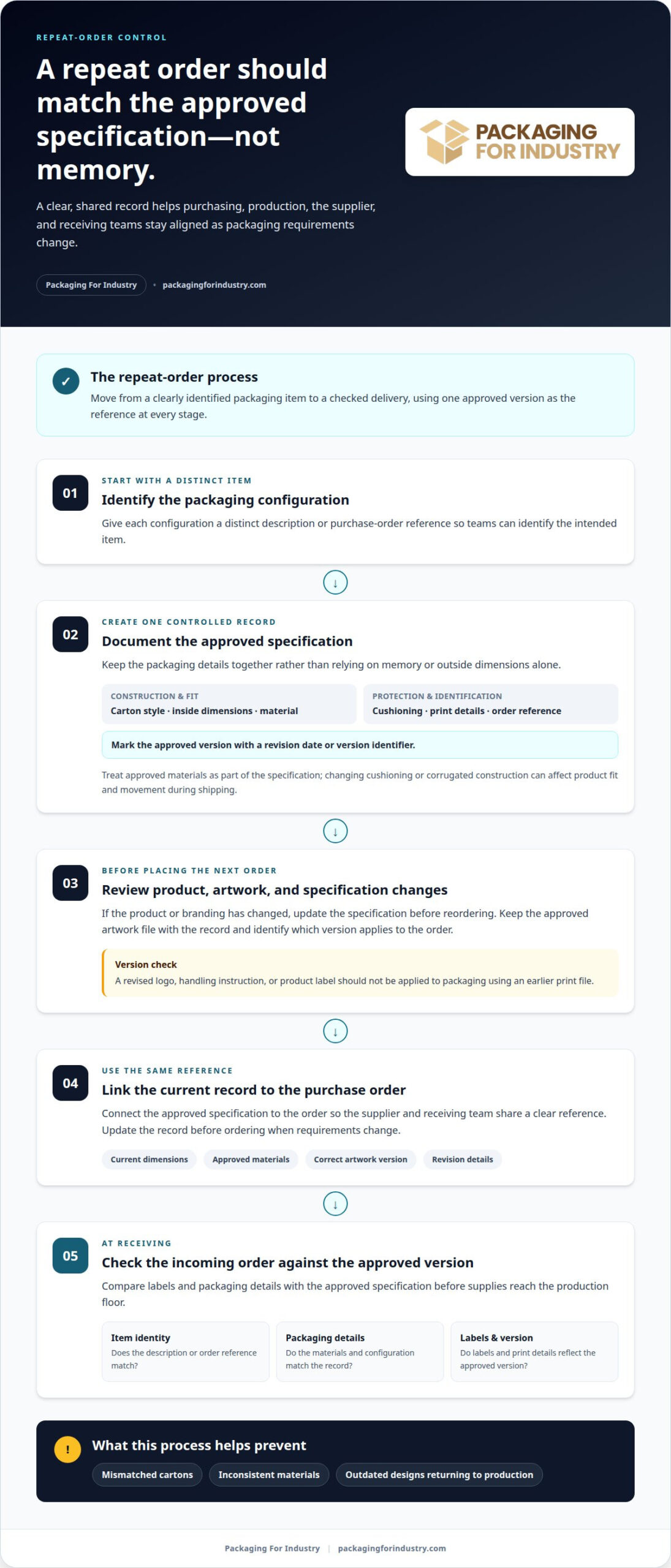
A repeat order should match the approved packaging specification, not rely on memory. Record the carton style, inside dimensions, material, print details, cushioning, and order reference together. For example, a carton’s outside dimensions alone may not define the fit required around the product. Clear records help purchasing and production teams reorder the intended packaging.
Start with one controlled specification for each packaging item. Include a revision date or version identifier, then link the record to the purchase order. When a product changes, update the specification before placing another order. This gives the supplier and receiving team a shared reference and reduces the chance that an outdated design returns to production unnoticed.
Artwork also needs version control. A company logo, handling instruction, or product label may change between runs. Keep the approved artwork file with the relevant packaging specification, and identify which version applies to each order. For example, don’t apply a revised label to cartons that still use an earlier print file.
Material consistency matters alongside dimensions and graphics. Changing the cushioning in a packaging design can affect how the product fits and moves during shipping. The same applies to corrugated construction and protective inserts. Treat each approved material as part of the specification, not as a detail to substitute informally.
- Identify the item: Use a distinct description or purchase-order reference for each packaging configuration.
- Document the approved version: Keep dimensions, materials, artwork, and revision details together.
- Review changes before reordering: Confirm product or branding updates are reflected in the current record.
- Inspect the incoming order: Compare labels and packaging details with the approved specification.
Receiving checks help catch discrepancies before supplies reach the production floor. For example, a warehouse team can match the item label and carton dimensions to the purchase order and report a mismatch before the packaging is issued. Consistent labeling also helps staff locate the correct version when products use similar cartons.
Environmental goals can be part of the same controlled process. If a business changes materials or reduces excess packaging, document the new design and assess product fit before repeating the order. This keeps environmental decisions connected to protection and handling instead of allowing unrecorded substitutions. A stable specification helps ensure each shipment uses packaging aligned with the approved design.
For a new or revised packaging specification, a packaging quote request can set out the product, dimensions, materials, artwork, and repeat-order requirements in one place.
Packaging inventory management
Packaging inventory affects production schedules, warehouse capacity, and purchasing decisions. A manufacturer using foam packaging, stretch film, and cartons needs a practical plan to keep each item available without ordering blindly. Reviewing usage alongside upcoming production helps teams spot changing demand and decide what to replenish. That planning can bring peace of mind from a reliable packaging partner in SoCal.
Start by organizing purchasing records around each packaging item. Include its description, approved specification, storage location, and the team that uses it. A warehouse may need separate records for similar cartons used on different product lines. Accurate details help buyers request the right materials and compare prices using matching specifications and order quantities.
Review packaging consumption against production and shipping activity. A product launch, change in order mix, or revised shipping method can shift demand for specific materials. Share these operational changes with the supplier before ordering. Current information helps guide replenishment planning and lets purchasing teams weigh bulk pricing against storage limits and expected usage.
Set reorder points based on actual consumption, replenishment timing, available space, and the operational impact of a shortage. Different items may have different needs. Regularly used stretch film and a custom-sized protective insert don’t necessarily call for the same purchasing rhythm. For peace of mind from a reliable packaging partner in SoCal, align inventory decisions with the role each material plays in production.
- Classify supplies: Separate frequently used materials from occasional or product-specific items.
- Review demand: Compare issue records with current production and shipping plans.
- Plan orders: Weigh replenishment timing against available warehouse space.
- Check item fit: Keep custom sizes available for products that cannot use standard packaging.
Receiving and storage practices affect how safely packaging moves through a facility. Assign labeled locations for each material and identify who handles replenishment requests. A consistent process helps reduce misplaced inventory and makes local packaging deliveries easier to coordinate with receiving operations.
Vendor Managed Inventory (VMI) for Packaging can help businesses with recurring supply needs coordinate inventory reviews and planned replenishment. Packaging For Industry (PFI) offers VMI programs that let purchasing teams structure supply planning around usage. This can be useful when manual reordering takes time or packaging stock is difficult to manage across work areas.
Review packaging use for opportunities to lower costs without compromising product protection. Consider material selection, order quantities, and storage needs together. To discuss your requirements and request a packaging quote, share your packaging items, usage patterns, and replenishment needs.
Packaging quality and brand consistency
Packaging quality starts with clear design inputs and repeatable production checks. A custom carton, for example, needs defined dimensions, material, print artwork, and finishing details before production. Reviewing these elements together helps prevent a mismatch between the product, the packaging, and the brand presentation.
For each packaging item, document the approved specification and its revision. Include the product reference, carton dimensions, material, artwork file, and cushioning arrangement. If your company updates its logo or changes a product’s dimensions, revise the relevant record before ordering another run. This helps keep new shipments aligned with current requirements.
There isn’t one certification that suits every packaging partner or application. Relevant standards depend on the product, industry, customer requirements, and packaging function. Look for applicable documented quality procedures and records showing how dimensions, materials, and print details are controlled.
Inspection should focus on the attributes that affect use and presentation. For a printed corrugated carton, compare the sample with the approved artwork and dimensions. For protective packaging, check that the product fits its intended position and remains supported. Recording inspection results helps teams spot recurring defects and address the process behind them.
- Dimensions: Compare the packaging against its approved specification and product fit.
- Materials: Confirm the specified construction and cushioning appear in the order.
- Artwork: Match logos, labels, and printed instructions to the approved file.
- Finish: Review folds, closures, and visible surfaces for the intended application.
Brand consistency also depends on packaging performance during handling. A carton that arrives crushed or opens in transit can undermine presentation, even when the print is accurate. Review damage reports alongside packaging inspection records. If the same area repeatedly fails, adjust the design or material specification and evaluate a revised sample before the next production run.
Artwork control matters across departments, too. Marketing may approve a new graphic while purchasing still refers to an older file. Assign one approved version to each packaging specification to give both teams a shared reference. For instance, record a product label change with the affected carton and order, rather than communicating it informally.
These checks connect product protection with a consistent customer experience. Defined specifications, controlled revisions, and recorded inspections help reduce avoidable differences between production runs. They also give operations and purchasing teams a practical basis for reviewing shipments, resolving defects, and deciding whether packaging changes meet product needs.
Custom packaging can help businesses maintain consistent branding, accurate product fit, reliable print quality, better inventory management, and professional presentation. Consider these goals together when reviewing a packaging specification: a consistent visual design still needs to fit the product and deliver the intended presentation. Keeping approved requirements connected helps teams weigh appearance alongside fit and print quality.
A clear shared reference also gives packaging decisions a consistent basis for ordering and review. When requirements change, checking the relevant specification and sample against current needs can help maintain alignment between the product and its presentation. This keeps attention on customer-facing details while considering packaging’s practical role in inventory management.
What packaging companies serve Southern California (SoCal)?
Southern California businesses can work with local packaging suppliers, regional distributors, or companies serving multiple locations. The right choice depends on the products you ship, the packaging you need, and how your operation purchases supplies. For facilities in Orange County, Los Angeles, and San Diego, regional support can make coordination around local operations more practical.
Products: Packaging For Industry (PFI) supplies corrugated boxes, protective foam packaging, and stretch film for industrial shipping and warehouse use. Its custom packaging design services address product-specific needs, such as foam inserts for components that require a fitted solution. Businesses can use these products individually or as connected parts of a packaging plan.
Industries served: PFI works with manufacturers and businesses in aerospace, electronics, medical devices, food and beverage, automotive, industrial equipment, warehousing, and distribution. Each sector handles different products and shipping workflows. An aerospace supplier shipping delicate components, for example, has different protection priorities from a distributor preparing standard cartons for regular outbound orders.
Benefits: A regional packaging partner can help align packaging choices with product protection, purchasing, and operational needs. PFI’s custom design and stocking programs support businesses managing specialized packaging or recurring supply needs. Coordinating these requirements can simplify purchasing and help companies work toward lower packaging costs and fewer supply disruptions.
Why choose PFI: PFI combines industrial packaging products with custom design and inventory management options. This can suit a business that needs more than a standard catalog item, such as a manufacturer managing a packaging change or a warehouse planning recurring replenishment. PFI serves Orange County, Los Angeles, and San Diego, making it a practical option for buyers seeking a Southern California packaging supplier.
When comparing packaging companies, describe your product, shipping method, packaging requirements, and purchasing pattern. Then assess whether each supplier’s products and services fit those needs. A distribution center buyer may prioritize repeat supply coordination, while a manufacturer may need packaging designed around a specific component.
Share your requirements and delivery location to get a quote based on the packaging your operation needs.
Packaging For Industry (PFI)
Packaging For Industry (PFI) helps Southern California businesses connect packaging needs with day-to-day operations. Turn to PFI when packaging requirements, supply planning, or changing demand make purchasing harder to coordinate.
Foam Packaging can support product protection, while Stretch Film helps secure unitized loads. For businesses managing ongoing packaging demand, Vendor Managed Inventory (VMI) for Packaging and Just-In-Time (JIT) Inventory Management for Packaging can help align replenishment with operational use. The right approach depends on the materials your team uses, how demand changes, and how supplies move through your facility.
Share your packaging requirements, usage patterns, and supply challenges to start a practical conversation about next steps. Contact Packaging For Industry to discuss your operation’s packaging needs.
Make Your Next Packaging Decision With Confidence
Packaging decisions affect how reliably your team can plan production, fulfill orders, and meet customer expectations. Start by identifying where coordination creates the most friction: changing product requirements, supply planning, or keeping packaging specifications current. A focused discussion can turn broad concerns into clear priorities.
For peace of mind from a reliable packaging partner in SoCal, start with the details that shape daily operations. Bring the packaging items involved, the workflow they support, and the changes your team expects. This gives the conversation a useful direction without committing to a one-size-fits-all approach.
A well-defined next step can make packaging decisions easier to manage as your operation evolves. Contact Packaging For Industry when you’re ready to discuss what would work for your business.
Your next packaging improvement can start with a clear, practical conversation.
Frequently Asked Questions
Can packaging be customized for my product?
Yes. A custom design can account for how a product is oriented, loaded, unpacked, and handled at its destination. For a kit containing several components, compartments can keep parts organized and make assembly easier. Share product drawings or a sample, along with pack-out steps and shipping conditions. Those details help PFI develop a solution suited to the product and the work involved.
How do SoCal packaging partners ensure product quality and consistent packaging?
Ask to evaluate a representative sample through your actual packing process before a full production run. A production operator can confirm whether the package is practical to assemble, close, and handle, while shipping or customer feedback can reveal problems that a bench review might miss. Agreeing on how concerns are reported and resolved also helps teams respond constructively if an incoming shipment causes an issue.
What questions should I ask before choosing a packaging supplier or co-packer?
Clarify whether you need packaging materials, product packing, or both, since a supplier and a co-packer may have different responsibilities. Define who sources materials, performs pack-out, applies labels, and manages finished goods. Also discuss how product or order changes affect production, how finished work is accepted, and who handles packaging-related issues. Clear scope prevents gaps between your purchasing team, packaging supplier, and production operation.