
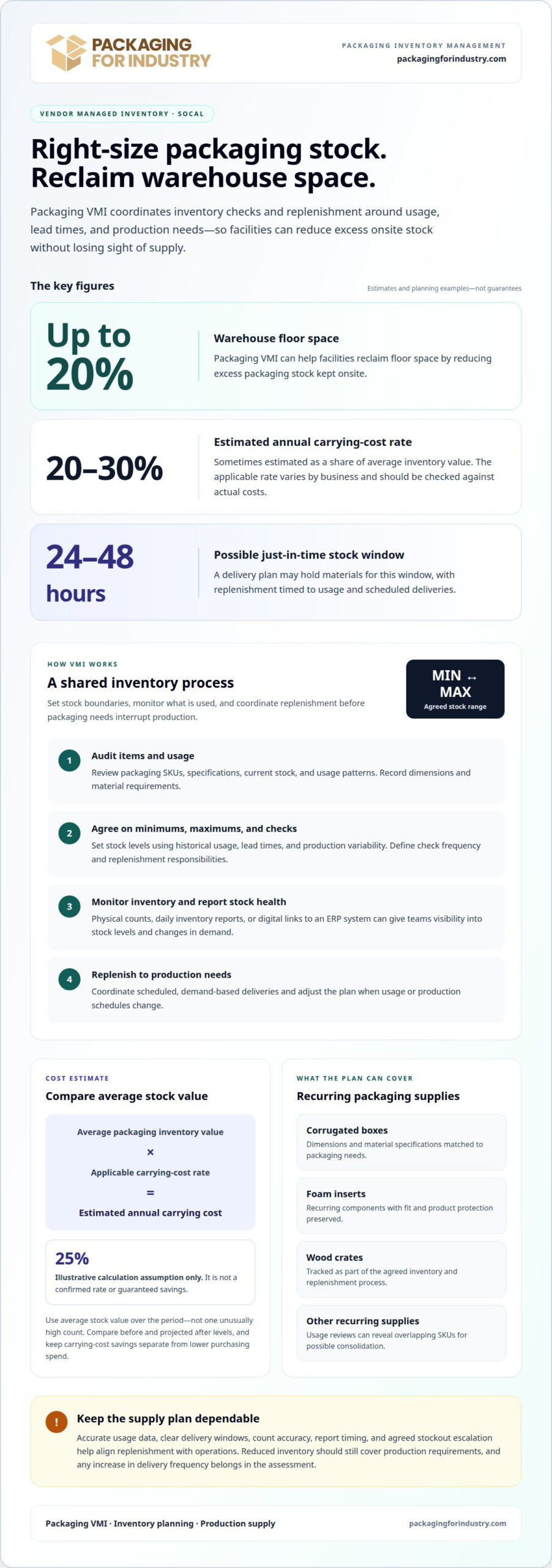
Packaging VMI programs can help facilities reclaim up to 20% of warehouse floor space, while keeping essential materials available for production. For manufacturers looking at warehouse floor-space reduction through packaging VMI in SoCal, the key is reducing excess stock without disrupting supply.
Yes. Packaging VMI can cover both the materials and inventory management. A supplier provides packaging and coordinates replenishment around usage, lead times, and production needs, helping your team avoid holding more stock onsite than necessary. This can also reduce carrying costs, depending on current stock levels and how the program is managed.
This article explains how packaging VMI works, how planned deliveries support production, and how right-sized inventory can free up warehouse space. It also covers what to consider when estimating carrying-cost savings and how replenishment can be tailored to your operation. The aim is a steadier packaging supply with less space tied up in stock you do not need immediately.
Key Takeaways
- Right-sized replenishment levels can help maintain packaging availability without keeping excess materials on site.
- Inventory reviews and usage patterns help identify which supplies need adjustment, consolidation, or more frequent replenishment.
- Scheduled, demand-based deliveries can reduce reliance on panic orders and the extra stock kept as a buffer.
- Reducing stored packaging can free warehouse space for production, staging, and other operational needs.
- Packaging VMI, just-in-time inventory management, foam packaging, and stretch film can support a more dependable supply plan.
What Is Vendor Managed Inventory (VMI) for Industrial Packaging?
Packaging VMI is an inventory arrangement in which a vendor monitors packaging stock and replenishes it according to agreed minimum and maximum levels. By linking usage, inventory checks, and delivery planning, the process helps keep materials available without relying on excess onsite stock.
Replenishment Levels and Onsite Checks
Minimum and maximum levels define the stock range that triggers replenishment and limits onsite inventory. A vendor sets these levels using historical usage, lead times, and production variability, then checks physical stock. Accurate counts can reveal shortages, misplaced items, or excess before they disrupt production. Regular monitoring also helps teams anticipate demand changes and adjust levels when product needs shift.
Managed Packaging Materials
VMI commonly covers corrugated boxes, foam inserts, wood crates, and other recurring packaging supplies. An inventory review records each item’s dimensions, material specifications, and usage patterns. The vendor can identify overlapping SKUs for consolidation, simplifying storage and replenishment. Any grouping should still preserve the fit and product protection each item requires.
VMI Implementation Steps
Implementation starts with an audit of packaging SKUs, specifications, stock, and usage. Next, the vendor and warehouse establish minimum and maximum levels and agree on check frequency, reporting, and replenishment responsibilities. Daily inventory reports and digital links to an ERP system can give teams visibility into stock health. These steps create a shared operating process and support more accurate forecasts.
In California, SB 54 packaging compliance mandates were in effect as of May 2026; VMI is an inventory method, not a substitute for packaging compliance. Service expectations should define count accuracy, report timing, replenishment triggers, and how stockout risks are escalated. Inaccurate usage data or delayed reports can lead to shortages, so clear responsibilities matter. For warehouse inventory management, consistent monitoring can help coordinate supply with floor operations.
Estimating Carrying-Cost Savings from Lower Stock
To estimate potential carrying-cost savings, compare the average value of packaging inventory before and after stock levels change. Annual inventory carrying costs are sometimes estimated at 20% to 30% of average inventory value, but the applicable rate varies by business and should be verified against your own costs. These costs may include capital tied up in stored materials and the space and handling they require.
For an illustrative estimate, you could apply an assumed rate of 25% to packaging inventory value. This is a calculation assumption, not a confirmed rate or guaranteed savings.
Use average stock value, not a single unusually high count, for a more useful comparison. Review purchasing and inventory records for the period being assessed, and separate packaging materials from unrelated stock. Then compare the estimated carrying cost with the projected cost at a lower inventory level. Keep the calculation focused: lower purchasing spend is not the same as carrying-cost savings.
Production requirements still set the practical limit. A tailored stock reduction should account for the corrugated boxes and other materials needed to keep the supply chain moving. If the reduced inventory requires more frequent replenishment, include the operational effect in the assessment rather than treating the carrying-cost estimate as the whole result. A packaging quote request can help translate usage patterns and target stock levels into a supply plan.
Just-in-Time Packaging Deliveries
Just-in-time packaging deliveries schedule supplies around actual production demand instead of storing large reserves onsite. A plan may keep materials for a 24 to 48 hour window, with replenishment timed to usage and delivery schedules. For example, a production line using corrugated boxes can receive the quantities needed for upcoming work rather than holding a large surplus near the line.
Demand-based scheduling connects packaging consumption with production plans. The inventory team tracks how quickly each material is used and aligns deliveries with replenishment needs. A standardized workflow can get the right kit to the right production line when it is needed. This is useful when different lines rely on distinct box sizes, foam components, or stretch film, and misplaced supplies can slow work.
Reliable timing depends on accurate usage records, clear delivery windows, and coordination between warehouse and production teams. When an order schedule changes, the plan should reflect updated demand to avoid both shortages and unnecessary stock. Just-in-time packaging inventory management organizes replenishment around operational needs, helping teams coordinate supplies with upcoming work.
For a warehouse, the practical benefit is less packaging stored between deliveries and clearer space allocation for active operations. Teams can assign designated staging areas for incoming corrugated materials and kits, then move supplies to production as scheduled. A tailored delivery plan should account for usage variation, storage limits, and the time needed to receive and stage each shipment. To discuss a packaging plan for your operation, request a packaging quote.
Reducing Panic Orders and Overstocking
Panic orders disrupt more than purchasing. When a production team discovers a packaging shortage, warehouse staff may have to pause planned work to find substitutes, confirm quantities, and arrange an urgent delivery. That pulls attention from scheduled receiving, picking, or order preparation. A managed packaging supply process can make replenishment part of routine operations and reduce these last-minute tasks.
Urgent deliveries can also put pressure on receiving. An off-schedule shipment may require immediate dock space, a rapid count, and quick putaway. For example, if a rush shipment of corrugated boxes arrives while a planned inbound load is being unloaded, staff must decide which load takes priority. Such changes can complicate dock scheduling and material movement.
Substitutions create another risk. If the required box or protective material is unavailable, teams may use a different size or format, affecting packing methods and space at the workstation. Staff may need to separate the substitute, update instructions, or reorganize staged orders. Coordinated packaging supply helps limit these disruptions and keeps material decisions aligned with production requirements.
After a shortage, teams often overstock to avoid another emergency. The result can be more packaging onsite than daily operations can use, while urgent orders still compete for attention. A planned supply arrangement gives purchasing and warehouse teams a consistent process, reducing reactive decisions and their disruption. The goal is smoother coordination across receiving, storage, and production, not simply fewer purchase orders.
Warehouse Floor-Space Reduction Through Packaging VMI
Packaging VMI can reduce the volume of packaging stored onsite by coordinating replenishment with facility usage. Rather than reserving floor space for an extended supply, a warehouse can keep materials needed for immediate production and replenish them as they are used. The space freed up can support active operations, staging, or finished goods.
Packaging VMI programs can help facilities reclaim up to 20% of warehouse floor space. The actual opportunity depends on how much space excess packaging occupies and how replenishment fits the production schedule. For example, reducing surplus corrugated boxes and foam inserts can clear storage locations while preserving access to materials required for current orders.
Space freed from packaging stock can support a more practical warehouse layout. In busy Southern California areas such as Ontario, Fontana, Chino, and Riverside, layout improvements may create more room for pallet storage. Aligning aisles with forklift needs and assigning clear locations to packaging materials helps the facility make effective use of reclaimed space.
Holding less stock onsite can also reduce exposure to damage. Packaging stored for long periods may collect dust or be damaged in warehouse accidents, turning usable materials into waste. A controlled replenishment schedule can limit how long surplus supplies occupy storage, while inventory monitoring helps keep production materials on hand.
The useful measure is not simply how much floor space becomes empty. It is whether the revised layout improves the flow of receiving, storage, picking, and production. A facility can map packaging locations before and after VMI, then assess whether the cleared areas serve a specific operational need. This makes warehouse floor-space reduction through packaging VMI in SoCal a practical space-planning decision, not just a stock-cutting exercise.
Packaging VMI Products and Services from PFI
Packaging For Industry (PFI) supports packaging operations with VMI, just-in-time inventory management, foam packaging, stretch film, packaging kitting, and custom packaging design. These services address different parts of the workflow, from choosing protective materials to organizing supplies for production and shipping. The right combination depends on the materials your teams use and how packaging moves through your facility.
Foam packaging can be part of a plan when components need cushioning or a shaped fit. Stretch film helps secure palletized loads and supports other shipping tasks. Coordinating these materials with packaging requirements can keep handling methods consistent across work areas, rather than treating each item as an unrelated purchase.
Packaging kitting and assembly can help prepare grouped materials for specific tasks. A production or packing team, for example, may need several packaging components together at a workstation. Custom packaging design addresses fit and protection, while packaging VMI and just-in-time inventory management support the broader supply program.
These services are useful when a facility is reviewing packaging specifications, coordinating materials across workstations, or simplifying recurring purchases. PFI can help align foam packaging, stretch film, design, kitting, and inventory services with your operation, rather than treating every facility as if it had identical requirements.
Contact Packaging For Industry to discuss your packaging needs and warehouse workflow.
Industries Served
Packaging For Industry supports manufacturers, warehouses, distributors, fulfillment centers, and other industrial businesses. Packaging needs vary with product shape, handling, and shipping method. A machinery supplier may need protective packaging for heavy components, while an electronics operation may prioritize cushioning and static-control materials for sensitive parts.
Aerospace and defense suppliers often ship valuable components that require carefully fitted protection. Medical device manufacturers may need packaging designed around delicate equipment and its handling requirements. Food and beverage producers, by contrast, work with different storage and distribution workflows. Aerospace packaging can address the fit and protection needed when shipping aerospace components.
Warehouses, logistics companies, and distributors handle varied products and outbound orders. Their packaging workflows may include staging cartons, securing pallet loads, and preparing shipments for different destinations. Fulfillment centers also need packaging materials suited to frequent order preparation, while construction and building-products businesses may handle large or heavy items requiring appropriate packaging formats.
Electronics and semiconductor companies, automotive suppliers, food producers, and contract manufacturers each have distinct product and shipping requirements. Matching packaging materials to those workflows can help protect products and keep packing processes practical. Packaging For Industry works with industrial operations to address these requirements through packaging products and services tailored to business needs.
Benefits of Working with a Packaging Supplier
A capable packaging supplier connects purchasing decisions with production and shipping requirements. Rather than treating each box, foam component, or roll of stretch film as a separate purchase, manufacturers can review how materials work together across their operation. That broader view may reveal ways to lower packaging costs through better material choices, coordinated ordering, and less excess inventory.
Product protection is another practical benefit. A box that is too large or poorly suited to its contents can leave products vulnerable during handling and transit. Pairing corrugated packaging with suitable cushioning can help reduce shipping damage. For products with specific shapes or handling needs, custom packaging design can match protection to the item instead of relying on a one-size-fits-all configuration.
Supply reliability improves when purchasing and replenishment follow actual usage. A manufacturer can align packaging orders with production needs, while a warehouse can plan receiving and storage around expected deliveries. Packaging VMI and just-in-time inventory management help coordinate this flow, reducing last-minute purchasing and helping teams maintain access to materials for active orders.
Supplier coordination also makes packaging changes easier to manage. When a product, shipping method, or production schedule changes, the packaging plan can be reviewed against those requirements. A change in product dimensions, for example, may affect box selection, protective materials, storage locations, and replenishment quantities. Coordinated planning helps purchasing and operations teams account for these connected effects.
For manufacturers, packaging value comes from balancing cost, protection, and availability. A tailored supply approach can help avoid unnecessary purchases, improve packaging fit, and maintain a steadier flow of materials. Teams assessing their needs can discuss packaging solutions for manufacturers.
Put Your Packaging Space Plan Into Action
Warehouse floor-space reduction through packaging VMI in SoCal starts with a clear operational priority: decide what the reclaimed space should support. It could be production staging, finished goods, or safer movement through a busy work area. That target gives purchasing and warehouse teams a practical way to assess whether a packaging supply plan suits their facility.
Packaging For Industry (PFI) offers packaging VMI alongside foam packaging and stretch film. If excess packaging inventory is limiting usable space, connect your material and usage needs with a supply approach built around your operation. The plan should support product protection and material availability while making room for work that moves the business forward.
Bring your packaging requirements and warehouse priorities to Packaging For Industry. A focused review can identify where supply coordination may support a more efficient operation.
A deliberate packaging plan can create a stronger foundation for daily warehouse operations.
Frequently Asked Questions
Do you provide the packaging materials as well as the VMI service?
Yes. Packaging For Industry (PFI) supplies packaging materials and manages packaging VMI, addressing both replenishment and supply. Materials can include corrugated boxes, foam packaging, stretch film, and other recurring industrial supplies. For example, a manufacturer can coordinate box and foam inventory through one program instead of managing material purchases and stock monitoring separately. This helps align replenishment with ongoing production requirements.
How does VMI help Orange County manufacturers with limited warehouse space?
VMI helps Orange County manufacturers reduce onsite packaging stock by coordinating inventory with usage and replenishment. A facility might reserve nearby storage locations for packaging needed at active production stations instead of filling them with excess cartons. The warehouse team can then plan space for incoming shipments, work in process, or finished goods. This is especially useful when packaging storage competes with operational space.
What geographic areas in Southern California do you serve for VMI?
Packaging For Industry serves businesses across Southern California, including Orange County, Los Angeles County, and San Diego County. Service areas include Anaheim, Irvine, Huntington Beach, Long Beach, Los Angeles, and San Diego. PFI’s VMI programs support local manufacturers and warehouses with recurring packaging needs. For companies with multiple locations, packaging requirements and replenishment can be planned around each facility’s usage and workflow.
What is the primary difference between VMI and traditional inventory management?
With traditional inventory management, the customer’s team typically tracks packaging stock and initiates replenishment orders. Under VMI, the vendor takes a more active role, monitoring inventory and coordinating replenishment according to agreed stock levels and usage. Instead of relying only on a buyer’s periodic review, for example, the program can use inventory checks and reported consumption to guide the next packaging delivery.
How much warehouse floor space can packaging VMI reduce?
Packaging VMI programs are said to help facilities reclaim up to 20% of warehouse floor space. The space freed depends on how much area excess packaging occupies and how the facility uses replenishment. A warehouse could redirect cleared locations toward production staging or finished goods. The useful measure is not only the area released, but whether the revised layout supports a specific operational need.
How does packaging VMI reduce inventory and warehouse space requirements?
Packaging VMI reduces onsite inventory by coordinating replenishment with actual consumption rather than keeping large reserves of every material. A warehouse can hold packaging needed for near-term work and receive replenishment as stock is used. This limits the footprint of slow-moving or excess materials and can make storage locations easier to organize, leaving space for active warehouse functions.
What warehouse data and demand forecasts are needed to size a packaging VMI program?
A packaging VMI plan is sized using packaging usage history, current inventory, supplier lead times, storage capacity, and production or shipping schedules. Demand forecasts help identify changes such as a seasonal increase, a new product run, or a discontinued item. A facility that tracks box consumption by product line, for example, can distinguish recurring demand from a one-time order and set more suitable stock levels.
Which packaging VMI providers serve Southern California?
Packaging For Industry provides packaging VMI for businesses in Southern California, including Orange County, Los Angeles County, and San Diego County. The service suits manufacturers, warehouses, distributors, and fulfillment operations with recurring packaging needs. PFI can coordinate VMI with packaging materials and usage requirements, helping local teams manage replenishment as part of their warehouse and production workflow.