
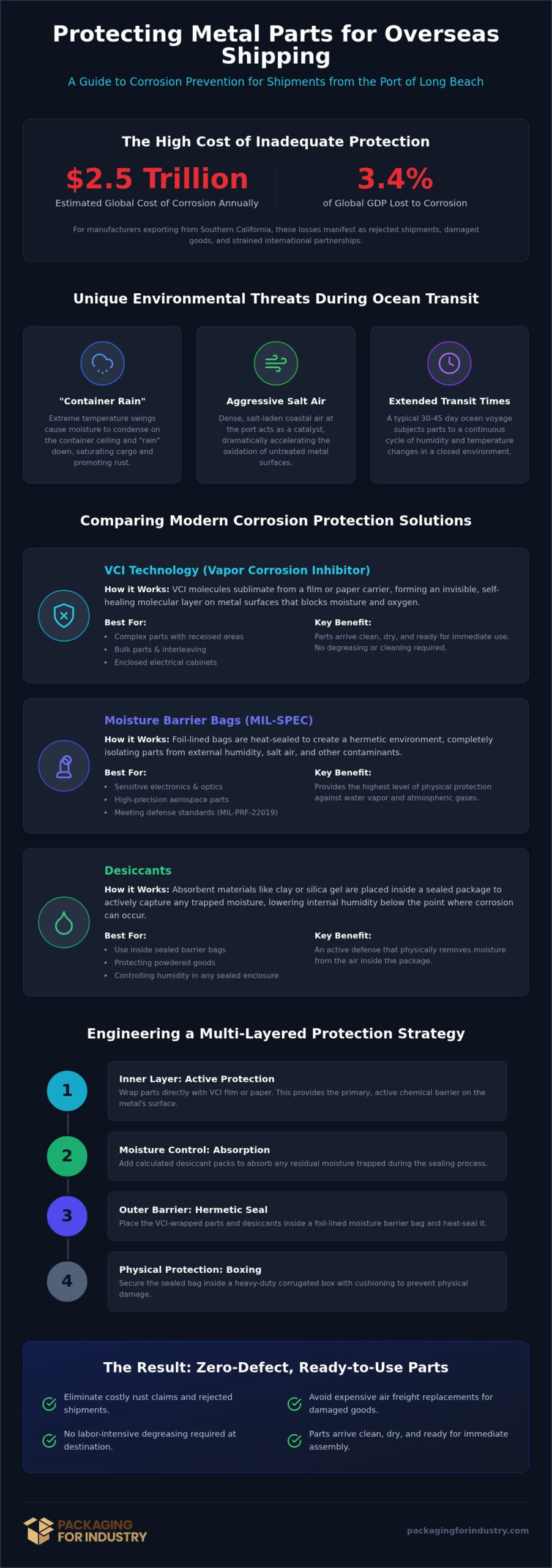
The global cost of corrosion is estimated at $2.5 trillion per year, which accounts for roughly 3.4% of the global GDP. For manufacturers throughout Southern California, these losses often materialize as rejected shipments and strained international partnerships. When you rely on the Port of Long Beach for export, your cargo is immediately exposed to “container rain” and aggressive salt-air environments. Effective corrosion protection for parts shipped overseas from Long Beach requires more than just standard plastic wrap. It demands an engineered system designed for the rigors of a thirty-day ocean voyage.
It’s frustrating to manage the high cost of rust claims or the burdensome task of degreasing parts upon arrival. You need a reliable way to ensure zero-defect delivery without slowing down your warehouse team with inconsistent, off-the-shelf supplies. This article explains how to safeguard high-value metal components using professional-grade VCI films and moisture barrier solutions. We’ll examine the benefits of MIL-SPEC materials like MIL-PRF-22019 and discuss how a customized, bulk-ordered protection strategy can lower your total packaging costs while simplifying your logistics flow.
Key Takeaways
- Identify the specific environmental risks at the Port of Long Beach, including “container rain” and high-salinity air, that threaten bare metal components.
- Compare the functional differences between Vapor Corrosion Inhibitors (VCI), moisture barrier bags, and desiccants to select the most efficient material for your cargo.
- Master a multi-layered strategy for corrosion protection for parts shipped overseas from Long Beach that combines chemical inhibitors with hermetic seals.
- Follow a streamlined, step-by-step packing process that ensures parts arrive clean, dry, and ready for immediate use without the need for labor-intensive degreasing.
- Discover how leveraging local next-day delivery and vendor-managed inventory (VMI) can stabilize your supply chain and lower overall packaging costs.
The Unique Corrosion Risks of Shipping from Long Beach
Shipping metal components out of the Port of Long Beach presents a specific set of environmental challenges that standard domestic packaging cannot withstand. High-value parts often sit in staging areas where they’re exposed to dense, salt-laden coastal air. This salinity acts as a catalyst for the process of corrosion, accelerating the oxidation of untreated steel and aluminum surfaces before the container even leaves the dock. For manufacturers in Southern California, implementing specialized corrosion protection for parts shipped overseas from Long Beach isn’t optional; it’s a financial necessity to avoid the compounding costs of international cargo rejections.
A typical ocean voyage to Asia or Europe lasts between 30 and 45 days. During this period, your parts are subjected to extreme temperature swings and high humidity. If your current strategy relies on retail-grade supplies, you’re likely seeing inconsistent results. Investing in professional-grade barriers is the most effective way to achieve packaging cost savings by eliminating the need for expensive air freight replacements or labor-intensive rust removal at the destination.
Understanding Container Rain and Humidity Cycles
“Container rain” is a primary threat during Pacific trade routes. As the ship moves through different climate zones, the air inside the steel shipping container heats up during the day and cools rapidly at night. This cycle causes moisture to evaporate from wooden pallets or the air itself and condense on the cold ceiling. Eventually, this water “rains” back down on your cargo. Standard corrugated boxes often exacerbate this problem by absorbing moisture, which keeps a damp layer in direct contact with your metal parts. This constant humidity creates a micro-climate where rust can form in as little as 48 hours.
The Long Beach Logistics Chain
Logistics hubs in Torrance, Carson, and San Pedro are the first line of defense. When parts are staged for loading, they’re vulnerable to the high-salinity environment of the harbor. Multiple logistics crews handle these containers, and every transition increases the risk of a compromised seal or a torn outer wrap. Local manufacturers must account for these variables during the initial packing phase. A proactive strategy involves using barriers that provide continuous protection from the warehouse floor through the final mile of delivery, ensuring that your international customers receive zero-defect components every time.
Comparing Corrosion Protection for Parts: VCI vs. Barrier vs. Desiccants
Selecting the right method for corrosion protection for parts shipped overseas from Long Beach involves balancing material costs with the labor required at the destination. While traditional grease and oil coatings provide a physical barrier, they require extensive cleaning that slows down assembly lines. Modern industrial solutions offer cleaner, more efficient alternatives that protect high-value components without the mess. The primary choice usually falls between chemical inhibitors, physical barriers, or active moisture adsorbents.
VCI Technology: Clean and Dry Protection
VCI technology relies on vapor-phase corrosion inhibitors that sublimate from a carrier, such as film or paper, to form an invisible molecular layer on metal surfaces. This layer prevents moisture and oxygen from reacting with the metal. Because the protection is molecular, it reaches recessed areas and complex geometries that sprays might miss. When the package is opened, the VCI molecules simply dissipate, leaving parts ready for immediate use. Manufacturers can choose from VCI films for bulk parts, VCI paper for interleaving, or emitters for enclosed electrical cabinets.
Barrier Materials and MIL-SPEC Standards
For sensitive electronics or high-precision aerospace components, a hermetic seal is often necessary. Foil-lined moisture barrier bags provide the highest level of protection against salt air and water vapor. These materials are frequently used in conjunction with MIL-SPEC packaging to meet strict defense and aviation standards like MIL-PRF-22019. Maintaining a vacuum seal is critical during this process. Any puncture during rough handling at the port can compromise the entire shipment, making the durability of the outer crate just as important as the inner bag.
The Role of Desiccants in Sea Freight
Desiccants serve as the active defense inside a sealed package by adsorbing ambient moisture before it can cause damage. The current active standard for these adsorbents is MIL-D-3464E. Silica gel is common for smaller electronic kits, while montmorillonite clay is a cost-effective, sustainable choice for larger industrial crates. Calculating the correct dosage is essential for success. You must account for the interior volume of the package and the hygroscopic nature of any dunnage used, such as wooden pallets or cardboard. Proper placement near the center of the package ensures maximum moisture adsorption throughout the 30-day transit.
Each method has its trade-offs in terms of cost and ease of application. VCI is often the most efficient for high-volume manufacturing, while barrier bags offer the most robust protection for long-term storage. If you’re looking to optimize your budget while ensuring zero-defect arrivals, you can request a packaging quote to compare different protection levels for your specific components.
Engineering a Multi-Layered Protection Strategy
Relying on a single layer of VCI film is a common mistake in industrial logistics. For high-value parts, a “system approach” is mandatory. This means coordinating the primary barrier with the secondary containment and internal stabilization. Effective corrosion protection for parts shipped overseas from Long Beach requires a plan that accounts for the chemistry of the packaging materials themselves. For instance, many warehouse teams overlook the fact that wooden pallets and crates naturally release volatile organic acids like acetic and formic acid. If metal parts are in close proximity to green or non-heat-treated wood without a proper liner, these acids can penetrate standard plastic wraps and trigger oxidation. By engineering a multi-layered defense, you ensure that external environmental factors and internal material reactions are both neutralized.
Custom Crating for International Transit
Exports from the Port of Long Beach must comply with ISPM-15 standards, requiring heat-treated wood to prevent pest migration. However, even heat-treated wood can retain moisture that contributes to “container rain.” We integrate custom shipping crates with internal corrosion liners to create a controlled micro-climate. Proper crate engineering includes strategically placed ventilation holes and internal blocking. These design features allow for pressure equalization and help manage humidity cycles, which is a key driver for damage reduction and overall cost efficiency in international trade.
Foam Inserts and Part Stabilization
Internal movement is a leading cause of barrier failure. If a heavy metal component shifts during rough sea transit, sharp edges can easily puncture a VCI or moisture barrier bag, rendering the chemical protection useless. We use custom foam packaging to lock parts into a fixed position. This prevents the friction that compromises the hermetic seal and ensures the VCI molecules remain concentrated around the metal surface. It’s also vital to select the correct foam chemistry. Standard foams can sometimes contain residual chemicals that react with specific alloys. We recommend non-corrosive polyethylene or anti-static foams for sensitive electronics to ensure the stabilization material doesn’t become a corrosion source itself. Custom sizes are available to fit any part geometry, ensuring a snug fit that eliminates the risks of “shifting cargo” rejections.
How to Pack Metal Parts for Overseas Transit: Step-by-Step
Establishing a repeatable packing protocol is the only way to ensure consistent results across multiple shifts. When your warehouse team follows a standardized checklist, you eliminate the variables that lead to rust claims. Effective corrosion protection for parts shipped overseas from Long Beach requires a systematic approach that begins the moment a part leaves the production line. Skipping even a single step in surface preparation or sealing can compromise the entire shipment during its thirty-day voyage.
Surface Preparation and Handling
Cleaning is the foundation of any corrosion prevention strategy. Even the most advanced VCI film can’t stop oxidation if contaminants are trapped against the metal surface. Fingerprints are a common culprit; the acidic oils from human skin create localized corrosion points that VCI molecules may struggle to neutralize. Warehouse staff should always wear gloves when handling bare metal components. Parts must be at ambient temperature before sealing to prevent condensation. If you pack a warm part into a cold bag, you risk trapping moisture that will eventually lead to oxidation. For smaller components, utilizing specialized parts bags helps keep items organized and protected from the start.
Once the part is clean and dry, apply the primary protection layer. If you’re using VCI bags, ensure the part is completely enclosed. For sensitive electronics or high-precision aerospace parts, a foil-lined moisture barrier bag provides a superior hermetic seal. At this stage, you should also add desiccants that meet MIL-D-3464E standards to adsorb any residual moisture trapped inside the package. This dual-action approach of chemical inhibition and active adsorption provides the highest level of security for international transit.
Sealing and Stabilization Techniques
The method you use to close the package is just as critical as the material itself. While taping VCI film is often sufficient for short-term domestic shipping, overseas transit usually requires a more robust seal. Heat-sealing moisture barrier bags ensures that no salt air can penetrate the package during the high-humidity cycles of the Pacific trade routes. After the primary barrier is secure, use stretch film to stabilize the load on the pallet. This prevents the primary bags from rubbing against each other or the outer crate walls, which could cause micro-punctures. Applying corner and edge protection to the exterior of the crate or heavy-duty RSC box adds a final layer of structural integrity.
The final step is a rigorous inspection of all seals and labels. Before the container is delivered to the port, verify that all vacuum seals remain intact and that all international shipping labels are clearly visible. By standardizing your corrosion protection for parts shipped overseas from Long Beach, you protect your company’s reputation and your bottom line.
Optimizing Your Supply Chain with PFI’s Custom Protection Solutions
Managing the complexities of international logistics requires a partner who understands the specific environmental demands of the Pacific trade routes. While the technical application of VCI and barrier materials is critical, the reliability of your supply chain depends on having those materials available exactly when production demands them. PFI provides an integrated approach to corrosion protection for parts shipped overseas from Long Beach, combining engineering expertise with localized logistical support. By aligning your packaging inventory with your shipping schedule, you can lower packaging costs and eliminate the risk of transit damage caused by substandard or missing supplies.
Local Service for SoCal Manufacturers
We specialize in supporting the manufacturing hubs that drive the Southern California economy. Our team provides local next-day delivery to industrial centers in Long Beach and Torrance, ensuring your warehouse never faces a shutdown due to lack of materials. We don’t just ship boxes; we offer on-site packaging reviews to identify specific cost-saving opportunities in your current workflow. For aerospace and defense contractors, we supply compliant, MIL-SPEC materials that meet the rigorous standards required for high-value exports. Custom sizes are available for every product we sell, from heavy-duty crates to specialized VCI liners, allowing you to optimize every square inch of your shipping container.
VMI: Never Run Out of Protection Supplies
Recurring export needs demand a stable inventory strategy. Through our Vendor Managed Inventory (VMI) program, we take the burden of stock management off your purchasing team. We monitor your usage levels of VCI bags, desiccants, and custom corrugated boxes to ensure you always have the necessary protection on hand. This proactive management eliminates the need for expensive emergency rush orders and improves your cash flow by ensuring you only stock what you need for current production cycles. When you compare packaging pricing, the administrative savings of a VMI program often outweigh the unit cost of the materials themselves.
Our commitment to your operational efficiency includes free prototyping for complex aerospace and manufacturing components. We design and test custom foam inserts and moisture barriers to ensure a perfect fit before you commit to a bulk order. This Just-in-Time delivery model for custom crates and VCI supplies allows you to maintain a lean warehouse while ensuring zero-defect arrivals at overseas destinations. To see how our localized expertise can streamline your export process, you can request a packaging quote from our team today.
Secure Your International Shipments with Engineered Protection
Implementing a robust system for corrosion protection for parts shipped overseas from Long Beach is the most effective way to eliminate international rust claims and rejected cargo. By combining chemical inhibitors like VCI with hermetic barriers and precision-engineered crates, you ensure your high-value components withstand the aggressive humidity cycles of the Pacific. This strategic approach protects your bottom line and strengthens your reputation with global customers.
PFI supports Southern California manufacturers with specialized expertise in MIL-SPEC and aerospace compliance. Our team provides local next-day delivery to facilities in Long Beach, Torrance, and Carson to keep your operations running smoothly. We also offer expert CAD/CAM prototyping for custom foam inserts and crates to ensure a perfect fit for complex geometries. Whether you need to stabilize your supply chain through VMI or require custom sizes for a one-off export, we have the pragmatic resources to help you succeed.
Take the stress out of ocean transit and ensure your metal parts arrive in factory-fresh condition every time.
Frequently Asked Questions
What is the best way to prevent rust when shipping metal parts overseas?
The most effective strategy is a multi-layered system that combines Vapor Corrosion Inhibitors (VCI) with a physical moisture barrier. Using VCI film or paper provides molecular-level protection, while a foil-lined barrier bag prevents salt air from reaching the component. When you integrate these with desiccants and custom crates, you create a controlled micro-climate. This comprehensive approach to corrosion protection for parts shipped overseas from Long Beach ensures zero-defect arrivals even after long Pacific voyages.
How long does VCI protection last in an ocean container?
VCI materials typically provide effective protection for up to two years when the package remains properly sealed. The duration depends on the quality of the seal and the thickness of the film. For a standard 30 to 45 day ocean voyage from Southern California, high-quality VCI provides a significant safety margin. It’s vital to use industrial-grade materials that meet established performance standards to ensure the protective molecular layer remains stable throughout the entire transit.
Do I need to clean my parts before using VCI packaging?
Yes, parts must be thoroughly cleaned and dried before they are packed. Contaminants like cutting oils, metal shavings, or acidic fingerprints can cause oxidation even if VCI molecules are present. You should also ensure parts have cooled to ambient temperature. Packing warm parts can trap moisture inside the bag, which leads to condensation. Clean, dry surfaces allow the VCI molecules to bond properly and form an effective, continuous protective layer.
What is ‘container rain’ and how do I prevent it?
Container rain occurs when temperature fluctuations at sea cause moisture to condense on the ceiling of a shipping container and drip onto the cargo. You can prevent this by using a combination of desiccants and moisture barrier bags. Desiccants adsorb the ambient moisture inside the package, while the barrier bag creates a hermetic seal against external humidity. This dual-layered defense is a critical component of corrosion protection for parts shipped overseas from Long Beach.
Is VCI film or VCI paper better for large industrial components?
VCI film is generally superior for large industrial components because it offers better physical durability and can be heat-sealed for a more secure environment. Film is also less likely to tear when handling heavy parts with sharp edges. VCI paper is an excellent choice for interleaving smaller parts or lining the interior of custom crates. For bulk shipments, we recommend using custom-sized VCI bags that completely enclose the part to maintain optimal vapor concentrations.
Can I use standard cardboard boxes for overseas shipping from Long Beach?
Standard single-wall cardboard boxes are usually insufficient for the high-humidity environment of ocean transit. We recommend using heavy-duty, double or triple-wall corrugated boxes (RSC boxes) that can withstand stacking pressure and moisture absorption. Standard boxes often lose their structural integrity when exposed to “container rain.” For the best results, combine these heavy-duty boxes with internal VCI liners and external corner boards to ensure the load remains stable and protected during transit.
How do I calculate the amount of desiccant needed for my shipment?
Desiccant requirements are calculated based on the interior volume of the package and the hygroscopic nature of the dunnage. You must account for the moisture held in wooden pallets or cardboard inserts. The industrial standard, MIL-D-3464E, provides specific formulas for determining the number of “units” required. A general rule is to use more desiccant if you’re shipping to tropical climates or if the transit time exceeds 30 days in a high-salinity harbor environment.
What are the MIL-SPEC requirements for corrosion protection in aerospace?
Aerospace exports often require materials that meet MIL-PRF-22019 for flexible barrier films and MIL-DTL-22020 for the resulting bags. These specifications ensure the material has a low water vapor transmission rate and high puncture resistance. Using MIL-SPEC compliant packaging is mandatory for many defense and aviation contracts. We provide expert guidance on selecting the correct materials to ensure your shipments meet all regulatory and performance requirements for international aerospace and manufacturing logistics.