
A single minor scuff on a Class A finished surface is more than a cosmetic flaw; it is a total loss that erodes your profit margins and damages your reputation for quality. Whether you are working with a Los Angeles packaging supplier or managing complex kitting for high-value parts, you have likely dealt with the frustration of generic materials leaving behind “ghosting” or residue. We understand that inconsistent protection for finished surfaces is a primary driver of high return rates and unnecessary professional stress.
In this guide, you will learn how to select and engineer the right packaging solutions to prevent scratches and abrasions to eliminate surface damage and reduce costly returns. We will demonstrate how to lower packaging costs by matching material science to your specific finish requirements. From custom foam inserts to integrated corrugated systems, this overview will show you how to maintain zero-defect standards while ensuring a reliable supply from your Orange County packaging supplier or San Diego packaging supplier.
Key Takeaways
- Differentiate between deep mechanical scratches and surface abrasions caused by repetitive friction to select the most effective material interface for Class A finishes.
- Identify high-performance packaging solutions to prevent scratches and abrasions, comparing the protective benefits of non-abrasive Polyethylene (PE) versus Polyurethane (PU) foams.
- Implement integrated protection strategies, such as the “box-within-a-box” method and rigid corner protection, to eliminate internal shifting and vibration during transit.
- Utilize custom-engineered prototypes and CAD design services to ensure zero-defect protection for sensitive components in the aerospace and automotive sectors.
- Improve supply chain reliability through local next-day delivery and Vendor Managed Inventory (VMI) programs tailored for Southern California manufacturers.
Understanding Surface Damage: Scratches vs. Abrasions
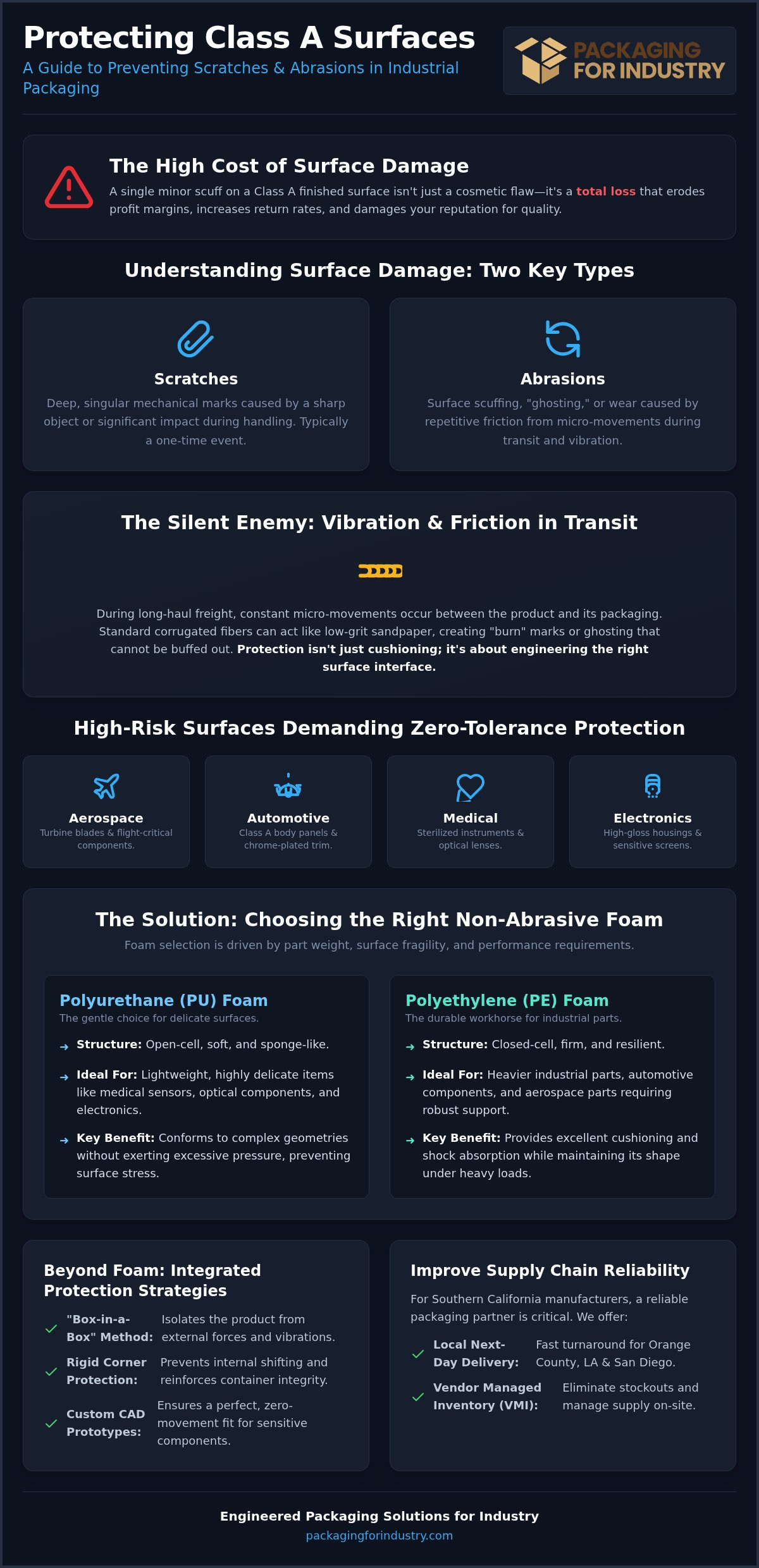
The difference between a scratch and an abrasion might seem academic until you are looking at a high-value shipment of rejected components. A scratch is typically a deep, singular mechanical mark caused by a sharp object or a significant impact during handling. In contrast, an abrasion is the process of scuffing, scratching, wearing down a finished surface through repetitive friction. Both lead to the same result: costly rework, scrapped parts, and a strained relationship with your customer.
Implementing effective packaging solutions to prevent scratches and abrasions requires understanding that protection isn’t just about cushioning. It’s about the surface interface. When you ship industrial goods, the hidden costs of surface damage often far outweigh the price of the packaging itself. Between the labor required for rework and the freight costs of shipping replacements, a single scuff on a “Class A” surface can erase the profit from an entire production run. These surfaces are those where visual perfection is functional, and any deviation from a pristine state renders the part unusable.
The Science of Friction in Logistics
Vibration is the silent enemy of finished surfaces. During long-haul freight, micro-movements occur constantly between the product and its container. If the contact point is a standard corrugated box, the fibers of the cardboard can act like low-grit sandpaper. This repetitive motion at specific vibration frequencies creates “burn” marks or ghosting that cannot be buffed out. Standard cardboard is inherently abrasive to polished metals and plastics because of its wood-fiber composition and the dust it generates during transit.
Effective foam packaging must account for these micro-movements. Without a non-abrasive barrier, even a tightly packed item will experience enough friction to degrade its finish. This is especially true for materials with high surface tension, which are prone to heat-induced scuffing from the packaging material itself if the fit isn’t engineered correctly.
Identifying High-Risk Finished Surfaces
Not every part requires extreme protection, but certain materials demand a zero-tolerance approach to surface wear. High-risk items include polished aerospace alloys, automotive body panels, and optical lenses. Medical-grade finishes and specialized coatings also fall into this category because surface integrity is often tied to sterilization or aerodynamic performance. For industries like aerospace and automotive, the tolerance for surface wear is zero.
- Polished metals and chrome-plated decorative trim.
- Painted plastics and high-gloss electronic housings.
- Medical instruments with critical surface-roughness requirements.
- Aerospace turbine blades and flight-critical components.
Engineering a solution for these sectors means looking beyond the box to the chemical and physical properties of the materials touching the part. Selecting the wrong liner or foam can be just as damaging as using no protection at all, particularly when dealing with sensitive “Class A” finishes.
Non-Abrasive Materials: Choosing the Right Interface
The interface between your product and its container is the most critical point of failure in any logistics chain. Selecting the right material involves more than just picking a soft cushion; you must verify its performance against technical benchmarks like the ASTM D5264 standard, which evaluates the abrasion resistance of materials under controlled friction. When you are engineering packaging solutions to prevent scratches and abrasions, the goal is to minimize the coefficient of friction while ensuring the material doesn’t leave behind “ghosting” or chemical residue on sensitive finishes.
Protective Foam Packaging Varieties
Foam selection is driven by the weight of the part and the fragility of its surface. Polyurethane (PU) is an open-cell, soft material ideal for lightweight, highly delicate items such as medical sensors or optical components. Its soft texture allows it to conform to complex geometries without exerting excessive pressure on the surface. For heavier industrial parts, Polyethylene (PE) is the standard. It’s a durable, closed-cell foam that provides excellent cushioning while maintaining its shape under load. For manufacturers in Orange County or Los Angeles shipping high-value aerospace components, we often recommend Cross-Linked Polyethylene (XLPE). This material has an extremely smooth surface that’s virtually non-abrasive, making it the preferred choice for Class A surfaces where even standard PE might be too aggressive. Custom foam packaging inserts ensure a precision fit, which eliminates the micro-movements that cause friction-related damage.
Electronics require an additional layer of engineering. Standard foams can generate static charges that attract dust and debris, which then act as an abrasive between the foam and the product. Using anti-static or ESD-safe foams prevents this attraction, keeping the interface clean and the surface pristine during long-haul transit.
Temporary Adhesive Films and Wraps
Temporary protection films are often the first line of defense during the assembly and kitting process. These films shield surfaces from contamination and light scuffs before the product even reaches the final shipping container. The key is matching the tack level to the surface texture. A film that’s too sticky can leave a solvent-based residue that requires expensive cleaning, while a film with insufficient tack will peel away prematurely. Water-based adhesives are generally safer for sensitive coatings, as they’re less likely to react with the finish over time. For those seeking the highest standards in surface preservation, organizations like Protek Films demonstrate the effectiveness of precision-applied films in preventing mechanical wear.
While films protect the surface, stretch film serves to stabilize the entire load. By securing the primary containers tightly to a pallet, you reduce the vibration-induced shifting that turns a standard box into an abrasive. If you are struggling with surface defects despite using cushioning, it’s often a sign that your materials aren’t correctly matched to your product’s finish. You can request a packaging quote to have our team evaluate your current material interface and identify more reliable alternatives.
Engineering Integrated Protection Systems
Surface protection is an engineering challenge, not just a material choice. While individual materials like XLPE foam or temporary films are effective, the most reliable packaging solutions to prevent scratches and abrasions utilize an integrated system approach. By combining non-abrasive interfaces with rigid external stabilization, you address both the micro-movements that cause scuffs and the macro-movements that lead to impact damage. This holistic design ensures that high-value components remain stationary and shielded throughout the entire logistical flow.
The “box-within-a-box” method is the gold standard for high-value industrial goods. In this configuration, an inner container holds the part in a precision-cut foam nest, while an outer heavy-duty corrugated box provides the structural integrity needed for stacking and transit. To make this cost-effective, we customize corrugated boxes to eliminate excess void space. Reducing the footprint of the package doesn’t just lower your freight costs; it removes the opportunity for internal shifting. When you eliminate movement, you eliminate the friction that turns standard packaging into an abrasive surface.
For manufacturers in San Diego or Orange County, integrating corner and edge protection into the primary pack is a pragmatic way to prevent internal movement. These guards serve a dual purpose: they reinforce the box corners for better stacking strength and act as internal bulkheads to lock foam inserts into place. This level of precision is especially critical in custom kitting, where multiple components are housed in a single unit. A well-designed kit ensures zero part-to-part contact, preventing components from scratching each other during handling on the assembly line.
Custom Foam-Lined Crates
When shipping oversized or flight-critical aerospace parts, the rigidity of wood is often required. We specialize in combining this structural strength with the softness of technical foams. By prototyping the internal layout, we ensure that the foam supports the part at its least sensitive points while maintaining a non-abrasive barrier over Class A surfaces. If you are shipping internationally, it is important to understand the complexities of engineering custom crates to meet ISPM-15 standards without compromising the delicate finishes inside.
Precision Edge and Corner Guarding
Palletized loads are often subject to high tension from polyester or steel strapping, which can crush box edges and force the packaging material against the product’s surface. Precision edge guarding distributes this pressure across a wider area, protecting finished corners from marring. By integrating these guards with machine-applied stretch wrap, you create a unitized load that resists vibration. This systematic approach provides the stability needed to ensure your products arrive in showroom condition, regardless of the shipping distance or the number of touchpoints in the supply chain.
Industry-Specific Solutions for High-Value Goods
The requirements for protecting high-value industrial goods vary significantly by sector. A solution that works for a heavy-duty automotive engine block will likely fail when applied to a delicate aerospace turbine blade or a medical-grade surgical instrument. Precision-engineered packaging solutions to prevent scratches and abrasions must account for the unique environmental and operational stressors of each industry. For manufacturers in San Diego and Los Angeles, meeting these specific standards is the difference between a successful delivery and a rejected shipment that halts an entire production line.
Aerospace and Defense Packaging Standards
In the aerospace sector, surface integrity is often a safety-critical requirement. Turbine blades and flight-critical components can’t tolerate even microscopic abrasions that might lead to stress fractures or aerodynamic drag. We provide aerospace packaging solutions that comply with rigorous Mil-Spec requirements for surface preservation. This involves using materials that ensure zero chemical transfer to critical alloys, preventing the corrosion or “ghosting” that can occur during long-term storage. Our engineering team focuses on creating inert interfaces that maintain their non-abrasive properties even under the pressure of vacuum-sealed environments or high-altitude transport.
Manufacturing and Automotive Logistics
Automotive Tier 1 suppliers face the constant challenge of delivering Class A painted panels and chrome trim to assembly lines without a single defect. Any scuff requires the entire part to be pulled from the line, causing immediate operational delays and rework expenses. We help clients lower packaging costs by designing reusable, non-abrasive dunnage that can withstand multiple cycles through the supply chain. These packaging solutions to prevent scratches and abrasions are optimized for manufacturing floor efficiency, allowing workers to quickly kit and unkit parts without risking surface damage from grit accumulation within the packaging.
Electronics and medical sectors require specialized material interfaces. For electronics, preventing abrasions on high-resolution screens or sensitive PCB surfaces is paramount. We utilize ESD-safe, non-shedding materials that prevent dust attraction. In medical contexts, we provide cleanroom-compatible materials that won’t shed fibers or particles. This ensures that the packaging protects the surface finish while maintaining the required level of cleanliness for surgical-grade components. By matching the material science to the industry application, you ensure that your logistics system supports your quality standards rather than undermining them.
Optimizing Your Supply Chain with PFI
Lowering your total cost of ownership requires a focus on both material performance and logistical reliability. While the previous sections detailed the technical aspects of surface protection, the operational reality is that your production floor is only as efficient as its inventory. If your team runs out of specialized non-abrasive inserts, they often resort to using generic cardboard or sub-standard film to keep the line moving. This is where most surface damage occurs. As a leading industrial packaging supplier near me for Southern California manufacturers, we act as your consultant to ensure that your supply of packaging solutions to prevent scratches and abrasions is as consistent as your manufacturing quality.
A reliable packaging partner doesn’t just sell you boxes; they integrate with your purchasing and operations departments to eliminate fiscal waste. By optimizing your material usage and ensuring a steady flow of protective supplies, we help you transition from a reactive “fixer” mindset to a proactive, zero-defect logistics strategy. This approach stabilizes your budget by reducing the hidden costs of shipping damage, such as administrative labor for claims processing and the high freight costs of expedited replacements.
Custom Design and Prototyping
Our design process begins with a technical analysis of your product’s specific surface vulnerabilities. We don’t guess which tack level or foam density you need; our engineers use CAD software to develop precise kitting and insert layouts that stabilize your goods. The “Free Prototyping” advantage allows you to test the fit and finish-compatibility in a real-world shipping environment before you commit to a bulk order. This step is vital for aerospace and automotive clients who can’t risk ghosting or residue on Class A surfaces. You can request a custom design packaging review today to begin engineering your specific solution.
Southern California Logistics and VMI
Inventory stockouts are a primary cause of shipping damage. When the correct protective materials aren’t available, workers use whatever is on hand, which rarely provides the zero-defect protection your customers expect. Our Vendor Managed Inventory (VMI) program solves this by placing the responsibility for stock levels on us. We monitor your usage and replenish supplies automatically, ensuring you never face an emergency rush order that compromises part safety.
For manufacturers located in Anaheim, Orange County, and Los Angeles, we provide local next-day delivery to keep your warehouse lean and your production moving. We also serve the Inland Empire, Irvine, and San Diego with the same commitment to logistical flow. By combining custom-engineered protection with a reliable supply chain, you reduce damage-related claims and improve your bottom line. To eliminate shipping damage and optimize your operations, request a packaging quote from our Southern California team today.
Protect Your Finish and Your Bottom Line
Surface integrity is a critical engineering requirement for manufacturers handling Class A finishes. By integrating non-abrasive material science with rigid structural stabilization, you eliminate the micro-movements that cause ghosting and surface wear. Our approach focuses on these technical details to transition your logistics from a source of professional stress to a pillar of operational reliability.
PFI provides the expertise required for high-value industrial protection, specializing in aerospace and automotive standards. We offer free prototyping on custom designs so you can verify the fit before rollout, supported by next-day local delivery across Southern California. Implementing the right packaging solutions to prevent scratches and abrasions is a pragmatic investment that lowers your total cost of ownership and protects your brand reputation.
Take the first step toward zero-defect delivery and a more resilient supply chain. We are ready to help you solve your most challenging shipping hurdles.
Frequently Asked Questions
What is the best material to prevent scratches on polished metal?
Cross-linked polyethylene (XLPE) is the most effective material for protecting polished metal because its smooth, closed-cell surface prevents the micro-scuffing associated with standard foams. Unlike generic materials, XLPE provides high-performance packaging solutions to prevent scratches and abrasions without leaving chemical ghosting or residue on sensitive alloys. This is the standard choice for aerospace and automotive components where Class A finishes are required.
How do I know if I need polyethylene or polyurethane foam for my parts?
Your choice depends on the weight and fragility of the part; use polyethylene for heavy industrial components and polyurethane for lightweight, delicate items. Polyethylene offers high load-bearing capacity and durability, whereas polyurethane is a softer, open-cell foam that provides superior cushioning for fragile electronics or medical sensors. We evaluate your product’s specific surface tension and weight to recommend the most cost-effective material interface.
Can standard corrugated boxes cause surface abrasions?
Yes, standard corrugated boxes can cause abrasions because the natural wood fibers in the cardboard act as a mild abrasive when subjected to transit vibrations. These micro-movements create friction that leads to “burn” marks or scuffs on finished surfaces. To prevent this, we integrate non-abrasive liners or custom foam inserts that decouple the product surface from the abrasive corrugated material.
What are Class A surfaces and why do they need special packaging?
Class A surfaces are high-visibility finishes, such as painted automotive panels or polished aerospace parts, where visual perfection is a functional requirement. Even a minor scuff can lead to a rejected shipment and expensive rework or replacement costs. These surfaces require specialized engineering to ensure that the packaging material itself does not react with the coating or cause mechanical wear during long-haul freight.
Does PFI provide custom foam inserts for small production runs?
Yes, we provide custom foam inserts for all production volumes, with custom sizes available to fit your specific component dimensions. Whether you are managing a small run of specialized medical equipment or a large-scale automotive production, our engineering team provides free prototyping to ensure the fit is perfect before you commit to a bulk order. This flexibility helps manufacturers in San Diego and Orange County maintain high standards without excessive inventory overhead.
How can I reduce packaging costs while improving product protection?
You can lower packaging costs by optimizing your material engineering to eliminate excess void space and reduce product damage rates. We encourage manufacturers to compare packaging pricing and total cost of ownership by looking at the savings generated from reduced returns and rework. Our Vendor Managed Inventory (VMI) programs also help stabilize your budget by preventing emergency rush orders and ensuring consistent supply reliability.
Do you offer local delivery for packaging supplies in Orange County?
We provide local next-day delivery for all packaging supplies throughout Orange County, Los Angeles, and San Diego. As a local Southern California packaging supplier, we understand the lead-time requirements of busy manufacturing hubs in Anaheim, Irvine, and the Inland Empire. Our local fleet ensures that your warehouse remains stocked with critical protective materials, preventing the production delays caused by inventory stockouts.
What is the difference between non-abrasive and anti-static packaging?
Non-abrasive packaging is designed to protect the physical finish of a part from friction, while anti-static packaging prevents electrostatic discharge (ESD) that can damage electronic circuits. In many cases, such as shipping sensitive PCBs or medical electronics, we combine these properties into a single material. This ensures that the interface is both smooth enough to prevent scuffs and chemically engineered to dissipate static charges that attract abrasive dust particles.